The general rifle elk season in Oregon's Wallowa-Whitman National Forest is one of the most physically demanding and deeply rewarding hunts in the Pacific Northwest. The Wallowa Unit, covering Wallowa and Union counties in the far northeast corner of the state, holds healthy populations of Rocky Mountain elk and sees moderate hunting pressure compared to some western Oregon units. If you're willing to hike hard and hunt smart, October bulls are within reach for the DIY public land hunter.
Season Dates and Tag Information
Oregon's general any-bull rifle elk season in the Wallowa Unit typically runs in late October, usually the fourth week. Hunters holding general elk tags — drawn or over-the-counter depending on the unit — can pursue branch-antlered bulls. ODFW's current regulations packet is your bible; unit boundaries and season dates can shift year to year. Pick up your tag at a local sporting goods store in Enterprise or La Grande and get your vehicle access permit if you're heading into any restricted forest roads.
Terrain and Where to Find October Bulls
By late October, the rut is winding down and bulls are transitioning from breeding behavior back to feeding mode. They're tired, winter is coming, and their focus shifts to calories. Look for elk in the following areas:
- Clear-cut edges and burns: The Wallowa-Whitman contains extensive areas of timber harvest and old fire scar. Elk love the browse and cover these areas provide. Glass them at first and last light.
- Riparian corridors: The upper Imnaha River drainage, the Minam River canyon, and the creeks draining the Wallowa Mountains all funnel elk. Willows, alder, and creek-bottom grass draw elk in the morning and evening.
- South-facing slopes in early October: When temperatures are still mild, elk push to sun-warmed south slopes covered in bunchgrass and cured forbs.
- Saddles and benches at elevation: Bulls often spend daylight hours bedded in timber on north-facing slopes or in dark timber patches near saddles. Hunt the fringes.
Access Roads and Trailheads
The Wallowa-Whitman National Forest has an extensive road network, but many high-elevation roads close by mid-October due to snow and mud. Key jumping-off points include:
- Imnaha Highway (OR-350): Heads east from Joseph toward the Imnaha River canyon — one of Oregon's great elk highways.
- Lostine River Road: Runs south from Lostine into the Eagle Cap Wilderness boundary. Park at the Two Pan trailhead and work drainages on either side.
- Minam River corridor: Accessed via Minam or from the Wallowa Lake trailhead. Multi-day pack trips into this roadless country can put you on elk that see almost no pressure.
- Crow Creek Road and upper Chesnimnus Creek: Northern Wallowa county, lower elevation, often accessible even in snow. Good for mule deer and elk both.
A Note on Snow and Road Conditions
Late October in the Wallowas can mean anything from mild fall conditions to two feet of snow. Call the Wallowa-Whitman National Forest office in Enterprise at (541) 426-5546 before you leave home. Road conditions change overnight. A 4WD truck with good mud tires and traction boards is not optional — it's standard equipment for this hunt.
Glassing Strategy
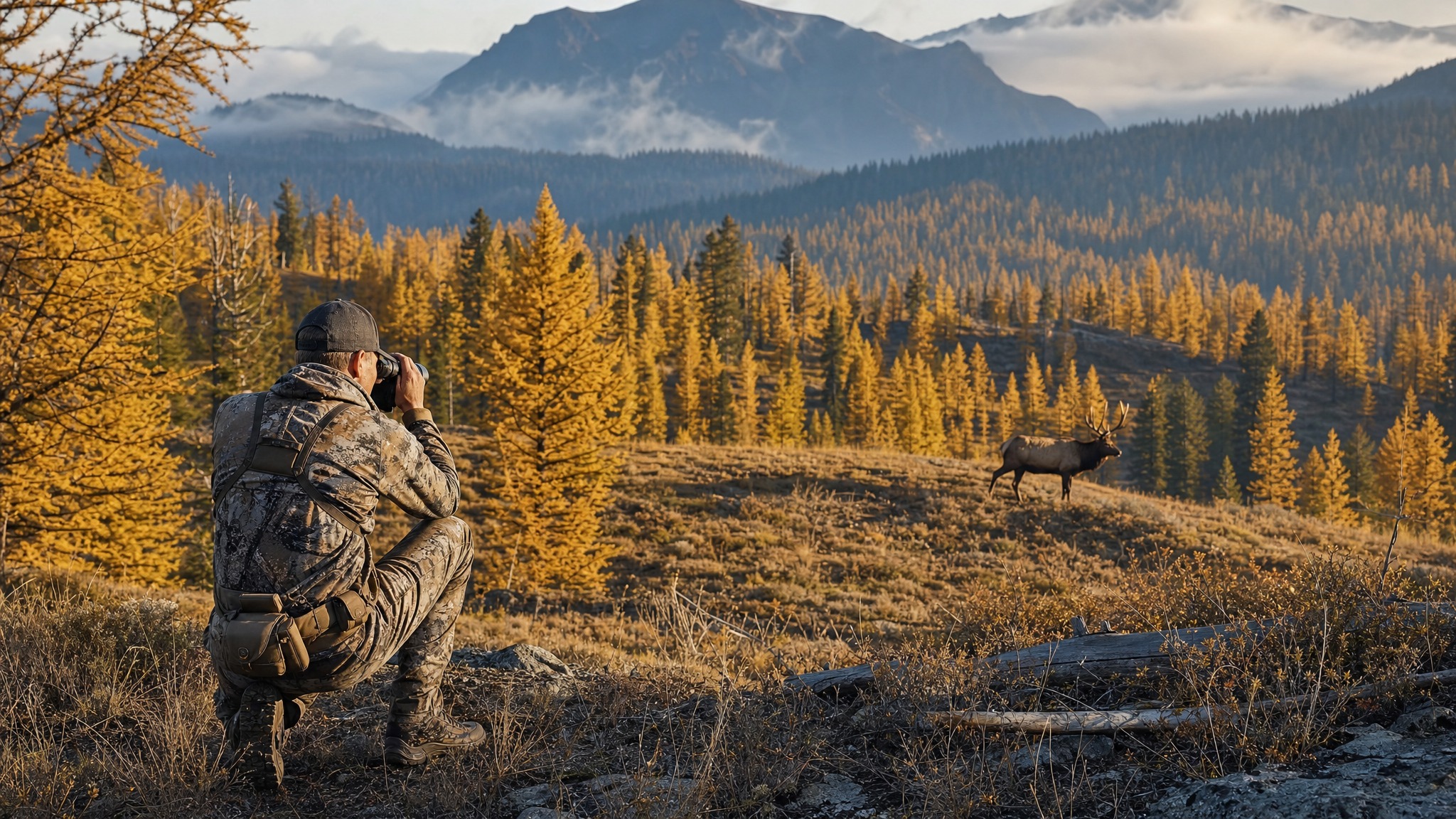
This is not a still-hunt — it's a glassing game. Plan to be in position on a high ridge or open slope 30 minutes before first light with quality optics. A 10x42 or 12x50 binocular and a 60-80x spotting scope on a tripod will do more work for you than any call or grunt tube in late October. Glass systematically: scan open parks, clear-cut edges, and creek bottoms. Mark any elk you see, especially bulls, and make a plan to close the distance.
Plan your stalk with the wind in mind. Elk have world-class noses. The thermals in mountain terrain are complex — they pull upslope in the morning as the sun heats the ground, then reverse in the afternoon. Move into position before thermals shift, and always circle downwind before your final approach.
Pack-Out Planning
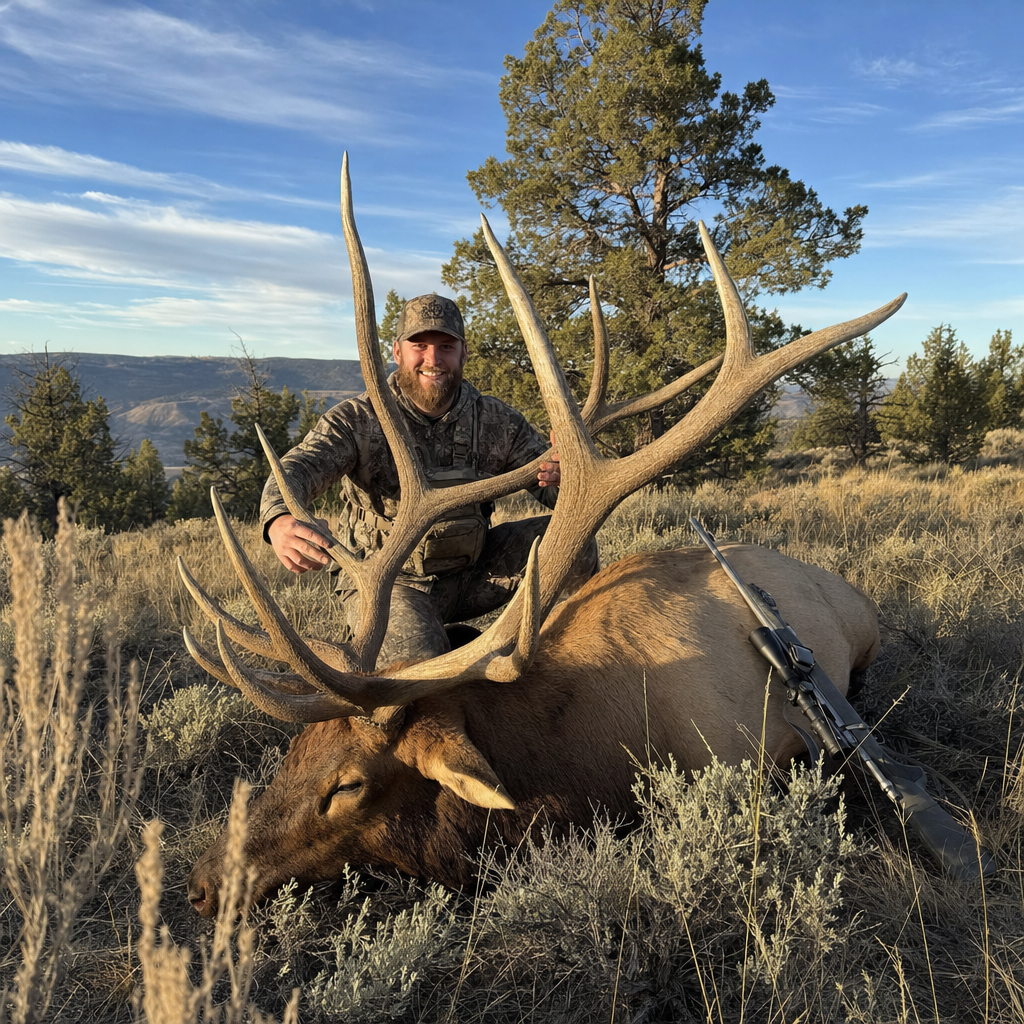
A mature Rocky Mountain bull elk will yield 250–350 lbs of boneless meat. That's a significant logistics challenge on public land in the Wallowas. Options include:
- Pack frames and game bags: Quarter and bone the elk on site. A solo hunter needs multiple trips; a two-person team makes it manageable in a day.
- Horse or mule packing: Several outfitters in Wallowa County offer packing services. If you shoot deep in the backcountry, have a number ready before you go.
- Bear awareness: Gut piles and meat caches attract black bears. Hang meat high and away from camp, and don't camp next to a kill site.
Recommended Loads for Elk
The Wallowas offer shots that range from 50 yards in tight timber to 350+ yards across open parks. Your rifle needs to cover that range. Popular choices among Wallowa County elk hunters include the .300 Winchester Magnum, .30-06 Springfield, 7mm Rem Mag, and 6.5 PRC for those comfortable with longer shots. Whatever you carry, use a premium bonded bullet — Federal Trophy Bonded, Nosler Partition, or Barnes TTSX — at elk-appropriate weights. A 180-gr .30-cal at 2,900 fps is hard to argue with in this country.
Zero your rifle at 200 yards, know your drop at 300 and 400, and practice shooting from field positions — sitting, kneeling, or off trekking poles. Bench-rested groups don't matter in the Wallowas. Field positions do.
Final Thoughts
The Wallowa-Whitman elk hunt is not for the faint of heart or the flat-lander who hasn't trained. But for hunters willing to put in the miles and the hours behind glass, northeast Oregon's elk country delivers experiences — and bulls — that rival anything in the West. Get your boots broken in, load your pack early, and get up the mountain before daylight. The elk are there.