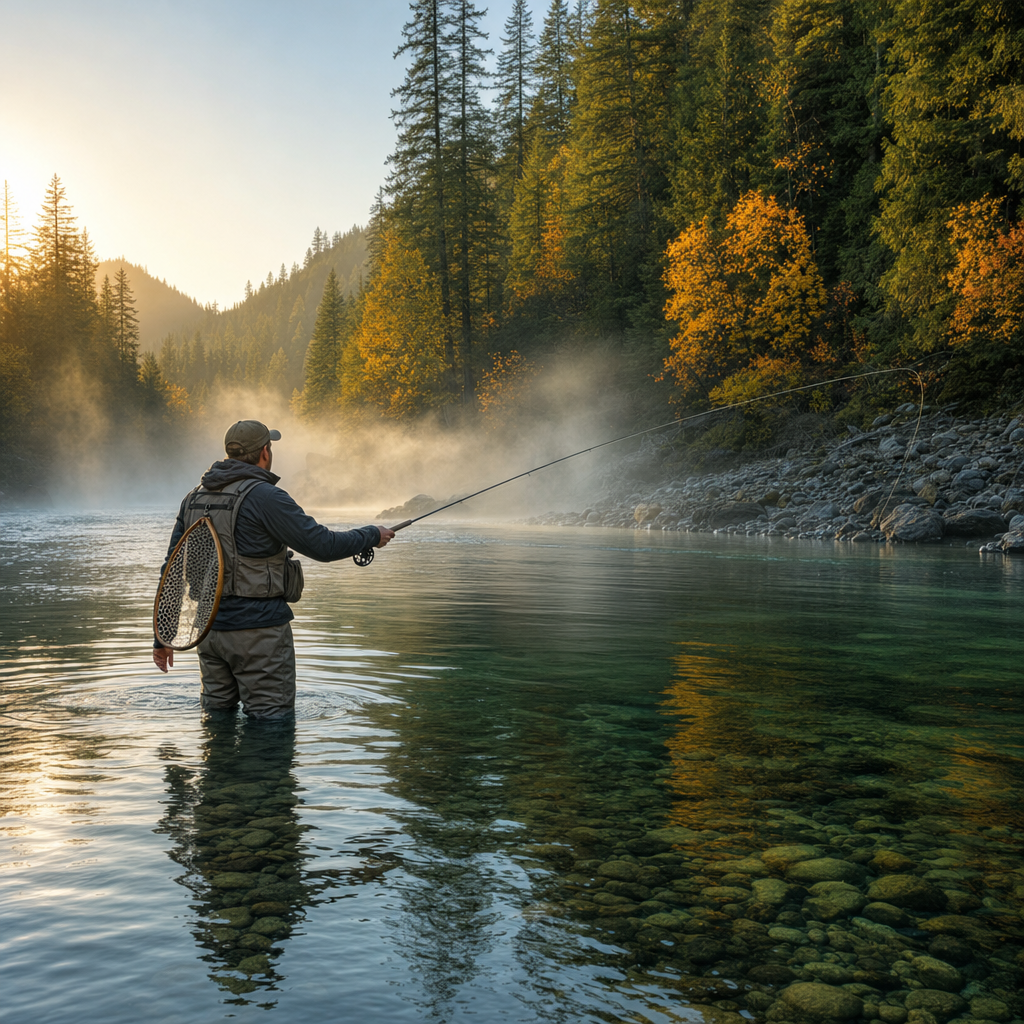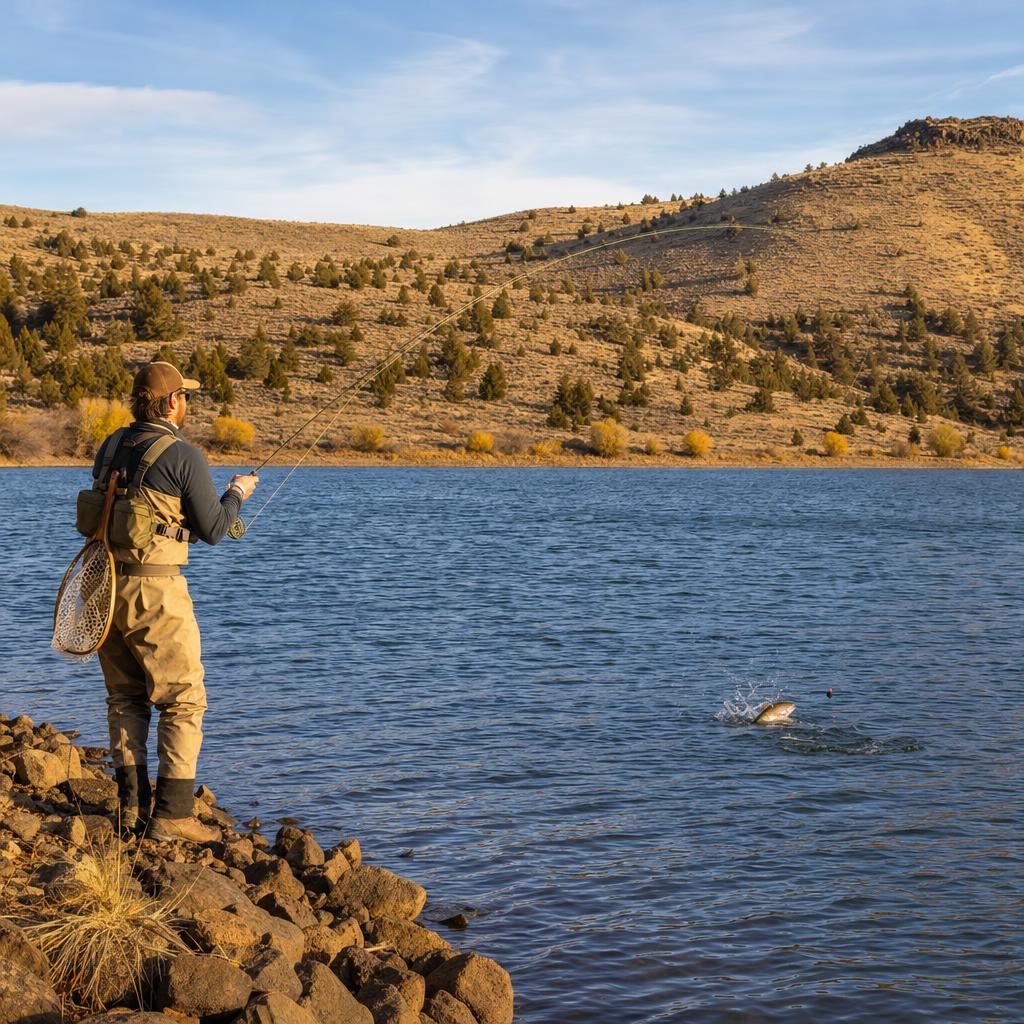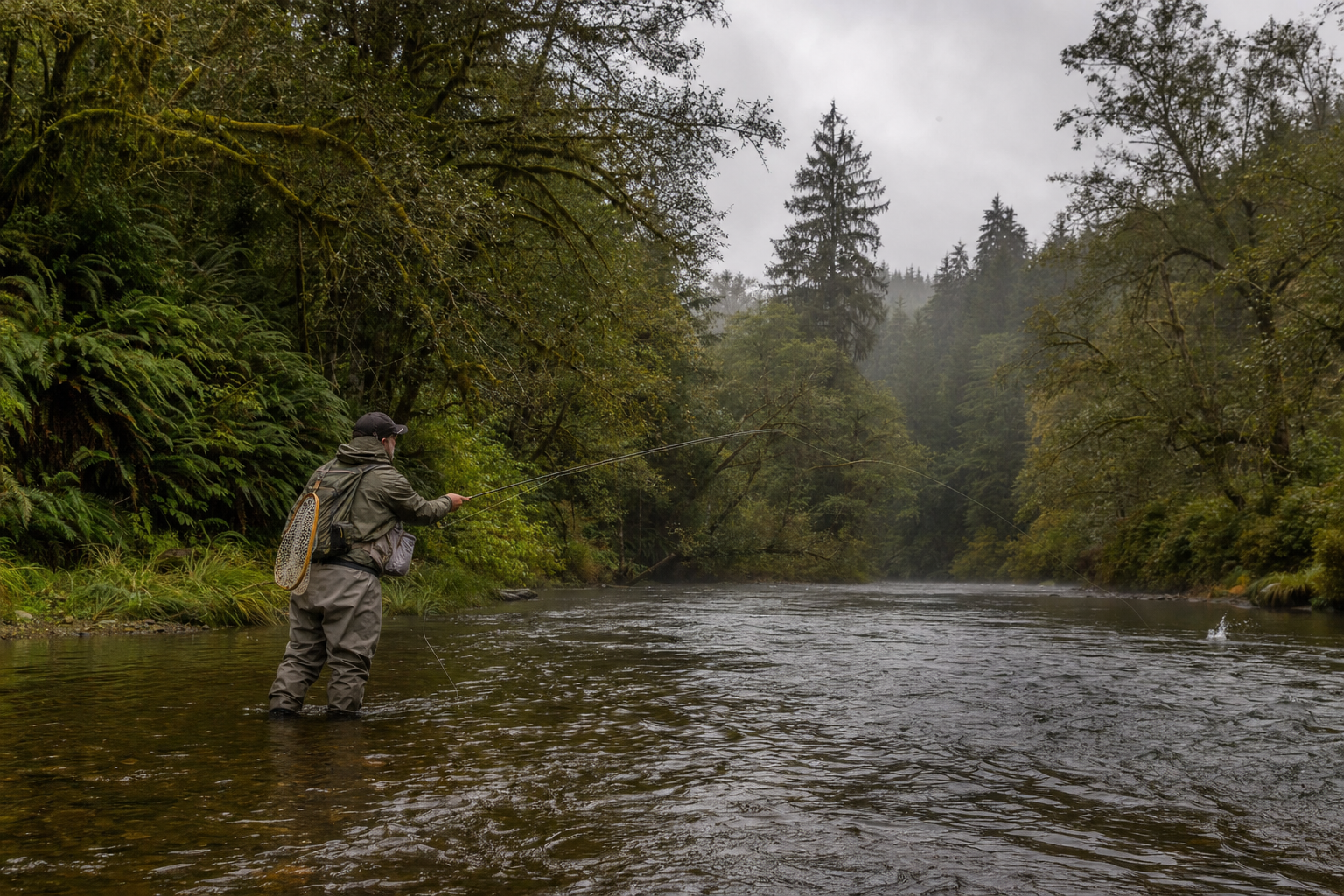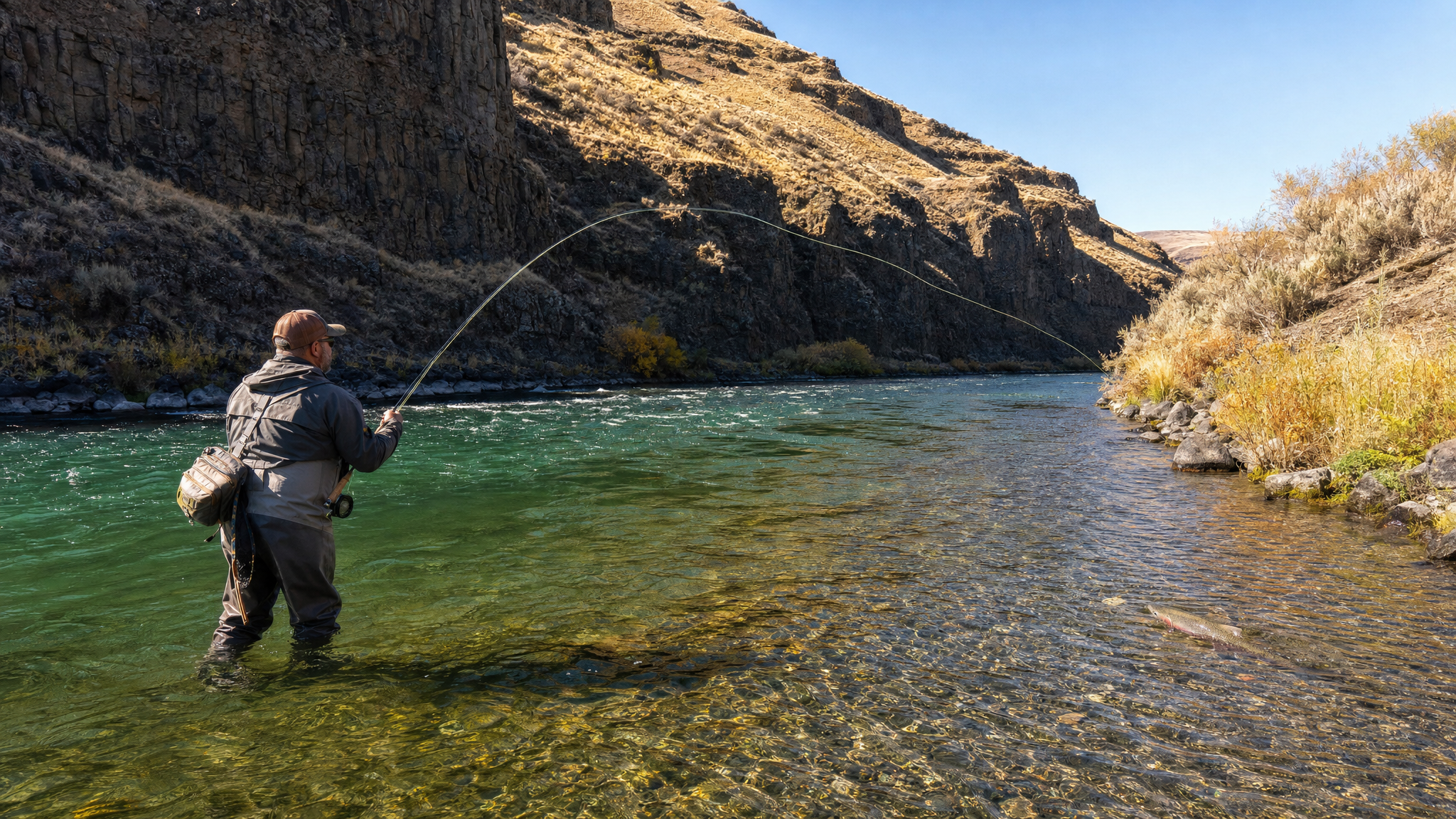
October is the month serious Oregon steelheaders circle on the calendar. The summer-run fish that entered the Deschutes back in July and August are still in the river, battle-hardened and aggressive after months in cold, gin-clear water. Fresh fall-run fish are pushing up from the Columbia. The Lower Deschutes in October is not a place for casual fishermen — it rewards anglers who put in the legwork, read the water, and match the hatch (or the fly pattern) to the moment.
The River, the Access, and the Drive Out
The Lower Deschutes runs roughly 100 miles from Pelton Dam near Madras to its confluence with the Columbia at Mack's Canyon. Most serious steelheaders concentrate their efforts from Maupin downstream to Mack's Canyon. Highway 197 drops you into Maupin, a small fishing town that exists almost entirely to serve drift boaters and wading anglers. From there, Bureau of Land Management (BLM) roads trace both banks downstream, with established camping areas at Mack's Canyon, Oak Springs, and Beavertail.
Access is a mix of boat ramp to boat ramp floating and serious trail hiking. Bank anglers willing to hike a mile or two from established campsites can find completely unpressured water. The canyon walls drop steeply, and the trails aren't maintained — watch your footing on the basalt. Rattlesnakes thin out by October but aren't completely gone. Wear ankle-supporting boots and don't step where you can't see.
Gear: Spey Rods Dominate, but Single-Hands Work
The Lower Deschutes is spey country. A 13-foot switch rod or full two-handed spey in a 7- or 8-weight handles the wide Skagit or Scandi casting that lets you cover miles of tailouts and bucket runs efficiently. Sink tips ranging from T-8 to T-14 get your fly down depending on water depth and current speed — in October, when water temperatures start dropping toward the low 50s Fahrenheit, steelhead hug the bottom more aggressively than during the warmer months.
For single-hand anglers, an 8- or 9-weight rod with a shooting head or long belly floating line with a polyleader works well for runs under 30 feet wide. Many of the best pools on the Deschutes are wade-fishable from a single position. Read the seam, find the soft water behind boulders, and swing your fly across the current from the fast water to the slow water edge.
Fly Patterns That Consistently Produce
- Intruders and sculpin patterns (size 2–1/0): Big, articulated flies that push water are autumn go-tos when steelhead are holding deep.
- Egg-sucking Leeches in black/purple or black/blue: A Deschutes staple across all conditions.
- Muddler Minnows and October Caddis imitations: The October Caddis hatch is real and significant — when you see them fluttering, fish waking patterns on or just under the surface.
- Boss and Signal Light: Classic Deschutes patterns that have worked for decades.
- Hot orange or cerise patterns: On bright bluebird days, smaller, hot-colored spiders and soft hackles can turn lockjawed fish.
Hardware Fishing: Legal and Effective
The Lower Deschutes is fly-fishing-only above the railroad bridge at the mouth of Sherar's Falls (roughly at Sherars Bridge). Below that bridge to the Columbia, conventional gear is legal. Spinners, spoons, and jigs produce fish for bank anglers, especially in the deeper slots near Mack's Canyon and the lower river canyon. Blue Fox spinners in sizes 4–5, Mepps Syclops spoons in silver or gold, and pink marabou jigs drifted under a float all take October Deschutes steelhead.
Drift fishing with sand shrimp or a sand shrimp-and-yarn combo is effective in deeper runs where swinging a fly is inefficient. The key in October is slowing your presentation — cold water means slower-moving fish. Let the bait or lure linger in the strike zone longer than you think necessary.
Reading the Water in October
Summer steelhead have been in the river for months by October. They've seen pressure, they've moved to comfort zones, and they're often not where guidebook photos show them. Fall fish, fresh from the Columbia, push hard upstream and often hold in faster, more oxygenated water than summer fish.
Focus on these types of water:
- Long tailouts: Where riffle water transitions to slower pool water. Fish stack here, especially at first and last light.
- Pocket water below large boulders: Look for the seam between fast and slow. Fish hold just out of the main current.
- Side channels and softer inside bends: Especially in afternoon heat when fish seek cooler, slower water.
- The bottom third of long pools: Often overlooked, these transitional zones hold fish that have pushed up slightly but aren't fully in the next run yet.
Regulations and Retention
The Lower Deschutes steelhead fishery is managed under Oregon Department of Fish and Wildlife (ODFW) regulations that change seasonally. In October 2026, check ODFW's current regulation booklet carefully before keeping any fish. Hatchery steelhead (clipped adipose fin) are generally retainable in numbers specified by the current year's regulation. Wild fish (unclipped) are catch-and-release only. Handle wild fish quickly, keep them in the water as much as possible, and use a rubberized net if you land them at all — many experienced Deschutes anglers skip the net entirely.
A valid Oregon fishing license and combined angling tag are required. Non-residents will need the appropriate non-resident licenses. Tribal fishing regulations also apply in certain stretches — know the boundary markers.
Camping and Logistics
BLM camping along the lower river is available at designated sites; fees apply and fills fast on October weekends. Book ahead or arrive on a Tuesday. Maupin has the Deschutes River State Recreation Area nearby, with hookups and tent sites. The Oasis Resort and other in-town options serve the angling crowd. Stock up on groceries in Madras or The Dalles — Maupin has limited supplies.
Cell service is effectively nonexistent below the canyon rim. Download offline maps, bring a paper regulation booklet, and tell someone your float or hiking plan. The canyon is remote and beautiful, but it demands respect.
Final Word
The Lower Deschutes in October is one of the finest steelhead experiences in the Pacific Northwest. The setting — basalt canyon walls, sage and bunch grass hillsides, golden autumn light, bald eagles overhead — makes even a fishless day memorable. Add a fresh 12-pound wild B-run steelhead slamming a swung fly in a glassy tailout, and you'll understand why anglers plan their entire fall calendars around this river. Go prepared, go early in the week, and go often.