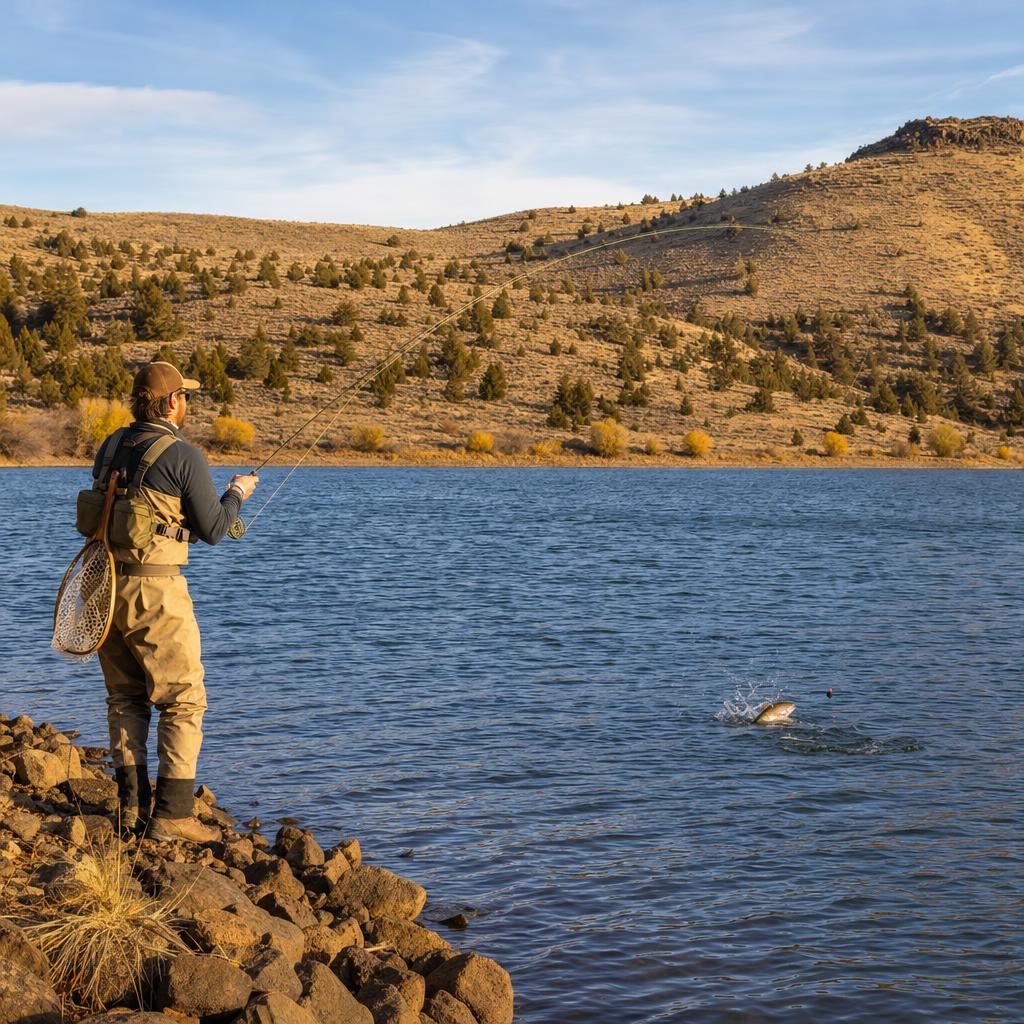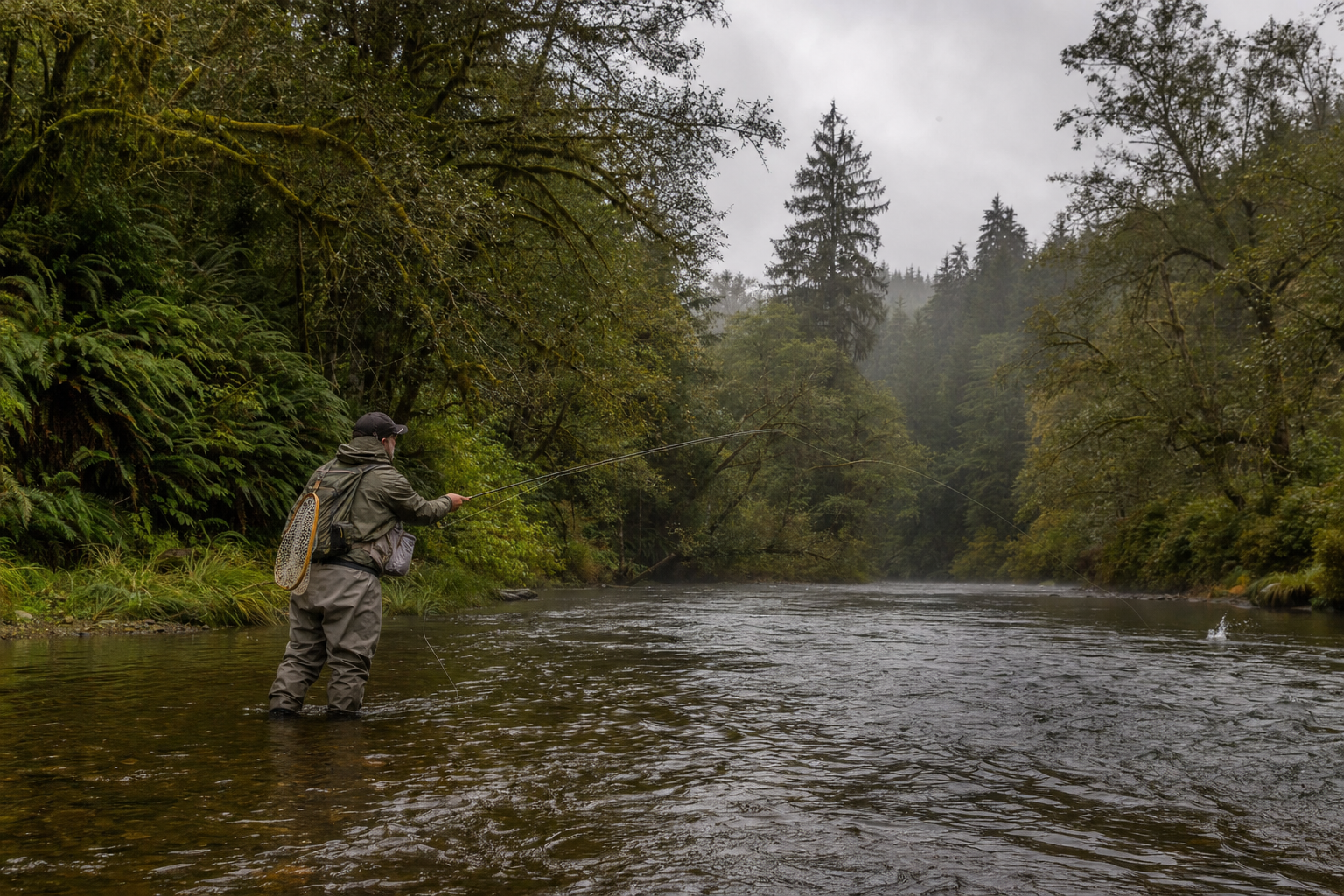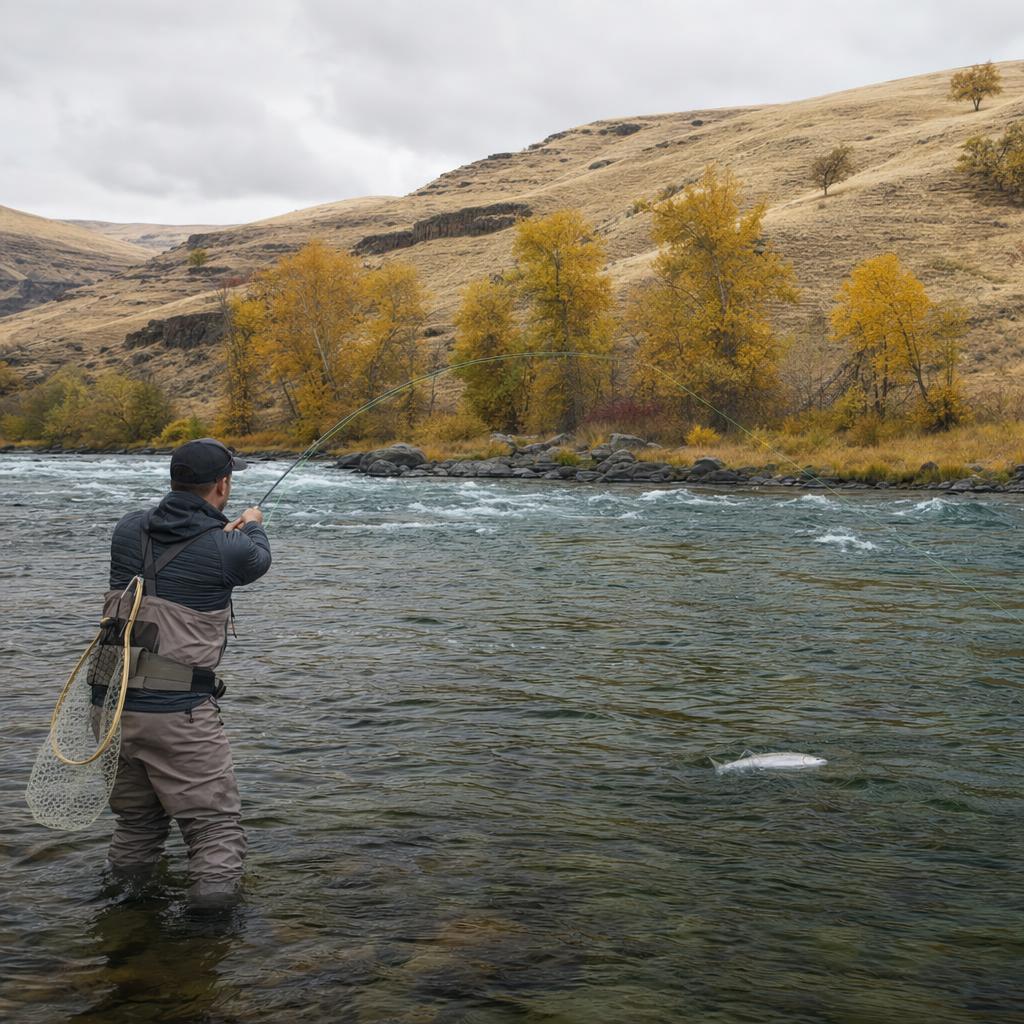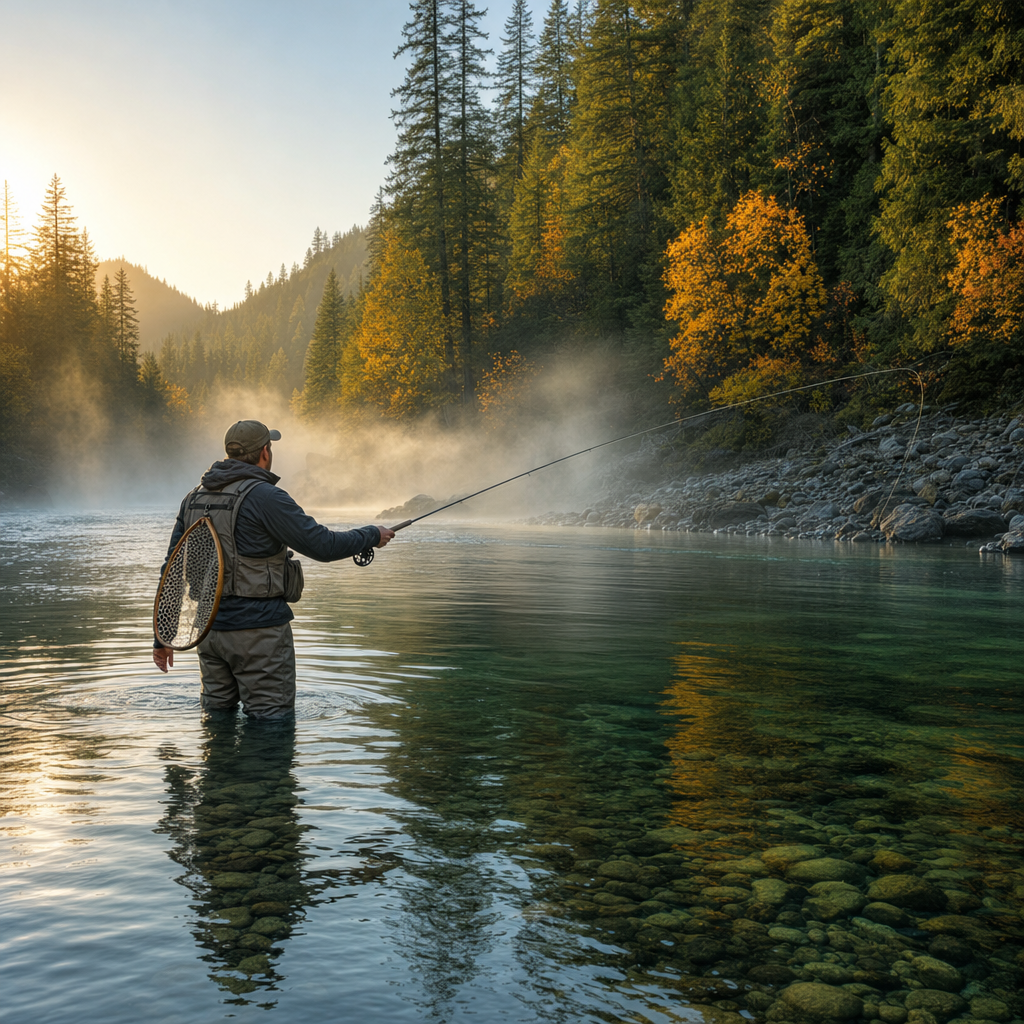
When Oregon steelhead anglers talk about the Umpqua system, the conversation almost always shifts immediately to the North Fork — the famous fly-only water above Steamboat, the legendary summer-run fish, the historic Steamboat Inn. The South Umpqua, meanwhile, quietly produces wild winter-run steelhead through October and November for anglers willing to do their homework. If you're looking for miles of uncrowded bank access and a legitimate shot at chrome fish in the 8-to-14-pound class, this is your river.
Understanding the South Umpqua's Steelhead Run
The South Umpqua flows roughly 100 miles from its headwaters near Camas Valley to its confluence with the North Fork just west of Roseburg. Unlike the North Fork's iconic summer-run wild fish, the South Umpqua's steelhead run consists primarily of winter-run hatchery fish from the Tenmile Creek Hatchery supplemented by a wild component that ODFW monitors closely.
October is the leading edge of the season — early fish showing with water temps still in the upper 50s, making them aggressive and willing to chase hardware. By mid-October through November, runs typically build as fall rains push the first significant flows through the system. Keep an eye on the USGS gauge at Tiller (gauge 14306500) — steelhead move best when flows are rising from a base of 500–800 cfs up toward 1,500–2,000 cfs.
Access Points and Bank Fishing Locations
Days Creek to Canyonville Corridor
Oregon Highway 227 parallels the South Umpqua from Days Creek down to Canyonville, and this 20-mile stretch is the heart of the fall fishery. Numerous ODFW access points are marked along the highway; the gravel pullouts between Days Creek and Dumont Creek Road consistently produce fish in October. Look for deeper green runs at river bends and tail-outs off gravel bars — that's where steelhead hold after pushing through riffles.
Tiller Area
The Tiller area, where the South Umpqua and its North Fork tributary meet, holds fish during low-water October conditions. The confluence pool itself is classic steelhead water — deep, slow, and funneling both branches' fish into a single holding zone. A county park near the Tiller Ranger Station provides legal bank access with restrooms.
Canyonville to Roseburg
As the river flattens toward Roseburg it loses some of its character, but larger holes below I-5 bridge crossings at Canyonville and Myrtle Creek hold fish during high-water events. Wade access is tricky in the lower river — bank fishing from ODFW-designated spots is more productive and safer than wading the deeper lower channel.
Hardware Tactics for October
October South Umpqua steelhead respond well to hardware in the warmer early-season flows. These setups produce:
Spinners
Blue Fox Vibrax #4 and #5 in orange/gold or chartreuse/silver are the benchmark early-season spinners. Fish them on a downstream swing across the tail of runs, allowing the blade to flash as the current swings the lure toward your bank. A slow, cross-current retrieve in deeper slots often triggers follows from reluctant fish. Use 10–12 lb monofilament or 20 lb braid with a 10 lb fluorocarbon leader.
Spoons
Little Cleo 3/4 oz and Kastmaster 3/4 oz in gold or hammered brass work well when fish are in fast water. Cast quartering upstream, let the spoon flutter down, then work it across on the swing. Silver spoons catch more fish in off-color water after rain.
Bobber and Jig
When water comes up and colors slightly tan or jade after rain, switch to a float and 1/4 oz jig. Chartreuse marabou jigs, pink or purple shrimp patterns, and white/blue combos all see action. Set your float 2–3 feet deeper than the run depth and drift through the slots. This is the most accessible technique for bank anglers without drift boat access.
Fly Fishing the South Umpqua
Unlike the regulated fly-only stretches of the North Fork, the South Umpqua has no gear restrictions outside standard ODFW statewide regulations. That said, the river's runs and pocket water fish well on the swing with sink-tip lines.
Skagit heads with 10–12 foot type 3–5 tips paired with large intruder-style flies in orange and black or purple and blue get down into the holding lanes. October fish in low-to-moderate flows respond to classic patterns like the Green Butt Skunk, Purple Peril, and egg-sucking leeches in #2–1/0. Keep casts short — 40 feet of line covers most of the South Umpqua's best bank-accessible runs without wading deep.
Reading October Conditions
Water temperature is your primary guide. Below 45°F: fish slow down, jigs and drift roe are most effective. 48–58°F: prime hardware and fly conditions, fish are aggressive. Above 60°F: early October South Umpqua can hit these temps in afternoon sun — fish early mornings before 10 AM when temps are coolest.
- Perfect gauge reading: 800–1,500 cfs at Tiller during or immediately following rain
- Good visibility: 2+ feet of clarity — green-tinted water is prime
- Morning priority: First two hours of daylight consistently outproduce afternoon
- Tide effect: South Umpqua near Roseburg is close enough to tidewater that incoming ocean tides can push fish upriver — check NOAA's tidal charts for Winchester Bay
Regulations — Know Before You Go
The South Umpqua falls under ODFW's Southwest Zone steelhead regulations. For the 2026–27 season, verify current rules at myodfw.com before heading out. As of recent seasons, hatchery steelhead (clipped adipose fin) are retainable; unclipped wild fish must be released. The daily limit is typically two hatchery fish. Barbless hooks are required in many steelhead zones — check the regulation pamphlet for specific tributaries.
Camping and Logistics
Susan Creek Campground (USFS, $22/night) sits right on the South Umpqua near Idleyld Park and provides walking access to the river. Horseshoe Bend Campground near Tiller is another option deeper in the drainage. Roseburg has full services — fuel, tackle (Umpqua Valley Guide Service and Big 5 both carry local-oriented steelhead gear), and lodging ranging from budget motels along I-5 to the Quality Inn off Garden Valley Road.
Final Notes
The South Umpqua is the kind of fishery that rewards persistent anglers who aren't chasing crowds. While every other rig in the county is stacked up at Sauvie Island or the Tillamook tribs, you can park, walk 200 yards, and swing flies into green October water for wild-looking chrome fish with no one watching. That's the Umpqua — Southern Oregon's best-kept fall steelhead secret.