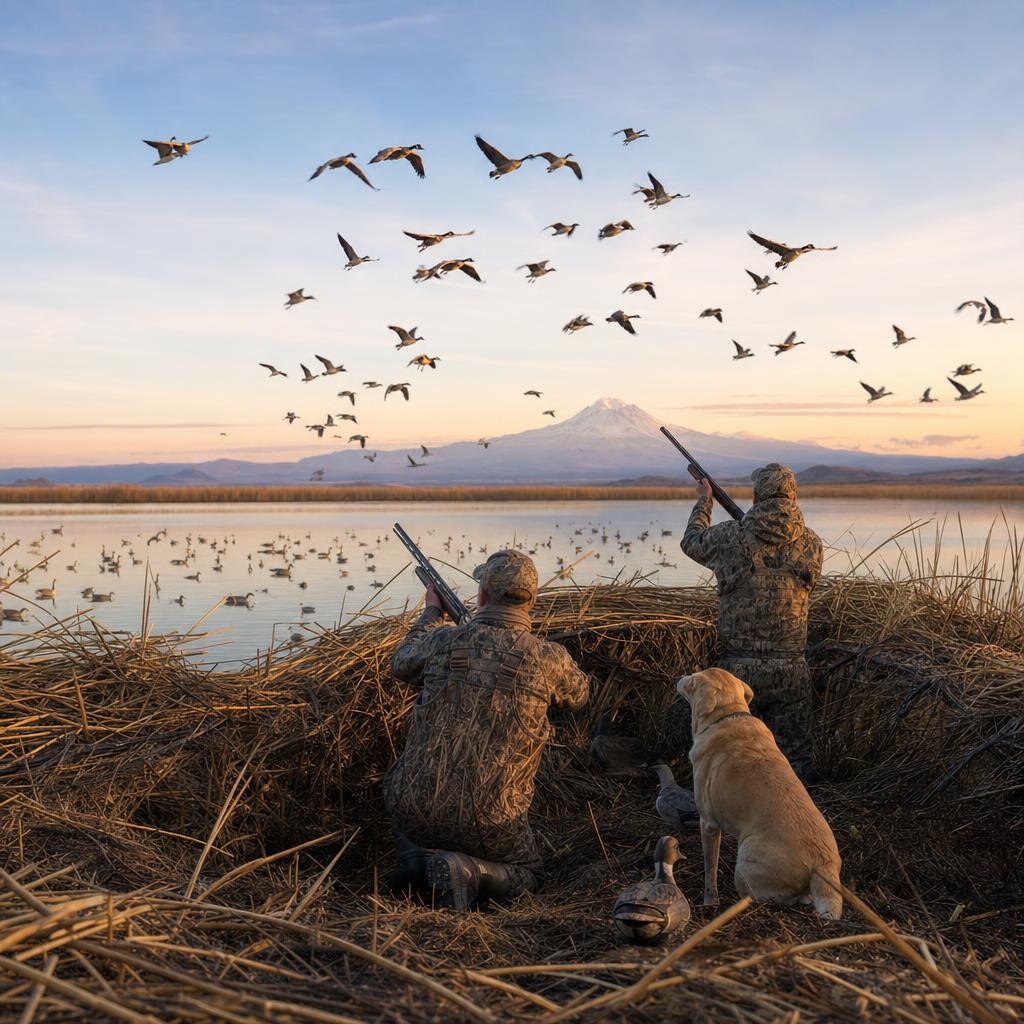
The Willamette Valley is one of the most productive agricultural valleys in the Pacific Northwest, and every October it fills up with Canada geese. Cackling Canadas, Western Canadas, and the occasional Taverner's goose drop into harvested grass seed fields, cornfields, and winter wheat on their southward migration — and for waterfowlers who do their scouting homework, it's some of the most action-packed field hunting west of the Cascades. Here's how to capitalize on it.
Understanding Willamette Valley Canada Goose Seasons
Oregon's goose seasons in the Willamette Valley are split between early and late seasons and vary by zone. The Willamette Valley Zone typically opens in October and runs through January, with bag limits and season dates set annually by ODFW based on population surveys. Check the current ODFW regulation booklet before you go — goose regulations change year to year based on continental population counts, and specifics matter. In October 2026, Cackling Canada Geese (the smaller, stubbier-billed subspecies) are often open to take when larger Western Canada subspecies have different rules. Know your subspecies identification cold before you pull the trigger.
Where the Birds Are: Field Scouting is Everything
Willamette Valley honkers live and die by field rotation. Geese are creatures of habit and will pound the same fields for days — until pressure pushes them, food runs out, or they simply move on. The best thing you can do a week before your hunt is drive county roads at dusk and watch where birds are roosting and feeding. Popular areas to scout include:
- The Tualatin Valley: Between Hillsboro and McMinnville. Grass seed fields and corn stubble hold large numbers of Cacklers and Western Canadas through November.
- Chehalem Valley and Ribbon Ridge: Smaller farming pockets south of Newberg with less hunting pressure than the Tualatin lowlands.
- Mid-Valley (Salem to Corvallis corridor): Open grass seed country, hay fields, and harvested row crops draw geese by the thousands. The Ankeny and Baskett Slough National Wildlife Refuges nearby serve as sanctuary roosts — birds flood out at first light to feed in surrounding private fields.
- Eugene Basin: Fern Ridge Reservoir and the surrounding farmland attract big flocks of Cacklers starting in late September and peaking through October.
On public land, Ankeny NWR Unit south of Salem has a public hunting area with designated blinds — check ODFW's website for permit and reservation requirements, as slots fill fast.
Landowner Permission: The First Obstacle
Most Willamette Valley goose hunting happens on private agricultural land. Getting permission is the single biggest barrier to a successful season. The best approach is showing up in person, off-season, and building a relationship. Bring your safety credentials, offer to help with field cleanup, and be upfront about what you're asking for. Many farmers are happy to let hunters chase geese — they do crop damage and make a mess — but they want to know who's walking their fields. A signed written permission letter keeps everyone protected and is a good habit regardless of legal requirement.
Knocking doors in October when you want to hunt tomorrow rarely works. The farmers who have great fields have already said yes or no to their regulars. Start your outreach in August for the best shot at October permission.
Layout Blinds and Decoy Spreads
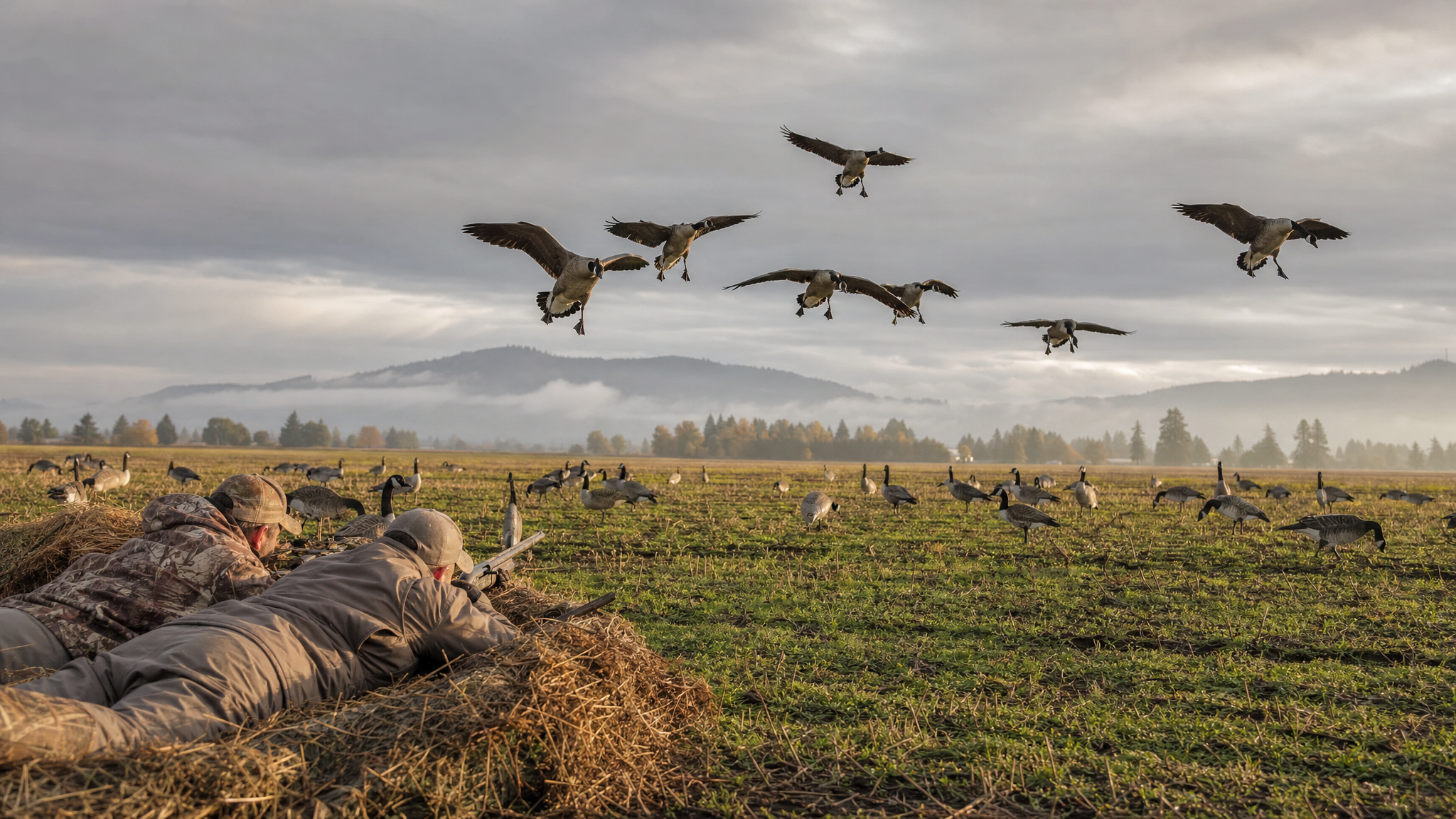
Field goose hunting in the Willamette Valley is layout blind hunting. Full-body goose decoys in realistic feeding, standing, and alert positions are the standard. A spread of 60 to 120 decoys is typical for field hunting; more isn't always better, but confidence in your spread matters. Key setup tips:
- Face your spread into the wind: Geese land into the wind, every time. Your kill hole — the open landing zone — goes downwind of your layout blinds, drawing birds over your position as they cup and drop in.
- Break up the straight-line look: Real geese don't stand in rows. Cluster decoys in family groups with gaps and variation in spacing.
- Add motion: Flapping-wing or rocker decoys at the upwind edge of your spread grab the attention of distant birds. In the flat light of an overcast October day in the valley, motion is your best visibility tool.
- Match the field: In green grass, use decoys with green body coloring (Cacklers). In corn stubble, the darker stubble pattern versions work better. Details that seem minor at home are significant at 200 yards when geese are deciding whether to commit.
Calling Canada Geese
Western Canada Geese and Cackling Geese have different vocalizations, and mixing up your calls for the wrong subspecies can flare birds. Western Canadas have the classic deep, resonant "aah-honk" you hear in every nature documentary. Cacklers — which dominate Willamette Valley October flights — have a higher-pitched, faster clucking and double-cluck call. Most experienced valley hunters carry both a low, traditional Canada call and a higher-pitched Cackler call.
The moaning or "murmur" call — a soft, contented feeding sound — is often more effective than aggressive calling when birds are already working your spread. Overcalling educated Willamette Valley geese is a real problem, especially later in the season. Watch the birds: feet down and wings cupped means shut up and let them come. Birds flaring or holding up at 200 yards means something is wrong — either the spread, the blind concealment, or the calling.
Shotgun and Ammo Selection
A 12-gauge with a 3-inch or 3.5-inch chamber is the standard for honkers. Over decoys with committed birds at 20–35 yards, a Modified choke with #2 or BB steel shot is plenty. Bismuth and tungsten loads in #2 or #4 give dense patterns at 40+ yards if you're reaching for passing birds. Don't go lighter than #2 steel on geese — they're big, heavily feathered birds and require penetration. Modified or Improved Modified chokes for steel, never Full (too much pressure).
The Willamette Valley's wet October weather is hard on guns. A semi-auto with an inertia or gas system designed for steel loads handles the damp conditions better than a cheap pump. Keep your action clean and slightly lubed — water, mud, and fine grass seed chaff are the enemies of reliable function in the field.
Regulations Check and Retrieval Dogs
Oregon requires a valid hunting license, a Federal Duck Stamp, and a state Upland/Waterfowl license for goose hunting. Non-toxic shot is federally mandated — no lead, no exceptions. Know your daily bag limit and possession limit before you start counting birds.
A retrieval dog makes every goose hunt better and more ethical. Crippled geese run remarkably well, and a good Lab or Chesapeake can save birds that would otherwise be lost in the tall grass edges that border most Willamette Valley fields. Labs are the go-to breed for most valley waterfowlers, and a steady, marked-retrieve-trained dog is worth its weight in goose breasts.
Final Notes
The Willamette Valley Canada goose season peaks in October and November and offers some of the highest-volume field shooting in the Pacific Northwest. The work is real — scouting every week, moving your spread as birds rotate fields, building landowner relationships — but when a hundred Cacklers drop their feet and glide silently into your spread on a gray October morning with the Cascades in the distance, it's hard to imagine being anywhere else. Put in the time, learn the birds, and this fishery will reward you for seasons to come.