When waterfowl hunters talk about North America's great flyway destinations, the Klamath Basin consistently earns a spot near the top. Straddling the Oregon-California border, this sprawling complex of national wildlife refuges — Tule Lake, Lower Klamath, Upper Klamath, Bear Valley, and Klamath Marsh — funnels millions of migratory birds through the Pacific Flyway each fall. For Oregonians willing to make the drive to Klamath County, the October opener is as close to world-class waterfowl hunting as you'll find on the West Coast.
Why the Klamath Basin in October
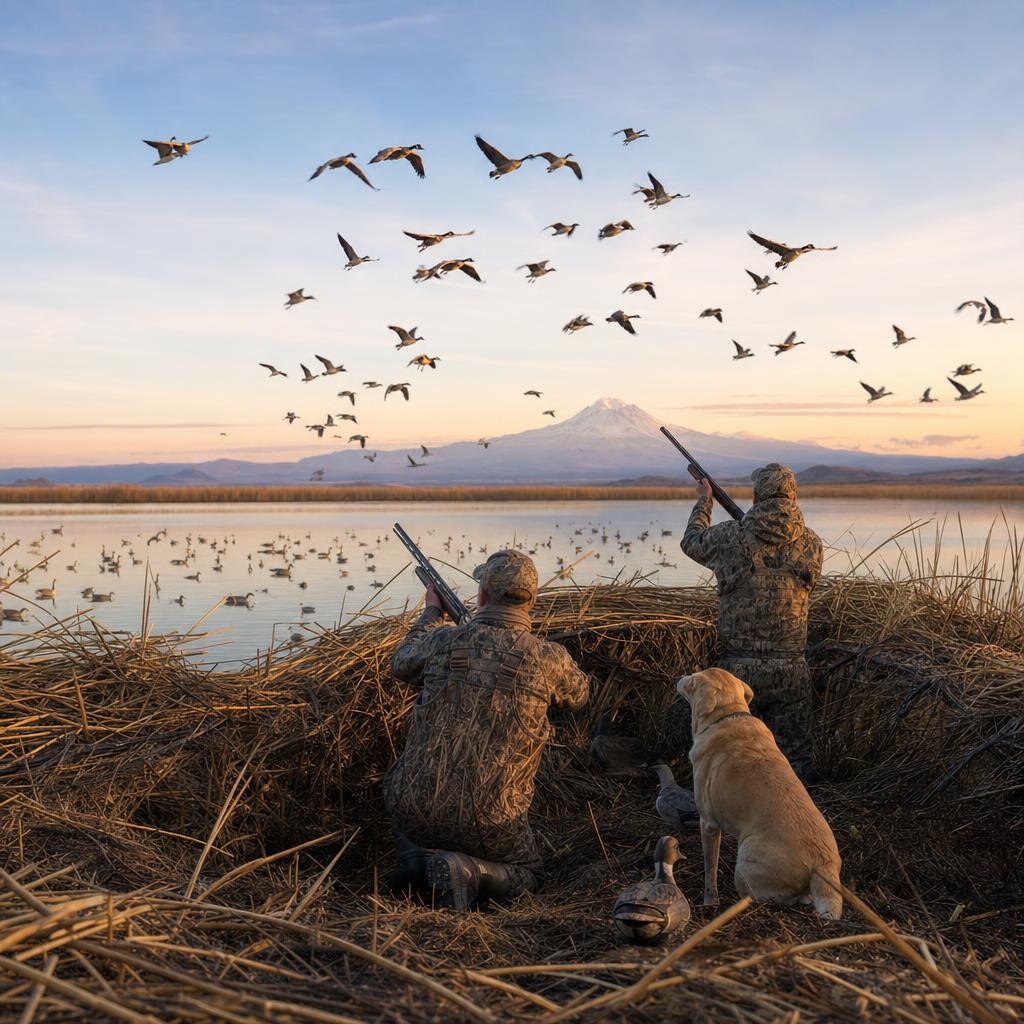
The Klamath Basin sits at the intersection of two major flyway corridors, and its combination of shallow marshes, grain fields, and open water makes it a natural stopover for birds moving south from Canadian and Alaskan breeding grounds. By mid-October, expect to see significant numbers of Canada geese (both cackling and greater), white-fronted geese (specklebellies), pintail, mallard, wigeon, teal, and canvasback. Peak numbers typically hit in late October through November, but October hunting pressure is lower and birds are less wary straight off the breeding grounds.
The basin's NWR units rotate hunt areas and operate on a draw or first-come basis depending on the unit. Check the U.S. Fish & Wildlife Service's Klamath Basin NWR Complex website for current season dates, access regulations, and any reservation requirements — these change annually.
Tule Lake NWR: The Centerpiece
Tule Lake is the flagship unit and arguably the most productive. Hunters can access designated blinds via a lottery-style daily draw at the refuge check station, typically starting well before legal shooting time. Arrive early — competition for prime blinds is real. The lake's shallow tule-fringed edges and open water cells create ideal conditions for both puddle ducks and divers.
Bring a full spread of decoys — 24 to 36 mallard and pintail decoys minimum, supplemented with 6 to 12 honkers if you're targeting geese. Motion decoys (spinning-wing or jerk-cord rigs) are legal on refuge units unless posted otherwise, and they make a tangible difference on calm-morning hunts.
Recommended Loads for Klamath Basin
- Ducks at decoys: 3-inch steel No. 2 or No. 3 shot — adequate for birds working close over a spread
- High-passing geese: 3½-inch steel BB or BBB, or bismuth/tungsten for tighter patterns
- Specklebellies (white-fronted geese): Same as Canadas — steel BB in 3 or 3½ inch
- Diver ducks (canvasback, redhead): 3-inch steel No. 2, modified choke
Lower Klamath NWR: Geese and Field Hunting
Lower Klamath, just south of the Oregon border in Siskiyou County, California, requires a California hunting license in addition to your federal duck stamp — a worthwhile extra if you're camping in the basin for multiple days. The unit's flooded grain fields and grain field edges hold massive numbers of Canada geese and specklebellies in peak migration. Field-hunting geese over a full-body decoy spread with a good caller can produce limits quickly when the birds are moving.
In Oregon proper, the Upper Klamath NWR marsh unit is accessible by boat only and holds exceptional numbers of mallard, wigeon, and teal in October. A flat-bottomed Jon boat or kayak lets you push into the tule channels and set a small spread in tight quarters — an effective tactic when birds are rafting in the open water cells.
Logistics: Making the Drive Count
Klamath Falls is your base of operations. The city offers full services — motels, sporting goods, and a Bi-Mart stocked with shells and decoys. From Portland, it's a 5.5-hour drive via US-97; from the Medford/Ashland area, allow 1.5 hours. Plan to arrive the evening before your hunt day to check refuge access boards and set up camp if you're staying at one of the basin's campgrounds.
A retrieving dog isn't optional in the Klamath marsh — it's practically mandatory. The tule beds and open water make cripple recovery extremely difficult without a capable Labrador, Chesapeake Bay Retriever, or other water dog. Birds that fall in the reeds without a dog are often lost.
Essential Gear Checklist
- Oregon resident/non-resident hunting license with HIP certification
- Federal duck stamp (required age 16+)
- Shotgun (3 or 3½-inch chamber) with non-toxic shot
- Full camo including face mask and gloves
- Waders (neoprene 5mm for October cold mornings)
- Decoy bag: 24+ duck decoys, 6–12 full-body or shell goose decoys
- Motion decoy (Mojo Teaser or similar)
- Duck call (Zink or Rich-N-Tone for mallards) and goose call (Tim Grounds or Grounds Call)
- Headlamp, hand warmers, thermos — Klamath mornings drop into the 20s in October
What to Expect: Bag Limits and Species
Oregon's Pacific Flyway duck limits typically allow 7 ducks per day with species restrictions (check ODFW regulations annually for current pintail and canvasback sublimits). Geese: dark geese (Canadas and cackling) are typically 3 per day with a season limit — white-fronted geese carry a separate daily limit. Snow geese typically don't arrive in significant numbers until November in the Klamath Basin.
Even on an average October morning, a two-person blind can reasonably expect 15 to 30 birds worked over the decoys, with a mix of species that keeps the hunting varied and exciting. On a great morning — overcast, slight breeze from the north, birds stacked up from a cold front — limits come fast.
Final Thoughts
The Klamath Basin is one of those places that reminds you why Pacific Flyway hunting has a reputation. The sheer number of birds, the variety of species, and the wild marshland backdrop make every hunt memorable — even when the birds don't cooperate perfectly. October gives you the basin before the heaviest pressure, a chance to catch early migrants, and the kind of mornings that become stories you'll tell for years.
Get your license, grab your dog, and point the truck toward Klamath Falls. This is what fall hunting in Oregon is supposed to look like.