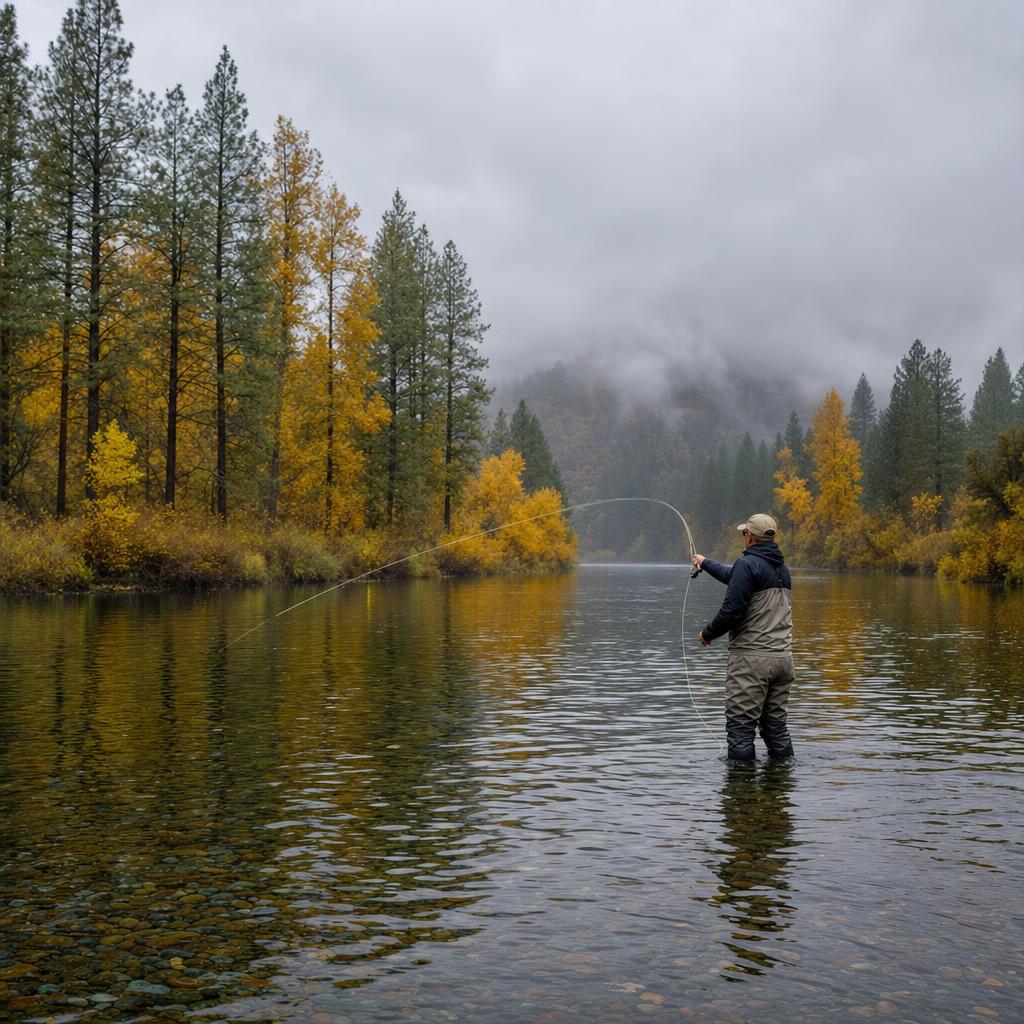
The Williamson River doesn't announce itself. It doesn't crash and roar like the Deschutes or carve dramatic basalt canyons like the Rogue. It simply emerges from the earth — cold, crystalline, and impossibly clear — and glides south through Klamath County toward Upper Klamath Lake with an unhurried confidence. In October, when Oregon's fishing crowds have thinned and the cottonwoods along the banks burn gold, the Williamson offers some of the best wild rainbow trout fishing in the entire Pacific Northwest.
Why October Is the Magic Month
The Williamson is a spring-fed river, which means it runs cold year-round — typically 48–54°F even in late summer. That cold, stable water temperature is what allows the river to grow truly outsized trout. By October, the summer algae blooms have faded, visibility is excellent, and the large brown and rainbow trout that sit deep and inactive through August have moved into aggressive pre-winter feeding mode.
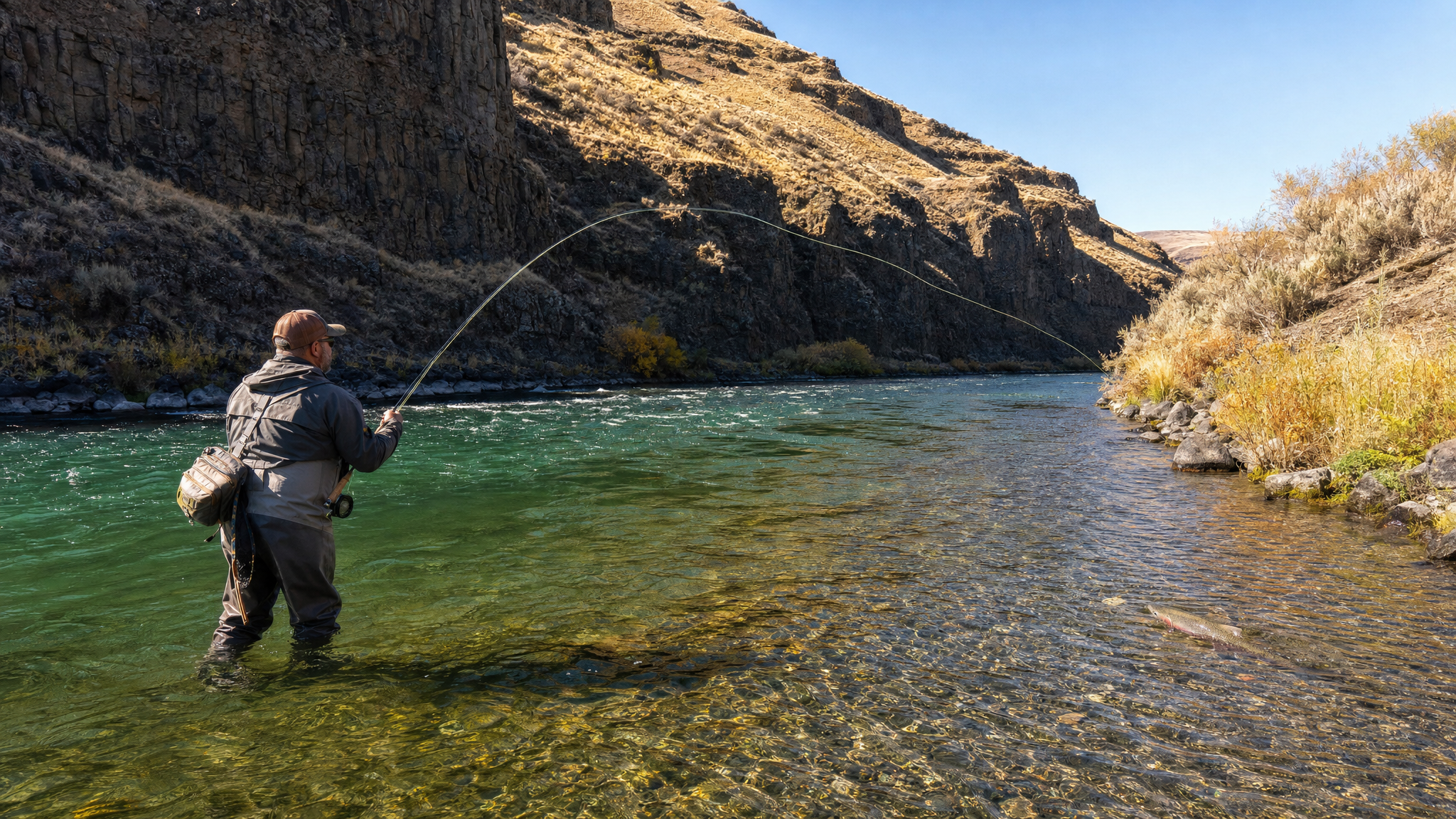
This is also when the river's famous mysis shrimp biomass — pumped up from Klamath Marsh through cold groundwater — reaches peak density. Big rainbows, some pushing 20 inches and beyond, stack in the slower inside bends and along undercut basalt ledges, gorging before winter. If you're going to hook a genuine trophy Williamson rainbow, October is your best window.
River Sections and Access Points
The Williamson divides neatly into two fisheries:
- Upper Williamson (Chiloquin to Klamath Marsh): Tighter, willow-choked banks and a meandering character. Best accessed via Hwy 97 north of Chiloquin. This section holds good numbers of 12–16 inch wild rainbows and the occasional brown trout pushing 18 inches.
- Lower Williamson (Chiloquin to the confluence with Spring Creek): This is the trophy section. The river widens here, flows deeper, and Spring Creek — one of Oregon's largest single-source springs — dumps 200+ cfs of 42°F water directly into the mainstem. The confluence pool and the half-mile below it are legendary for large rainbows.
Public access is excellent. The Collier Memorial State Park at the Spring Creek confluence offers parking and river access. The Chiloquin Riverside Park provides paved boat ramp access for drift anglers. The Williamson River Anglers' Preserve — a fee-based, catch-and-release section downstream — is worth every penny if you're targeting the biggest fish in the system.
Tactics That Work in October
Nymphing
Euro-nymphing and tight-line techniques shine on the Williamson's glassy runs. Mysis shrimp patterns in sizes 16–20 are the go-to: try Mercer's Tungsten Mysis, the Egan's Mysis, or any slim white/gray nymph with minimal flash. Fish them slow and deep — the big rainbows are holding on bottom, not chasing. Weight your rig appropriately; you need to feel the bottom without dragging. A good dropper combo is a #16 mysis above a #20 RS2 or Jujubee Midge.
Streamer Fishing
October triggers aggression. A 4- to 5-inch articulated streamer swung through the Spring Creek confluence or stripped through the deeper bends can draw vicious strikes from fish you'd never see any other way. Black and olive are reliable colors. The Drunk and Disorderly, Kelly Galloup-style Dungeons, and a simple Woolly Bugger in size 6 all produce. Use a sink-tip line or a 12-foot sink tip on a floating line and mend aggressively to keep the fly in the zone.
Dry Fly Windows
Don't overlook the evenings. October afternoons on the Williamson can produce legitimate BWO (Blue-Winged Olive) hatches, especially on overcast days — which describes most of October in Klamath County. PMD and Baetis patterns in sizes 18–22 on light tippet (6X fluorocarbon) will fool selective risers. The fish are sophisticated; keep your leader long and your presentation accurate.
Gear and Regulations
The Williamson is all artificial flies and lures, with a 2-fish limit on trout under 10 inches only — effectively a trophy-oriented catch-and-release fishery for the large fish. Check ODFW regulations for current specifics before your trip; special rules apply to various sections.
A 4- to 6-weight rod in the 9- to 10-foot range handles most situations. Bring a variety of line types: floating for drys and nymphs, a streamer-specific sink-tip for the deeper runs. Polarized glasses are non-negotiable — the water clarity lets you spot and stalk fish in ways impossible on most Oregon rivers.
Logistics: Getting There and Staying
Chiloquin is the hub for Williamson River fishing. It sits on Hwy 97 about 25 miles north of Klamath Falls. Services are limited — fuel up in Klamath Falls or Bend before heading out. The Williamson River Club and several riverside properties offer guided float and wade trips with experienced local guides who know every snag and holding lie on the system.
Cell service is spotty north of Chiloquin. Download offline maps and the ODFW fishing regulations PDF before you leave. The closest hospital is Sky Lakes Medical Center in Klamath Falls — carry a first aid kit and wade carefully on the slick basalt ledges.
Conservation Note
The Williamson drains the Klamath Basin — a watershed that has seen significant water management challenges over the past two decades. Wild rainbow trout in this system are native and irreplaceable. Handle every fish with care: use rubberized nets, minimize air exposure, and revive fish fully in current before release. These fish are what make the Williamson worth the drive.
If you've been sleeping on the Williamson River while chasing Deschutes steelhead and McKenzie trout, October 2026 is the year to fix that. Load up the drift boat or lace up your wading boots and head south — Klamath County is holding some of the finest fall rainbow trout fishing in the Pacific Northwest right now.