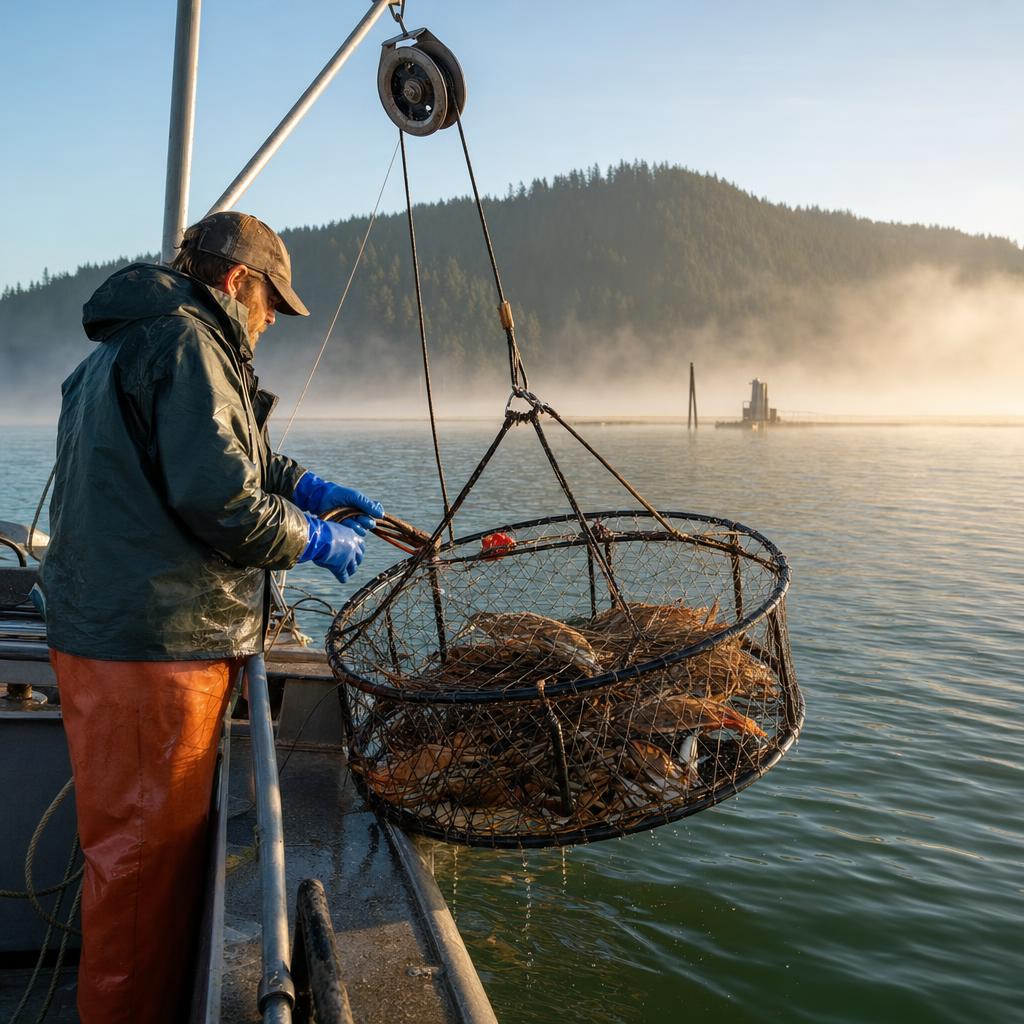
October is prime time for one of Oregon's most rewarding coastal pursuits: Dungeness crab in Tillamook Bay. As water temperatures drop into the upper 40s and early-season salmon crowds thin out, savvy Oregonians shift their attention to pots and rings. Tillamook Bay's sheltered estuary, brackish channels, and hard sand-and-mud bottom create ideal habitat for legal-sized Dungeness crabs, and October often produces some of the best catches of the year before winter storms make access difficult.
Why October Is Prime Crabbing Season on Tillamook Bay
Dungeness crabs follow a predictable seasonal rhythm tied to molting cycles and water temperature. By late September and into October, the post-molt crabs that shed their shells in summer have hardened up and are actively feeding to rebuild weight. That means you're pulling full, dense crabs rather than soft-shells with empty leg meat. Water clarity also improves in fall as river inflows taper down from summer, and crab activity peaks in cooler water. If you've been skunked on summer trips, October will change your mind about Tillamook Bay's crab population.
Regulations: What You Need to Know Before You Launch
Oregon Dungeness crab regulations are set by ODFW and can change based on stock assessments, so always verify current rules at myodfw.com before you go. As of recent seasons:
- Bay crabbing is open year-round in Tillamook Bay (ocean crabbing has seasonal restrictions)
- Minimum size: 5¾ inches measured across the widest point of the carapace
- Male crabs only — females must be returned immediately
- Limit: 12 Dungeness crab per person per day
- Gear: up to 5 traps or rings per person
- A valid Oregon shellfish license is required (combination license works)
Measure every crab before putting it in the cooler. The fines for undersized or female crabs are steep, and enforcement on Tillamook Bay is regular.
Where to Crab on Tillamook Bay
Tillamook Bay is one of the largest bays on the Oregon Coast, covering roughly 2,500 acres. Crab are found throughout, but a few areas consistently produce:
The Channel Edges
The main navigation channel running through the center of the bay drops to 15–20 feet at low tide. Crabs stage along the channel edges — not in the deepest water, but on the shoulder where the bottom transitions from soft mud to harder sand and shell hash. Set your pots in 8–15 feet of water on these edges and you'll find crab throughout the tide cycle.
Kilchis Point and the Upper Bay Flats
The upper bay near the mouths of the Kilchis and Wilson rivers gets overlooked by most crabbers, but in October when crab are actively foraging, the flats at 6–10 feet can be surprisingly productive. The freshwater influence is minimal this time of year, and the flat bottom is easy to work with standard ring nets from a kayak or small boat.
Bay City Area
The boat ramp at Bay City (off the Three Capes Scenic Drive / Bay Ocean Road area) puts you close to some of the bay's most consistent crabbing grounds. The wide channel bends near Bay City hold crab year-round, and October is no exception. Locals fish the outgoing tide here when current sweeps bait scent across the bottom.
South Jetty Hole
Near the bay mouth at Garibaldi, the deep water adjacent to the south jetty holds crab that stage before moving in and out with tidal exchange. This is also a good location when ocean swells close out the bar — you still get tidal movement and active crabs without the risk of bar crossing.
Gear Setup: Pots vs. Ring Nets
Both crab pots and ring nets are legal and effective in Tillamook Bay. Pots are more hands-off — set them and come back in an hour or two — but ring nets give you near-instant gratification and let you check your catch every 20–30 minutes. In a moving-current bay like Tillamook, rings do wash around in strong tidal flows, so use a 5–6 lb. lead weight and a float with enough scope to account for tide height changes.
- Bait: Razor clam necks are the gold standard, but frozen squid, oily fish carcasses (tuna frames, salmon heads), and chicken legs all work. Puncture bait bags to release more scent in current.
- Soak time: In a good location, 30–45 minutes per ring pull is plenty. For pots, 1–2 hours is typical. Avoid overnight soaks in summer (crabs escape and die), but October's cooler water makes 2–3 hour soaks reasonable.
- Depth: Target 8–16 feet for most Tillamook Bay crabbing. Deeper isn't always better — crabs actively forage in shallower water, especially on an incoming tide.
Tides and Timing
Tides matter more than any other factor for bay crabbing. The two-hour window around a moving tide — incoming or outgoing — is when Dungeness crabs are most active and feeding. Slack water at high or low tide tends to slow crabbing noticeably. Study the tide chart for Garibaldi (the reference station for Tillamook Bay) before your trip. An incoming tide starting around sunrise is a classic October setup that gets you on the water during the productive morning crab bite with good light for launching and navigating.
Boat Launch Access
Several public launch options exist around Tillamook Bay:
- Garibaldi Marina: Fee launch, close to the mouth and the jetty hole, moorage available
- Bay City: Free ramp off Three Capes Road, good access to mid-bay grounds
- Memaloose Point: Limited access but free; brings you close to the upper bay flats
On busy October weekends, launch early. The Bay City ramp can back up by 8 AM on a good-weather Saturday.
Cleaning and Cooking Your Catch
Fresh Dungeness crab is one of the Pacific Northwest's great pleasures. Live crabs can be cleaned dockside (legal in Oregon) or cooked whole. The simplest method: boil or steam whole crabs in salted water for 15–18 minutes depending on size, crack and enjoy with drawn butter and a cold Oregon Coast lager. If you want to stretch your catch, Dungeness crab cakes, crab melts, or a simple bay-style crab cioppino made with whatever else you caught that week will make the drive to the coast feel very much worth it.
October Tillamook Bay crabbing offers a slower, more meditative pace than the chaos of August salmon season — just you, the tidal current, and a cooler that fills up if you put in the time. It's one of the Oregon Coast's finest fall traditions.