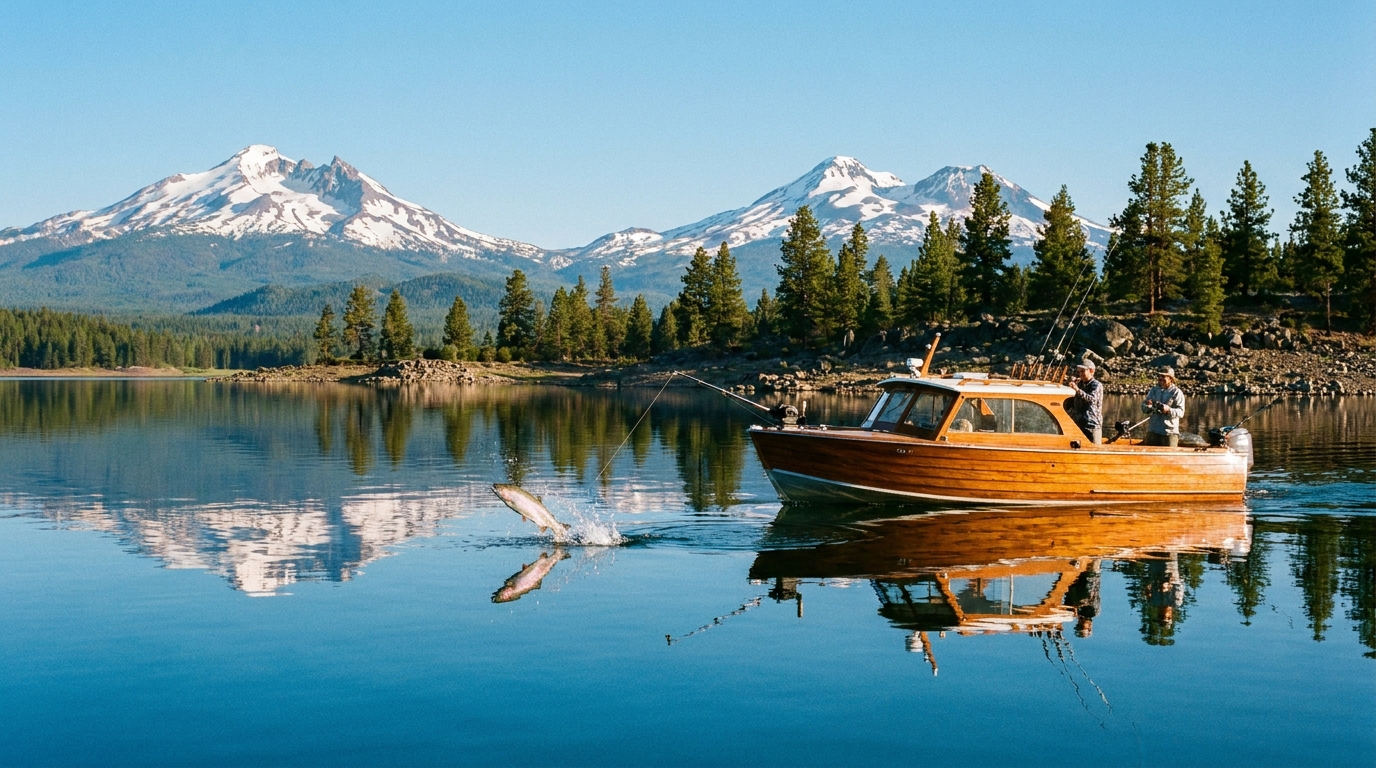
Ask most Oregon anglers where to find trophy rainbow trout and you'll hear the usual answers — the Deschutes, Crane Prairie, maybe the upper Williamson. Wickiup Reservoir, sitting at 4,350 feet in Klamath County just southwest of Sunriver, rarely enters the conversation. That's exactly why serious troll fishermen love it.
With nearly 10,000 surface acres at full pool, an abundance of kokanee as a forage base, and consistent depth structure, Wickiup produces heavy-bodied rainbows that regularly top 4 and 5 pounds. The fishing isn't always fast, but when it's on, it's some of the best stillwater troll fishing in the Oregon Cascades.
Understanding the Reservoir
Wickiup is a flood-control and irrigation reservoir on the upper Deschutes River. Water levels fluctuate significantly through the season — high in spring and drawn down progressively through summer and fall. Pay attention to the current pool elevation before you go; the Deschutes Irrigation District posts updates online and launch ramp access can vary.
The reservoir's primary forage base is kokanee salmon, which were introduced specifically to grow large rainbows. The strategy works. The rainbows cruise suspended in the water column, tracking kokanee schools, and that's exactly how you fish for them — by matching the depth and speed of those baitfish.
Gear and Rigging for Wickiup Trolling
Downriggers are the most consistent tool here. Set up with a 8.5- to 9-foot medium-action trolling rod, a line-counter reel spooled with 20-pound mono or 30-pound braid with a 20-pound fluorocarbon leader, and you're in the game.
- Flasher/fly combos: A 6- or 8-inch dodger with a UV-coated fly or squid trailer is a proven Wickiup setup. Green, chartreuse, and orange patterns produce well, especially early and late in the day.
- Spoons: Dick Nite, Kokanee King, and Brad's Killer Spoons in chrome, pink, or silver/blue imitate kokanee effectively. Run them 18–24 inches behind a small dodger or direct from the cannonball.
- Needle fish lures: Worden's Lures Needlefish in rainbow or fire tiger are consistent producers when fish are keying on small baitfish profiles.
Depth and Speed: The Critical Variables
Rainbows at Wickiup typically suspend between 15 and 35 feet, but that changes with water temperature and time of year. In late May and early June, fish are often shallower — 10 to 20 feet — as water temperatures haven't stratified fully yet. By mid-summer, expect to go deeper, sometimes down to 40 feet to find the thermocline.
Trolling speed is non-negotiable: 1.8 to 2.2 mph is the window. Too slow and your flashers won't rotate properly; too fast and you're just dragging hardware. Use a GPS to monitor speed over ground, not just engine throttle.
Best Access Points
Twin Lakes Resort on the north shore offers the most convenient launch and basic amenities. North Davis Creek Campground and Wickiup Butte on the east shore also provide ramp access. The western arm near the Deschutes River inlet is worth exploring early in the season when fresh water is pulling in fish.
Regulations and Limits
Wickiup falls under standard Oregon regulations for most of the reservoir. Check the current ODFW synopsis carefully — there are sometimes special rules in effect around the Deschutes inlet arm. The general bag limit is 5 trout per day, and all rainbow trout must be at least 8 inches. No bait restrictions on the main body.
Timing Your Trip
Late May through June is arguably the best window. Water temperatures are ideal, fish are active near the surface, and boat traffic is lighter than the peak summer push. July and August still fish well but require going deeper and getting on the water by 6 a.m. before afternoon winds develop. By September the drawdown is significant and some ramps may be unusable.
Wickiup doesn't get the Instagram attention of Crane Prairie or the reputation of the upper Deschutes, and that's exactly the point. Load the downriggers, study the depth finder, and spend a morning working the open water. You might find your new favorite reservoir fishery.