The mule deer archery tag is one of Oregon's most attainable archery big game opportunities, available over-the-counter for most units east of the Cascades. But attainable should not be confused with easy. Mule deer in open high desert and sagebrush country offer almost no natural cover to stalk behind, their eyes are designed to detect motion at a distance, and their wide-open habitat means deer can see you long before you see them. Closing the distance to archery range — typically 40 yards or less — demands patience, physical fitness, and a systematic approach to spot-and-stalk hunting.
Oregon's Best Archery Mule Deer Units
Steens Mountain and Harney Basin
The country surrounding Steens Mountain in Harney County is among the most spectacular mule deer habitat in Oregon. Big deer live here, particularly on the western escarpment and in the rimrock country north toward the Malheur National Wildlife Refuge. The BLM-managed terrain is vast and largely roadless — backpack hunters or those willing to run ATVs to base camp positions have a significant advantage over road-hunters. The Harney Basin unit is a general archery tag, running mid-August through September.
Malheur Unit
The Malheur unit in southeastern Oregon holds excellent mule deer numbers and draws less hunting pressure than areas closer to the Cascade corridor. Desert bucks here have a reputation for growing heavy, wide racks in the bitterbrush and mountain mahogany terrain. Water sources in late August can be productive early-morning ambush locations before thermals rise and deer move to shade.
Beatys Butte Unit
Remote, hot, and demanding — the Beatys Butte unit in Lake County is not for casual hunters. But for those willing to pack water, endure temperatures that can push 100 degrees in August, and cover ground on foot, it consistently produces close encounters with quality bucks. The unit requires complete self-sufficiency; the nearest services are in Lakeview, and cell service is nonexistent across most of the unit.
Reading Mule Deer in Open Country
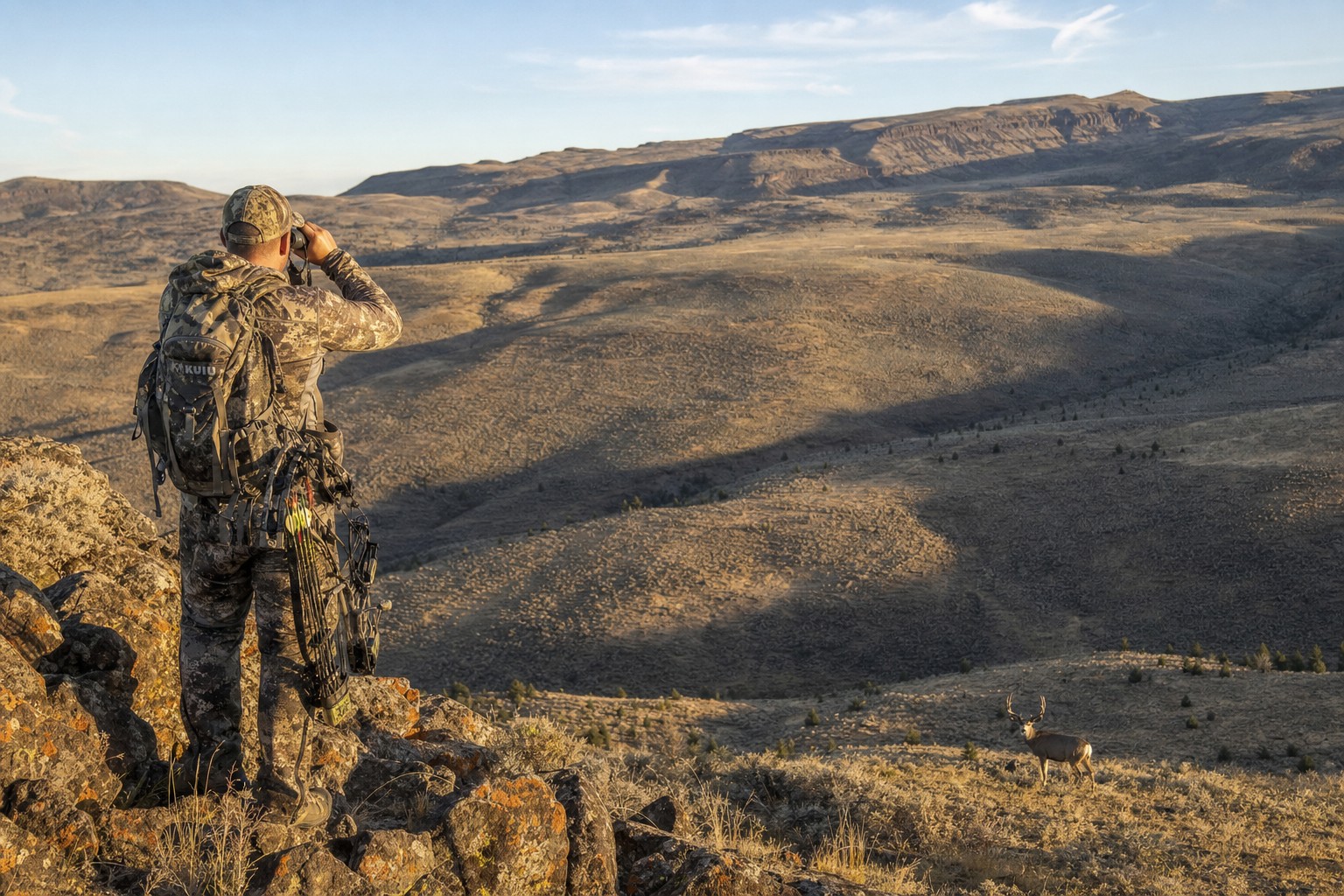
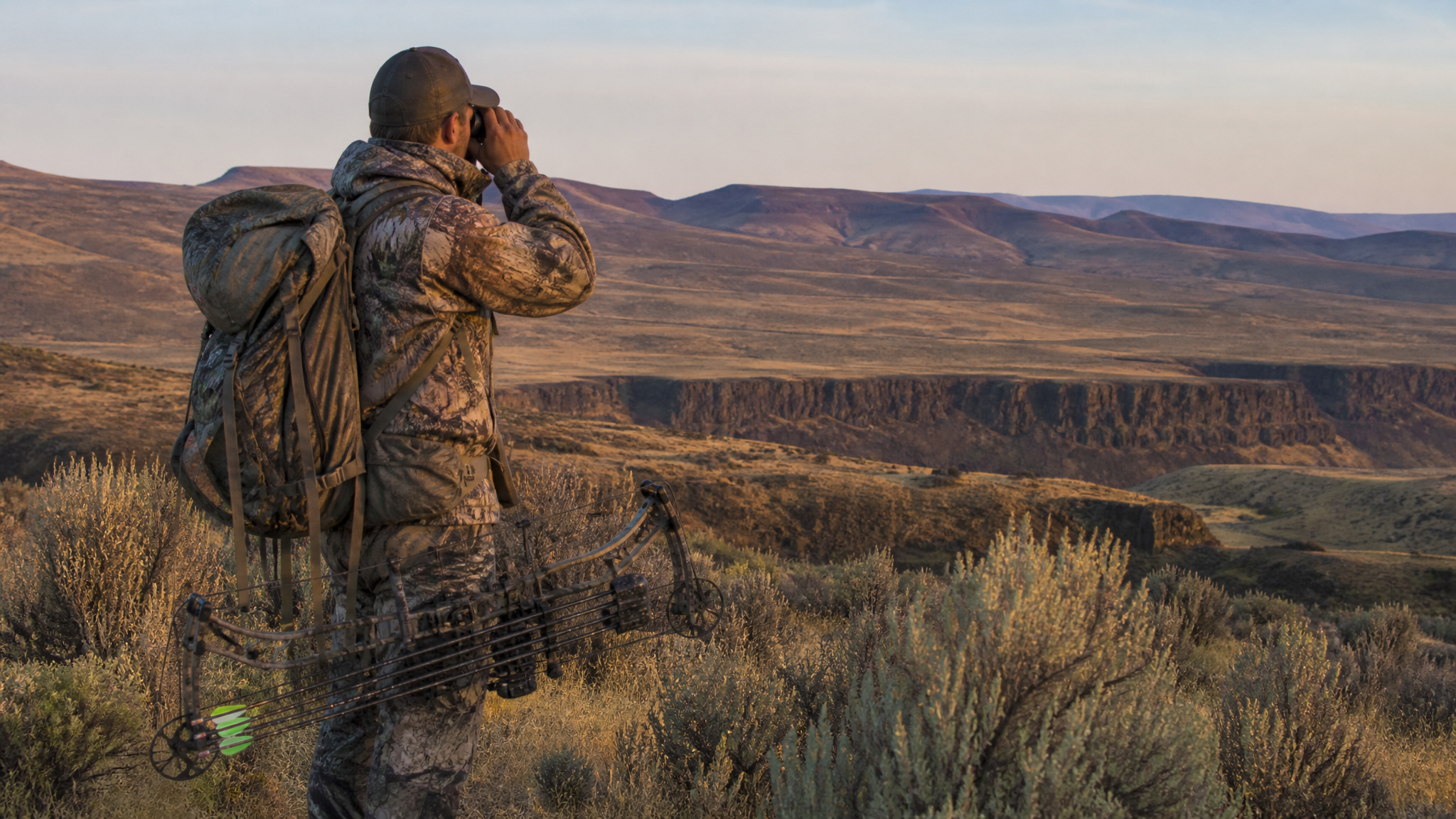
The foundation of spot-and-stalk archery hunting is optics. Invest in the best binoculars your budget allows — a 10x42 glass from Vortex Viper HD, Maven B.2, or Leupold BX-5 Santiam is a minimum starting point. Add a quality 15x to 20x spotting scope for confirming antler quality and bedded deer locations at distance. The goal is to locate deer at 400 to 1,000 yards before beginning a stalk, giving you time to analyze terrain and plan an approach.
Look for deer movement at first light and in the last 90 minutes before dark. In August's heat, mule deer are largely nocturnal in their feeding activity. During shooting light hours, focus on shaded north-facing slopes, canyon drainages with willows, and rimrock ledges where deer bed with shade cover and downwind security. Spot a bedded buck with a quality optic from a distance you cannot be detected, then make your move.
The Anatomy of a Successful Stalk
Wind Discipline
A mule deer's nose will end a stalk faster than any other factor. Before beginning any approach, identify the wind direction at ground level using a wind checker or milkweed seeds. Plan your entire stalk around keeping the wind in your face. Thermals complicate this: in canyon country, thermals blow uphill as the day warms and downhill as it cools, often shifting mid-stalk. Factor in the time of day when planning your route.
Route Planning
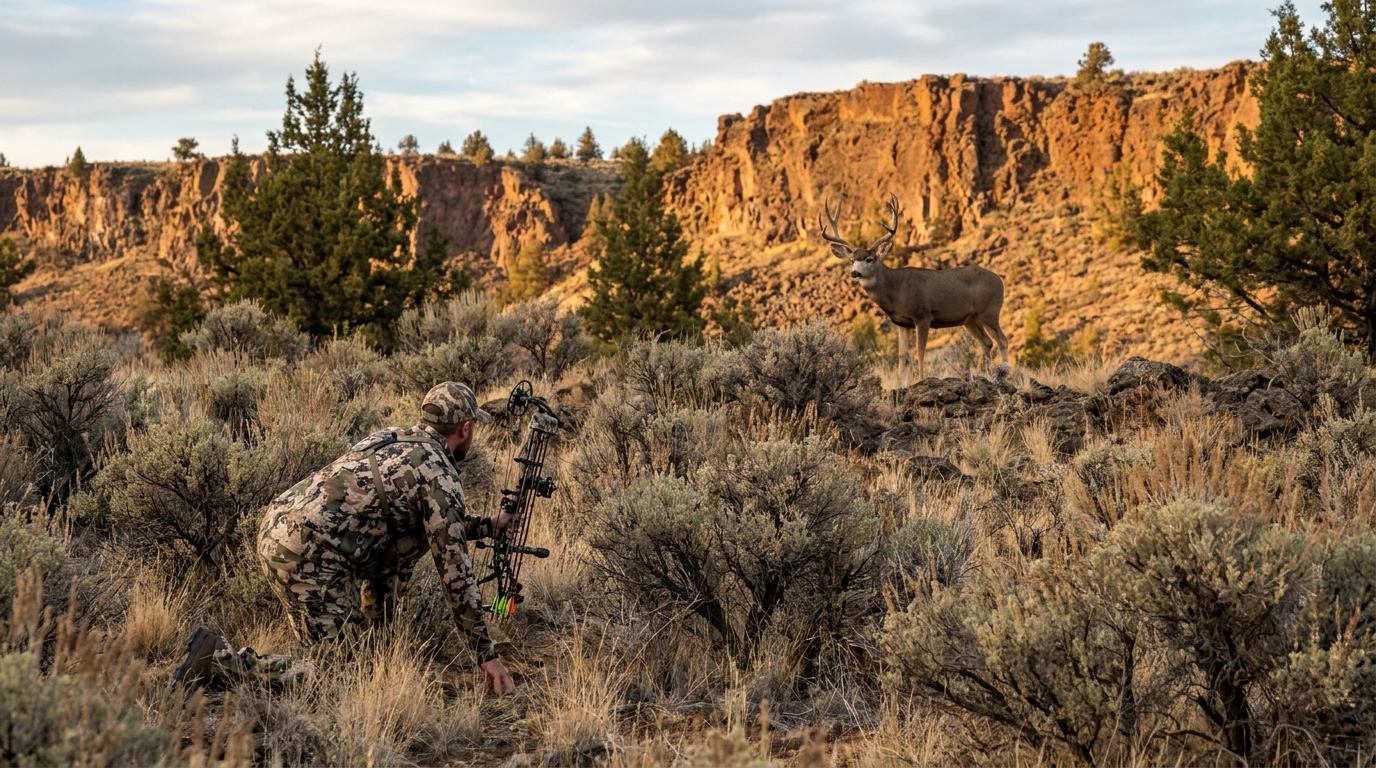
Use terrain aggressively. Drop into drainages to move below ridgelines. Use sagebrush and juniper for visual concealment where it exists. Move only when the deer's head is down or their vision is otherwise obscured. In truly open country with no cover, a crawling approach on the last 100 yards may be the only option. Wear knee pads — desert terrain at a crawl is brutal without them.
Closing the Final 60 Yards
This is where most stalks fail. Move at a pace that feels uncomfortably slow. Every footfall should be tested before weight is transferred — a snapped twig at 60 yards can blow a deer that did not detect you at 150. Wear quiet, soft-soled shoes or boots — hard-heeled hunting boots are a liability on the rocky desert floor. Rubber-soled camp shoes or specialized stalk boots are worth their price.
Shot Placement on Mule Deer
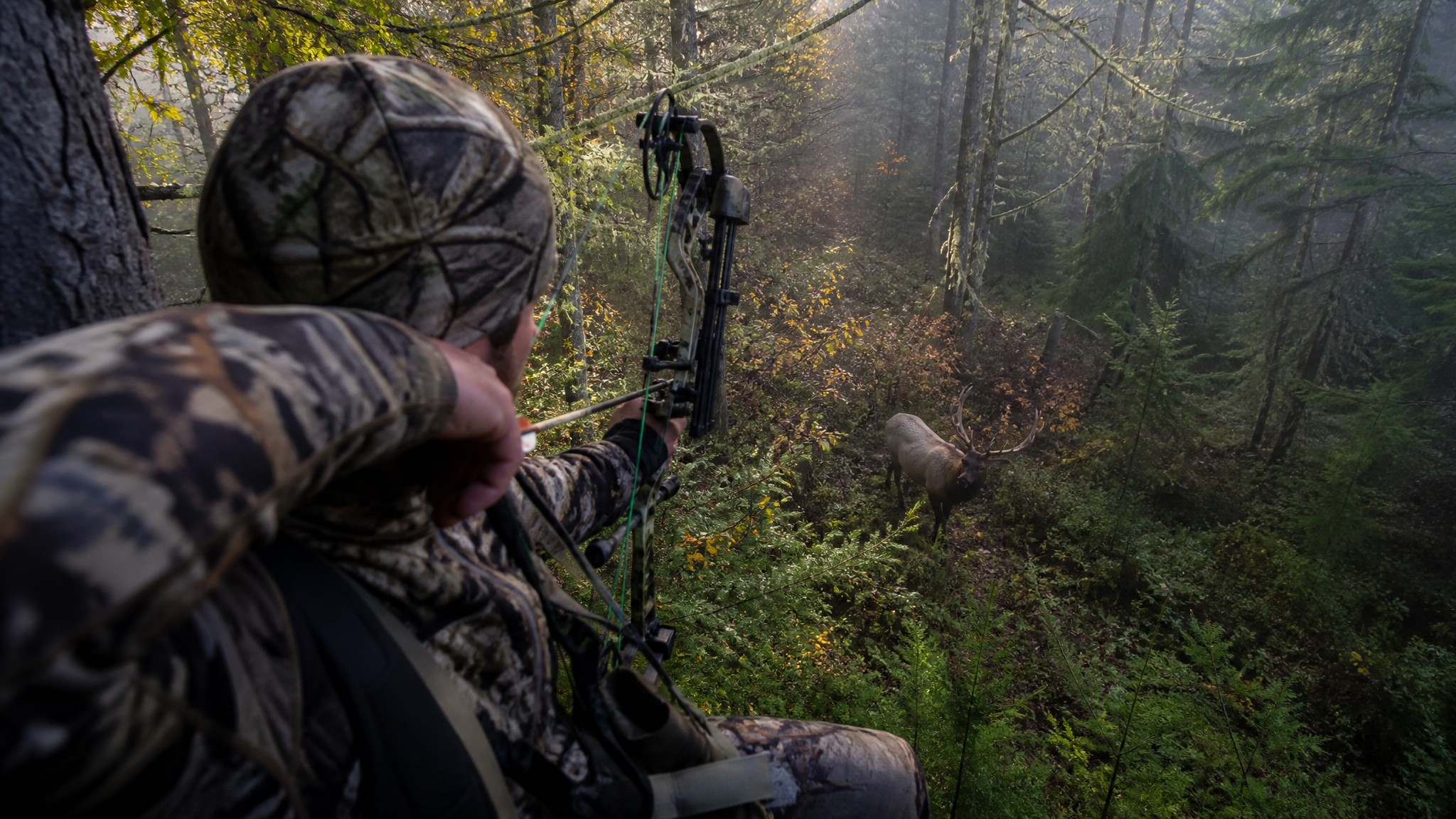
A broadside or slightly quartering-away shot through both lungs is the only ethical shot on a mule deer with archery equipment. Pass-through penetration on a double-lung hit drops deer within 100 yards the vast majority of the time. Avoid quartering-to shots, which require a perfectly placed arrow to reach vitals through the shoulder. Desert terrain can make blood trailing difficult in extreme heat — mark the last-seen location carefully and wait a minimum of 30 minutes before trailing a deer that ran from the shot.
Gear Considerations for Eastern Oregon in August
- Water: 4 to 6 liters per person per day in August's heat. A gravity filter like the Sawyer Squeeze extends your range near stock tanks and springs.
- Boots: Lightweight over insulated. Temperatures in eastern Oregon in August routinely hit the 90s.
- Camo: Desert patterns like KUIU Super Freaks or Sitka Open Country blend far better in sagebrush than standard timber patterns.
- Optics: Quality glass is more important than any other single piece of gear. Underspend on pack, clothing, or camp gear before you underspend on your binoculars.
- Pack: A quality daypack with a meat shelf is sufficient for day stalks. An ultralight backpack setup expands your range significantly on multi-day camps.
Final Thoughts
Spot-and-stalk archery mule deer hunting in Oregon's high desert is a challenging, physical, and deeply rewarding pursuit. Failed stalks outnumber successful shots by a wide margin — that's not failure, it's the nature of hunting deer in open country with archery equipment. Every stalk teaches you something about wind, terrain, and the behavior of animals living in demanding country. Stick with it, and the moment a desert buck walks into bow range after a hard-earned stalk is something that stays with you for the rest of your hunting life.