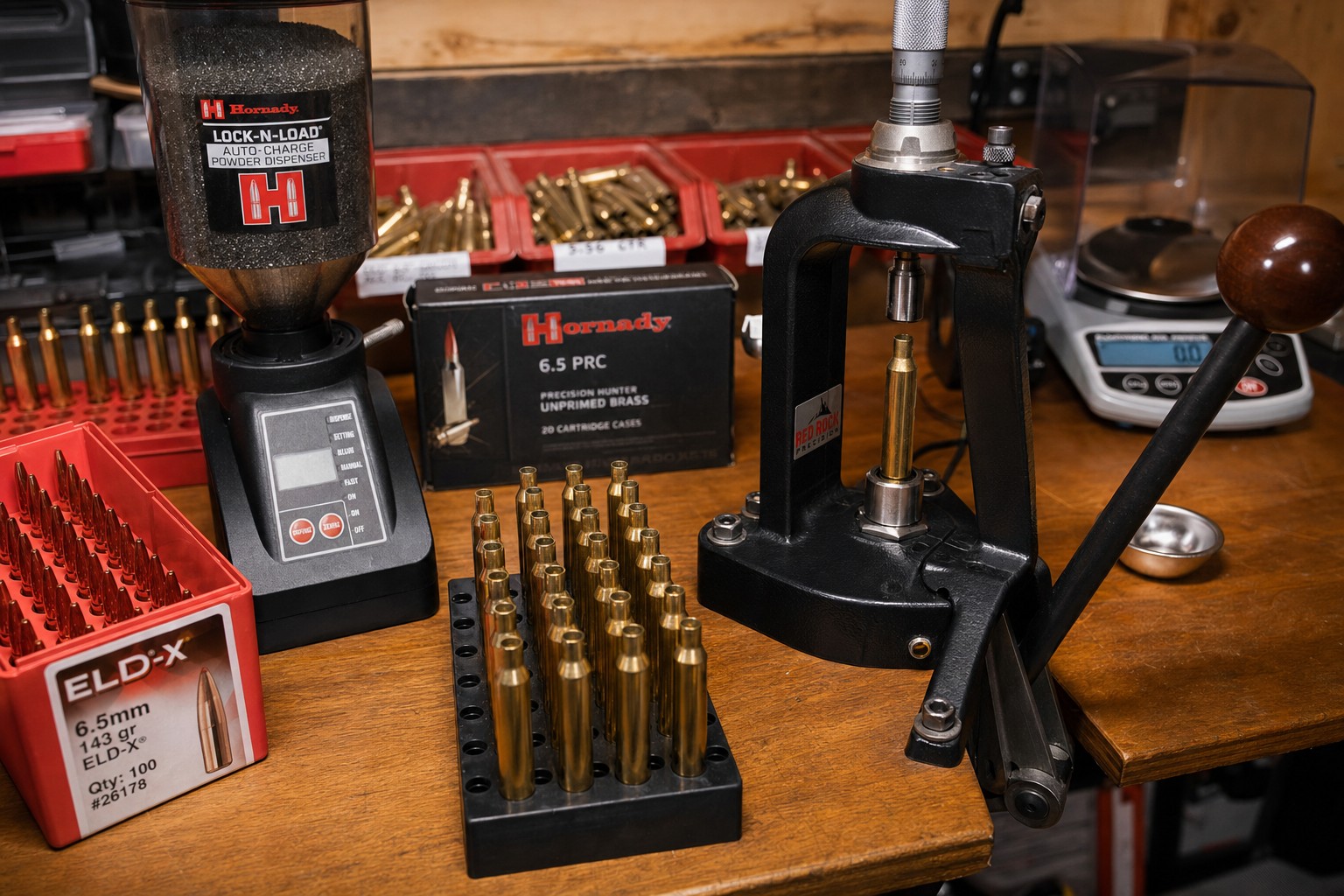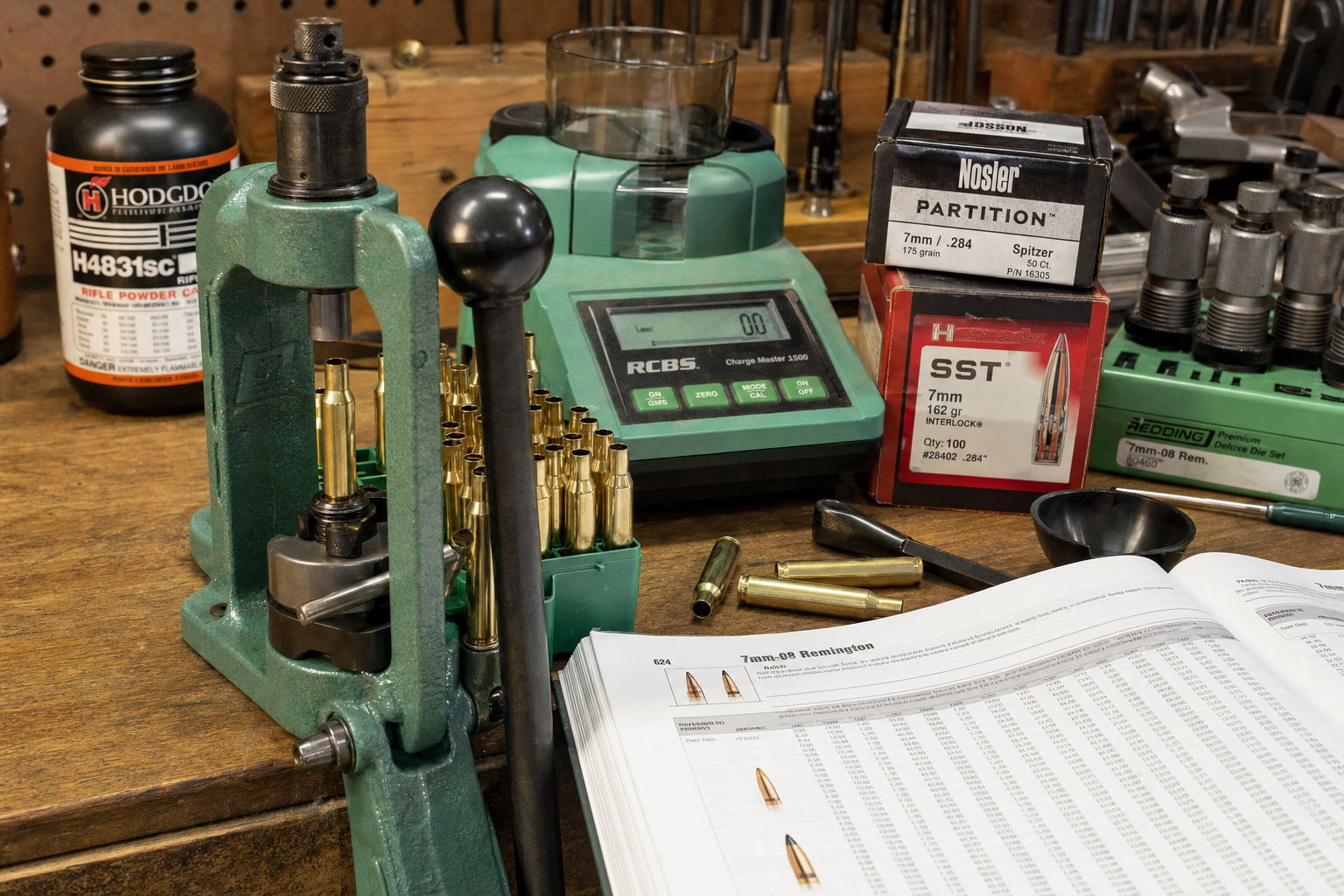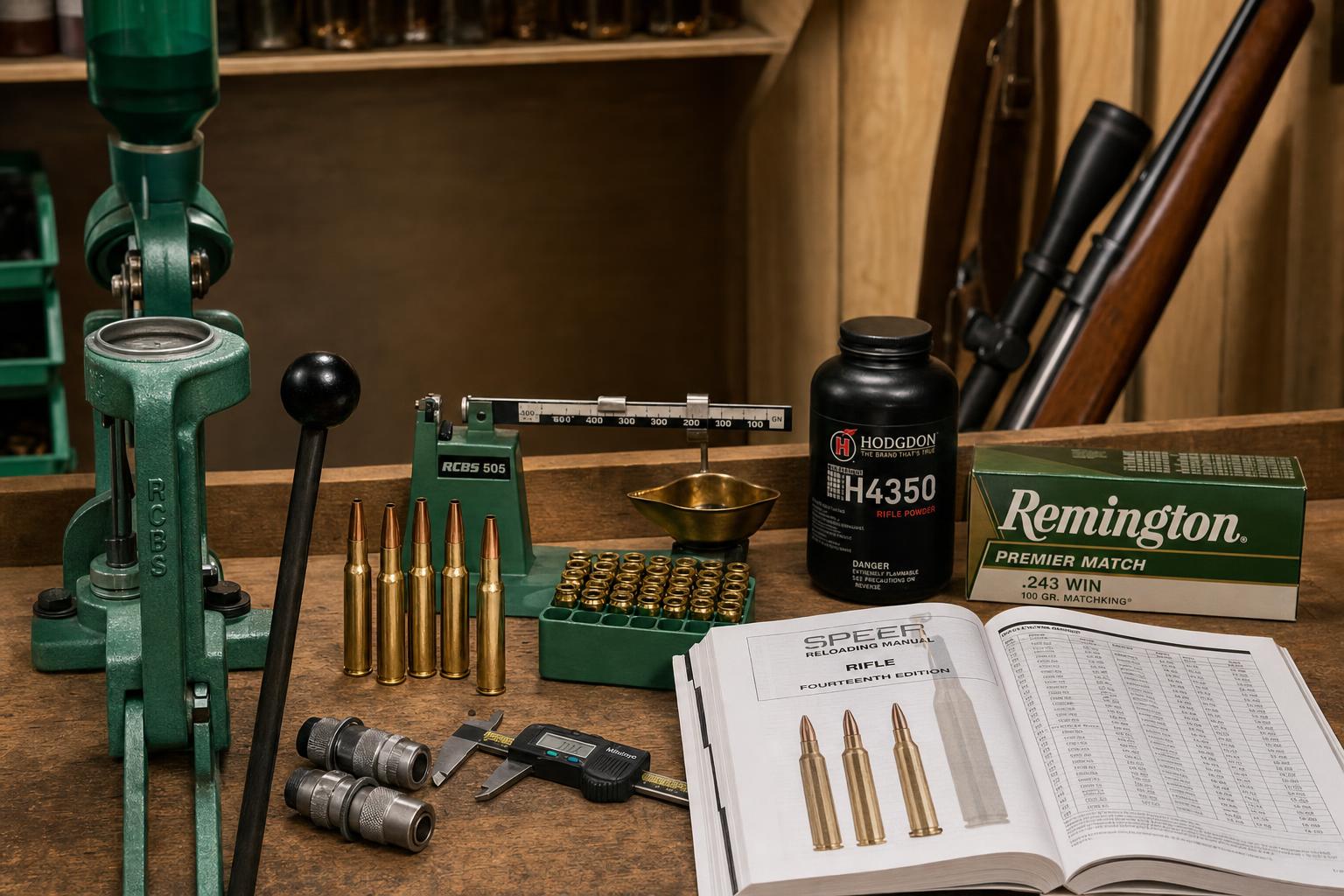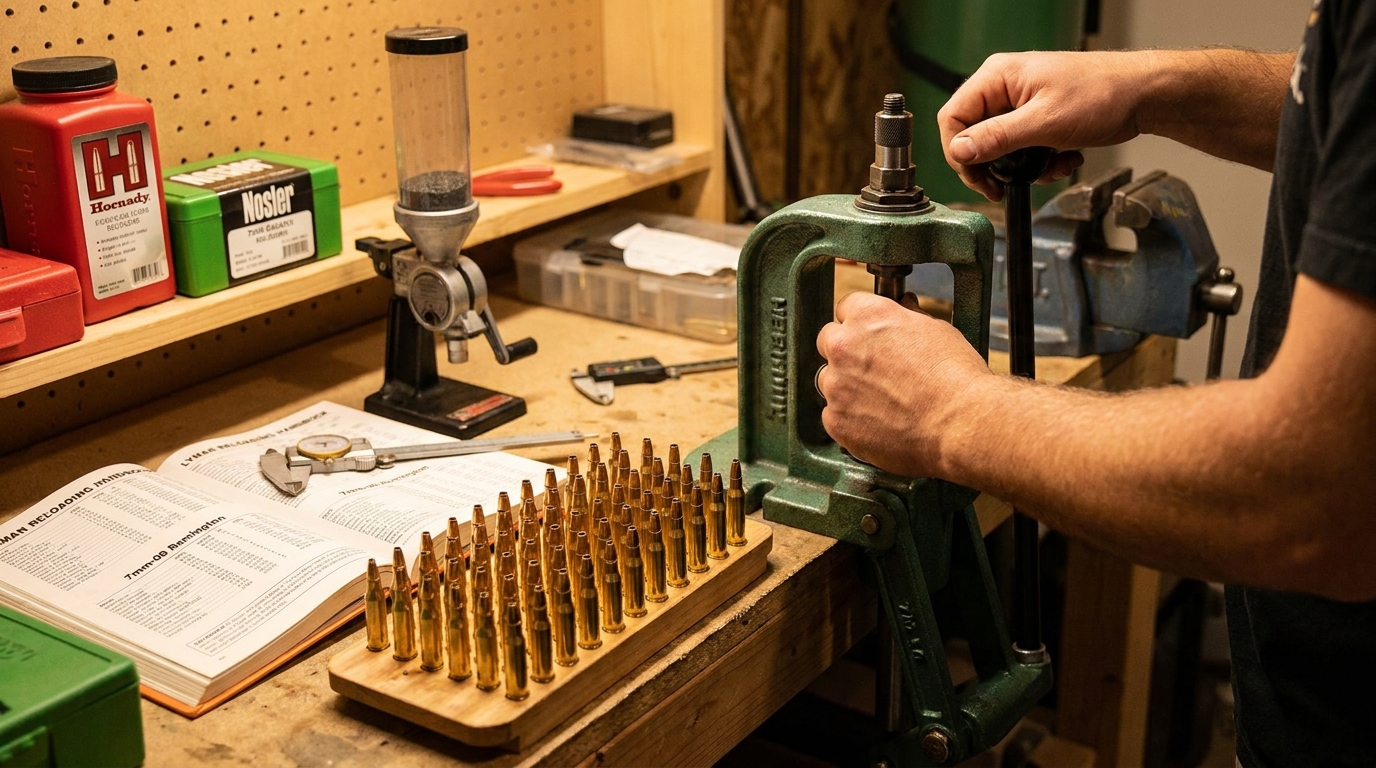
The 7mm-08 Remington doesn't get the social media attention that the 6.5 Creedmoor or the 6.5 PRC enjoy, but among experienced handloaders and deer hunters who prioritize efficiency and performance over trend-following, it remains one of the finest cartridges ever chambered in a bolt-action rifle. Introduced commercially in 1980, the 7mm-08 necks the .308 Winchester case down to accept .284-inch bullets, producing a package that is simultaneously easy to shoot, inherently accurate, and genuinely effective on deer-sized game at hunting distances.
Why the 7mm-08 Deserves Your Attention
The 7mm bullet diameter occupies a performance sweet spot between the .264s and the .308s. At 7mm, you have access to a wide range of high-BC projectiles — bullets like the Berger 168-grain VLD Hunting, the Sierra 150-grain GameKing, and the Hornady 162-grain ELD-X. In the 7mm-08 case, these bullets run at modest velocities that preserve barrel life, generate manageable recoil, and deliver excellent terminal performance on mule deer, whitetail, and black bear at practical hunting distances.
Brass and Case Preparation
7mm-08 brass is available from all major manufacturers. Lapua makes the finest brass currently on the market, with exceptional case weight consistency and annealing quality — worth the premium if you're loading for accuracy. Hornady, Federal, and Nosler all produce good-quality brass for hunting applications. Remington brass is serviceable but typically requires more sorting to achieve uniform case weights.
Trim to the SAAMI trim length of 2.025 inches after sizing. A consistent case length is especially important in the 7mm-08 because the small case volume means that crimp interference and bullet seating depth variations have a more pronounced effect on pressure and accuracy than in larger-capacity cartridges. Deburr and chamfer the case mouth, and primer pocket uniforming will improve primer seating consistency in premium brass.
Powder Selection
The 7mm-08's case capacity and bore diameter create a narrow optimal powder burn-rate range. The best powders fall in the medium-burn-rate zone occupied by IMR 4064, H4350, Varget, and Reloder 15.
H4350
Hodgdon H4350 is the most popular 7mm-08 powder for good reason. It meters consistently, is temperature-stable due to the Extreme series formulation, and produces excellent velocities with bullets in the 140- to 162-grain class. Starting loads for a 140-grain AccuBond with H4350 are typically around 38.0 grains, with max loads approaching 42.0 grains. Work up carefully in your specific rifle — pressure signs come on quickly near maximum with this combination.
Varget
Hodgdon Varget produces slightly lower velocity than H4350 in the 7mm-08 but is exceptionally accurate in many rifles with mid-weight bullets. It's a strong choice for 120- to 140-grain bullet loads and tends to produce tight extreme spreads — ES under 10 fps is achievable with careful load development. Starting loads with a 139-grain SST run around 37.5 grains.
Reloder 15
Alliant Reloder 15 works well with lighter 7mm bullets in the 100- to 140-grain range. It's less temperature-stable than H4350 but produces excellent accuracy and slightly higher velocities in shorter barrels. Worth trying if your primary hunting area experiences extreme temperature swings between morning and afternoon.
Bullet Selection for Oregon Hunting
Hornady 139-grain SST
The SST is an excellent all-around deer bullet for 7mm-08. It's affordable, widely available, and produces reliable expansion on broadside deer shots at any reasonable hunting distance. For Eastern Oregon mule deer in open terrain where shots can stretch to 300 yards, the SST retains enough velocity for reliable expansion and does not over-penetrate on medium-sized deer.
Nosler 140-grain AccuBond
The AccuBond bonded core construction makes it the better choice for black bear or larger deer where deeper penetration is desirable. The bonded jacket prevents premature expansion, ensuring the bullet holds together on shoulder shots. For hunters who want a single load that works on deer, bear, and potentially elk, the 140-grain AccuBond in 7mm-08 is a hard recommendation to argue against.
Berger 168-grain VLD Hunting
The Berger 168 VLD pushes the 7mm-08 to its ballistic ceiling — velocity runs lower than with the 140s, but the BC of .617 gives it excellent long-range trajectory and wind resistance. Seating depth is critical with VLDs; experiment with jumping the bullet 0.015 to 0.030 inches off the lands for best accuracy. This is a match-grade hunting load for dedicated accuracy shooters.
Sample Load Data
- 139-grain Hornady SST / Varget: 37.5 gr start / 40.5 gr max (~2,650–2,830 fps, 22" barrel)
- 140-grain Nosler AccuBond / H4350: 38.0 gr start / 42.0 gr max (~2,680–2,870 fps, 22" barrel)
- 168-grain Berger VLD Hunting / H4350: 35.0 gr start / 38.5 gr max (~2,480–2,650 fps, 22" barrel)
Always start at minimum load data and work up in 0.5-grain increments, watching for pressure signs. Consult current published data from powder and bullet manufacturers before loading.
Accuracy Expectations
The 7mm-08 is one of the most inherently accurate cartridges in production. A quality bolt-action rifle — Tikka T3x, Ruger American, or Savage 110 — will routinely group under 1 MOA with a well-developed load. Half-MOA groups are achievable with premium components and a quality barrel. For Oregon's deer seasons, where shot distances rarely exceed 400 yards on public land, the 7mm-08 with a 140-grain AccuBond loaded to 2,850 fps is simply more rifle than you'll ever need.
Final Thoughts
The 7mm-08 Remington rewards handloaders with excellent accuracy, mild recoil, and real versatility across bullet weights. It's an outstanding choice for deer and bear in Oregon's varied terrain — equally at home in the heavy timber of the Coast Range and the open draws of the high desert. If you've overlooked it in favor of more fashionable cartridges, give it a second look. The old ones got popular for a reason.