Sauvie Island sits at the confluence of the Columbia and Willamette rivers just 10 miles northwest of downtown Portland — and every October, it transforms into one of the most productive public waterfowl hunting destinations in the Pacific Northwest. The Oregon Department of Fish and Wildlife manages roughly 12,000 acres of the island as the Sauvie Island Wildlife Area, with dedicated hunting zones that draw mallards, wigeon, teal, pintail, and diving ducks in numbers that can make a western Oregon hunter forget what a slow morning feels like.
Why Sauvie Island Holds So Many Ducks
The island's geography does most of the heavy lifting. The Columbia Slough system, the seasonal lakes (Sturgeon Lake alone covers 3,300 acres when full), and the managed wetland units create an interlocking network of habitat that attracts birds migrating down the Pacific Flyway. When cold fronts push through British Columbia and Washington in October, ducks stage on Sauvie before continuing south — and a lot of them decide to stay. Add a grain-heavy agricultural landscape on the island's northern end and you have a classic feed-and-loaf pattern that's exploitable by hunters willing to read the water.
Hunt Zones and Access
The wildlife area is divided into several hunting units. The Oak Island Unit and the Coon Point area are among the most popular for walk-in access, while the Sturgeon Lake dike system offers long walks that filter out pressure the closer you get to the lake's western end. A Wildlife Area Parking Permit ($22 for Oregon residents) is required for all vehicles parked on the wildlife area and must be purchased before you arrive — they're available online through ODFW and at local license agents.
- Oak Island Unit: Best for early-season teal and resident mallards; walk in from the Oak Island Road parking area
- Sturgeon Lake Dike: A 2-3 mile hike puts you on productive open-water points away from crowds
- Coon Point: Good pintail and wigeon numbers when the Columbia is running high and pushing birds into flooded fields
- Unit B (Bernert Road): Flooded agricultural fields draw mixed bags of puddlers when farmers flood their grain stubble
Oregon Duck Season Dates and Limits
For 2026, Oregon's general duck season opens October 10th and runs through January 25th in Zone 1, which includes Sauvie Island. The daily bag limit is 7 ducks with species-specific restrictions — 2 pintail, 1 canvasback, and the usual USFWS framework restrictions apply. Check the current Oregon Migratory Bird Regulations synopsis before every trip because limits and species restrictions can shift year to year. Hunting hours begin 30 minutes before sunrise and end at sunset.
Decoy Spreads for Sauvie's Mixed Bag
Sauvie Island hunters typically encounter mallards, wigeon, teal, pintail, and a surprising number of diving ducks — particularly scaup and canvasback — on the sloughs closer to the Columbia. A versatile spread works better here than a specialized one.
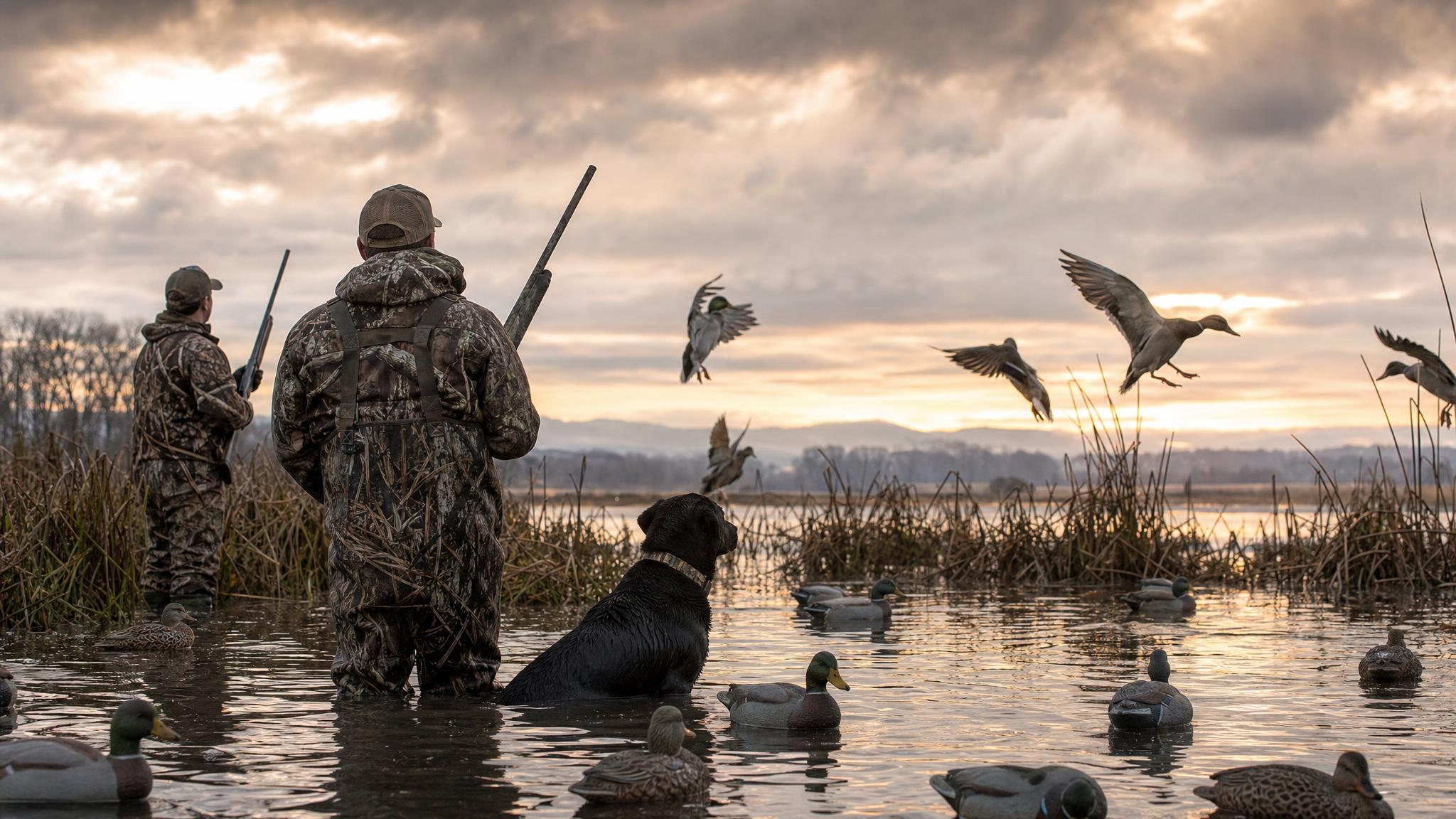
- Puddler spread: 18-24 mallard decoys in a J or horseshoe with a wigeon and pintail pair mixed in; leave a landing hole in the middle
- Mixed spread for open water: Add a dozen diver decoys (scaup or bluebill) off to one side to pull birds that are moving over open water
- Motion decoys: A Mojo or spinning-wing decoy draws birds on bluebird days when ducks are high and skeptical; kill it as birds commit inside 40 yards
- Line length: Keep decoy lines short — 12 to 18 inches — in the shallow sloughs to prevent tangling in current
Calling on Sauvie Island
Sauvie Island ducks see pressure from opening day forward, but calling still works — it just needs to be honest. Early season birds respond well to an aggressive 5-to-7-note hail call followed by a feeding chuckle. By mid-October when migrants start moving in earnest, back off the volume and lean on soft quacks and the feeding chuckle. Wigeon don't respond to mallard calls — use a wigeon whistle (three-note whee-whee-whew) if you want those birds to commit rather than flare at the last second.
Gear Considerations for Sauvie's Conditions
The Columbia River lowlands in October are wet, often foggy, and cold by midmorning when the marine layer burns off and wind picks up. Chest waders are essentially mandatory — neoprene 4mm or 5mm if you run cold, breathable with heavy base layers for the walking-intensive spots. Steel shot in 3-inch 12-gauge shells handles the mixed bag: BB or BBB for high ducks over open water, No. 2 or No. 3 for close-working puddlers in the timber and sloughs. Non-toxic shot is required on the entire wildlife area, no exceptions.
Dogs and Retrieves on Sauvie Island
A trained retriever is worth its weight in decoys on Sauvie Island. The slough systems have current, the cattail margins are thick, and a bird that falls into the reeds without a dog is almost certainly a lost bird. Labs and Chesapeakes that can handle a hard water retrieve in 45-degree water are the standard. If you're hunting without a dog, plan your spread placement so downed birds fall in open water where you can retrieve them with a decoy wand or boat paddle.
Tips for Beat-Down Opening Weekend
- Get there by 3:30-4:00 AM — parking lots fill fast and walking to your spot in the dark takes time
- Monday through Wednesday produces better shooting after the weekend pressure dissipates
- Hunt the edges of Sturgeon Lake during a southeast wind — birds work the protected lee side
- Scout from the road the afternoon before — spotting birds loafing tells you more than any app
- If your spot gets crowded, push deeper into the dike system; most hunters stop at the first good-looking water
Sauvie Island isn't a secret, but it's big enough to absorb pressure and still produce birds for hunters willing to put in the legwork. Whether you're setting up on Sturgeon Lake for a mixed puddler-diver spread or working the sloughs for mallards and wigeon, the October opener on Sauvie is one of the best public-land waterfowl opportunities in Oregon. Get your parking permit, check the regs, and be on the water before first light.