The .338 Lapua Magnum was born on the battlefield — designed as a long-range sniper round capable of engaging targets beyond 1,500 meters. But somewhere along the way, hunters discovered what military snipers already knew: this cartridge hits hard, bucks wind like nothing else in its class, and can be reloaded to exceptional accuracy. If you hunt open country — Eastern Oregon's high desert, Idaho's river breaks, the Alaska Range — the .338 Lapua is a serious tool worth the reloading investment.
Case Basics and Brass Selection
The .338 Lapua uses a large, rebated-rim case measuring 2.724 inches. It runs at maximum average pressures around 60,000 PSI, so brass quality and case preparation matter more here than with milder cartridges. Lapua brass is the gold standard — it is thicker, more consistent in neck tension, and lasts for far more firings than competing brands. Nosler and Peterson also make quality .338 Lapua brass worth considering.
Full-length resize on every firing unless you're shooting a single rifle and want to neck-size only for maximum case life. Trim to 2.724 inches and deburr case mouths. Primer pockets should be uniformed on fresh brass — the .338 Lapua uses large rifle magnum primers, and consistent pocket depth pays dividends in ES and SD numbers.
Primers
Large rifle magnum primers are mandatory for reliable ignition with the slow-burning powders this cartridge requires. Federal 215M (Gold Medal Match) and CCI BR-2 are top choices for accuracy work. Remington 9.5M performs well at a lower price point. Seat primers firmly to the bottom of the pocket — a primer that rocks or tips even slightly will cost you consistency.
Powder Selection
The .338 Lapua's large case volume demands slow-burning, high-energy powders to achieve proper velocity without spiking pressure. The following are the most proven options for hunting loads:
- Hodgdon H1000: The most popular powder for this cartridge. Metered well, fills the case appropriately, and produces excellent velocity with 250- to 300-grain bullets. Start at 88.0 grains and work up carefully toward 93.0 grains with 250-grain bullets — never exceed published maximums.
- Retumbo: Slightly slower than H1000, Retumbo is an excellent choice for the heaviest bullets (285- to 300-grain). Gives a slight velocity edge in some rifles with 300-grain projectiles.
- Norma MRP: A favorite among European precision shooters, MRP meters exceptionally well and produces consistent results across temperature ranges — valuable for hunting loads that may be fired in cold mountain mornings.
- Hodgdon US869: Dense, slow-burning, and well-suited for compressed loads in the large Lapua case. Less common but worth a spot on the test bench.
Bullet Selection for Hunting
The real magic of the .338 Lapua for hunting is the bullet selection available at this diameter. The .338 bore supports some of the highest BC projectiles available in any hunting caliber.
- Berger 300-grain Hybrid OTL: Designed specifically for hunting and long-range use, this bullet opens reliably at extended ranges and carries devastating energy downrange. BC of .818 G1.
- Hornady 285-grain ELD-M: Outstanding accuracy and terminal performance on large game. A top pick for elk and moose. BC of .796 G1.
- Sierra 300-grain MatchKing: Not a hunting bullet in the traditional sense, but the terminal performance on big game at long range is well-documented and the accuracy is exceptional.
- Nosler 250-grain AccuBond: A more traditional hunting bullet that steps down slightly in BC but offers excellent controlled expansion. Good choice for hunters who want proven terminal performance on deer, elk, and black bear.
Load Development: A Working Framework
Start 10 percent below the maximum charge listed in your reloading manual and work up in 0.5-grain increments, watching for pressure signs: flattened primers, stiff bolt lift, ejector marks on case heads. The .338 Lapua is a high-pressure cartridge — give it respect.
Once you've identified a pressure-safe maximum, back off 2 to 3 percent and begin seating depth testing. The long, high-BC bullets used in this cartridge are sensitive to seating depth, and finding the right jump-to-lands distance often tightens groups dramatically. Most rifles like bullets seated 0.010 to 0.040 inches off the lands, but test your specific chamber.
Realistic Velocity Expectations
- 250-grain bullets: 2,950 to 3,050 fps from a 26-inch barrel
- 285-grain bullets: 2,800 to 2,900 fps
- 300-grain bullets: 2,650 to 2,750 fps
These velocities, paired with the extremely high BC of .338 bullets, result in retained energy figures that dwarf most hunting cartridges at 800 to 1,000 yards.
Equipment Notes
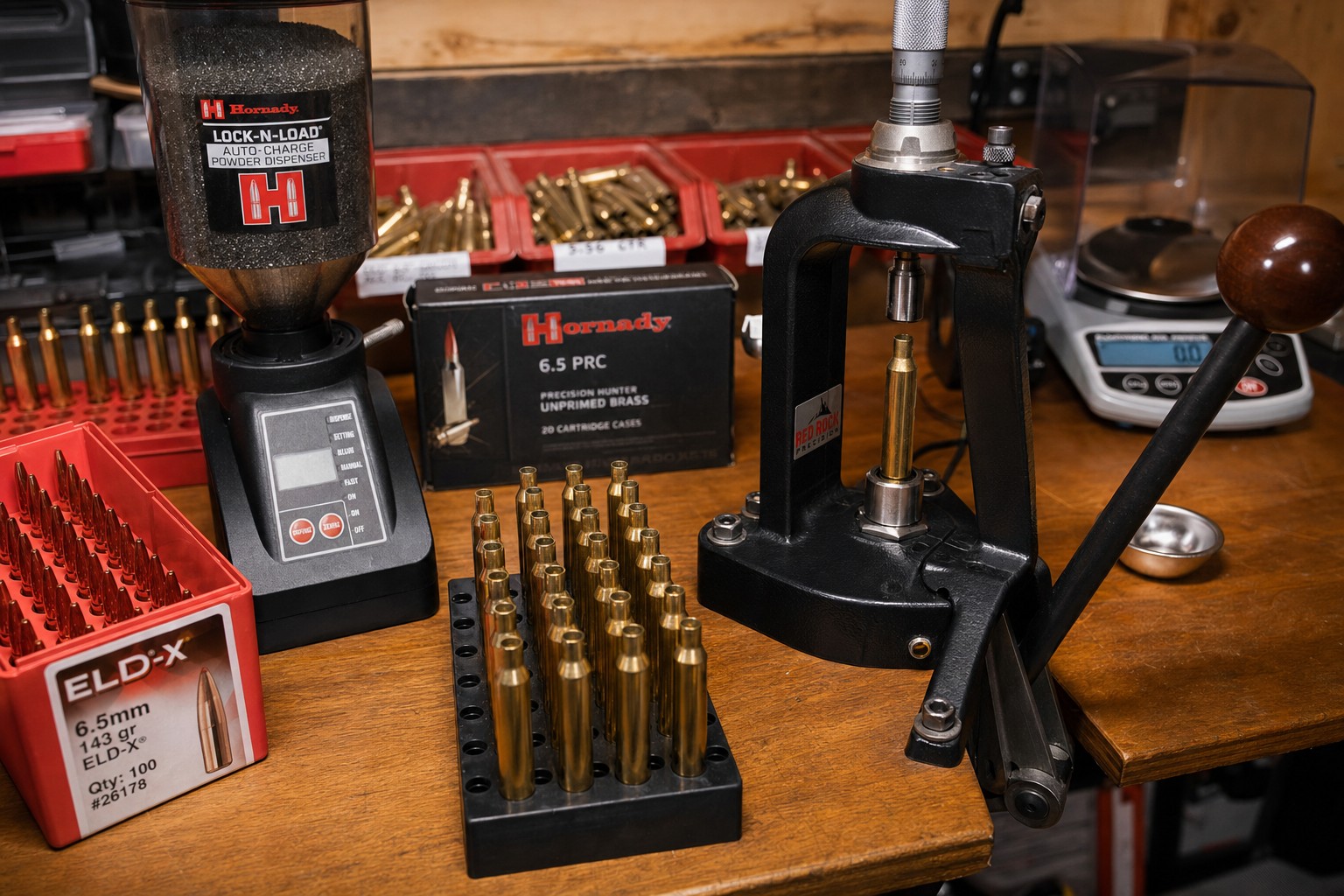
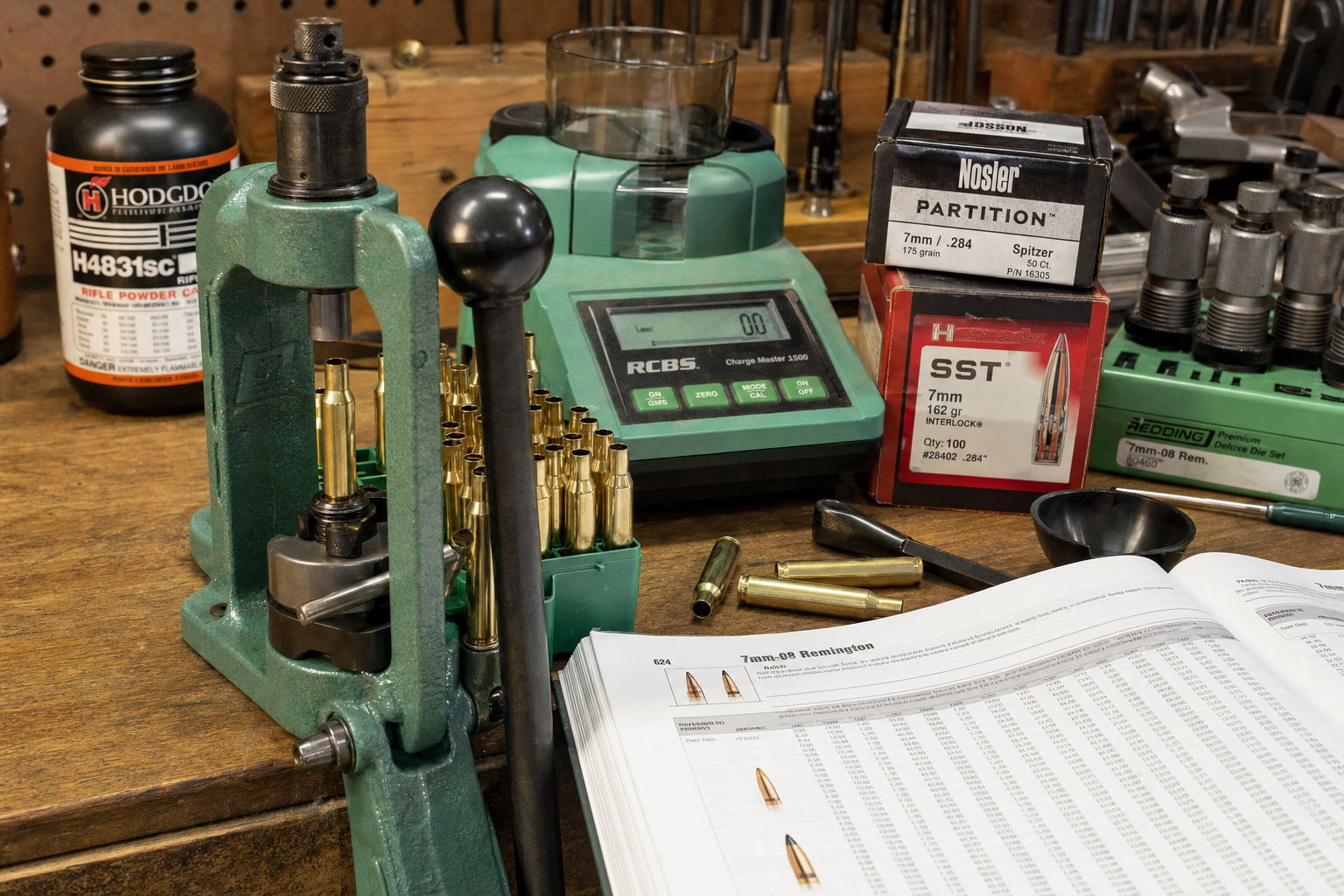
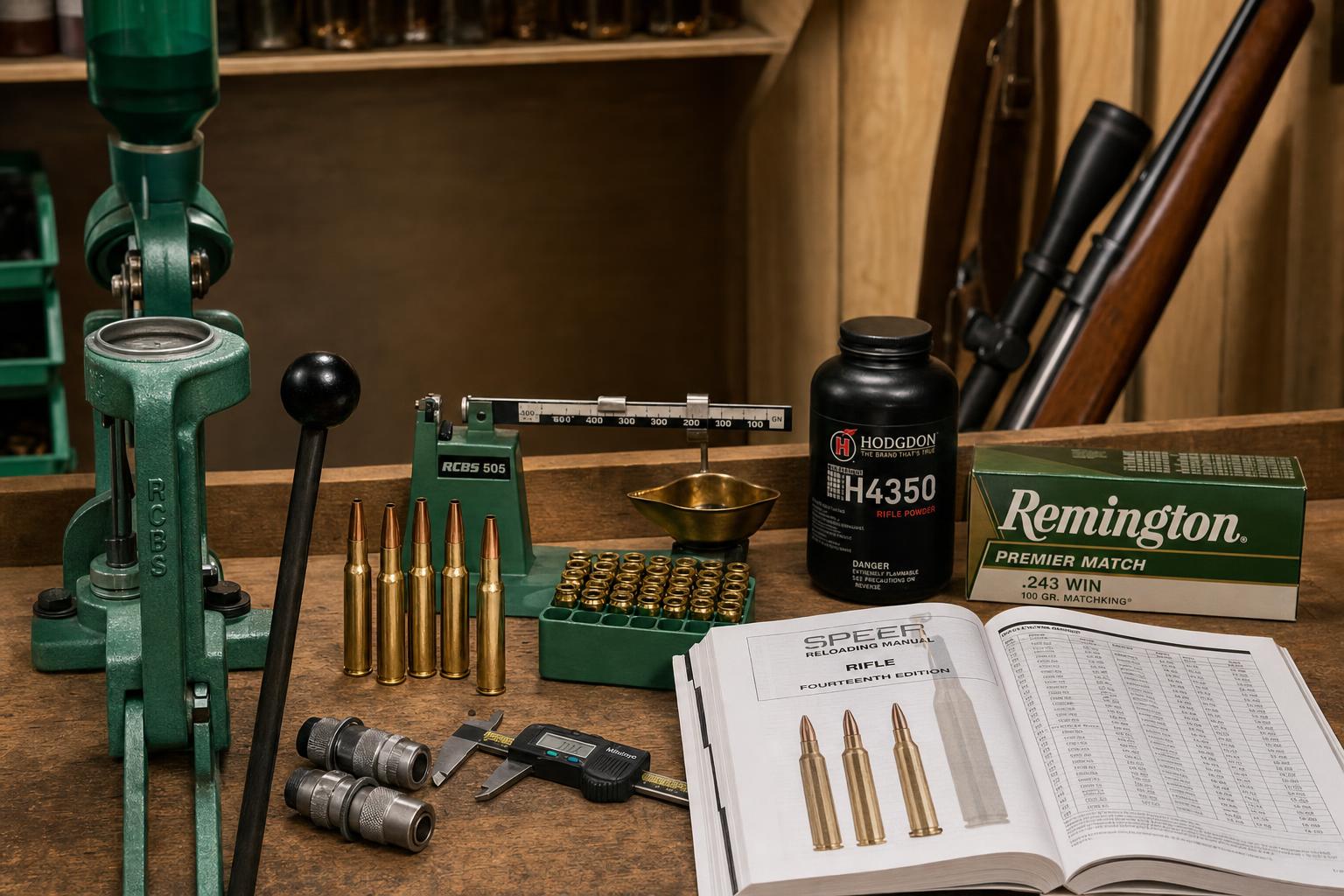
The .338 Lapua demands a sturdy reloading press — a single-stage press with good leverage like the Redding T-7 turret or RCBS Rock Chucker handles the sizing effort comfortably. Dies from Redding or Forster are worth the premium investment for this cartridge. A good digital scale or Prometheus/AutoTrickler combination is worth the investment when loading for a precision rifle of this class.
Final Thoughts
Reloading the .338 Lapua Magnum is not the cheapest project — brass, bullets, and powder costs add up quickly. But the payoff is a precision hunting round capable of reaching beyond where most rifle/cartridge combinations run out of steam. For hunters who take their open-country game seriously and put in the range time to use it, the .338 Lapua is genuinely in a class of its own.