The .280 Remington has a legitimate case for being the most underappreciated cartridge in western big game hunting. Introduced by Remington in 1957 as a semi-rimless alternative to the 7x57 Mauser, it was squeezed out of the spotlight by the more popular .30-06 and .270 Winchester. Then the 7mm Remington Magnum arrived in 1962 and pushed it further into obscurity. It has been quietly delivering excellent results ever since, largely unbothered by trend cycles and ammunition shortages that punish the more fashionable cartridges.
The .280 Rem is built on the .30-06 case necked down to 7mm (.284"). It runs the same bullets as the 7mm-08, 7mm Rem Mag, and 7mm PRC — meaning you have access to an enormous selection of quality hunting and match-grade projectiles. Case life in bolt guns is excellent, powder selection is straightforward, and brass from Remington, Nosler, and Lapua is readily available. It's one of the most handloader-friendly cartridges of the 20th century, and it rewards the effort with genuinely impressive performance on deer and elk out to honest hunting distances.
Performance Expectations
The .280 Remington operates at SAAMI maximum average pressure of 60,000 psi. With a 24-inch barrel, handloaders can push 140-grain bullets to 3,000–3,050 fps, 160-grain bullets to 2,850–2,900 fps, and 175-grain bullets to around 2,700 fps. The 160-grain load in particular gives you excellent sectional density, good retained velocity past 400 yards, and enough energy to handle elk cleanly.
Compared to the .270 Winchester, the .280 Rem can run heavier bullets with better ballistic coefficients. Compared to the 7mm Rem Mag, it generates significantly less recoil from a lighter rifle with no appreciable accuracy penalty at normal hunting ranges. It's a legitimate 500-yard elk cartridge in a package most shooters can handle from field positions.
Recommended Powders
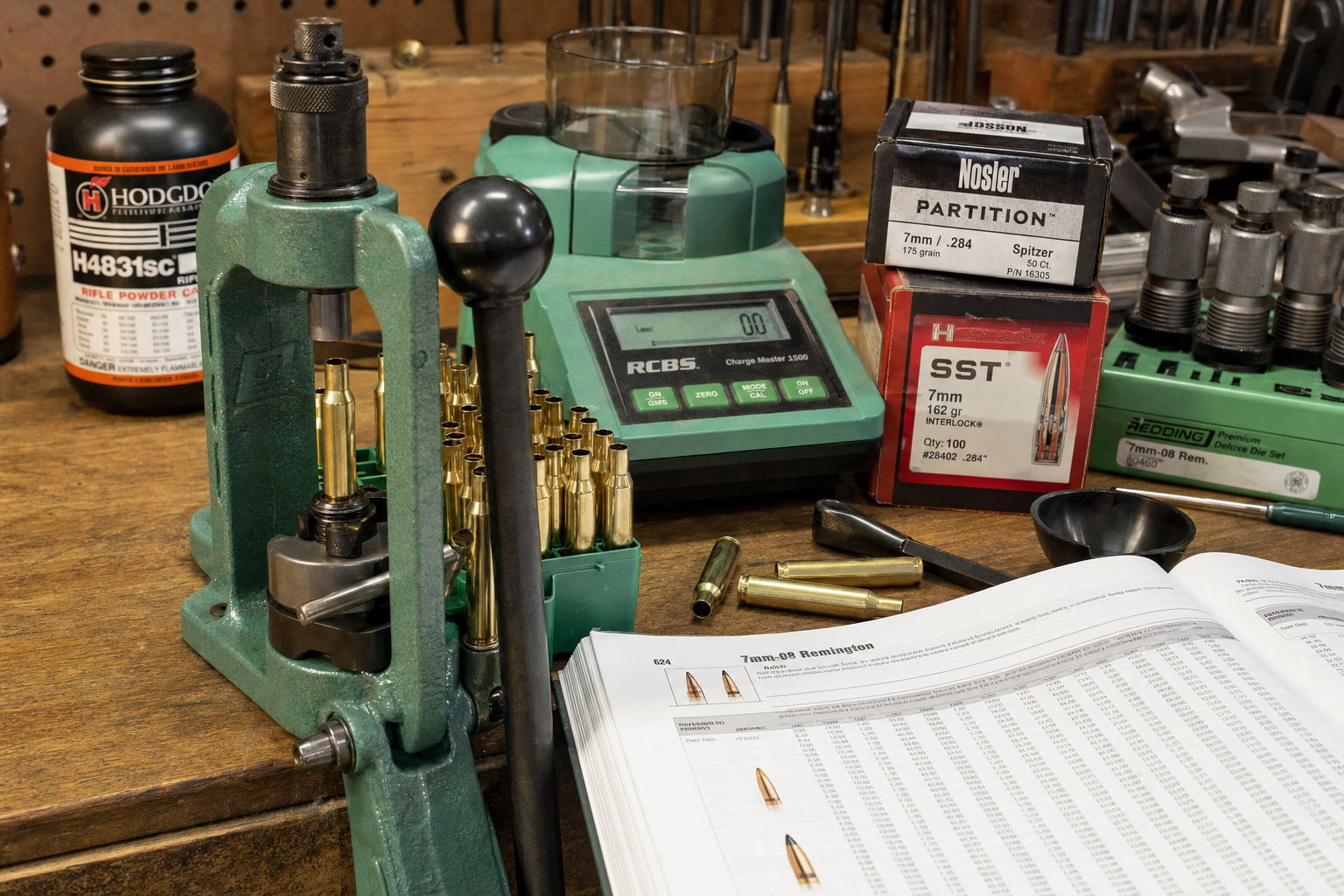
- IMR 4831 / H4831SC: The classic choice. Both deliver near-maximum velocity with 160-grain bullets and excellent accuracy. H4831SC is temperature insensitive and a favorite for hunting loads. Start near 56.0 grains and work up carefully.
- RL-22 (Reloder 22): Excellent with heavier bullets in the 160–175-grain range. Delivers high velocity and shoots well in most rifles. Watch for pressure signs in warm weather — RL-22 is temperature sensitive.
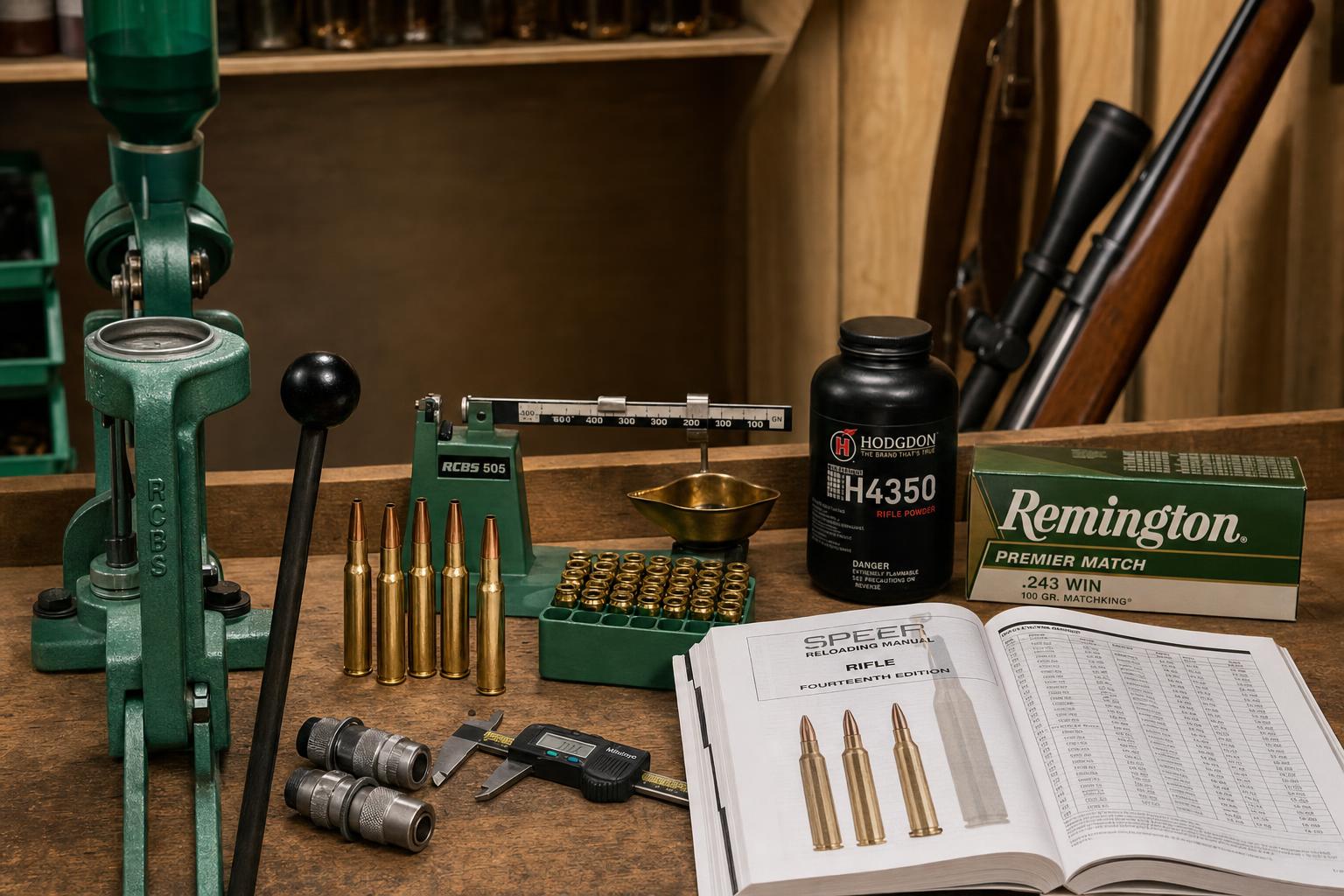
- IMR 4350 / H4350: More appropriate for lighter bullets in the 140-grain class. H4350 with a 140-grain Berger Hunting VLD or Nosler AccuBond is a legitimate long-range deer load. Charge weights around 55.0–57.0 grains.
- Hodgdon H1000: Pairs well with 175-grain heavy bullets at the expense of some velocity. Delivers exceptional barrel life and temperature stability for cold-weather hunts.
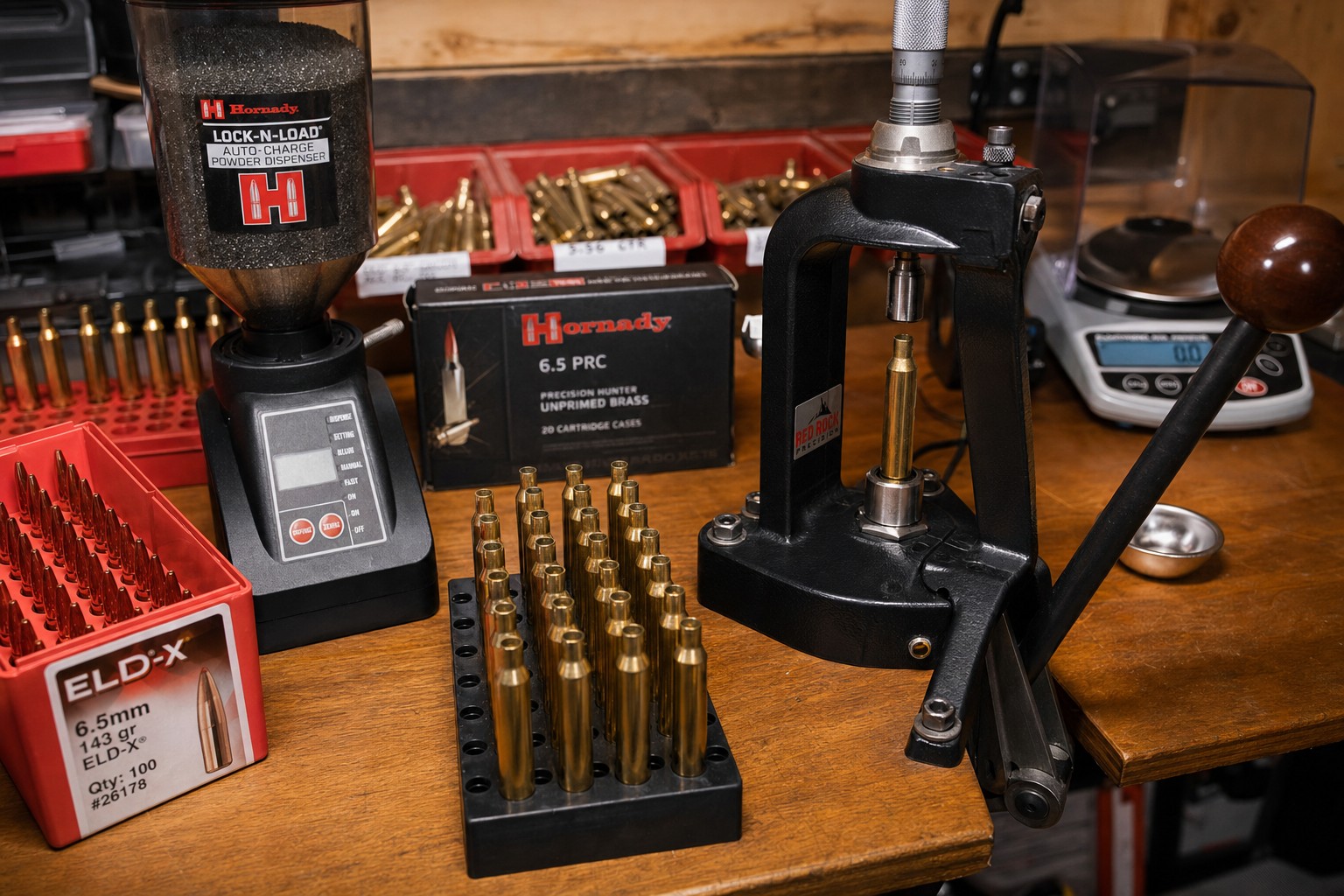
- Reloder 26: Modern option that extracts near-magnum performance. With a 162-grain ELD-X or 168-grain Berger can approach 7mm Rem Mag territory in a standard-length action.
Bullet Selection
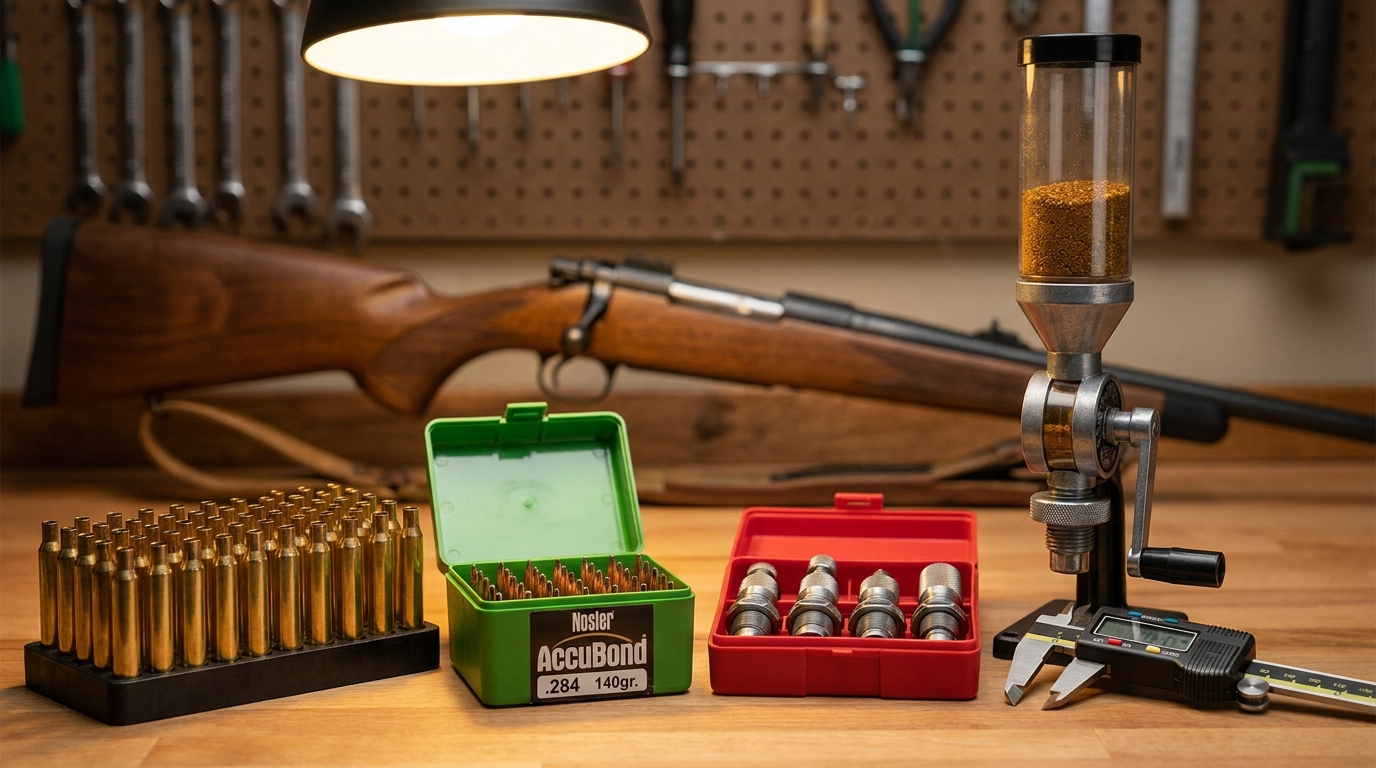
- 140-grain Nosler AccuBond: BC of .485, excellent terminal performance at all ranges. The go-to deer load at 3,000+ fps.
- 160-grain Nosler Partition: BC of .434. Outstanding on elk at all realistic distances. Has anchored more big game than almost any other 7mm projectile.
- 162-grain Hornady ELD-X: BC of .631 — by far the highest of any 7mm hunting bullet at this weight. Dramatically flattens the trajectory and makes the .280 Rem a genuine long-range hunting cartridge.
- 168-grain Berger Elite Hunter: Devastating terminal performance, excellent BC, appropriate for elk-sized game at any reasonable hunting range.
- 175-grain Swift A-Frame: Maximum toughness for close-range timber hunting or bear country where deep penetration matters most.
Sample Load Data
All data is for reference only. Begin 10% below listed maximum and work up carefully. Always consult a current reloading manual.
- 140 gr Nosler AccuBond / H4350 / Fed 210M / Nosler brass: Start 54.5 gr / Max 57.5 gr / ~3,020–3,060 fps (24" bbl)
- 160 gr Nosler Partition / H4831SC / CCI 200 / Remington brass: Start 55.0 gr / Max 58.5 gr / ~2,860–2,900 fps (24" bbl)
- 162 gr Hornady ELD-X / RL-22 / Fed 210M / Lapua brass: Start 55.0 gr / Max 58.0 gr / ~2,880–2,930 fps (24" bbl)
Brass Prep and Case Life
Remington factory brass is workable but inconsistent. Trim to 2.530" (SAAMI spec is 2.540" max), deburr and chamfer, and uniform the primer pockets on the first firing. Lapua makes .280 Remington brass — expensive but genuinely excellent, with consistent case weights and very long life. With proper sizing and consistent annealing every 3–4 firings, .280 Rem brass can last 8–12 reloadings in a standard bolt gun.
The Bottom Line
If you own a rifle in .280 Remington — especially a classic Remington 700 BDL or a Ruger Model 77 — you have one of the finest western hunting cartridges ever designed. A 160-grain Nosler Partition at 2,880 fps leaves the muzzle with over 2,900 ft-lbs of energy and is still carrying 1,800 ft-lbs at 400 yards. In an era of marketing-driven cartridge churn, the .280 Remington quietly keeps doing its job. It deserves a seat at the table in any serious conversation about western hunting cartridges — and it's never been a better time to handload one.