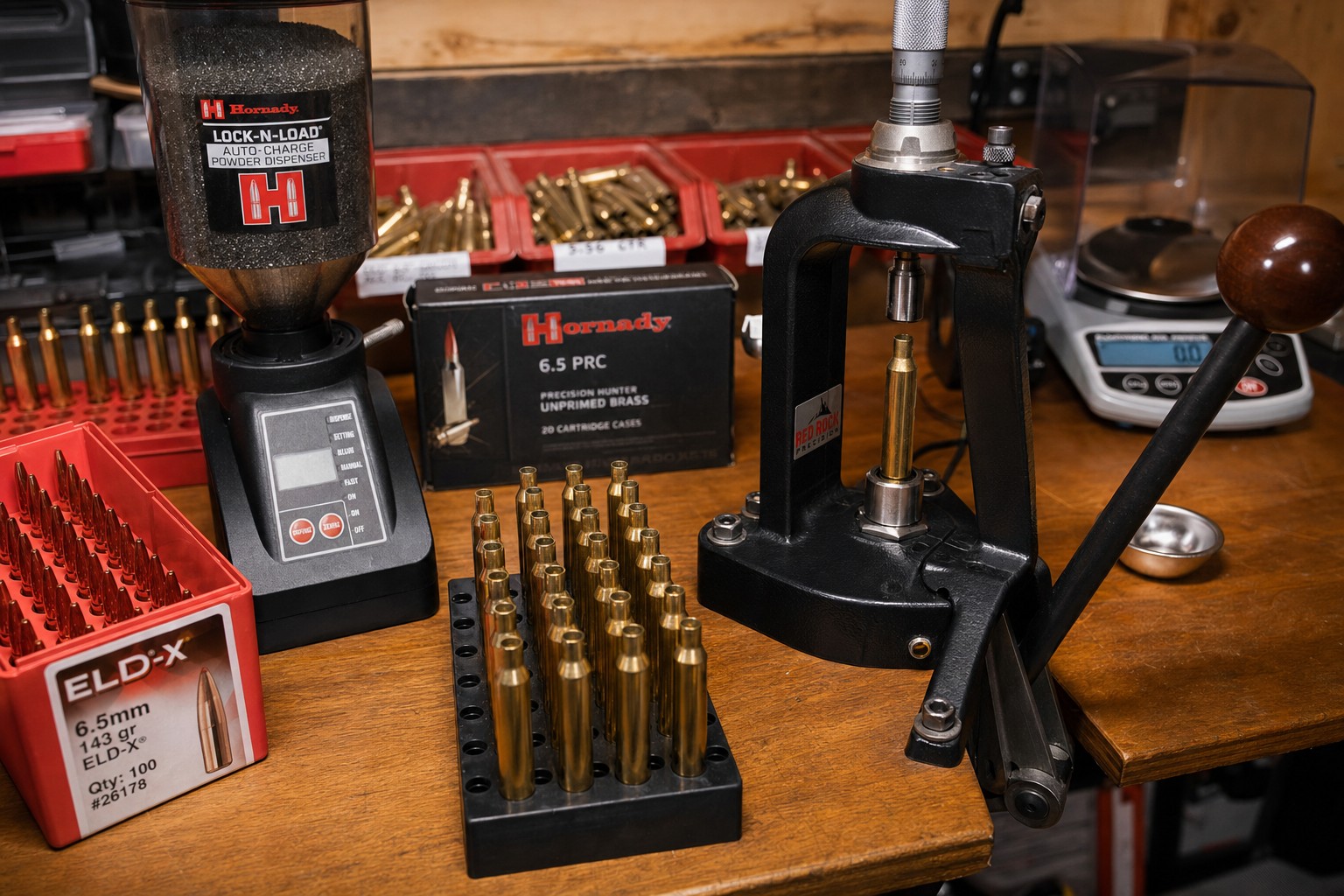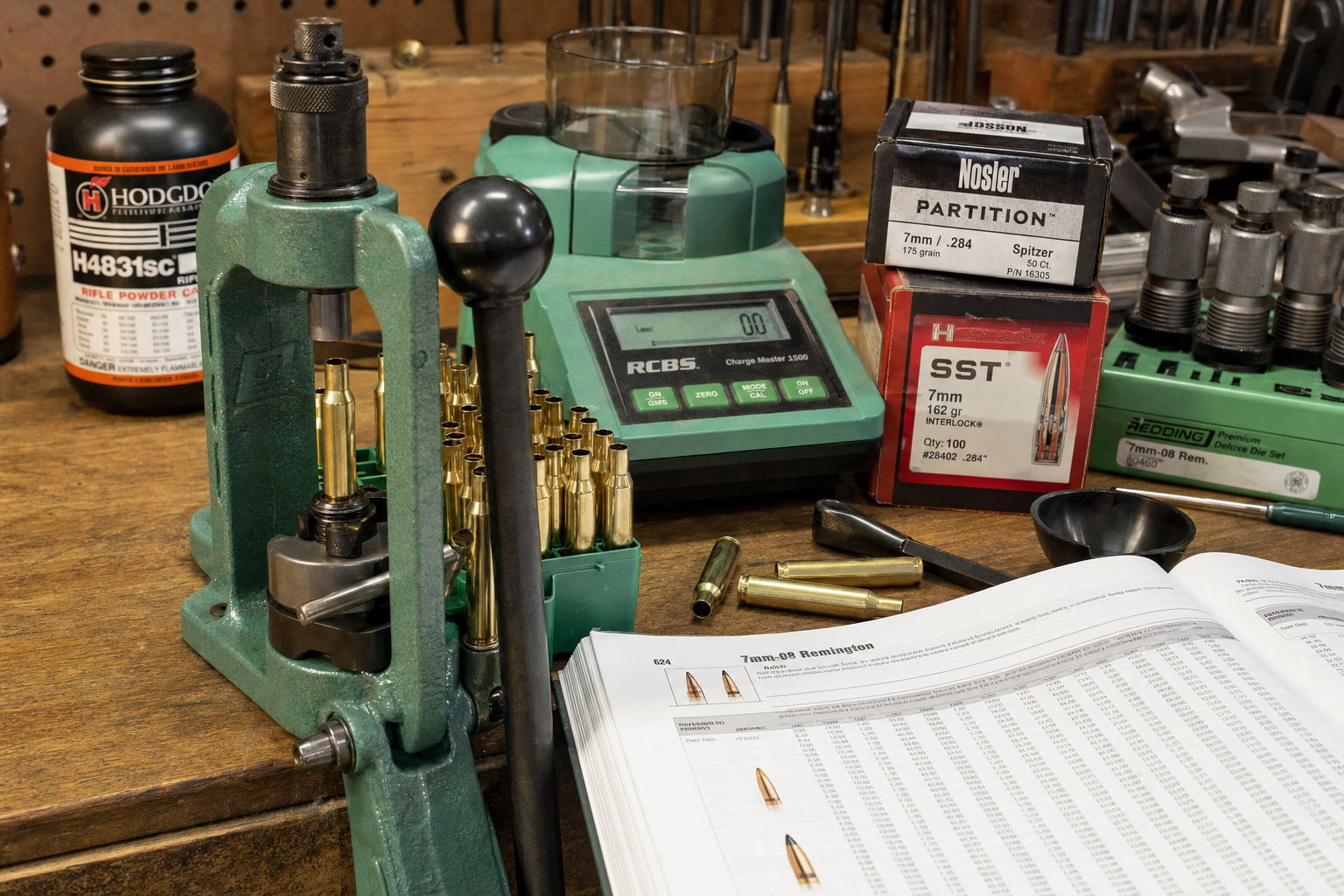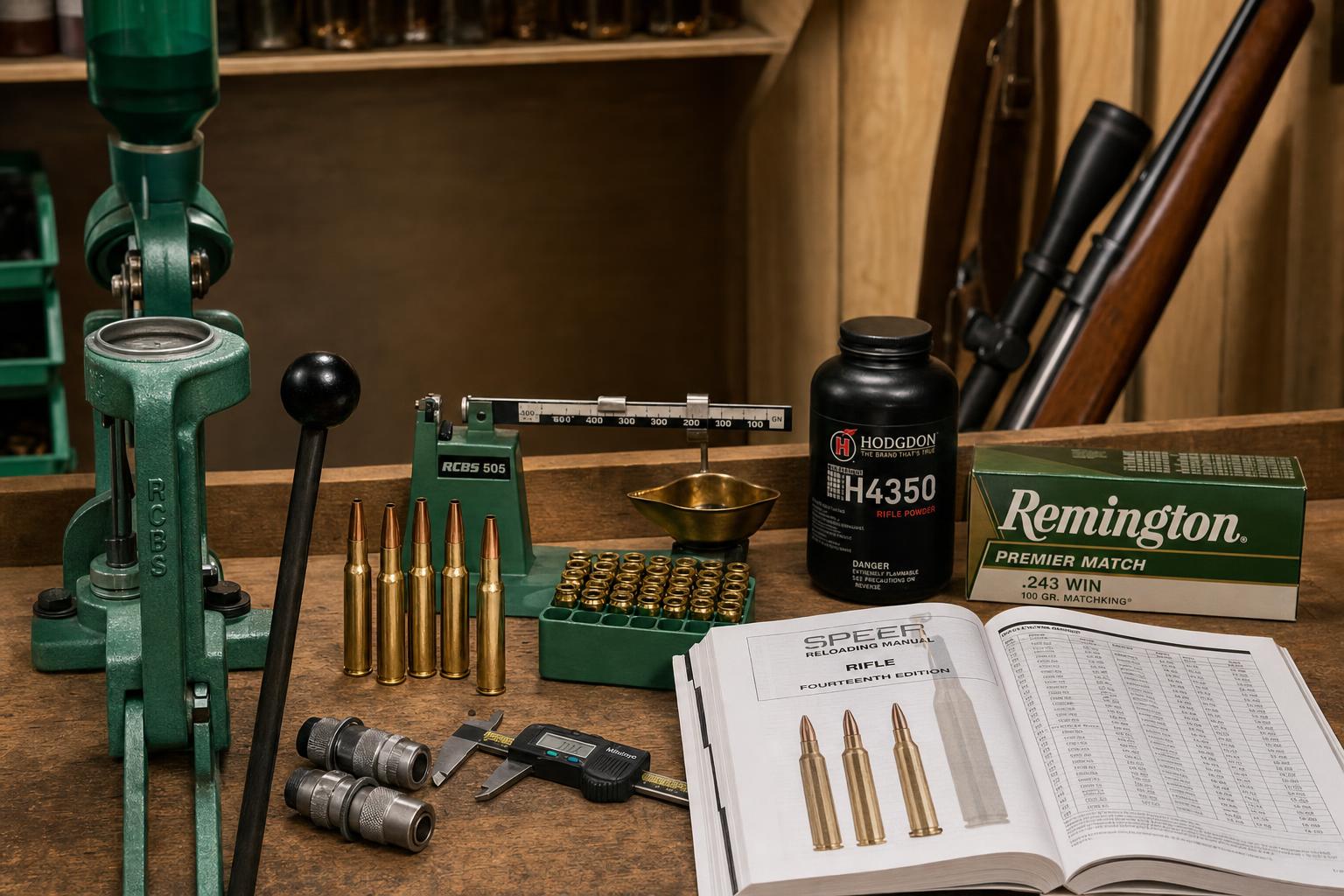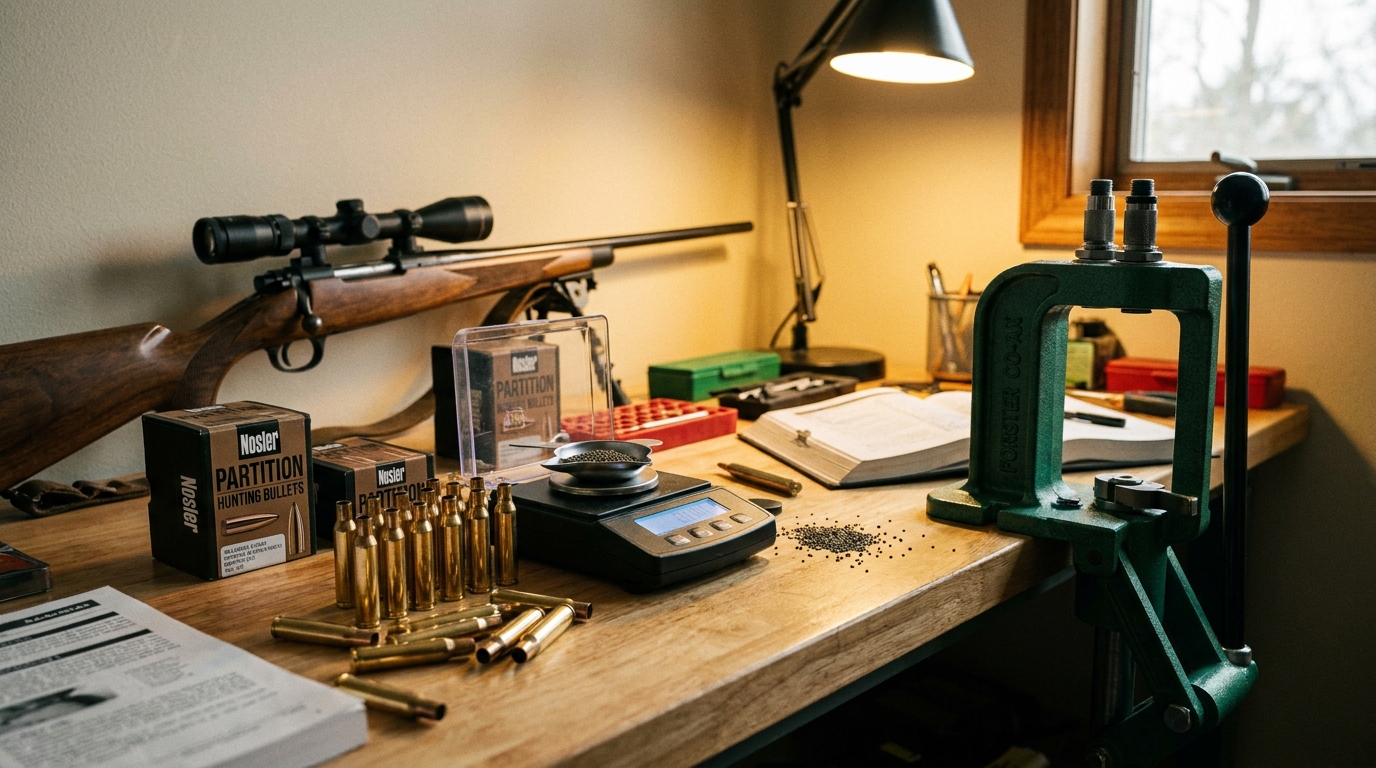
Nosler introduced the .30 Nosler in 2016, and it arrived with a straightforward proposition: more velocity than the .300 Win Mag in a standard-length action, near-.300 Weatherby Magnum performance without a custom rifle. For elk hunters chasing open-country shots in Oregon's Blue Mountains, Wallowas, or high Cascades, the .30 Nosler delivers a meaningful ballistic edge. It also rewards the handloader who takes time to develop an accurate, consistent load — the factory ammunition selection is relatively thin compared to legacy cartridges, making reloading not just economical but practically necessary for serious .30 Nosler shooters.
Understanding the .30 Nosler
The .30 Nosler is based on a rebated-rim, beltless magnum case measuring 2.590 inches in length, headspacing off the 35-degree shoulder. It fits in a standard magnum-length (3.340" COAL) action. The result is a cartridge that pushes 180-grain projectiles to 3,100–3,150 fps from a 26-inch barrel — roughly 100 fps faster than the .300 Win Mag with the same bullet at the same barrel length. That's not a revolutionary difference, but in the context of a 500-yard shot on a bull elk, it matters.
The rebated rim means .30 Nosler brass requires a standard magnum bolt face (.532") — the same as .300 Win Mag. Brass is available from Nosler (priced accordingly) and from a limited number of other suppliers. Prepare to pay $90–120 per 50 cases new. Handle it well, and you'll get 5–8 loadings from quality Nosler brass with proper prep.
Brass Prep and Case Prep Protocol
New .30 Nosler brass benefits from a full prep cycle before first firing. Trim to 2.580" (0.010" under max), uniform primer pockets, deburr flash holes, and chamfer/deburr case mouths. After fire-forming to your chamber, measure each case with a caliper. You'll find variance from Nosler brass is tight — usually within 0.003" — but sorting by weight into two or three groups will improve consistency if you're building precision loads.
Neck sizing only after fire-forming is acceptable for a bolt-action used in one rifle. Full-length resize if the brass will be used in multiple rifles or if cycling becomes stiff. Use a quality carbide or titanium-nitride die set. Redding Competition dies are the top choice for .30 Nosler handloaders who want the tightest possible concentricity.
Primer Selection
Large rifle magnum primers are standard for the .30 Nosler given its case capacity and the slow-burning powders it requires. Federal 215M (Gold Medal Match) and CCI 250 are the most used. Murom KVB-7M and Remington 9.5M are worth testing if you can find them. Avoid standard (non-magnum) large rifle primers — they produce erratic ignition with the powder charges this cartridge demands.
Seat primers to 0.003–0.005" below flush, not bottomed hard against the pocket. Consistent primer seating depth measurably improves ES/SD numbers.
Powder Selection
The .30 Nosler thrives on slow magnum powders. Its large case requires powders that fill efficiently and produce high, consistent pressures across temperature ranges — important in Oregon's mountain hunting, where morning temperatures in September can be 25°F at elevation and afternoon temperatures can hit 65°F in the lower drainages.
Top Powder Choices
- Hodgdon H1000: The consistent top performer in .30 Nosler. Delivers excellent velocity with 180–200 grain bullets and produces low ES/SD numbers. Start at 82.0 gr, approach max around 86.0 gr (watch for pressure signs). Velocity: 3,060–3,140 fps with 180s from 26-inch barrel.
- Hodgdon Retumbo: Slightly slower than H1000. Excellent for heavier bullets (200–210 gr) and maximum loads. Start at 84.0 gr, max around 88.0 gr. Good temperature stability with IMR components.
- Alliant Reloder 26: Outstanding temperature-stability powder. Produces top-end velocities with 180 gr bullets with good ES numbers. Start at 81.0 gr, approach max at 85.0 gr. Preferred by hunters who see extreme temperature swings.
- Alliant Reloder 33: Slower-burning, excellent for 200–220 grain heavyweights if you're running deep-for-caliber LR hunting bullets. Start at 84.0 gr for 200-grain class bullets.
- Hodgdon H4831SC: Slightly faster, better with 150–168 grain bullets if you choose to run a lighter, faster load. Less ideal for the 180+ grain bullets that define this cartridge's purpose.
Bullet Selection for Elk
The .30 Nosler was designed around Nosler's own premium hunting projectiles, and they remain the logical choice. For elk specifically:
- Nosler AccuBond 180 gr: The flagship combination. Bonded construction survives high-velocity impact, controlled expansion, high weight retention. Verified on elk at 400+ yards in multiple western states. COAL 3.290".
- Nosler AccuBond Long Range 210 gr: For shooters prioritizing BC over velocity. G1 BC of 0.730, retained energy at 600 yards rivals the 180 at 400. Requires slower powders (Retumbo, RL-33). COAL 3.340" — max length for most rifles.
- Berger Hybrid Hunter 185 gr (.30 cal): Outstanding BC (G7 0.304), excellent terminal performance. Requires tuning — Berger bullets need refined seating depth for best accuracy. Worth the effort if your rifle likes them.
- Federal Trophy Bonded Tip 180 gr: Excellent terminal performance, slightly lower BC than AccuBond, very reliable at close ranges and high angles common in steep Oregon elk country.
Recommended Load: 180 gr AccuBond + H1000
This combination is the working load for most .30 Nosler elk hunters. Start at 83.0 grains H1000 with Federal 215M primer and Nosler brass. Work up in 0.5 gr increments watching for pressure signs — flat primers, stiff extraction, case head expansion. A 26-inch barrel will produce 3,080–3,120 fps at a safe load. At 3,100 fps with a 180 gr AccuBond zeroed at 200 yards, you're 6.9" low at 300, 20" low at 400, and 41" low at 500 — manageable with a confirmed DOPE chart and practiced holds.
Note: All published load data should be cross-referenced with current Nosler, Hodgdon, or manufacturer data. Work up from minimum charges. Pressure and velocity vary by barrel length, chamber dimensions, and temperature.
Brass Life and Practicalities
The .30 Nosler runs at the upper end of SAAMI pressure limits by design. Expect 5–7 loadings from Nosler brass at full hunting loads before case head expansion or neck cracks signal retirement. Anneal necks every 3 firings to extend life. Trim after every firing — the case grows toward max quickly at magnum pressures. Keep your brass sorted and documented.
At roughly $2.00–2.50 per case loaded, the .30 Nosler is not a cheap cartridge to shoot in volume. Most serious hunters run 50–100 rounds per year — enough to confirm zero, verify load consistency, and practice at range. That's a manageable and economical proposition for a tag you may have waited 3 years to draw.
If you have a rifle chambered in .30 Nosler and haven't explored handloading it, start now. The factory offerings are decent, but the custom loads you'll develop in your own rifle will outperform them consistently — and that's what elk hunting at range demands.