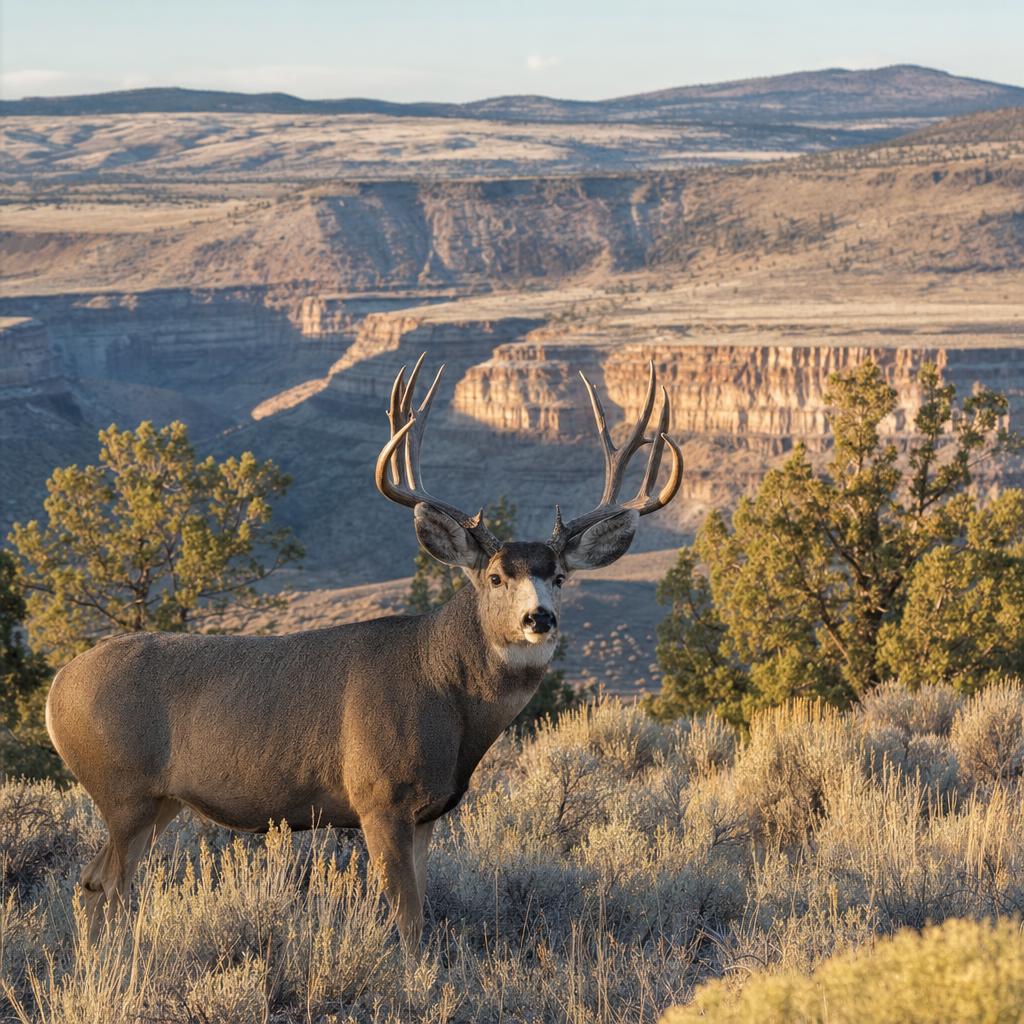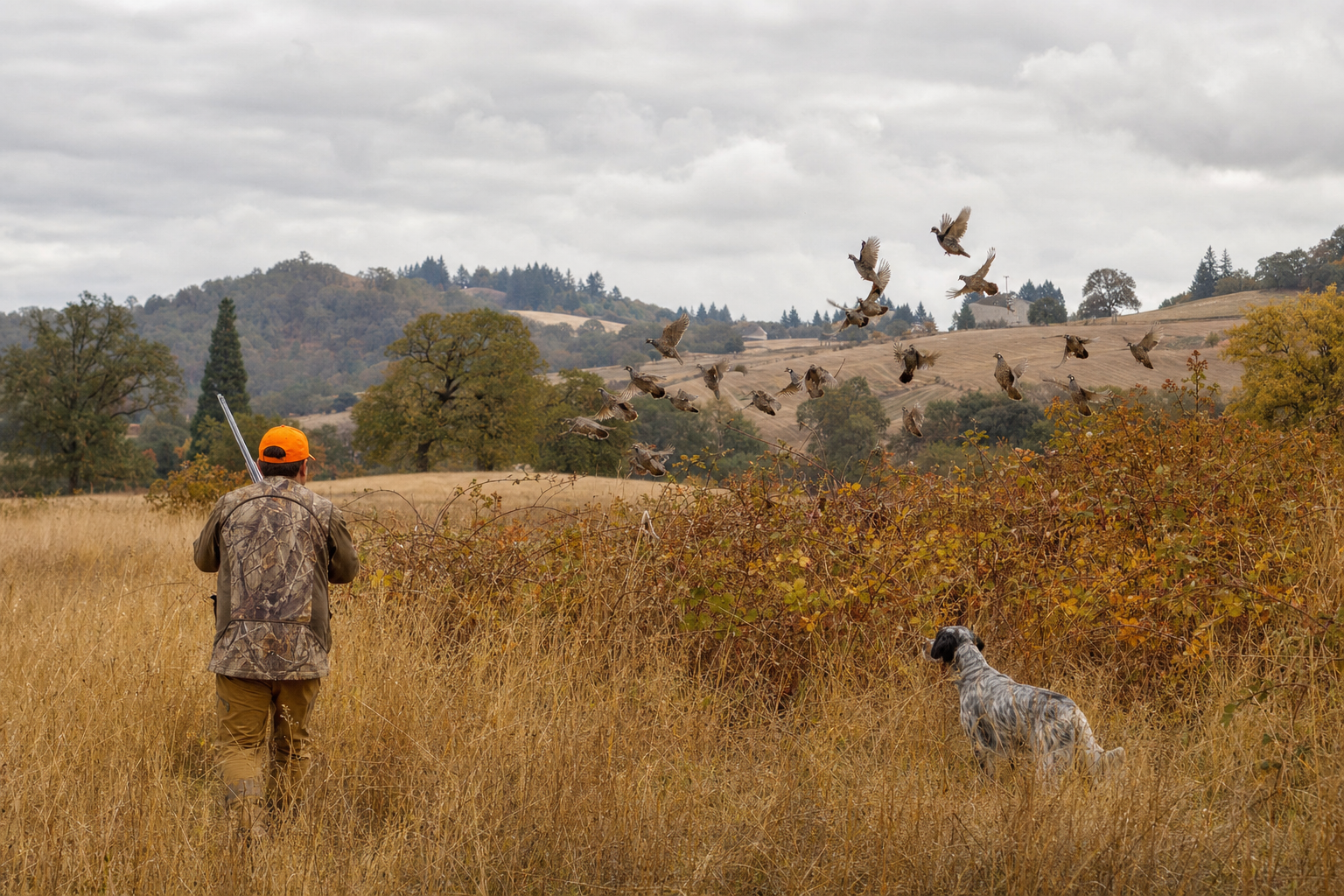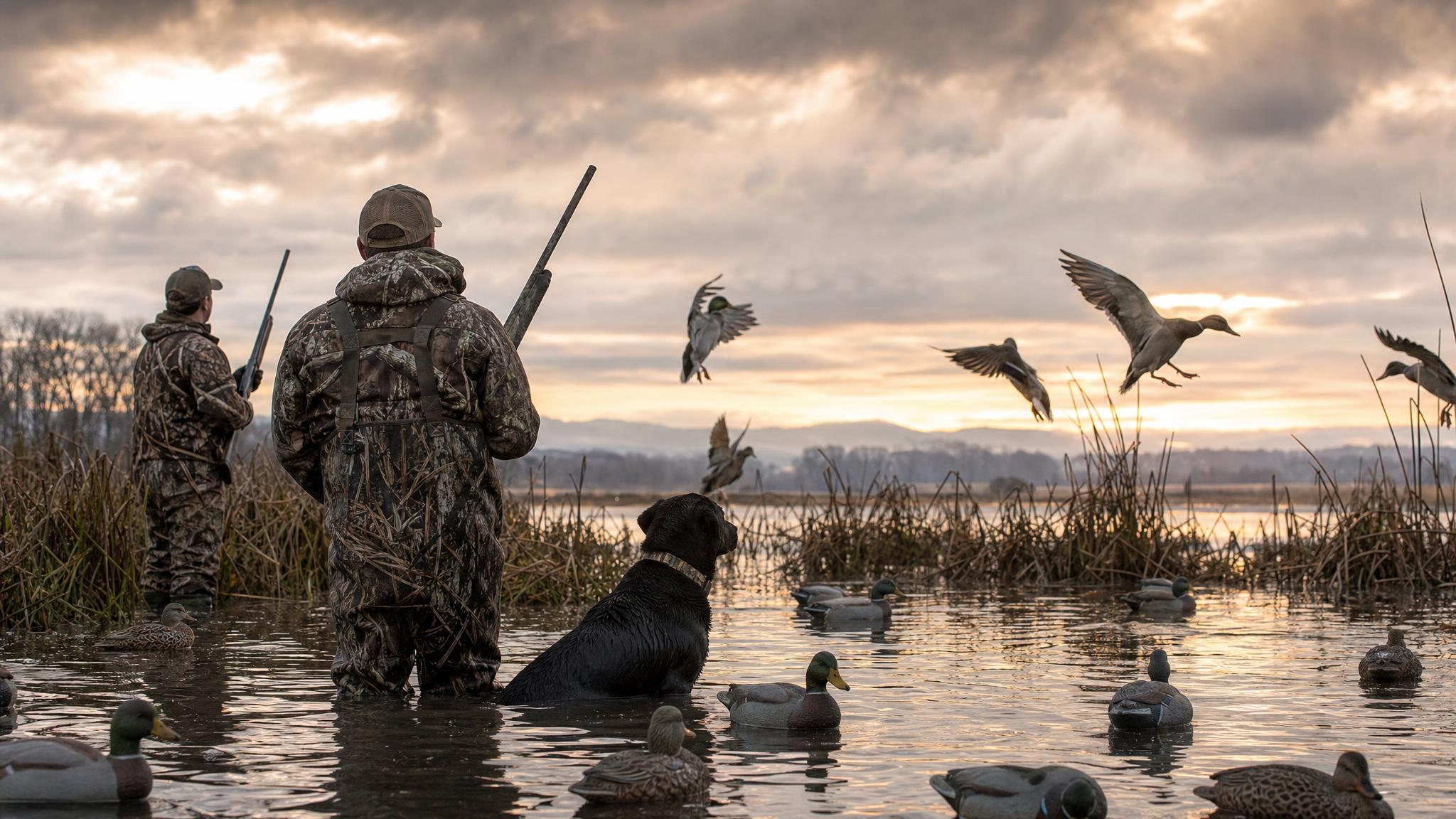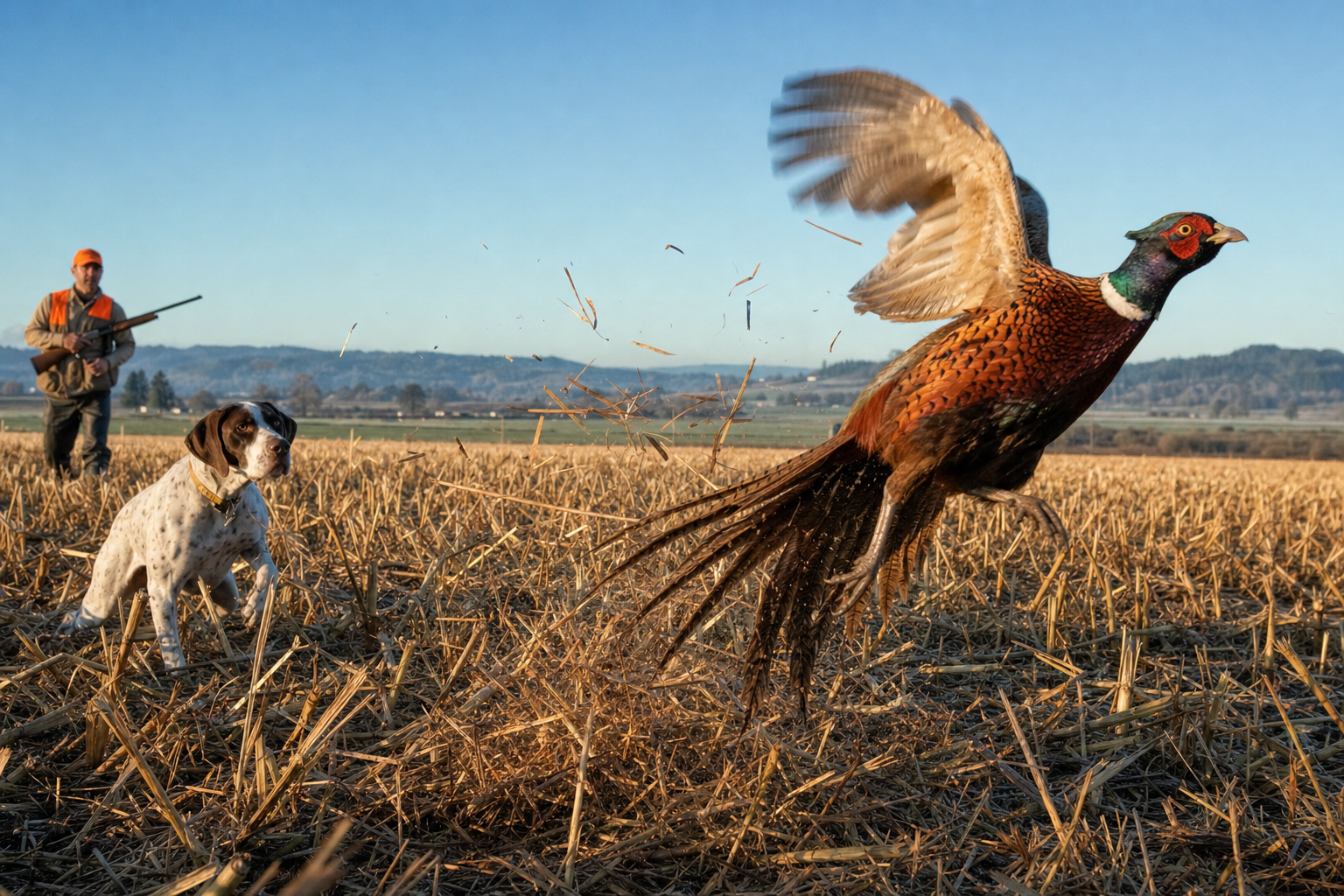
The crowing of a rooster pheasant at sunrise is one of October's most welcome sounds across Oregon's farm country. Whether you're working knee-deep cover in the Willamette Valley or striding through cattail sloughs in Malheur County, ring-necked pheasant hunting offers some of the most accessible and rewarding upland action in the state. Here's what you need to know to put more roosters in your vest this fall.
Oregon Pheasant Season Dates and Regulations
Oregon's 2026 pheasant season opens October 17 in most zones and runs through the end of December. The bag limit is two roosters per day with a six-bird possession limit. Hens are protected statewide. A valid Oregon hunting license and upland bird validation are required. Youth hunters ages 12–17 can participate in the Youth Pheasant Hunt weekend (October 10–11) ahead of the general opener — an excellent way to introduce new hunters to the sport.
ODFW stocks pheasants at designated Access and Habitat (A&H) sites and many Wildlife Management Areas (WMAs) throughout the season. Check the ODFW website for release schedules — birds are typically stocked in waves on Thursdays and Fridays ahead of weekends.
Where to Hunt: Willamette Valley Public Land
The Willamette Valley holds the most accessible pheasant hunting in western Oregon. Focus your scouting on these key locations:
- Ankeny National Wildlife Refuge (Marion County) — Upland hunting areas surround the refuge wetlands. Walk-in permission areas along grassy fencerows and blackberry margins hold both wild and planted birds.
- Baskett Slough NWR (Polk County) — Upland zones open to hunting with designated parking. Heavy grass and hedgerow cover near agricultural fields concentrate birds.
- Sauvie Island WMA (Columbia County) — While better known for waterfowl, the island's upland edges produce pheasants early in the season before hunting pressure shifts birds deeper into cover.
- Finley NWR (Benton County) — One of the most productive valley spots. Hunt the grass buffers, brushy drainages, and CRP fields bordering the refuge's crop rotations.
Wild pheasant numbers in the valley fluctuate with winter severity. After the mild 2025–26 winter, populations are in good shape heading into October.
Eastern Oregon: Big Country Roosters
Eastern Oregon is pheasant country on a different scale. Agricultural areas in Malheur, Harney, and Umatilla Counties hold wild birds that are wary, fast, and satisfying to hunt.
- Malheur County (Ontario area) — Irrigated agriculture along the Snake River and its tributaries creates ideal pheasant habitat. Hunt cattail-edged irrigation canals, dry weed patches adjacent to corn stubble, and overgrown fence lines. Birds run hard here — a tight-pointing dog is worth its weight in gold.
- Umatilla County — Wheat stubble interspersed with draws and creek drainages along the Columbia Plateau holds excellent wild pheasant populations. Look for cover near Standing Rock, Echo, and Hermiston.
- Malheur NWR Upland Areas — Portions of the refuge open to upland hunting. CRP ground and brushy draws adjacent to the Malheur River hold birds through November.
- Irrigon Wildlife Area (Morrow County) — This Columbia River unit produces consistent pheasant action. Hunt willow thickets and tall grass margins along irrigation return flows.
Gun and Load Selection
Pheasants are tough birds. A rooster cackling skyward at 35 yards takes a real hit to fold cleanly. Most Oregon pheasant hunters run a 12-gauge with 2¾" or 3" loads. Shot recommendations:
- Early season (October) — #5 or #6 lead shot in 1¼ oz. loads at 1,330–1,400 fps. Birds are lighter and cover is dense.
- Late season (November–December) — Move up to #4 lead or #5 heavyweight (Heavyweight, Bismuth, or FLITECONTROL steel) as birds get wary and shooting lanes open up. 1⅜–1½ oz. loads at 1,300 fps deliver reliable kills at 40+ yards.
An improved-cylinder choke works well in heavy cover; modified choke handles the open-country shots common in eastern Oregon. A 20-gauge with quality loads is perfectly capable — just pick your shots within 35 yards.
Dogs Make the Difference
You can hunt pheasants without a dog, but you'll leave birds in the field. A pointing breed — English setter, Brittany, German shorthair, or Vizsla — that can work dense cover and hold point on running roosters is the ideal tool. Flushing dogs (Labs, spaniels) excel in thicker Willamette Valley cover where birds don't run far before going up.
Whatever the breed, a dog that retrieves to hand is essential. A wounded rooster that dives into a blackberry thicket is gone without a determined retriever. Run your dog with a bell or beeper collar in dense cover — losing track of a pointing dog in Malheur County cattails costs you birds and time.
Tactics That Hold Up All Season
Hunt the Edges
Roosters rarely sit in the middle of a field. Work the transition zones — where standing corn meets a weedy ditch, where grass meets a blackberry margin, where a CRP strip edges against a hedgerow. These edges concentrate birds.
Beat the Pressure
Oregon's pheasant opener sees heavy traffic at popular WMAs. Be in the field by first light. Post a blocker at the far end of a cover strip and push birds toward them rather than letting them run out the other end.
Go Back in the Afternoon
Pressured birds that evacuated heavy-hunted cover in the morning filter back in the afternoon. Return to spots that held birds at first light for a second chance as the day cools.
Don't Ignore Midday
Unlike deer hunting, pheasant hunting doesn't have a dead zone. Midday birds often sun themselves on south-facing slopes or loaf in heavy grass near feed. Keep hunting.
Final Thoughts
Oregon pheasant hunting offers something for everyone — from suburban Willamette Valley farms you can reach in under an hour from Portland to the wide-open sagebrush-and-stubble country of the eastern high desert. Pick up your upland bird validation, line up a block of permission ground or a solid public parcel, and get that pointing dog into shape. The October opener is closer than you think.