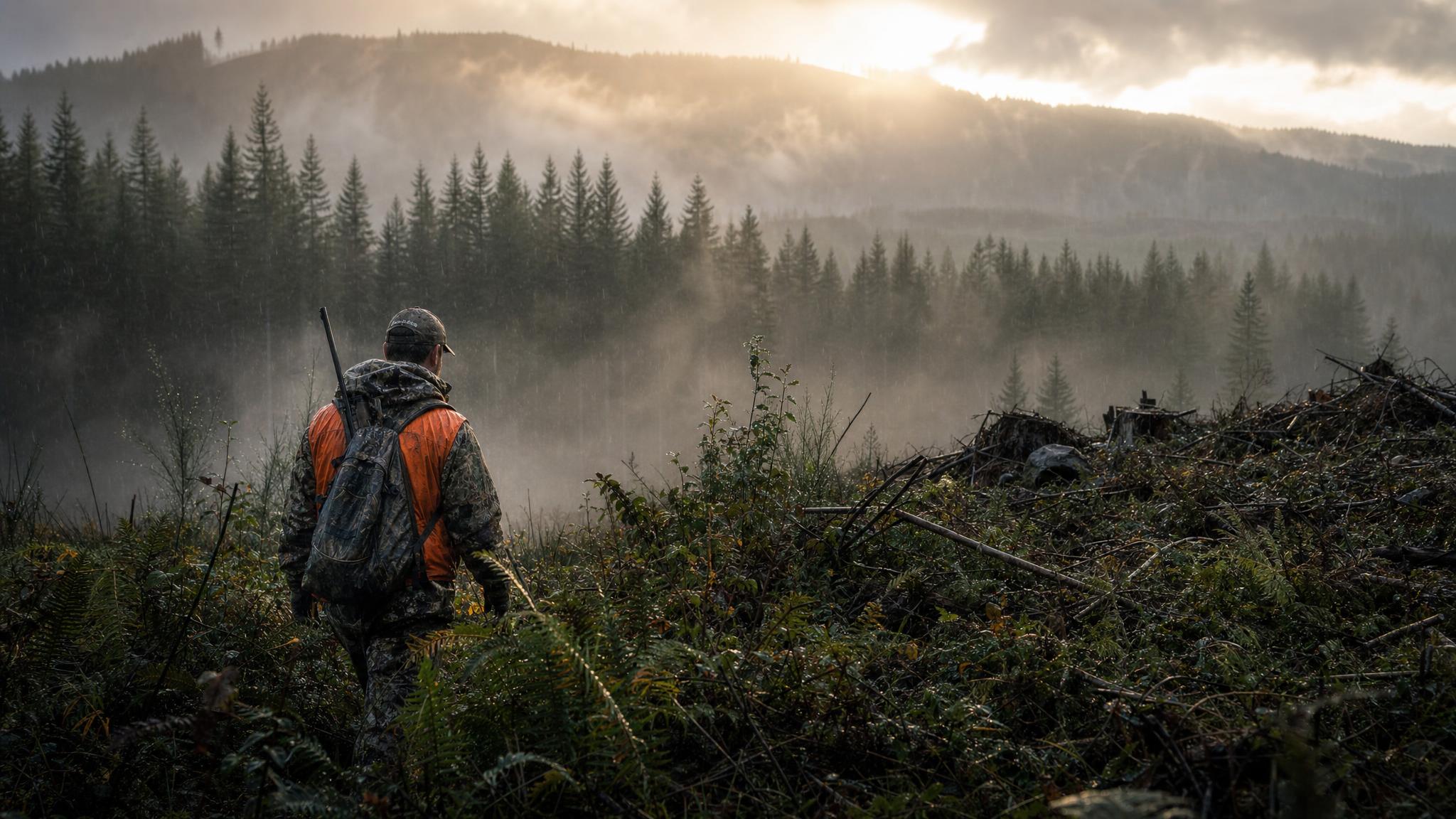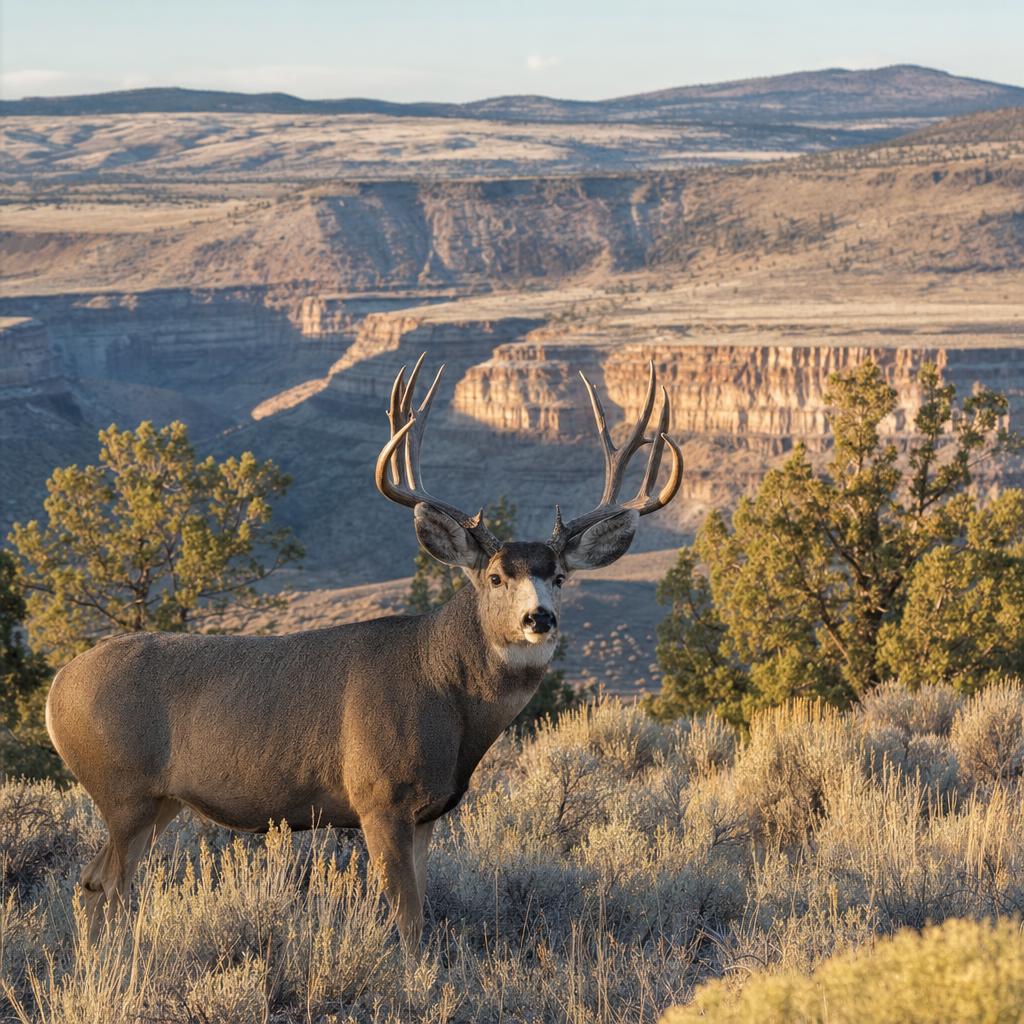
October is here, and with it comes one of Oregon's most storied rifle seasons — general mule deer in the vast high desert country of the John Day drainage. From the sage-covered benches of the Ochoco National Forest to the rimrock canyons of the Murderers Creek and Northside units, eastern Oregon muley hunting offers public-land hunters a legitimate shot at mature bucks in country that rewards boot leather and patience.
Understanding the John Day Country
The John Day drainage covers a staggering swath of Grant, Harney, and Wheeler counties — canyon country carved by millions of years of volcanic geology. Mule deer here are grazers and browsers that cycle between summer range on high ridges and winter range in the lower canyon floors. By October, bucks that spent summer on the rimrock edges are beginning to shift toward the juniper and sage draws where they'll stage before the rut.
Key public-land units to focus on include the Murderers Creek Unit, which consistently produces above-average buck-to-doe ratios, the Northside Unit east of John Day, and the Fossil Unit in Wheeler County — one of the most overlooked mule deer zones in the entire state. The Malheur National Forest provides large blocks of elk and mule deer habitat with minimal pressure compared to the Cascades.
Scouting Strategy: Glassing Over Boots
The biggest mistake eastern Oregon deer hunters make is walking too much and glassing too little. John Day country is built for optics. Big sagebrush basins, canyon walls, and open ridge faces mean you can cover dozens of square miles from a single vantage without moving your feet.
- Morning routine: Be on a high point before first light. Mule deer feed into open slopes through early morning and then filter into the juniper and rimrock shade by mid-morning.
- Midday glass: Don't quit after 9 a.m. Mature bucks often bed on north-facing slopes within the juniper fringe — visible from across a canyon if you work your glass slowly.
- Evening: Bucks return to open sage flats to feed. Key on areas with good browse — bitterbrush, rabbitbrush, and antelope bitterbrush are all high-preference forage plants.
Tools that matter: a quality 10x42 binocular, a 15–45x spotting scope on a stable tripod, and a rangefinder with angle compensation. The shots in this country can stretch. Know your zero and know your limits.
Terrain and Access
The John Day Highway (US-26) serves as a spine for accessing much of the best public land. Forest Service Road 21 heading south from John Day into the Malheur National Forest opens up miles of ridgeline country. The Izee area southeast of Seneca holds solid buck populations in its creek-bottom willow and sage mix. For the Fossil Unit, Oregon Route 19 provides access to vast tracts of BLM land in Wheeler County.
Cell service is minimal to nonexistent in most drainages. Download offline maps in OnX Hunt before you leave home. Mark water sources — spring-fed stock ponds and creek crossings are magnets in dry October years.
Shot Distances and Rifle Selection
Eastern Oregon mule deer hunting is the reason long-range rifle skills matter. Shots of 300–500 yards on open ridge faces are common. Hunters who stay mobile and close the gap when possible are most successful, but you will encounter situations where a longer shot is the ethical choice.
Flat-shooting cartridges rule here. Popular choices among experienced Oregon mule deer hunters include the 6.5 PRC, .280 Ackley Improved, 7mm Remington Magnum, and the ever-present .300 Winchester Magnum. Whatever you shoot, be zero'd for the conditions — verify your drop at 300 and 400 yards before leaving home, and carry a written DOPE card.
- Use quality controlled-expansion bullets — Berger Hunting VLDs, Nosler AccuBonds, and Federal Trophy Bonded are all proven performers on mule deer.
- A muzzle brake or suppressor cuts felt recoil and allows you to call your own shots through the scope — critical for follow-up if needed.
- A lightweight bipod or trekking pole setup gives you a stable field position from prone or sitting in the sage.
What Makes a Good October Buck
Oregon's general mule deer season is antlerless-eligible in some units, but most hunters are chasing mature bucks. In the John Day system, a 4x4 (Western count) with 20-inch or better outside spread is a solid representative buck. A 24-inch or wider 4x4 or any heavy-beamed 5x5 is a genuine trophy deserving serious consideration.
Look for mass through the main beams — John Day bucks tend to carry heavier bases than their Great Basin counterparts. Don't rush. Glass bucks fully before committing. A wide main frame deer with weak tines is often outscored by a narrower buck carrying four stout points per side.
Pack-Out Reality
Solo mule deer hunting in canyon country means planning your pack-out before you pull the trigger. Know how many miles you are from the truck. A dressed mule deer buck can run 140–180 pounds. Bring a quality frame pack capable of hauling heavy loads, a good bone saw, and the patience to do multiple trips if needed. The KUIU Ultra 7200 and Stone Glacier Sky Talus 6900 are two packs built for exactly this work.
Quarter and hang your deer as quickly as possible in October — daytime temperatures in the high desert can still climb into the 70s, and you want to get the hide off and the meat cooling fast.
Licenses and Tags
Oregon general mule deer tags are over-the-counter for residents and nonresidents alike in most eastern Oregon units. The 2026 season runs October 1–22 for general rifle in most units. Check ODFW's website for the specific dates and boundaries of the unit you plan to hunt — some units have modified seasons or antler restrictions.
Pick up your tag before you leave — some rural sporting goods stores in Grant and Harney counties stock tags, but supply can be limited on opening weekends.
Final Thoughts
The John Day country asks something of you. It's not a put-and-take fishery or a managed preserve. It's real public land — dusty, remote, and beautiful — where the bucks are legitimately wild and the work is legitimately hard. Put in the glass time, cover the miles, and respect the country, and you'll understand why hunters return to this corner of Oregon year after year. The mule deer population here is healthy, the public access is exceptional, and October days in the high desert rank among the finest hunting experiences the Pacific Northwest has to offer.