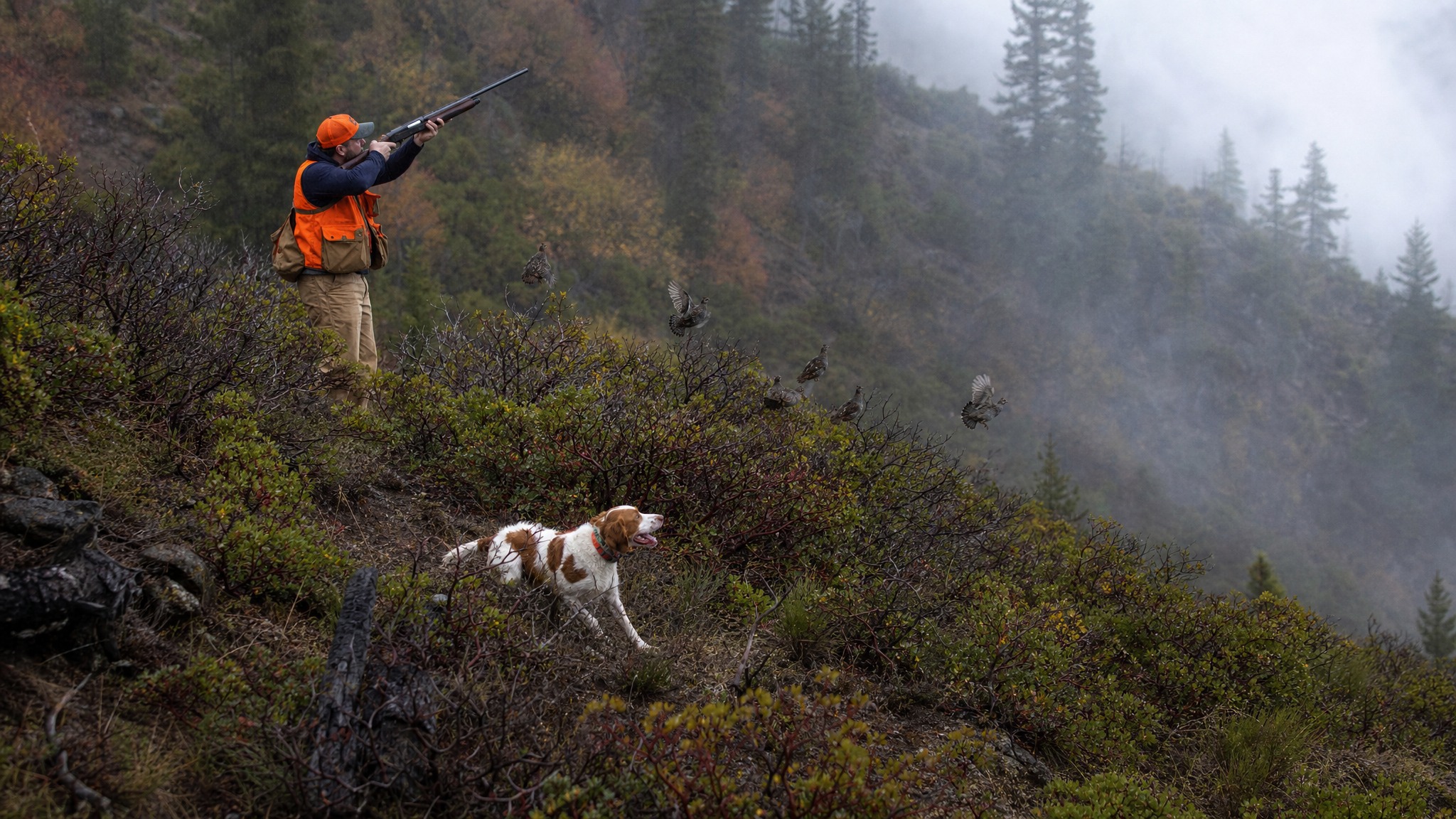
When most Oregon waterfowl hunters think December geese, they think Canadas honking over flooded fields or snow geese working the coast. But savvy Willamette Valley hunters know that white-fronted geese — specklebellies — offer some of the most exciting late-season goose hunting in the Pacific Northwest. These birds are smart, vocal, and absolutely delicious. If you haven't targeted specs in the valley, you're leaving birds on the table.
Understanding Oregon's Specklebelly Migration
Greater white-fronted geese (Anser albifrons) migrate through Oregon in two distinct waves. The first push comes in October as birds staging from Alaskan breeding grounds hit the Klamath Basin and valley floors. The birds you want — the ones that linger into December — are late migrants and local birds that have discovered the Willamette's wealth of harvested grain fields, grass seed stubble, and wet meadows.
By late November and December, most of the valley's specklebelly population is concentrated between Salem and Eugene, with strong concentrations around Linn, Benton, and Marion counties. Fields that produced corn, wheat, or grass seed are magnets. When atmospheric rivers roll in off the Pacific and flood low fields, specklebellies pile in from miles around.
Scouting: The Work That Makes the Difference
Specklebellies are not birds you can pattern from the couch. They move constantly, following food and avoiding pressure. Effective December scouting means driving the valley between dawn and 9 AM to watch where birds feed, then returning at dusk to confirm they're roosting nearby.
Key areas to glass in December:
- Lower Luckiamute Valley (Polk County) — Flooded grass seed fields hold big numbers of mixed geese including specs
- Ankeny National Wildlife Refuge area — Private ground surrounding Ankeny routinely holds birds pushed off the refuge by hunting pressure
- Muddy Creek watershed (Benton/Linn border) — Low-lying fields flood fast and attract specs when rivers come up
- North Albany grain country — Harvested corn and wheat stubble fields along Hwy 20 corridor
Knock on doors. Seriously. Most Willamette Valley farmers have seen hunters stop more times than they can count, but a respectful, early approach — especially if you offer to share birds — goes further than you'd expect. Many of the best speck spots in the valley are accessed through long-standing landowner relationships.
Decoy Spreads for December Specs
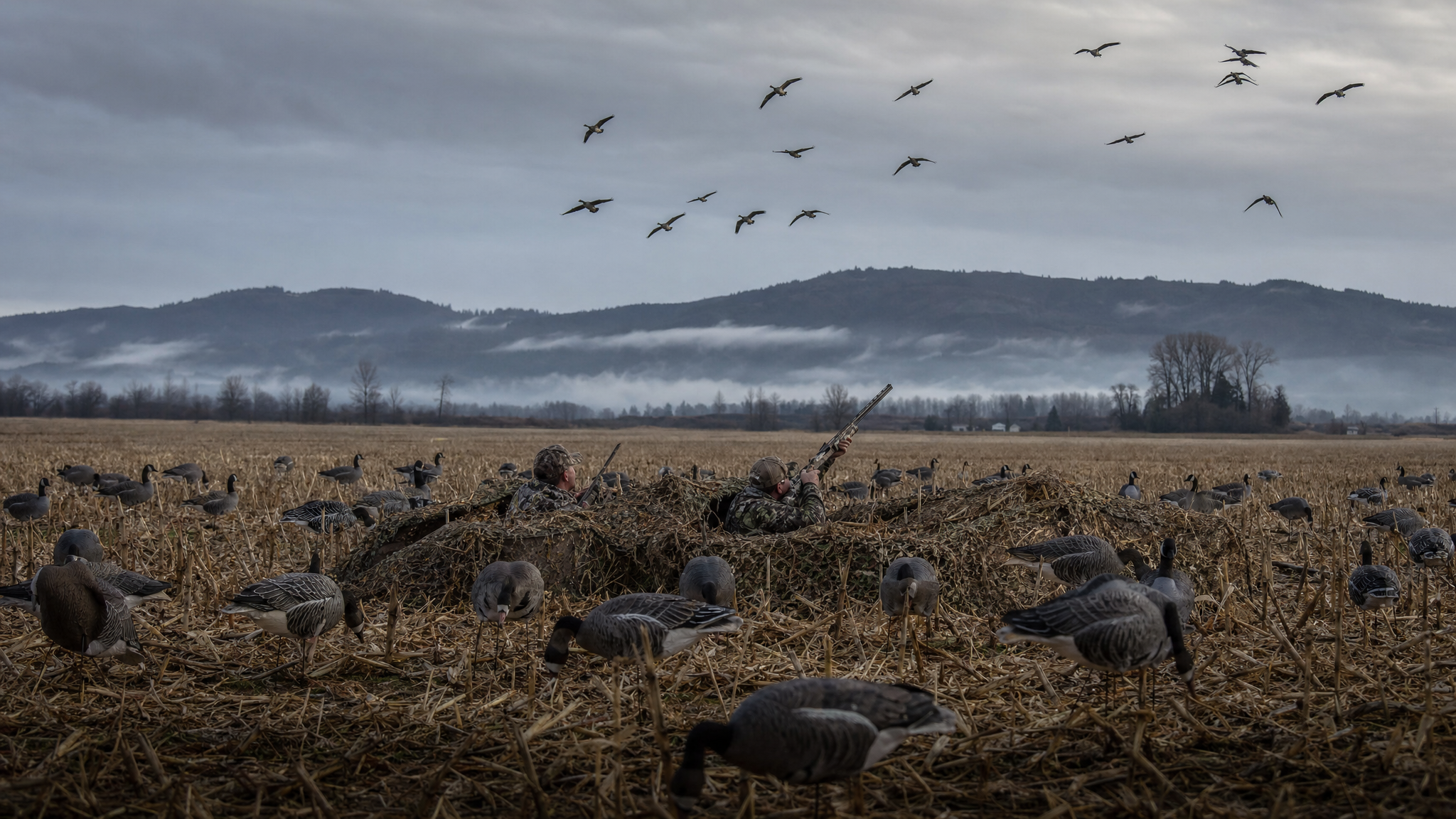
Specklebellies are call-responsive and decoy-focused, but they're also sharp. A lazy spread won't cut it by December when birds have been pressured since October. Here's what works:
- Use full-body decoys — Avian-X, Dave Smith, or GHG full-body specklebelly decoys are worth the investment. Silhouettes work in low-light conditions but struggle mid-morning
- Mix in Canadas — Real December fields hold mixed flocks. A spread of 60% Canadas and 40% specs looks natural and doesn't spook mixed groups
- Spread wide, not tight — December geese that have been hunted want room. Give them a landing zone 20–30 yards in front of your blinds
- Add movement — A spinning wing or flapping shell decoy in calm conditions helps. When wind is blowing, standard full-bodies do the job
Calling Specklebellies
The laughing, cackling yodel of a specklebelly is unmistakable and one of the most exciting sounds in waterfowl hunting. Learning to run a speck call is a skill unto itself, but here's the foundation:
Specklebellies respond to a high-pitched, nasal layering call — almost like a rapid, stuttering "lahk-lahk-lahk" with a high front end. Zink Calls, Tim Grounds, and Rich-N-Tone all make excellent speck-specific acrylic calls. Practice with recordings of real birds before the season.
In December, birds are educated. Lead with soft contact calls and clucks when birds are working. Aggressive layering calls on committed birds will often flare them. Read the flock — if they're drifting, hit them hard; if they're locked in, back off and let the decoys finish the job.
Layout Blinds and Field Concealment
Layout blinds are the standard setup for Willamette Valley field hunting. Avery Outdoors, Final Approach, and Dakota Decoy all make solid options. The key in December is brushing your blind to match the specific field — grass seed stubble looks completely different from flooded ryegrass or corn debris. Bring zip ties and native material you collect on-site.
Face into the wind. Specklebellies almost always land into the wind, so place your blinds so incoming birds are coming toward your faces, not crossing perpendicular or landing behind you.
Shotgun and Load Selection
Geese are tough. By December they've built heavy breast muscle and dense feather structure. Use a 12-gauge with a modified or improved modified choke and load up with:
- Steel: 3-inch BBB or BB at 1,550 fps minimum
- Bismuth or Heavyweight TSS: 2¾-inch No. 2 or No. 3 for tighter patterns
- Hevi-Shot or Federal Heavyweight: 3-inch No. 2 for clean kills at 40–50 yards
Keep shots inside 45 yards. Crippled geese that sail to the next field are lost birds, and they educate every spec in the zip code.
Oregon Regulations: Know Before You Go
Oregon's 2026–2027 Pacific Flyway goose season allows white-fronted geese under the Light Goose Conservation Order provisions and regular season frameworks. Check the ODFW Migratory Bird Regulations for exact dates and bag limits, as the late season framework can shift. The standard daily bag limit for white-fronted geese during regular season is typically 2 birds. Possess your federal and state licenses, your HIP (Harvest Information Program) registration, and a current Federal Duck Stamp. Non-toxic shot is mandatory.
Final Thoughts
December specklebelly hunting in the Willamette Valley is a grind — cold, wet, and physically demanding if you're setting 150 decoys in a rain-soaked field at 5 AM. But when a family of specs commits to your spread, wings cupped and that electric yodeling filling the gray valley air, there's nothing else like it in Oregon waterfowling. Put in the scouting miles, secure your permission, and go earn your birds.