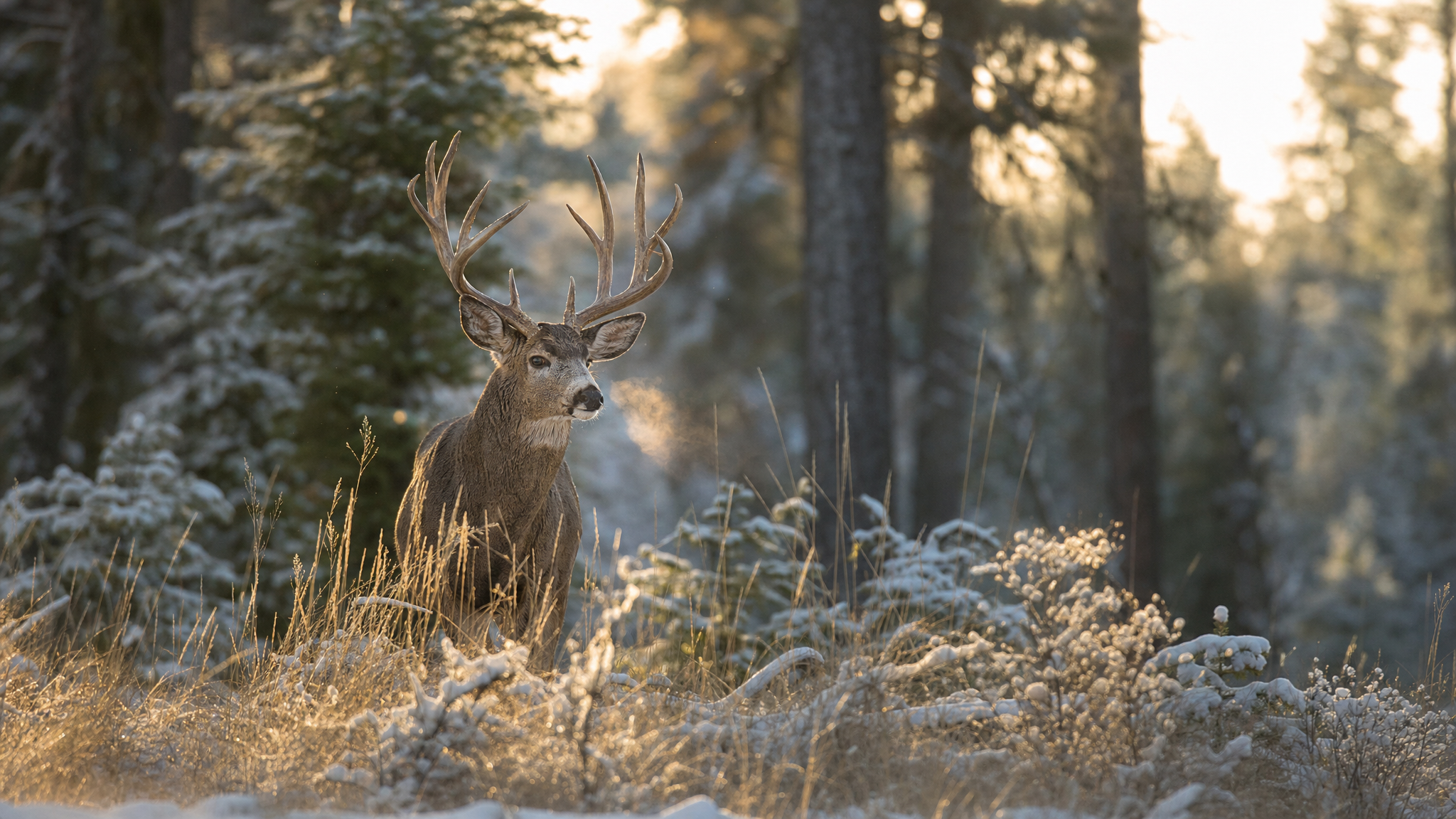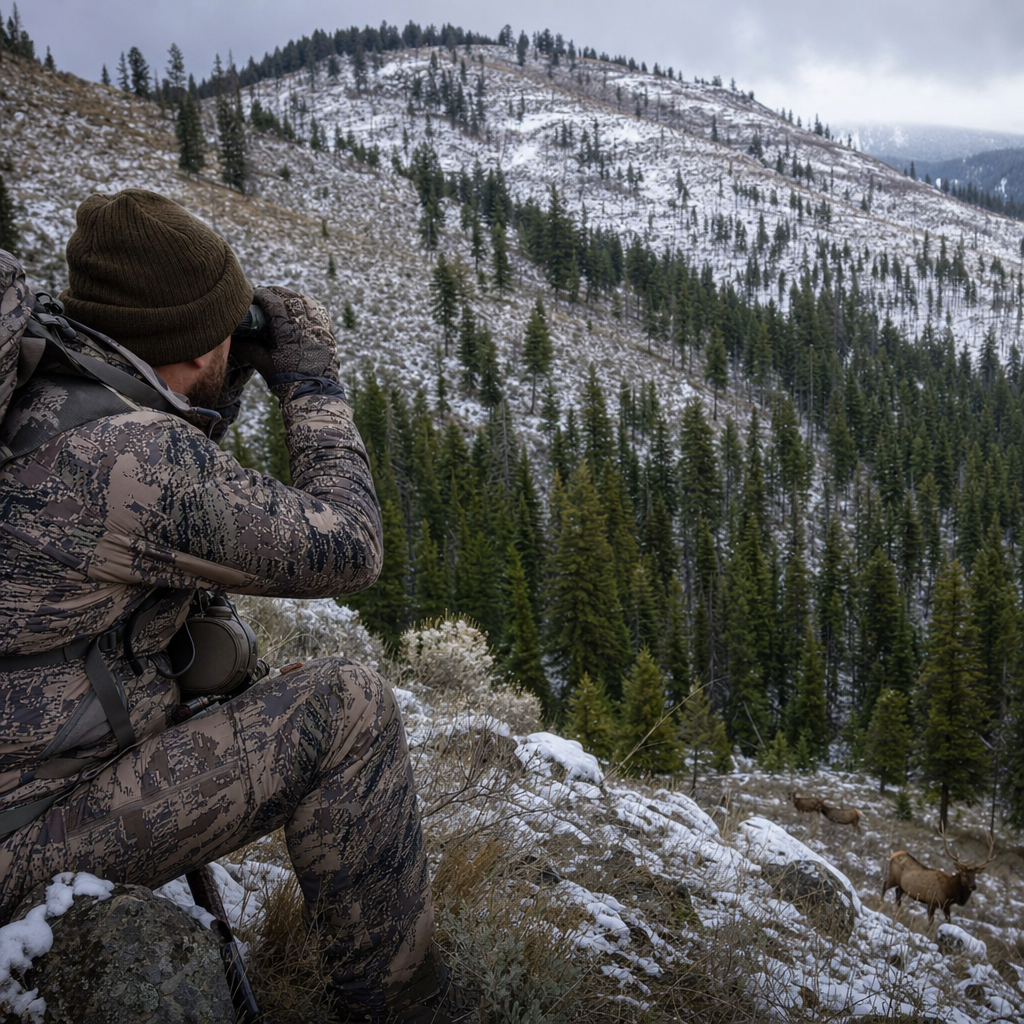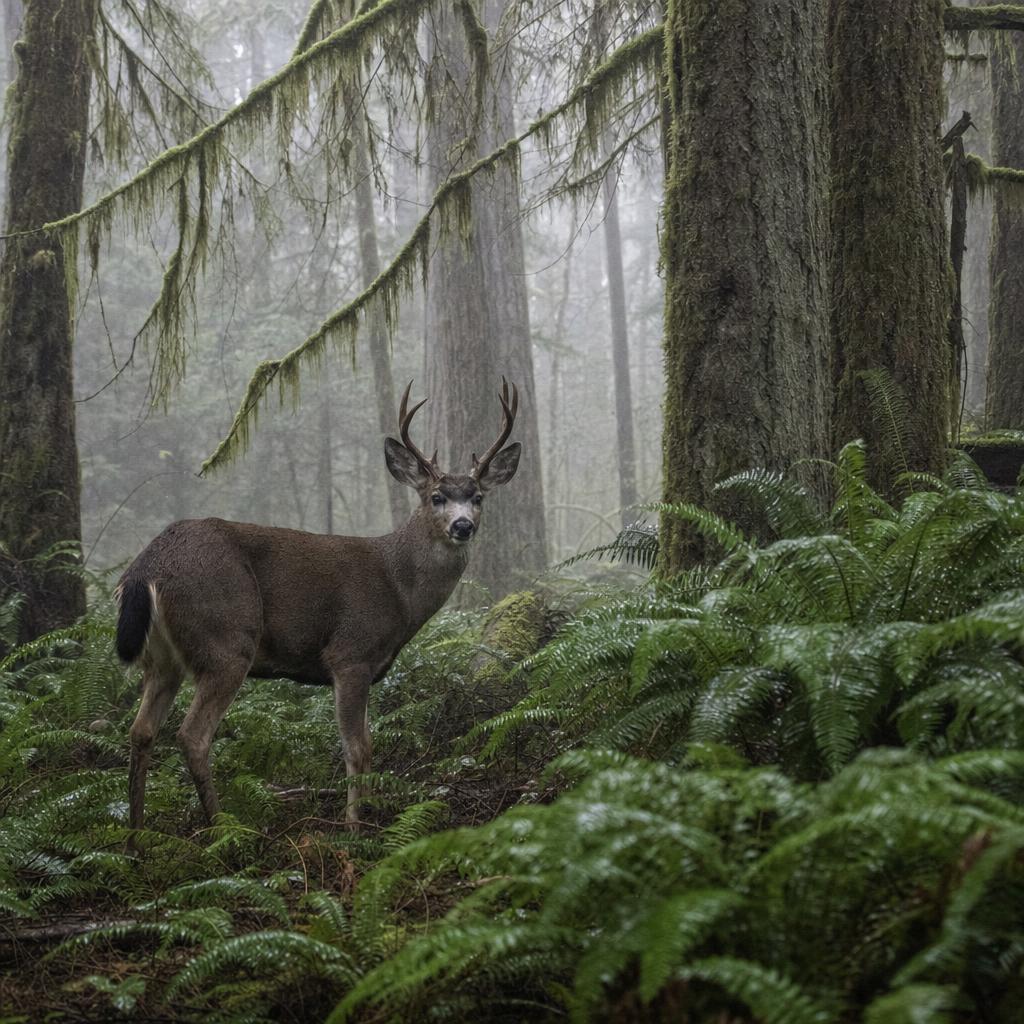
By mid-November, the Willamette Valley is soaked in and the Cascades are under snow. For hunters who put in their time in the Oregon Coast Range, this is exactly what they've been waiting for. The late-season Columbian black-tailed deer rut is winding down, but bucks are still on their feet more than any other time of year, pushing through fog-shrouded ridges and checkerboard timber in Tillamook, Lincoln, and Yamhill counties. If you can read the terrain and weather, the last two weeks of the Oregon general deer season can be your best hunting of the year.
Understanding November Coast Range Blacktail
Columbian black-tailed deer (Odocoileus hemionus columbianus) are a different animal than their mule deer cousins in eastern Oregon. They've evolved in dense, wet, broken timber — and they use every bit of it. November blacktails don't do long cross-country cruises in the open like November whitetails. They move through the timber in short bursts, bedding in tangles of salal and sword fern, feeding on whatever browse is left after summer. The rut peaks in late October to early November on the coast, but mature bucks are still moving hard through mid-month, checking scrapes and trailing does.
The key to late-season success is finding the transition zones: where clear-cuts from 5–15 years ago butt up against mature timber or creek drainages. Blacktails feed in the brush, bed in the dark timber, and travel the edges in between. Focus on saddles, benches just below ridgelines, and creek bottom crossings — the same terrain features that concentrate deer movement in any heavy-timbered country.
Prime Hunting Areas in Tillamook and Lincoln Counties
Tillamook State Forest
The 364,000-acre Tillamook State Forest is Oregon's most accessible public blacktail country. Highway 6 and the Wilson River corridor provide trailhead access deep into the forest, and the patchwork of logging roads — many open to foot traffic in late season — lets you glass clear-cut edges at first light. The drainages feeding the Wilson, Trask, and Tillamook rivers all hold good deer numbers. The area burned in the Tillamook Burn fires of 1933–1951, and the resulting even-aged timber creates excellent browse-to-cover transitions throughout.
Siuslaw National Forest (Lincoln County)
The Siuslaw holds Roosevelt elk and blacktail in roughly equal standing. The drainages west of Siletz and north of Waldport are worth exploring for late-season deer. The old-growth pockets hold mature bucks, but you'll cover a lot of miles in this country. Focus on the 10–20-year-old clear-cuts where there's still thick brush at the edges.
Yamhill County Private Ground
If you have access to Yamhill County private timber or farm ground, the oak savanna edges along the valley floor where it transitions into Coast Range foothills can be exceptional in November. Blacktails work these transitions hard during the rut's tail end, and visibility is typically better here than in the dense coastal timber.
Tactics for Rain and Fog
The Coast Range in November means rain — usually a lot of it. This is not a reason to stay home. It's a reason to gear up properly. Here's what works:
Still Hunting in Wet Timber
Rain is your friend in the Coast Range. Wet leaves and duff eliminate noise completely, and you can move through the timber as quietly as a deer. Take three or four slow steps, stop, look, listen for 30–60 seconds, then move again. Focus on looking for horizontal lines — a deer's back or belly — in a vertical world of tree trunks and brush. November blacktails will often stand completely still and watch you pass, relying on their camo rather than bolting immediately.
Working the Fog
Dense coast fog can frustrate glassing setups, but it also pins deer in predictable areas and reduces their alertness. On foggy mornings, focus on the edges — where fog-line and timber meet — and work the downwind side of saddles and benches. Deer move later into the morning on foggy days, often until 9:00 or 10:00 AM.
Rattling and Calling
The rut tail end in mid-November still responds to light rattling and grunt calling. Don't bash the horns together — Coast Range blacktails are not aggressive fighters the way plains whitetail are. Light tickling and grinding, combined with a few doe bleats, can pull a cruising buck in from 150–200 yards in this dense country. Set up with the wind in your face and timber at your back.
Gear for the Pacific Coast Timber
- Waterproof everything: GORE-TEX pants and jacket are non-negotiable. The Coast Range will soak you through a rain shell in two hours. Budget for quality here — it directly affects how long you can stay in the field.
- Rubber boots: Muck boots or similar knee-high rubber pull-ons keep your feet dry when you're wading through wet brush. Pack wool socks and an extra pair.
- Short-to-medium range optics: You rarely get shots past 150 yards in this country. A 2.5–10x scope is plenty. Leupold VX-3 or similar quality glass handles the low-light conditions at dawn and dusk.
- Brush-busting cartridge: The classic Coast Range deer guns are the .30-30, .308, and .270 Winchester — all capable of 150-yard shots and all easy to pack in wet timber. The .30-06 with a 150-grain flat-based bullet is a Coast Range staple.
- Orange requirements: Oregon requires 200 square inches of fluorescent orange above the waist during general rifle deer season. Vest and hat covers it.
Shot Opportunities and Shot Placement
Coast Range shots are rarely long, but they're often awkward — quartering-away angles through brush, steeply downhill, or at a deer half-obscured by a fern patch. Know your shot angles cold before you go. The classic quartering-away shot on a blacktail means aiming through the near-side ribs to exit the opposite shoulder. Practice this shot from steep angles at a 3D target before the season.
At close range in thick timber, consider the .30-caliber advantage: a 150–180 grain bullet can clip through a small branch and still hit the vitals. Ultra-thin-jacketed varmint-style bullets won't do this reliably — stick with bonded or cup-and-core hunting bullets that can handle minor deflection.
The Last Hunt of the Year
Oregon's general deer season closes in mid-November across most western units. That final week in the Coast Range, with the rut winding down and the weather turning cold and wet, is a bittersweet stretch of hunting. The bucks are still moving. The fog sits in the drainages. The deer smell like wet fir and moss. Gear up right, hunt slow, and get out there for the last best days of the season.