The ODFW controlled hunt draw results drop in mid-July, and every mule deer hunter in the state gets that familiar stomach-drop the moment they log in. But whether you drew a coveted Oregon mule deer tag or you are hunting general season, the week after draw results is not the time to start scouting. It is the time to already know where your buck is.
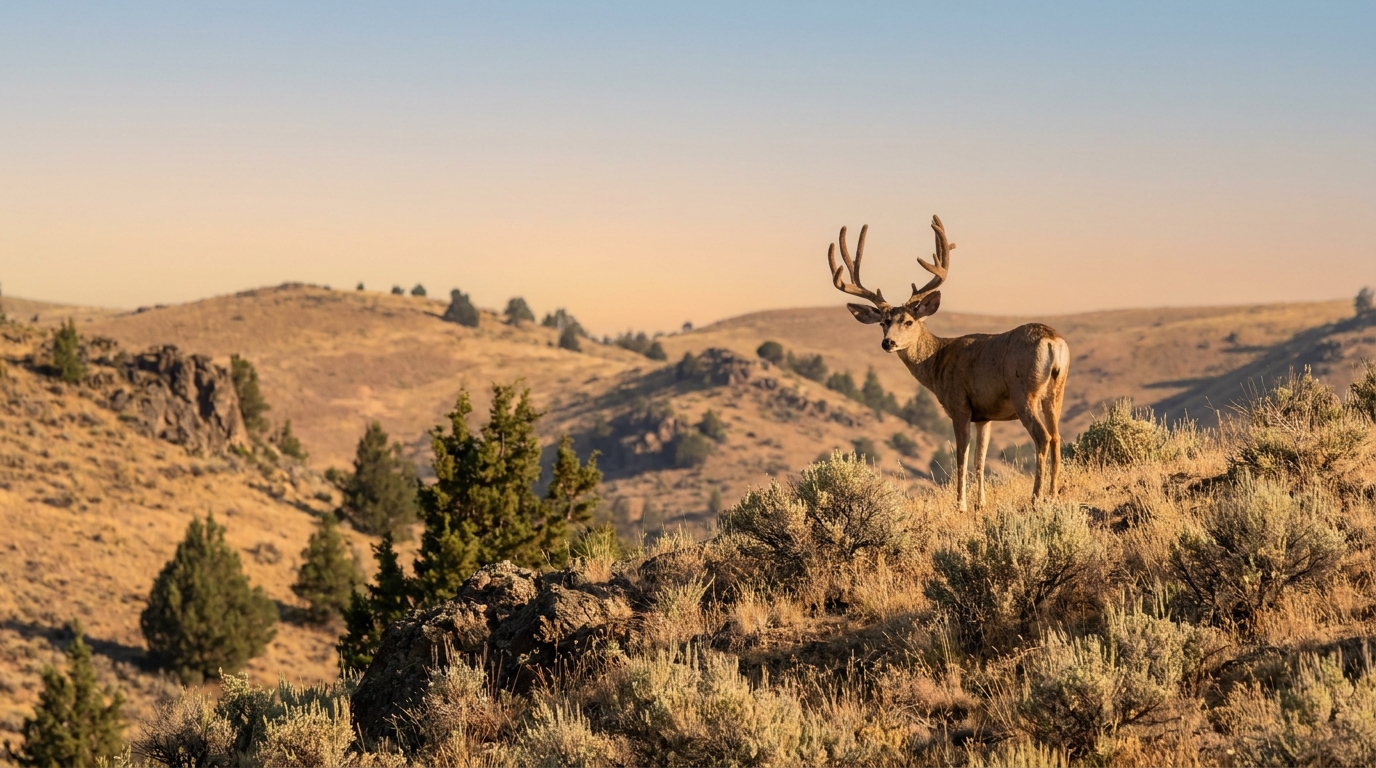
Late July is the single best glassing window of the entire deer season. Bucks are in full velvet, feeding aggressively to fuel antler growth, and holding summer patterns that will not shift until late August at the earliest. If you put in glass time now, you will know exactly where your target animal wants to be when the season opens.
Why July Scouting Beats August Scouting
By mid-August, hunting pressure starts shaping deer behavior — trail cameras go in, trucks start driving forest roads, and bucks that were using meadows at midday begin shifting to nocturnal patterns. In late July, the pressure is almost zero. Bucks are still visible at 7 a.m. in the same draws they will use a month from now, and they have not yet been spooked into survival mode.
You are not just finding deer. You are finding summer-to-early-fall transition habitat. A buck that is feeding on a north-facing slope with a spring seep nearby in late July will often be within half a mile of that spot when archery season opens in late August. That consistency is what you are banking on.
Digital Scouting First
Before you drive five hours into the high desert, do your homework at home. OnX Hunt is the standard tool in Oregon for good reason — the ability to overlay satellite imagery, public versus private land boundaries, topo lines, and water sources in one view cuts days off the scouting process.
- Find water: In July and August, water is the trump card in arid Eastern Oregon units. Springs, stock tanks, creeks, and ponds all concentrate deer. Identify every water source in your unit and prioritize glassing setups that cover approach routes to water.
- Find north-facing slopes: These hold grass, forbs, and residual moisture longer into summer than south-facing aspects. Velvet bucks in July are calorie-driven. They follow the feed.
- Find the bench: Classic mule deer habitat in units like Murderers Creek, Beulah, Silvies, and Beatys Butte — a benched hillside with a mix of sage, bitterbrush, and bunch grass above a drainage, with timber or rimrock for shade within a quarter mile. That micro-habitat is what you are looking for.
- Mark roads and gates: Note which areas require a key or have seasonal closures. Calling the local BLM field office takes five minutes and can save you a locked gate situation at 4 a.m.
Glass from a Distance, Then Back Out
Show up before legal light and be on a glassing point by first light. The first and last 45 minutes of daylight are your windows. In the high desert, set up 600 to 1,000 yards from the country you want to glass — you are looking across at terrain, not into it. A quality 10x42 binocular (Vortex Razor HD, Swarovski EL, or Leica Noctivid) and a 65-85mm spotting scope on a sturdy tripod are the minimum setup worth hauling.
Glass methodically. Break the hillside into horizontal bands and work from the bottom up. Brown velvet against green grass can look like a rock until it flicks an ear. Look for the horizontal line of a back, the dark mass of a body in shade, the flicker of a tail. Take your time.
When you find a good buck, watch him long enough to determine his bed site and exit route. Then leave. Do not walk in. Your most valuable asset in the next month is that buck not knowing you exist.
Water Sources and Trail Cameras
If you want to close the gap on velvet bucks after glassing them from a distance, water sources are the right camera location. Deer visit water in the morning after feeding, and again in the evening before the last-light feed. A camera positioned 15 to 20 yards back from a stock tank or spring — not right at the edge — will give you identification photos without over-pressuring the source.
Check cameras every 10 to 14 days in July and early August. Resist the urge to check more frequently. Every trip in is another trip that might bump a mature buck off his pattern.
Unit-Specific Notes for Eastern Oregon
- Murderers Creek Unit (Grant County): One of Oregon's most consistent producers of trophy mule deer. Mixed ownership — know your boundaries. Buck velvet antler development peaks in late July. Concentrate on north-facing drainages above 4,500 feet.
- Beatys Butte Unit (Lake County): Remote, long miles between water, dramatic country. Bucks here use rim systems and lava field edges. Glass north rims from the flats below at first light.
- Silvies Unit (Harney County): Diverse habitat from meadow to aspen draws. July bucks often use meadow edges at first light before retreating to timber. Look for rubs on small junipers — they are starting early even in velvet.
- Owyhee Unit (Malheur County): Canyon-heavy country. Deer move between canyon bottom water and rimtop graze. Glass from the rim looking down into side canyons in the early morning when bucks are still on their feet.
What to Note in Your Scouting Journal
Every glassing session should produce written notes, not just mental ones. Record:
- GPS waypoints for bed locations, water sources, and feeding areas
- Buck identification details: frame size, tine count, any distinguishing points or abnormalities
- Time of day the buck was visible and direction of travel
- Wind direction during observation (helps you plan a future approach)
- Other hunters or vehicles seen in the area
Two or three scouting sessions before mid-August can produce a pattern complete enough to put together a first-week archery hunt with a specific target animal in mind. That is the goal. Not just deer — that deer.
Final Thought
Most hunters wait until the week before season to start thinking about where they are going. The ones who consistently punch their tags on mature bucks did not wait. They were on the glass in late June and July, logging miles and building a map in their head of how a specific animal uses specific country. Do the work now. Eastern Oregon will reward it.