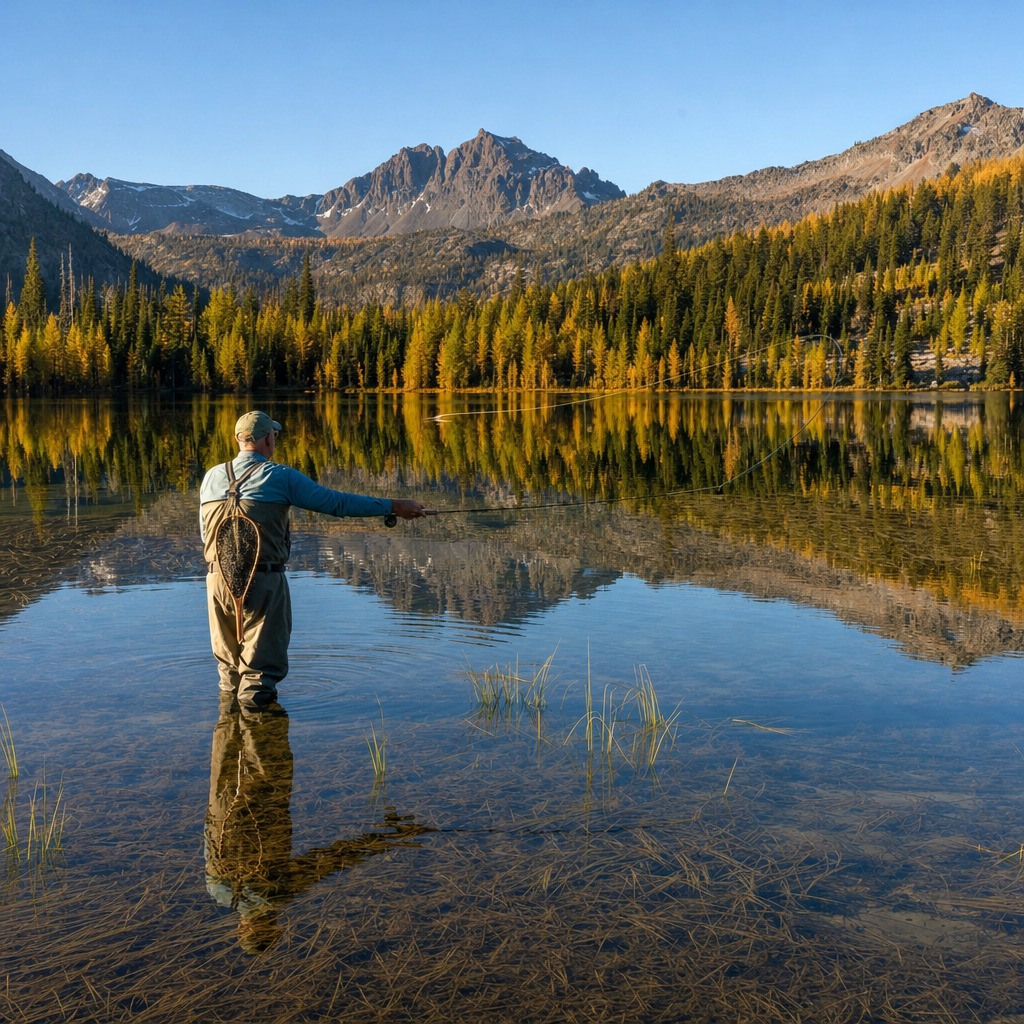
Tucked into the Deschutes National Forest south of Bend, Hosmer Lake is one of Oregon's most unique fisheries. It's a shallow, weedy, spring-fed lake that sits at roughly 4,950 feet elevation in the shadow of Mount Bachelor, and it holds a population of Atlantic salmon and brook trout that are unlike anything else you'll find in the Pacific Northwest. The catch-and-release fly fishing-only regulations have shaped a fishery where fish grow big, wary, and absolutely gorgeous — and October and November are the best months to be there.
What Makes Hosmer Lake Special
Hosmer was stocked with landlocked Atlantic salmon decades ago and has maintained a self-sustaining population alongside its wild brook trout ever since. The lake itself is broken into two basins connected by a narrow channel — the upper lake is shallower and more heavily vegetated, while the lower basin is deeper with more open water. Both hold fish, but the upper lake is where most of the wade-fishing and canoe fly fishing action happens in fall.
The lake is fly fishing and artificial lures only, catch-and-release for Atlantic salmon. Brook trout may be retained up to the current ODFW limit — check current regulations at myodfw.com — though most serious anglers practice full catch-and-release here. This fishery is a gem worth protecting.
Why Fall Is the Best Season
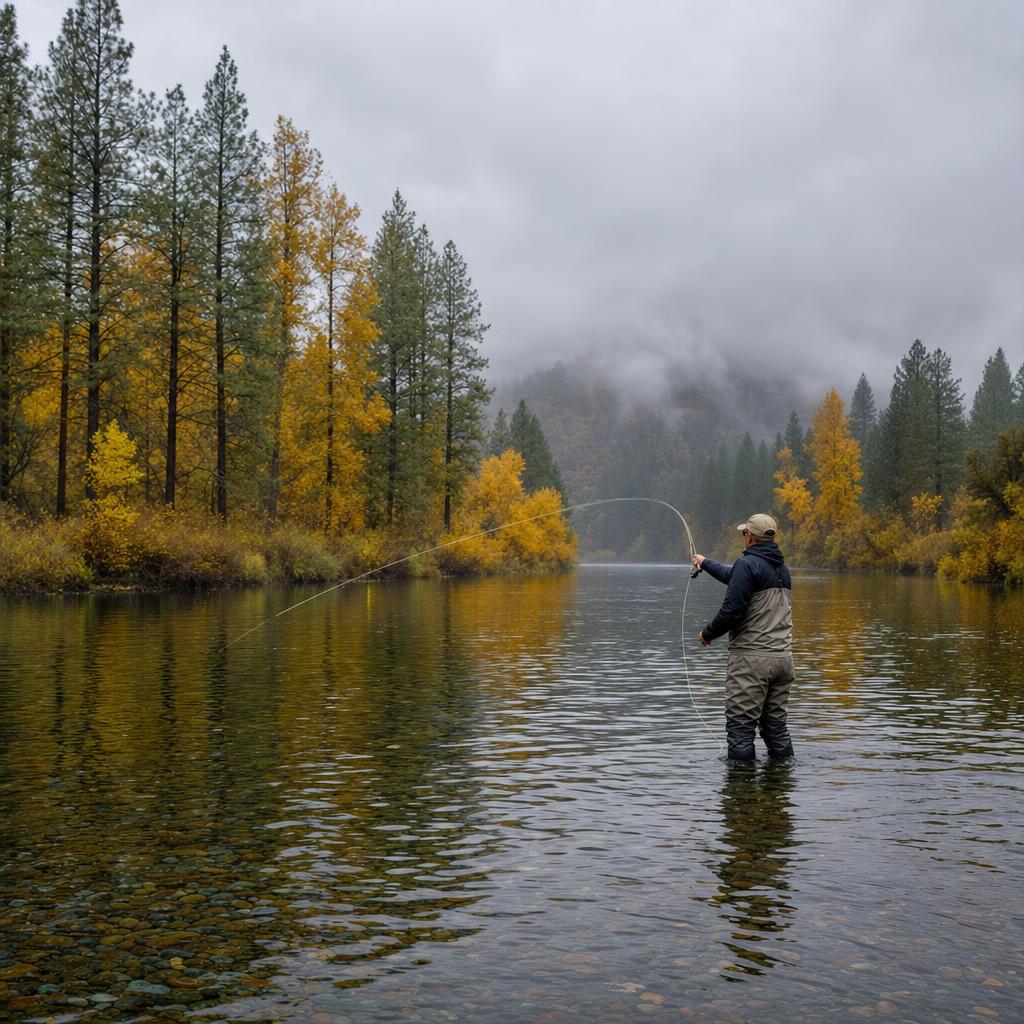
Hosmer Lake fishes well throughout the summer, but autumn transforms the lake. Here's why October and November stand out:
- Brook trout spawn in October and November. Spawning brookies are at their most vivid — males turn electric orange and red on the belly with brilliant blue and yellow flank spotting. They're also more aggressive and easier to locate near gravel shallows and inlet seeps.
- Atlantic salmon aggregate. The salmon stack up in predictable locations as water temps drop, making them easier to target with streamers and wet flies on full-sinking or sink-tip lines.
- Crowds thin dramatically. Summer weekends at Hosmer can be shoulder-to-shoulder with canoes and kayaks. By October, most of the float tube crowd is gone and you'll often have entire sections of the lake to yourself.
- Hatches continue. October brings reliable Callibaetis mayfly hatches into the afternoon, along with midges and small Baetis that keep fish looking up on warm fall days.
Tactics for Fall Brook Trout
Hosmer is a sight-fishing lake. The water clarity is exceptional — often 10 to 15 feet of visibility — and the shallow upper lake lets you see individual fish cruising the weed edges and sandy flats. This is where the fishing gets addictive and frustrating in equal measure.
Dry Flies and Emergers
When the Callibaetis hatch is on, fish will be visibly sipping emergers and duns off the surface. A size 14–16 Callibaetis Parachute, CDC Comparadun, or RS2 fished on a long, fine leader (12–14 feet of fluorocarbon down to 5x or 6x) will fool fish — but they need to be presented well. These are educated fish in clear water. Drag-free drifts are mandatory.
Streamers for Salmon
The Atlantic salmon respond to streamer presentations stripped with erratic action. A Rio Aqualux or Airflo sink-tip line with 4 feet of 1X or 2X fluoro lets you get flies down into the 4–8 foot range where salmon hold in the lower basin. Olive Woolly Buggers, black Marabou Muddlers, and small Clouser Minnows in chartreuse/white all produce. Strip fast, let it pause, strip again — salmon often follow and take on the drop.
Nymphing the Weed Edges
Brook trout love to work the edges of aquatic vegetation for damselfly nymphs, chironomid pupae, and scuds. A simple two-nymph rig under an Airlock indicator — a size 16 Bead-head Pheasant Tail and a size 18 Zebra Midge — fished tight to the weed lines in 3–5 feet of water will pick up brook trout all day long when hatches aren't happening.
Getting There and Camping
Hosmer Lake sits 35 miles southwest of Bend via the Cascade Lakes Highway (Highway 46). The road is typically open through mid-November before seasonal closure, though early snow can change that — check current road conditions with the Deschutes NF at fs.usda.gov before making the drive.
There are two campgrounds at Hosmer: South Hosmer Campground and Mallard Marsh. Both are primitive and first-come-first-served. By late October, these campgrounds are usually empty and free to use after the fee season ends. An evening fire, a sky full of stars with Bachelor visible to the north, and rising brook trout at last light — it doesn't get better than that.
Essential Gear Checklist
- 5-weight fly rod, 9 feet, with floating line and a spare sink-tip spool
- Long leader (12–14 feet) in 4x–6x fluorocarbon
- Dry flies: Callibaetis Parachute #14–16, CDC Emerger #16–18, Griffith's Gnat #20
- Nymphs: Zebra Midge #18–20, Hare's Ear #14, Bead-head Pheasant Tail #16
- Streamers: Olive/black Woolly Bugger #6–8, Marabou Leech, small Clouser
- Polarized sunglasses (essential for sight fishing — amber or copper lenses for overcast fall days)
- Waders or wading boots — the lake is wadeable along much of the upper basin shoreline
- A small canoe or kayak opens up water beyond the wading range
Hosmer Lake is one of those places that gets under your skin the first time you visit. The combination of stunning scenery, unique fishery, and demanding technical fishing makes it endlessly rewarding. If you've never fished it in fall, put it on your calendar now before the Cascade Lakes Highway closes for winter.