October on the Oregon coast means cooler crowds, rougher weather, and — for those willing to brave it — some of the best remaining Pacific halibut fishing of the season. The ODFW halibut season typically runs through the fall quota closure, and savvy anglers in Newport, Depoe Bay, and Florence are racing to punch their tags before it ends. If you haven't made your halibut trip yet, now is the time to load the cooler and book a seat on a charter.
Where to Launch: Newport, Depoe Bay, and Florence
Newport's South Beach Marina is the hub of Oregon's coastal halibut fleet. Multiple charter operators — including Pacific Charter Services and Sig's Charters — run daily halibut trips from here throughout the season. The ride to productive halibut grounds is typically 10 to 20 miles offshore, putting boats over structure along the continental shelf edge in 150 to 300 feet of water. Newport sits at the mouth of Yaquina Bay, making access efficient even on early-morning departures.
Depoe Bay, dubbed the "World's Smallest Harbor," is home to several charter operations that target halibut on the reefs and sandy flats north of Cape Foulweather. The proximity of good bottom structure just a few miles off the beach means shorter runs, but you'll still need a weather window — that tiny harbor entrance can shut down quickly when swells build.
Florence and the Siuslaw River mouth offer a southern option, with productive halibut grounds accessible off the central coast. Dune Country Fishing Adventures and local guides work the flats south toward Reedsport when conditions allow.
Gear and Terminal Tackle
Pacific halibut are big, flat, and powerful. They also live on or near the bottom, which means your gear has to punch through 200+ feet of water column and then stay put while presenting bait. Here's what the Oregon charter fleet uses:
- Rods: Heavy conventional rods rated for 50–80 lb. line, 6–7 feet long. Halibut rods need backbone to drive hooks and lift big fish from depth.
- Reels: Level-wind conventionals (Shimano Tekota, Penn Squall 50–80) with strong drag. You'll be dropping heavy sinkers to the bottom repeatedly.
- Line: 65–80 lb. braided mainline with a 5–6 foot fluorocarbon leader in 80–100 lb. test. Braid's low stretch is critical for feeling bites at depth and setting hooks.
- Terminal Rig: Standard Pacific halibut rig is a three-way swivel with a dropper to a lead pyramid sinker (12–20 oz depending on current) and a 12–18 inch leader to a large circle hook (8/0–10/0). Many anglers add a flasher above the bait.
- Bait: Fresh-frozen herring, squid, and octopus are the standards. Salmon bellies are highly effective. Many charter operations provide bait — confirm when booking.
Technique: Working the Bottom
Halibut hunting is a game of bottom contact. Your sinker should tick the sand or gravel with a steady "thump-thump-thump" as the boat drifts. Too much scope and you're fishing in the water column — useless. Too tight and you're snagged. The sweet spot is light bottom contact maintained throughout the drift.
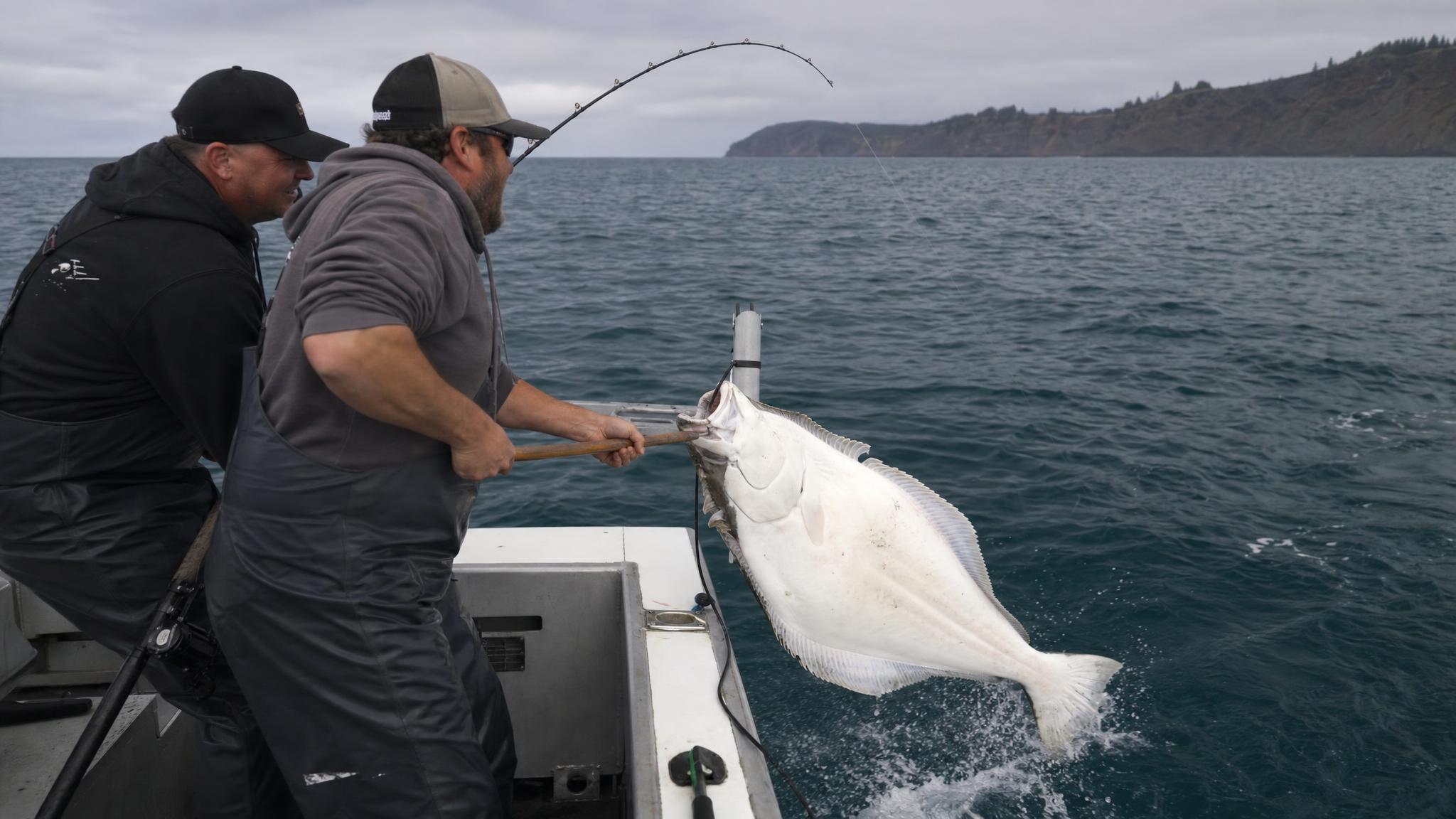
Once your rig is on bottom, reel up 6 to 12 inches, then drop back down every 30–45 seconds. This motion mimics a wounded baitfish and triggers strikes from fish sitting flat on the substrate below you. When a halibut hits, resist the urge to yank — with circle hooks, a slow, steady reel-up is all it takes. Wind, don't strike.
Reading Structure
Charter captains spend years learning the specific rocky pinnacles, sandy troughs, and current edges where halibut congregate. On a DIY trip in a private boat, focus on:
- Transition zones where hard bottom meets sand (use a quality chartplotter with sonar)
- Depths of 120–250 feet, with particular attention to 150–180 foot contours
- Areas with moderate current — too fast and halibut won't feed, too slack and they disperse
- Underwater humps and pinnacles marked on NOAA charts and popular fishing apps like Navionics
Oregon Halibut Regulations: Read Before You Go
ODFW manages Oregon's Pacific halibut fishery under a federally allocated quota that can close the season mid-year once limits are reached. For 2026, check the current status at myodfw.com before booking trips. Key rules:
- One halibut per person per day, minimum 24 inches in length
- Possession limit: 2 fish per angler
- Oregon fishing license required; halibut tag may be required depending on year
- All retention and release must be reported to ODFW via the Recreational Boat Survey if selected
Deadlines matter here. Late-October closures are common once the quota fills. If you're planning a trip, call ahead to confirm the season is still open.
What to Do with Your Catch
A large Pacific halibut is an exceptional table fish — firm, white, mild, and incredibly versatile. Even a modest fish in the 20–30 pound range will fill a cooler with quality fillets. Standard processing:
- Fillet both sides, removing the lateral line (the dark stripe) for mildest flavor
- Portion into 6–8 oz. pieces and vacuum seal for freezing — halibut freezes exceptionally well
- Classic preparation: pan-seared with butter, lemon, and capers. Simple and perfect.
- Halibut fish tacos with cabbage slaw and chipotle crema are a coastal Oregon staple
Final Word
The October halibut window on the Oregon coast is short, weather-dependent, and not for the faint of heart. But for anglers who make the trip — rolling offshore on a brisk fall morning, rod heavy with the thump of bottom structure, a halibut sled pulling hard toward the surface — it's one of the most satisfying fishing experiences the Pacific Northwest offers. Book early, pack your sea legs, and don't miss the last good bite of the season.