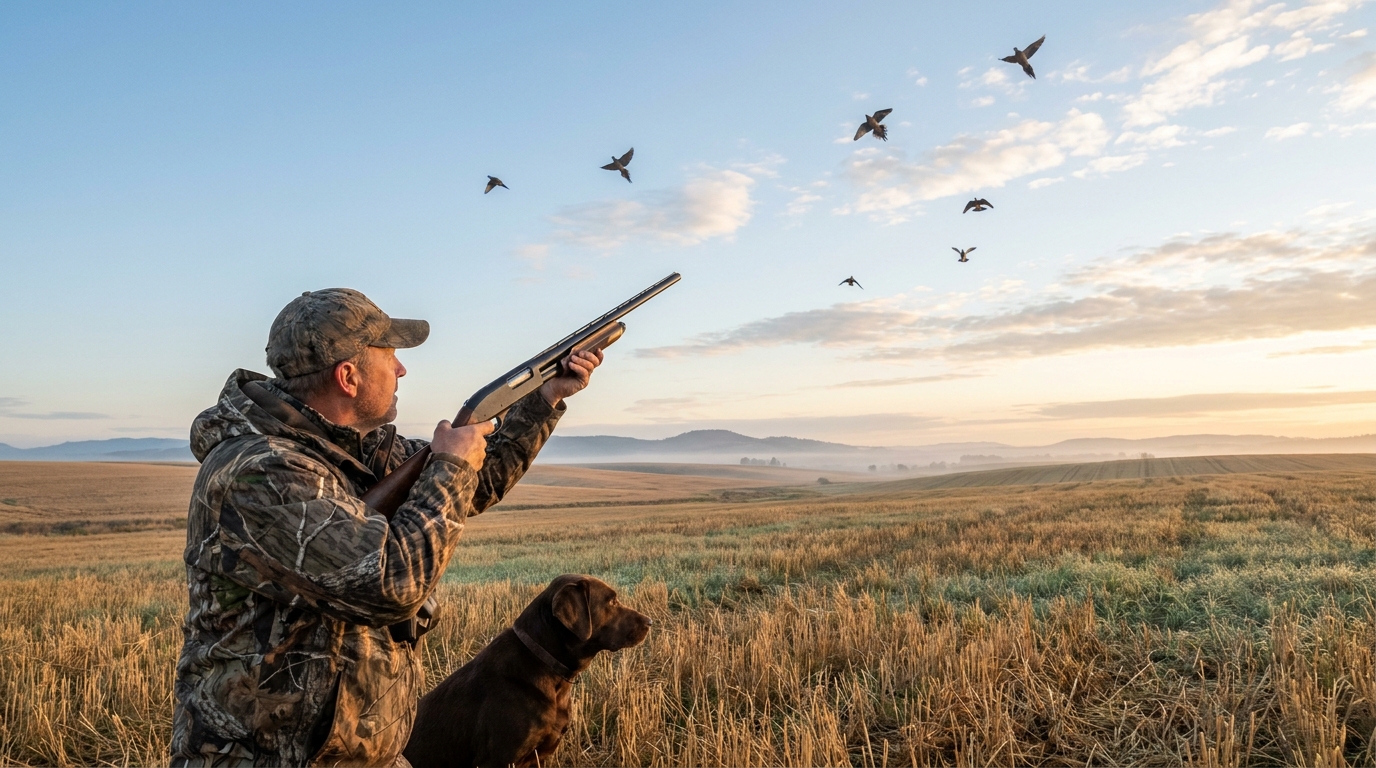
Dove hunting is one of the most overlooked opportunities on the Oregon hunting calendar. While most hunters are focused on elk tags, archery deer, and the upcoming waterfowl season, September opens with a fast and furious dove shoot that offers some of the most action-packed wing shooting available in the Pacific Northwest. Bag limits are generous, shooting is challenging, and the birds are excellent table fare when prepared right. Here's how to make the most of Oregon's mourning dove season.
Season Dates and Regulations
Oregon's mourning dove season typically opens on September 1 — the same date as most western states — and runs through mid-November. The daily bag limit is 15 doves with a possession limit of 45. Eurasian collared doves, which have expanded dramatically across eastern Oregon in recent years, are not regulated at the state level and can be taken in unlimited numbers in most areas. Always verify current ODFW regulations before heading out, as zone-specific rules and dates can change year to year.
You'll need a valid Oregon hunting license and a Federal Migratory Bird Hunting Stamp (duck stamp) to hunt doves. A HIP (Harvest Information Program) registration is also required — sign up when you purchase your license online through ODFW's licensing portal.
Where to Find Doves in Oregon
The Willamette Valley
The valley floor is prime early-season dove country. Sunflower fields, harvested grain, and irrigated pastures draw birds throughout September. Public access is limited, so you'll need landowner permission for most valley hunting. Focus on field edges near water sources — stock ponds, irrigation canals, and creek bottoms where doves come to drink morning and evening.
Eastern Oregon Agricultural Areas
Malheur County and the Treasure Valley along the Idaho border offer exceptional dove hunting thanks to vast sunflower and milo acreage grown for commercial markets. The area around Ontario, Vale, and Nyssa consistently produces limits of both mourning and Eurasian collared doves. Many fields are on private land, but polite knocking and asking permission goes a long way with eastern Oregon farmers.
High Desert Rangelands
Don't overlook the open rangeland and sagebrush country of central and southeastern Oregon. Mourning doves are abundant across this habitat type, particularly near stock ponds and natural water developments. BLM public land makes up a significant portion of this region, giving hunters legitimate access without needing private land permissions.
Columbia Basin
The dryland wheat country of north-central Oregon — Sherman, Gilliam, and Morrow counties — also holds good dove numbers in September. Recently harvested winter wheat fields attract birds in large numbers, and the landscape is more open, making pass shooting over feedfields a viable strategy.
Hunting Tactics
Pass Shooting
The classic dove technique. Set up at field edges, fencerows, or near water sources where birds are flying predictable routes. Arrive early and watch flight lines from a distance before committing to a setup spot. Doves tend to follow terrain features like creek drainages, power lines, and treelines as travel corridors between roost and feed. Position yourself where you have a clear overhead shooting lane.
Decoys
Spinning-wing dove decoys and static decoys on fenceposts or bare branches can pull birds into range and slow them down for cleaner shots. MOJO and Flambeau both make popular dove-specific decoys. Set three to six decoys within 20–30 yards of your position. Mourning doves are naturally curious and will often circle decoys before committing.
Water Holes
Doves need water daily, especially during the hot early September weather. Natural potholes, stock ponds, and irrigation canals are magnets. Shoot the approach lanes as birds glide in low over the water's edge. Evening flights to water can be fast and furious for 30–45 minutes before dark.
Shotgun and Ammo Selection
Doves are small and fast — they'll humble even experienced wing shooters. A 12 or 20 gauge with a modified or improved cylinder choke is standard. Shot size of 7.5 or 8 works well at typical dove ranges of 20–35 yards. Go with lighter loads, 7/8 oz. to 1 oz. in 12 gauge — you'll shoot a lot of shells in a dove field, and lighter loads reduce fatigue over a long morning hunt. Lead shot is permitted for doves on most Oregon lands, but check if you're hunting within a zone that mandates non-toxic shot.
Bring more ammo than you think you need. A box of 25 shells per hour is not uncommon for newer dove hunters, and even experienced shooters can burn through two or three boxes on a good bird day.
Gear Checklist
- Hunting license + duck stamp + HIP registration
- Shotgun with modified or IC choke
- Minimum 3–4 boxes of 7.5 or 8 shot
- Spinning-wing decoy and 2–4 static decoys
- Folding stool or bucket (you'll be stationary)
- Cooler with ice — process birds quickly in September heat
- Sun protection: hat, sunscreen, and long sleeves
- Plenty of water
Field Dressing and Table Fare
Doves spoil fast in warm weather. Get birds into a cooler with ice as soon as possible. Breast them out in the field by pressing your thumbs into the breast, pushing up, and popping the breast plate free — the whole process takes about 15 seconds per bird once you get the hang of it. Dove breasts wrapped in bacon and grilled over charcoal are a September tradition across the South that Oregon hunters would do well to adopt. Simple, delicious, and well worth the shells spent to put them on the plate.