Walk into any gun shop or browse any online rifle forum and you'll encounter the first focal plane versus second focal plane debate. Scope manufacturers have pushed FFP hard in the last decade, and the marketing pitch sounds compelling: accurate holdovers at any magnification, true MOA or MRAD measurements across the zoom range. But is FFP actually better for hunting? The honest answer depends entirely on how, where, and at what range you hunt — and a lot of hunters are buying scopes optimized for a use case that doesn't match how they actually shoot.
The Basics: What the Focal Plane Actually Does
Every variable-power scope has an erector tube assembly that magnifies the image. The reticle can be placed either in front of that assembly (first focal plane) or behind it (second focal plane). Where the reticle sits determines how it behaves as you adjust magnification.
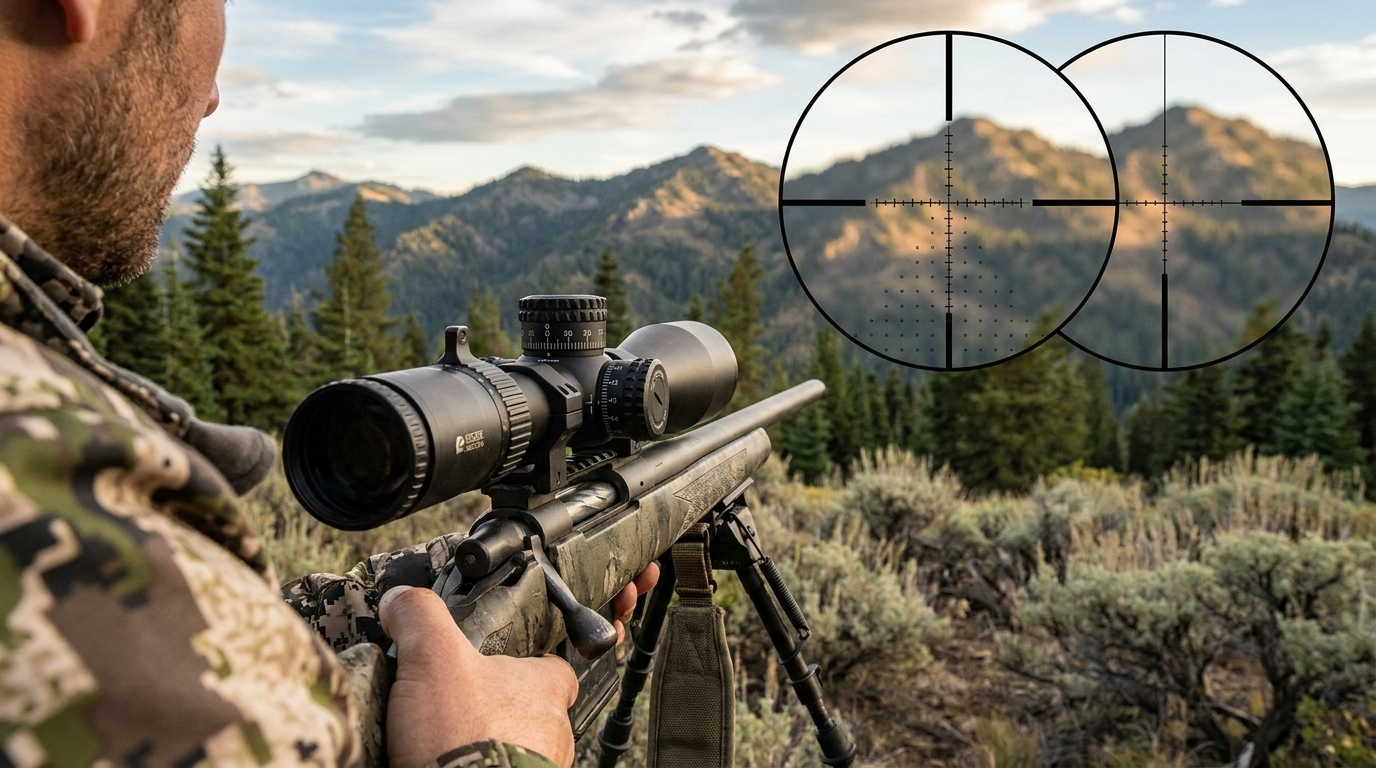
- First Focal Plane (FFP): The reticle appears to grow and shrink as you zoom in and out, because it's being magnified along with the target image. The result: the reticle's subtensions (the MOA or MRAD spacing between hash marks and holdover points) remain accurate at any magnification setting. A 1-MOA dot is 1 MOA whether you're at 4x or 20x.
- Second Focal Plane (SFP): The reticle stays the same apparent size regardless of magnification, because it sits behind the erector system. The subtensions are only accurate at one specific magnification — usually the highest power setting. At any other zoom level, the holdover marks are proportionally off.
Why FFP Became Popular
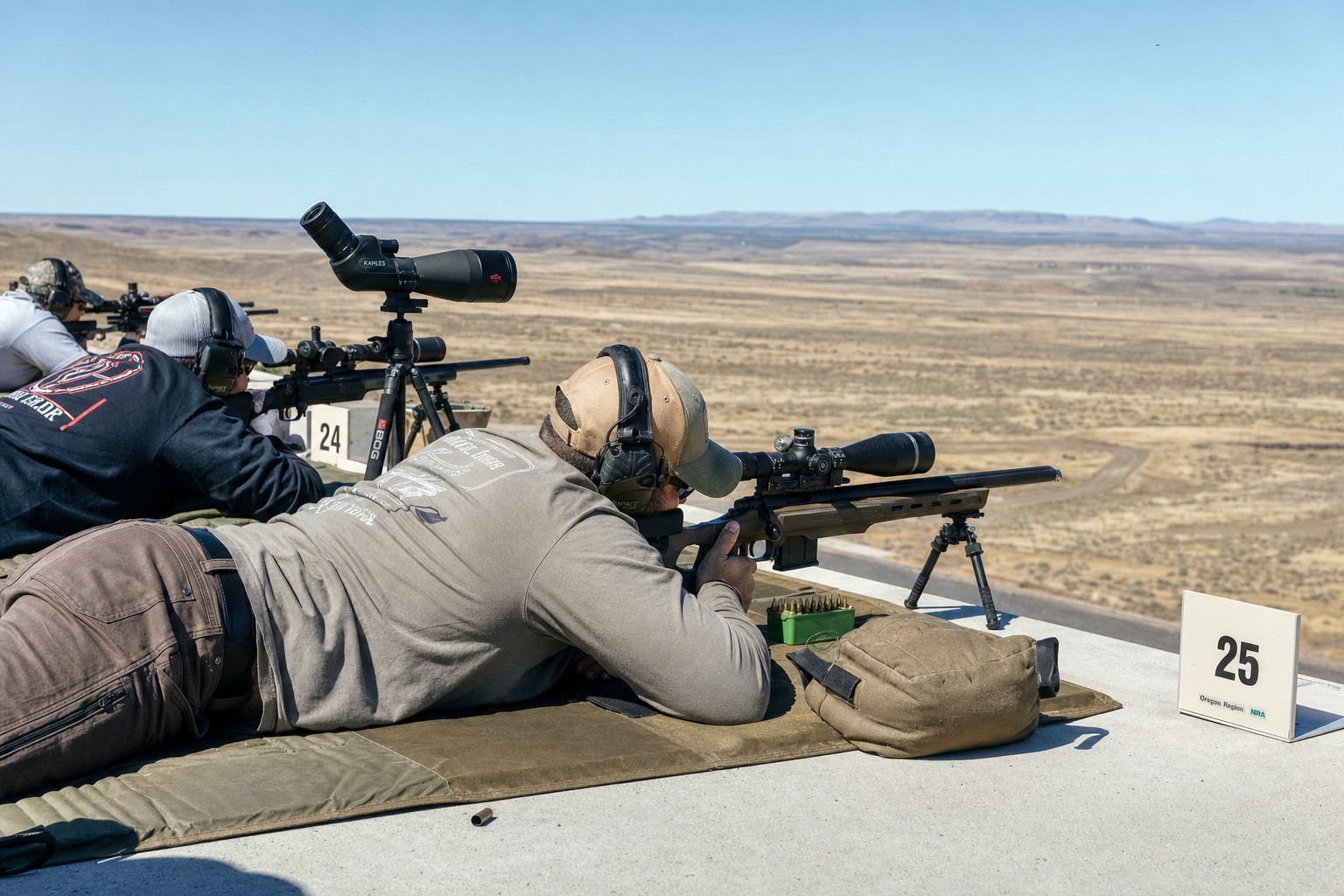
First focal plane scopes rose to prominence in the precision rifle and military/law enforcement markets, where shooters need to make rapid corrections at varying distances without thinking about what magnification they're on. In competition shooting — PRS matches, gas-gun matches, tactical carbine courses — the ability to read accurate dope at 6x or 18x without doing mental math is a genuine advantage. For a competition shooter dialing precise adjustments under time pressure, FFP is clearly the better choice.
The Hunting Reality
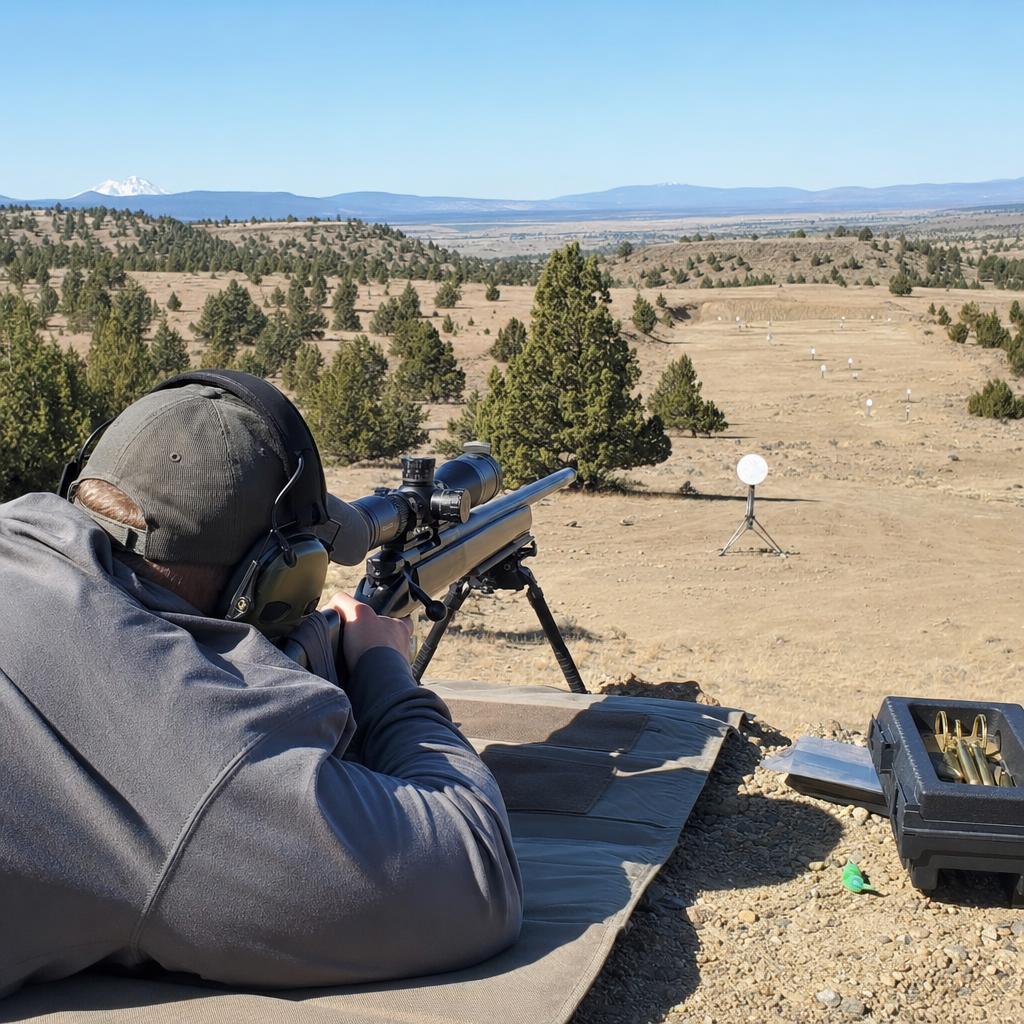
Here's where it gets more nuanced. Most hunting situations look nothing like a PRS stage. Consider the typical western big-game shot: you're glassing a mule deer or elk, you spot a shootable animal, you range it (180 yards), you dial your scope to the appropriate magnification (often maximum or near-maximum for a clear sight picture), you settle into position, and you shoot. You are almost never making a shot at an unknown magnification setting in a genuine hunting scenario.
When a hunter dials a scope to maximum power — or even to a consistent mid-range setting — an SFP scope's subtensions are perfectly accurate. The "problem" FFP solves (reticle inaccuracy at varying magnification) is essentially irrelevant if you're disciplined about your magnification setting before the shot.
Real Advantages of FFP for Hunters
That said, there are genuine hunting scenarios where FFP earns its keep:
- Long-range shots with unknown follow-up requirements: If you're hunting open country where a wounded animal might require a fast 400-yard follow-up shot at reduced magnification, having accurate holdovers at any power setting is useful.
- Rapid engagement at variable distances: Predator hunters — particularly those calling coyotes at close to medium ranges who might need to swing on a second dog at 50 yards while set up for a 200-yard shot — benefit from always-accurate reticle subtensions.
- Reduced magnification in timber: If you run a variable scope at low power in dense brush and want to use your BDC or mil holdovers at that setting without recalculating, FFP gives you that.
Real Advantages of SFP for Hunters
Second focal plane scopes have some underappreciated strengths that get lost in the FFP marketing blitz:
- Reticle visibility at low power: In FFP scopes, the reticle shrinks as you reduce magnification — sometimes to the point of being nearly invisible at minimum zoom. At 4x on a 4–16x FFP scope, a fine crosshair reticle can be hard to see clearly. SFP reticles remain the same size and visibility at all powers.
- Simpler, less cluttered reticle at high power: On FFP scopes, the reticle grows at high magnification, and complex Christmas-tree style reticles can become busy and hard to read on target. SFP scopes maintain a clean sight picture at max zoom.
- Cost: FFP scopes cost more to manufacture. At the same price point, you often get better glass quality in an SFP scope than an FFP scope from the same manufacturer.
- No discipline required: With SFP, your subtensions are accurate at the marked power (usually max). You always know where you stand without tracking your magnification setting.
Which Should You Buy?
Here's a practical framework for Oregon and western hunters:
Choose FFP if you:
- Compete in PRS or precision rifle matches
- Frequently shoot at unknown distances without ranging first
- Hunt open country where follow-up shots at variable ranges are likely
- Regularly use your scope's mil or MOA holdover marks rather than dialing
Choose SFP if you:
- Hunt primarily in timber or brush at ranges under 300 yards
- Dial to max or a set power before every shot
- Value a clean, visible reticle at low magnification for running shots or dense cover
- Want maximum glass quality at a given price point
- Are building a lightweight mountain hunting rifle where every penny counts toward glass quality
The Bottom Line
The focal plane debate matters a lot more in competition shooting than it does in hunting. For most Oregon big-game hunters — whether you're punching a tag in the Coast Range, hunting elk in the Blues, or glassing mule deer in Harney County — a quality SFP scope with a good reticle and excellent glass will serve you better than a mediocre FFP scope at the same price. If budget isn't a constraint and you're shooting long range in open country, the FFP argument gets stronger. But don't let the marketing convince you that FFP is categorically superior — it's not. Match the scope to your actual hunting, not to the marketing brochure.