Eastern Oregon doesn't get the national spotlight of South Dakota pheasant hunting or Idaho chukar country, but hunters who've worked its canyon rims, irrigation edges, and high desert draws know the truth: this country produces birds, and it does it on terms that separate serious hunters from casual ones.
Three species define the upland bird season in Eastern Oregon: ring-necked pheasants, chukars, and Hungarian partridge (Huns). Each occupies different habitat, requires different tactics, and offers a different kind of punishment for your legs.
Ring-Necked Pheasant: Where to Find Them
Pheasants in Eastern Oregon concentrate around water. They need year-round moisture — creek bottoms, irrigation canals, cattail sloughs, and the brushy edges of agricultural fields. The Wildhorse, Powder River, Grande Ronde, and Umatilla River drainages all hold resident birds.
The best public land pheasant hunting is found in ODFW's designated Wildlife Management Areas (WMAs) and on Bureau of Land Management parcels adjacent to private agricultural land. The Burnt River drainage east of Unity and the lower Powder River between Baker City and Richland consistently produce birds. The McNary WMA near Umatilla offers excellent pheasant habitat where the Columbia meets irrigated farmland.
Pheasant Tactics That Work
Work into the wind. Pheasants rely on their nose as much as their eyes, and a rooster will sit tight or run ahead if he smells you coming. Move slowly through cover — cattails, Russian olive thickets, rose hip tangles — and push birds toward the edges of fields where they'll run out of cover and flush rather than run.
Early season birds hold tighter for pointing dogs. By late November, they've been pressured and will flush wild or run ahead of you. A flushing dog like a Lab or Springer can pin birds to cover and push them up at close range better than a pointer in pressure-hunted country.
Chukar: The Masochist's Bird
Ask any dedicated chukar hunter about their legs and they'll laugh, then wince. Chukars live in steep, rocky terrain — the canyon country of the Owyhee drainage, Hells Canyon, the Burnt River Canyon, and the rocky rim country east of Burns. They spend their mornings feeding on canyon benches and sidehills, calling loudly, and generally acting unbothered by anything with two legs trying to reach them.
The key chukar tactic is simple and brutal: get above the birds. Chukars will run uphill before they fly. If you approach from below, they'll run to the top of the ridge and flush out of range every time. Hike to the top, work across the face, and let gravity be on your side when birds flush.
Eastern Oregon's Best Chukar Country:
- Owyhee Canyon (Malheur County): Oregon's premier chukar destination. Rim country above the reservoir holds enormous numbers of birds in good years.
- Hells Canyon: Both the Oregon and Idaho sides produce. The canyon faces get good sun in winter and hold birds when cold weather locks up the high country.
- Succor Creek Canyon: Accessible from US-95 southeast of Vale. Good canyon habitat with less pressure than the Owyhee.
- Burnt River Canyon (US-30 corridor): Overlooked by most hunters. Rocky faces between Unity and Huntington hold birds worth finding.
Hungarian Partridge: Fast Flushers on Grass and Grain
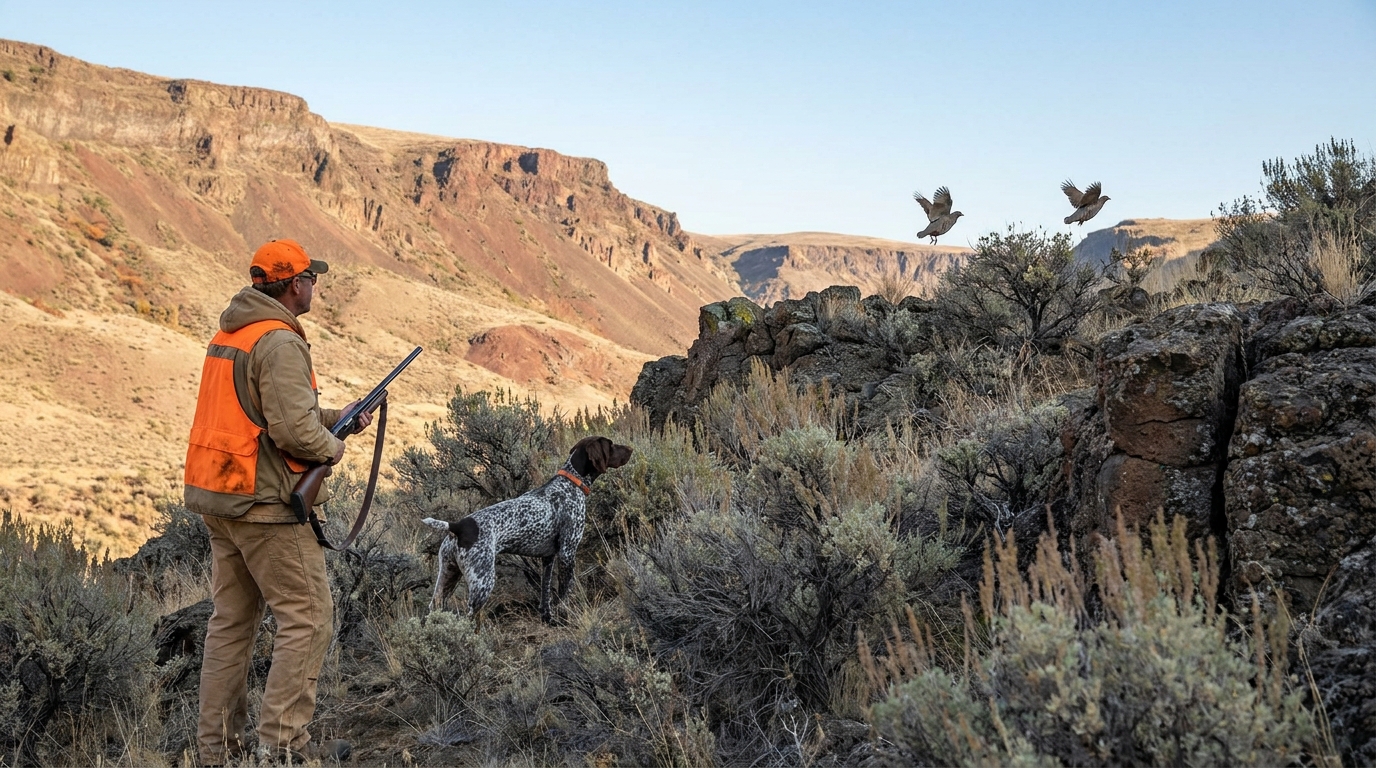
Huns occupy the transition zone between sagebrush flats and grass/grain country. You'll find them in mixed-use BLM ground east of Pendleton, on the Ladd Marsh WMA near La Grande, and along the breaks above Malheur National Wildlife Refuge. They're smaller than pheasants, flush explosively as a covey, and scatter wide before reassembling. Mark where the covey lands after the initial flush, approach quietly, and work through the reassembled birds individually.
Pointing dogs shine on Huns. A well-trained dog can scent, point, and hold a covey tightly long enough for a clean shot. They're fast birds — swing through and maintain lead. New hunters consistently shoot behind them.
Licenses and Regulations
Oregon upland bird season generally opens the first Saturday in October for pheasant and runs through the end of January. Chukar season runs concurrent. You need a valid Oregon hunting license and an Upland Bird Validation. WMA parking passes are required at many ODFW areas — pick up a Combined Hunting License with all validations at an ODFW license agent or online at myodfw.com before the season opens.
Dogs, Water, and Field Prep
Eastern Oregon is unforgiving desert and canyon country. Temperatures swing 40 degrees between morning and afternoon in October. Carry at least a liter of water per hour of hard hunting — more for your dog. Chukar country specifically can leave both hunter and dog dehydrated in a single morning.
Protect your dog's paws in rocky terrain. Rubber boots or wax-based paw protection help in rocky chukar country. Carry a first-aid kit for both yourself and the dog — sharp rimrock cuts pads quickly.
No hunting tool beats local knowledge. Talk to the ODFW district wildlife biologist for your target area early in the season — they do brood surveys and can point you toward productive drainages without sending you on a multiday scouting trip.