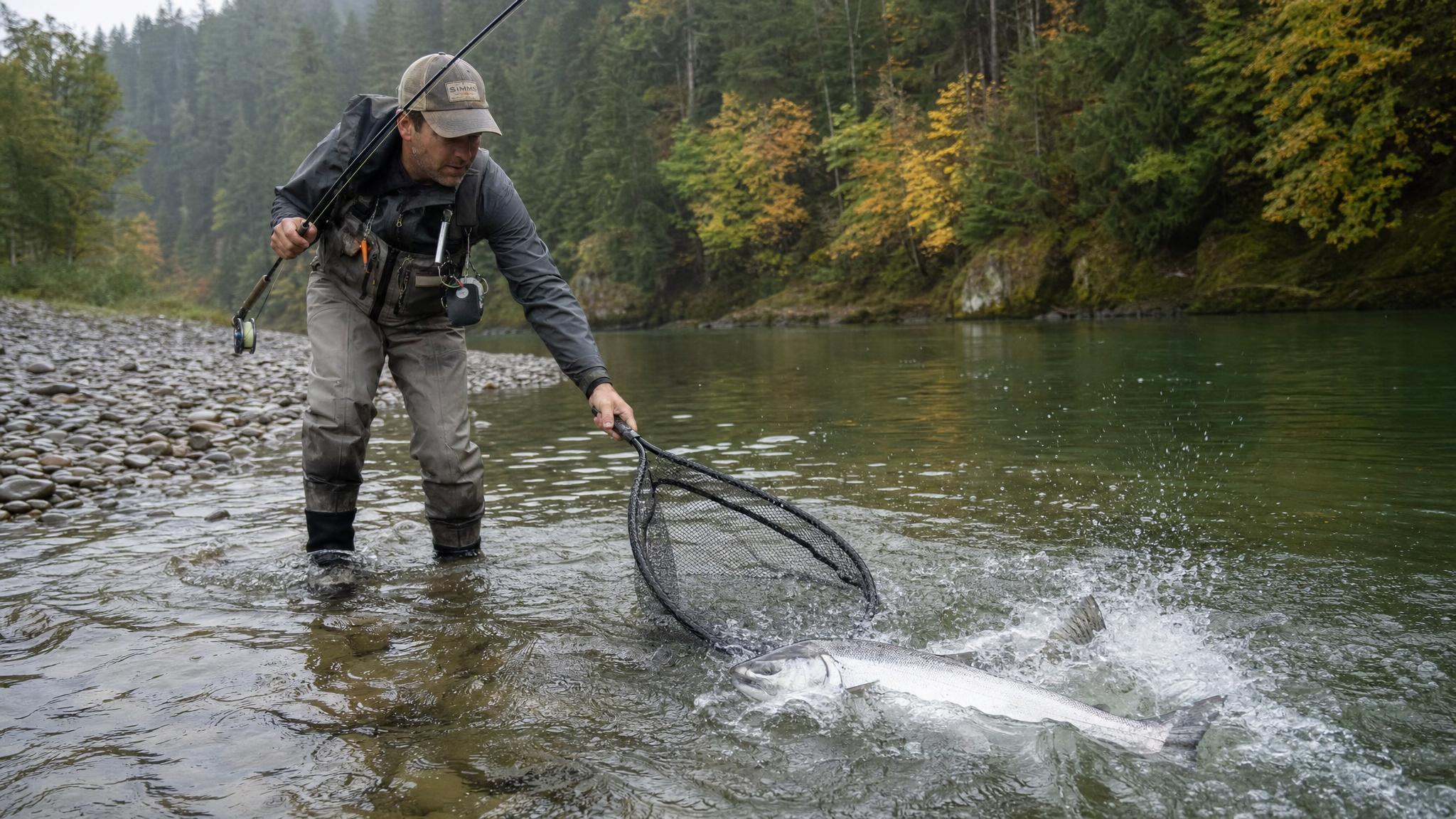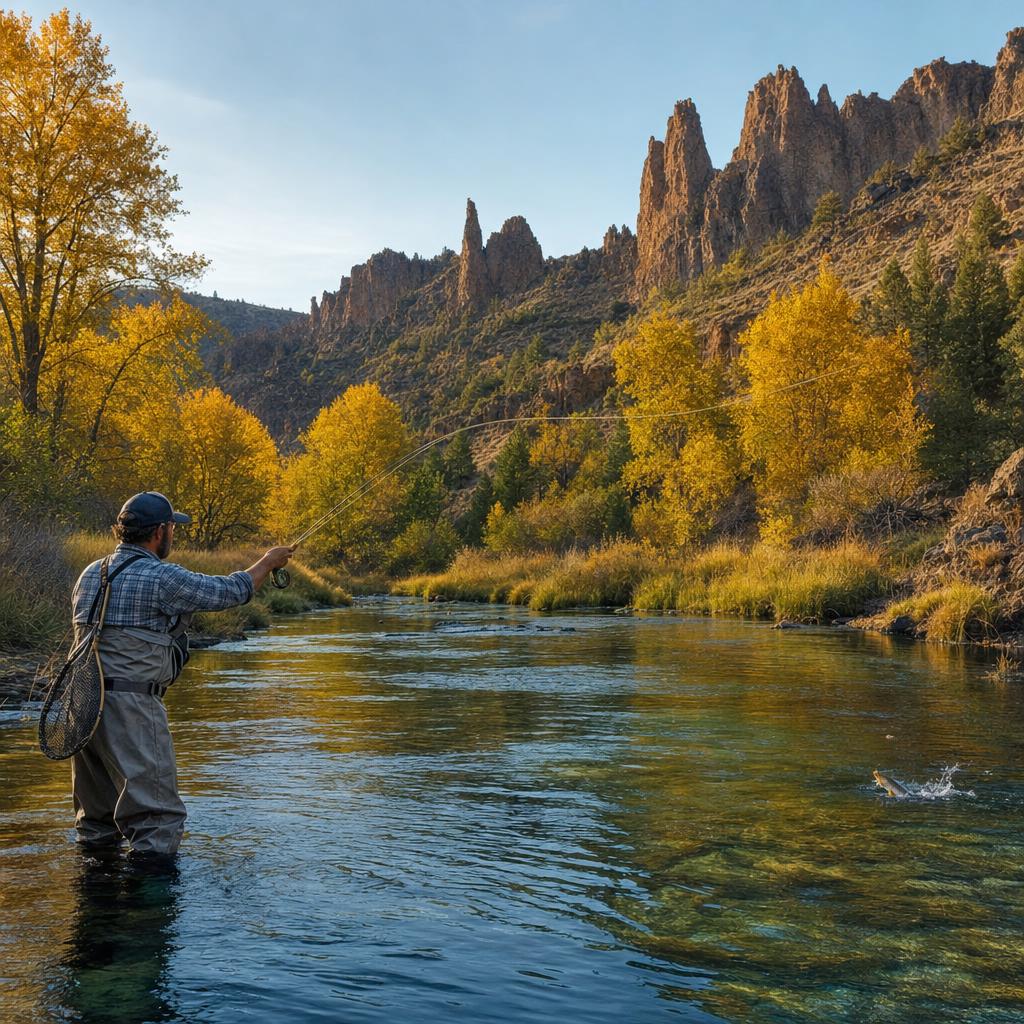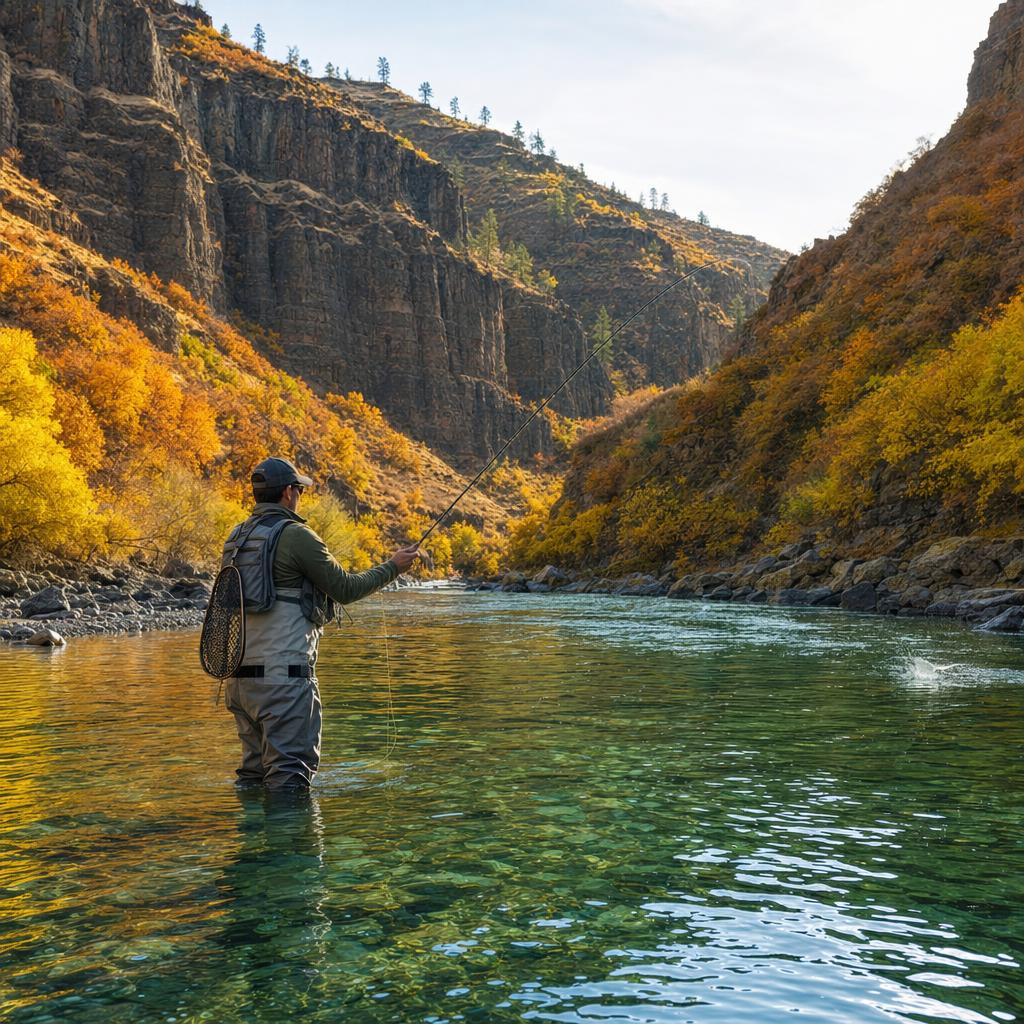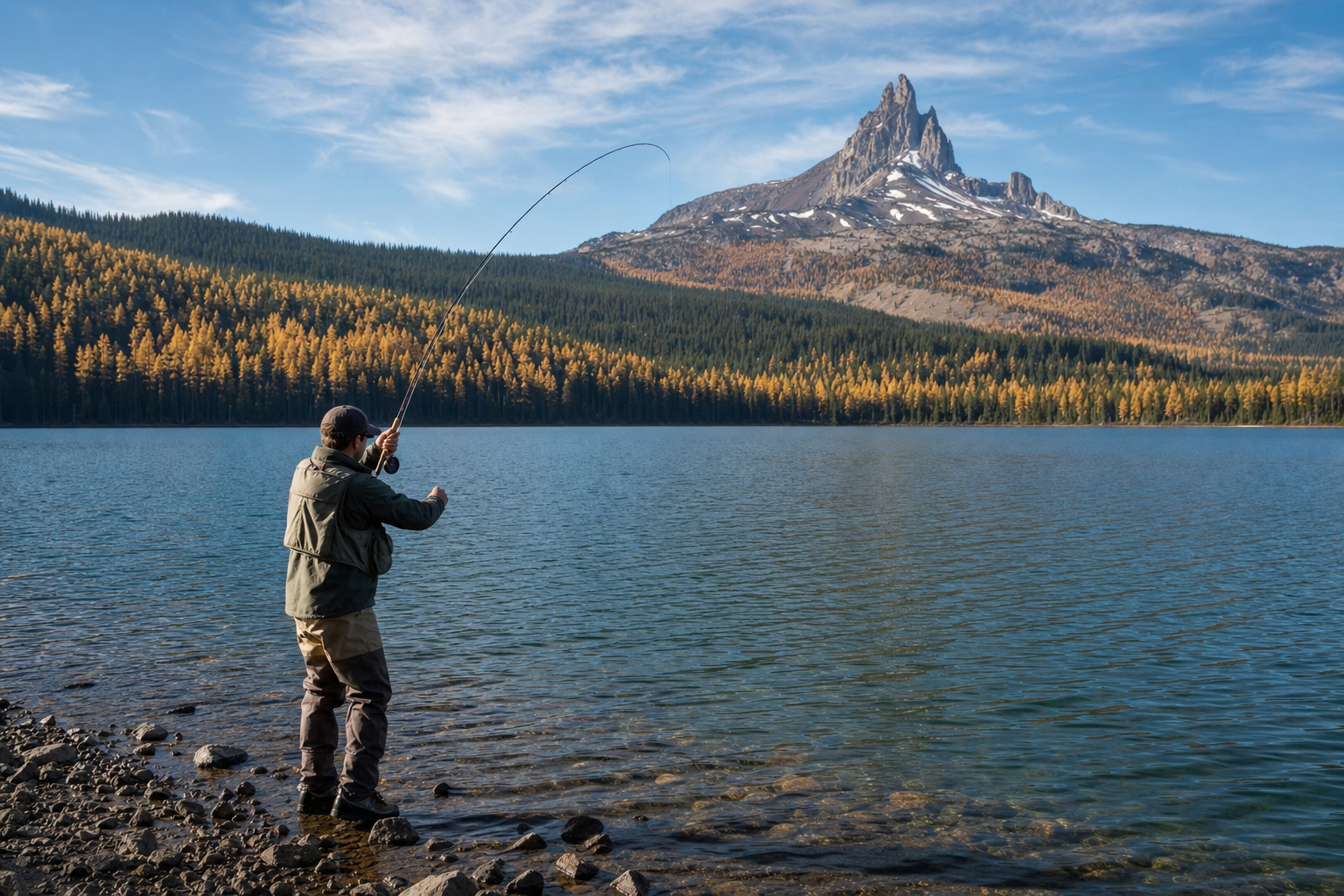
Diamond Lake sits at 5,183 feet in the heart of Oregon's Cascade Range, cradled between the imposing spire of Mount Thielsen to the northeast and the broad volcanic dome of Mount Bailey to the southwest. At roughly 3,000 acres, it's one of the most picturesque trout fisheries in the Pacific Northwest — and by October, it's producing some of the fattest, most aggressive rainbow trout of the entire season.
Fall is when serious Diamond Lake anglers earn their fish. Summer crowds thin out, water temperatures drop into the mid-50s°F sweet spot, and the rainbows bulk up aggressively ahead of winter. Average fish run 14 to 17 inches, with plenty of 18-to-20-inch specimens mixed in, and the Oregon Department of Fish and Wildlife stocks the lake generously throughout the season with catchable and trophy-sized hatchery fish.
Why Fall Is Diamond Lake's Best Season
Through July and August, Diamond Lake's shallow, warmwater-prone basin can push surface temps into the low 60s, pushing trout deep and making surface fishing slow. By late September, those temperatures fall back into prime range. Trout that spent summer hugging the 20-to-30-foot thermocline push up into the 8-to-15-foot zone where bank anglers and trollers can reach them easily.
The fall feed also intensifies. Diamond Lake holds a solid population of invertebrates — chironomid midges, Callibaetis mayflies, damselfly nymphs, and scuds — and trout gorge on these through October as insect activity spikes before cold shuts things down. If you're on the water at dawn or dusk, surface rises are common and spectacular.
Shore Fishing Diamond Lake in Fall
The lake's eastern shore road provides the most convenient bank access, with pullouts and informal launch areas scattered along Highway 230. The campground areas at Diamond Lake Resort and the South Shore Campground both produce consistent shore action.
Shore Rigging That Works
- Slip bobber with PowerBait: The classic setup. Use a 3/8-oz slip sinker, a swivel, 18 inches of 4-lb fluorocarbon, and a #10 egg hook loaded with chartreuse or rainbow PowerBait. Set your bobber stop at 6–10 feet in early fall, shallower as temperatures drop.
- Nightcrawler under a float: Native earthworms or store-bought crawlers outperform prepared bait after a cold front. Hook once through the nose on a #8 baitholder hook and let the tail wave freely.
- Micro jigs: A 1/16-oz white or pink marabou jig on 4-lb mono is deadly when trout are visibly dimpling the surface. Cast beyond the rises, let it sink, and twitch slowly back through the feeding lane.
Trolling Diamond Lake for Fall Rainbows
Trollers dominate Diamond Lake's boat fishing, and with good reason — the lake's relatively uniform depth (average 20 feet, max 52 feet) lends itself perfectly to consistent trolling passes. Most boats launch from the paved ramp at Diamond Lake Resort on the north shore.
Fall Trolling Setups
- Needlefish or Flatfish lures: A gold or silver Needlefish trolled at 1.5–2 mph at 8–15 feet accounts for the majority of Diamond Lake's trolling catches. Add a 2-oz inline sinker on 6-lb mainline with a 4-foot fluorocarbon leader.
- Ford Fenders with worm: The old-school spinner/worm combo still outfishes everything else on slow days. Run a 4-blade Ford Fender spinner rig 18 inches ahead of a half nightcrawler.
- Trolling flies: A leaded woolly bugger in black or olive, trolled 12–18 feet deep along the weed-edge transitions, is the fly angler's trolling solution. Use a full-sink or sinking-tip line and a 6-foot fluorocarbon leader of 3X or 4X.
The most productive trolling route in fall runs along the eastern weed edge, parallel to shore in 10–18 feet of water. Look for the transition zone where soft bottom meets rocky structure near the campground point — that corridor holds fish all season long.
Fly Fishing Diamond Lake's Fall Hatches
If you pack a float tube or pontoon boat, Diamond Lake offers some of the best stillwater fly fishing in Oregon from late September through October. The Callibaetis hatch peaks mid-morning from about 9 a.m. to noon on calm, overcast days. Look for fish rising in 6–10 feet of water over sparse weed beds.
Key Fall Fly Patterns
- Callibaetis Parachute or Comparadun, #14–16: Match the hatch when fish are visibly sipping emergers. Dead drift or give a very subtle twitch every 30 seconds.
- Chironomid pupa under an indicator, #14–18: Red, maroon, or black chironomid pupa patterns suspended 2–4 feet off bottom produce fish all day, even when nothing is showing on the surface.
- Damselfly nymph, #10–12: In late September, the last damsel migration of the year draws explosive strikes. A tan or olive damsel nymph stripped slowly toward shore mimics the naturals perfectly.
- Woolly Bugger, #8–10: When all else fails, a slow-stripped olive or black woolly bugger covers water and provokes aggressive takes from feeding rainbows.
Planning Your Diamond Lake Trip
Diamond Lake sits within the Umpqua National Forest, about 75 miles east of Roseburg on Highway 138 or accessible via Crater Lake Highway from Medford. The drive from Portland is roughly 4.5 hours; from Eugene, about 2.5 hours.
Diamond Lake Resort operates year-round and offers cabin rentals, an RV park, boat rentals, and a cafe — making it a practical base camp even for non-campers. The resort's boat rental shop stocks basic tackle and bait, but serious anglers should bring their own selection.
A valid Oregon fishing license is required for anyone 12 and older. Check the ODFW regulations for current limits — Diamond Lake's bag limit is typically 5 trout per day, with a minimum size of 8 inches, though special regulations can apply, so verify before your trip at myodfw.com.
What to Pack for a Fall Diamond Lake Trip
- Layered clothing — October mornings at 5,000 feet are cold (25–35°F is common at dawn)
- Waders and wading boots for shore fishing the soft-bottomed eastern shore
- 7.5-foot to 9-foot float tube or pontoon if fly fishing
- Spinning rod 6–7 feet, 4–8 lb test for shore and trolling
- Fly rod 5-weight with both a floating line and a type 3 sinking line
- PowerBait, nightcrawlers, and small Panther Martin spinners as backup
Diamond Lake at its fall peak is one of those Oregon experiences that reminds you why you have a fishing license in your wallet. The trout are big, the scenery is unmatched, and the crowds that choke the campgrounds in August have gone home. Book a fall weekend, get there before sunrise, and don't be surprised if you're still on the water at dark.