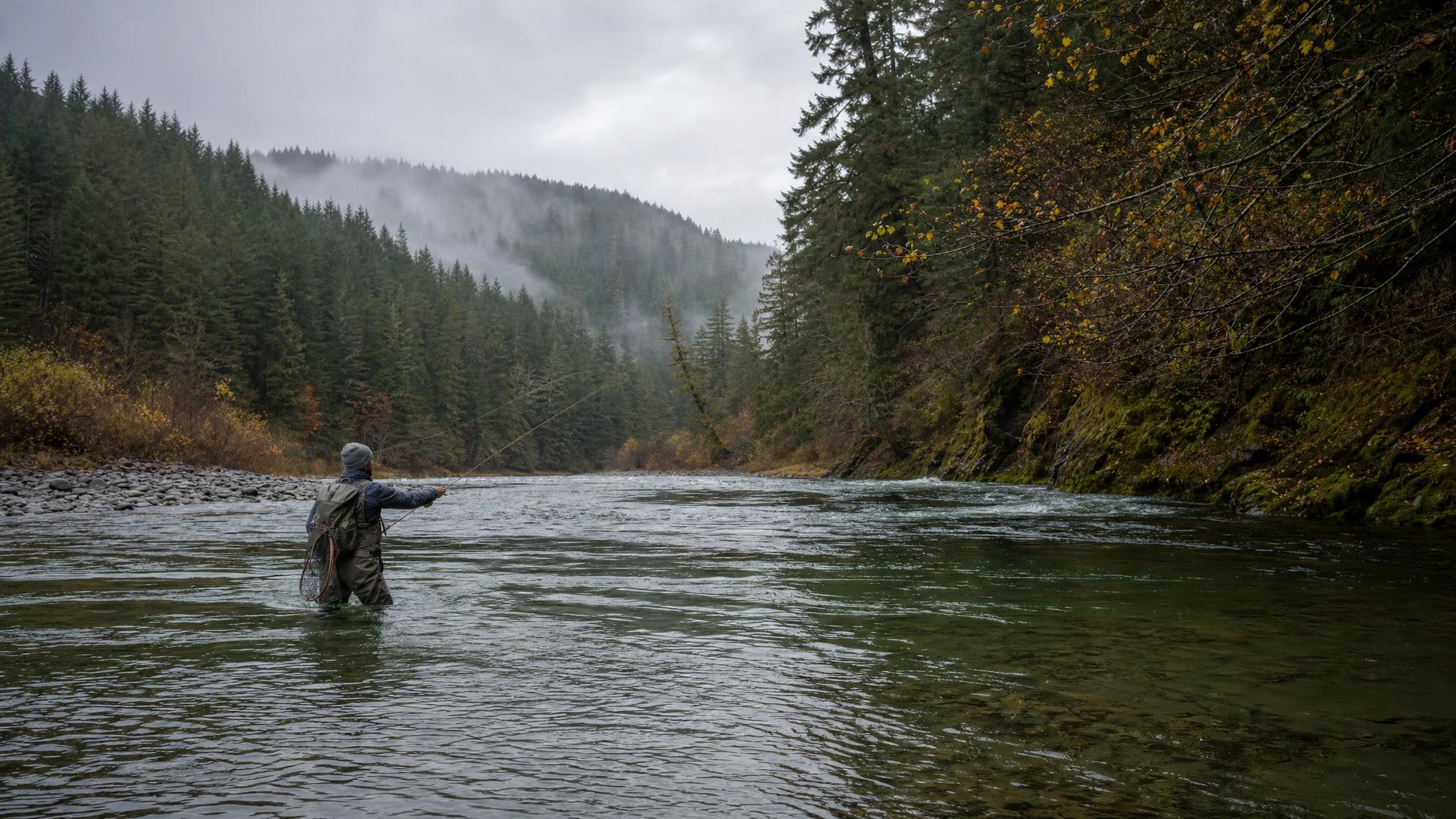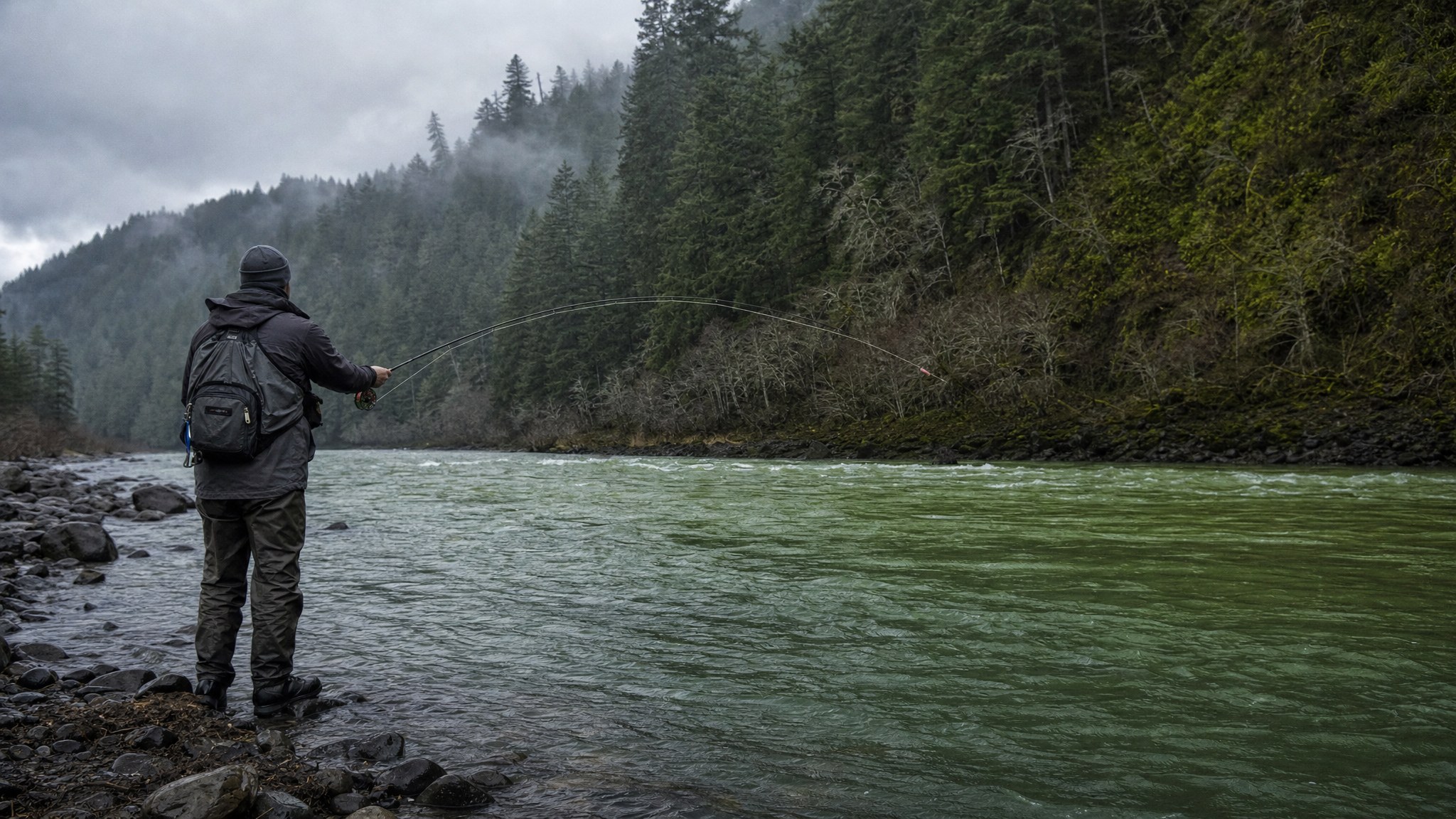
The Clackamas River is one of Oregon's most accessible wild steelhead fisheries, running just 30 miles southeast of Portland through Clackamas County's fir-covered foothills. December marks the beginning of a serious winter steelhead push on this river, with wild B-run fish staging from the Willamette and moving upstream through the canyon reaches. For bank anglers within striking distance of the metro area, there's no better winter fishery in the state.
December Run Timing and Water Conditions
Clackamas winter steelhead fishing typically kicks off in earnest between Thanksgiving and Christmas, with numbers building through January and peaking in February. December fish are fresh from the ocean — bright, chrome-sided, and tackle-wrecking strong. The river runs clear to slightly stained in December depending on rainfall, and optimal conditions occur when flows at the USGS gauge at Estacada sit between 2,000 and 4,000 cfs. After heavy rain, let the river drop and clear for 24–48 hours before heading out.
Best Bank Access Points
The Clackamas is a bank angler's river, with several key public access spots worth knowing:
- McIver State Park (Estacada): Excellent bank access along the lower canyon. Fish the riffles and tailouts below the launch area. This is one of the most productive stretches in December.
- Carver Park: The lower Clackamas from Carver downstream offers good bank spots near the boat ramp and along the gravel bars. Easy access and ample parking.
- North Fork Reservoir Tailrace: Below North Fork Dam at Estacada, the tailrace pool holds fish stacking before moving upstream. Fish here with hardware early in the morning before other anglers arrive.
- Eagle Creek Confluence: Where Eagle Creek meets the Clackamas is a traditional holding spot. Fish the seam on the downstream side of the confluence through the deep slots.
- Riverside Park, Estacada: In-town access with parking. Fish the deeper runs and outside bends through town for staging fish.
Tackle and Techniques for December Bank Fishing
Float Fishing with Jigs and Roe
Float fishing is the most consistent method for December Clackamas steelhead from the bank. Rig a 12–15 foot float rod with 15 lb monofilament mainline and a 3–4 foot leader of 10 lb fluorocarbon. Under a slip float, fish 1/4 oz pink or white marabou jigs, or cure your own roe into small egg clusters tied with borax cure. Set your float depth so the offering drifts 6–12 inches off the bottom through the slot. When fish are aggressive, switch to brighter colors like hot pink or chartreuse.
Spinners and Spoons
When water clarity allows — typically 2 feet or better — casting hardware is deadly on fresh Clackamas chrome. Blue Fox Vibrax spinners in size 4–5 in pink/silver or chartreuse/gold are go-to choices. Retrieve cross-current to let the blade flutter into likely holding lies: tail-outs, the inside edge of runs, and behind large boulders. Krocodile spoons in 3/4 oz silver-prism are worth carrying as well for distance casting on wider pools.
Drift Fishing Roe
Traditional drift fishing with cured salmon roe remains deadly throughout December. Use a 3-way swivel or slinky drifter rig, 10 lb fluorocarbon leader, and a size 2 or 1/0 Gamakatsu octopus hook. Fresh-cured roe in Fire Cure or Pautzke Balls O' Fire will out-fish natural cure when the river is slightly off-color. Fish the roe through the bottom third of slower runs and let it swing at the end of the drift before picking up.
Regulations — Know Before You Go
The Clackamas River has wild steelhead regulations that require close reading. Only adipose fin-clipped (hatchery) steelhead may be retained below the mouth of the North Fork Reservoir. Wild steelhead — identified by an intact adipose fin — must be released unharmed. Check ODFW's current regulation synopsis before each trip, as rules can change mid-season. A valid Oregon fishing license and Combined Angling Tag are required. Bait restrictions may apply in certain sections — confirm before rigging up with roe.
December Safety and River Ethics
December on the Clackamas means cold water, slippery banks, and fast currents after rain events. Wear wading boots with felt or rubber soles in good condition, and always use a wading belt if wading at all. When flows exceed 5,000 cfs at the Estacada gauge, stay off the water — high, fast water is dangerous and unproductive. Respect other bank anglers by giving occupied runs wide berth and rotating through spots respectfully. The Clackamas community is tight-knit; courtesy on the water is remembered and repaid.
Getting There
From Portland, take Highway 224 southeast through Boring and Estacada — about 45 minutes in normal traffic. McIver State Park is well-signed off Highway 211 near Estacada. Clackamas River Road follows much of the canyon between Estacada and the North Fork Reservoir, with numerous pullouts and informal access points. Parking fees apply at OPRD facilities — bring an Oregon State Parks pass or $5 in cash. Download maps in advance as cell service goes in and out through the canyon.
December steelhead fishing on the Clackamas is one of the great gifts of living in the Portland metro area. Wild, chrome fish in a beautiful canyon river — right in your backyard. Dress warm, bring rain gear, and don't be surprised when that float goes under hard and runs for the far bank.