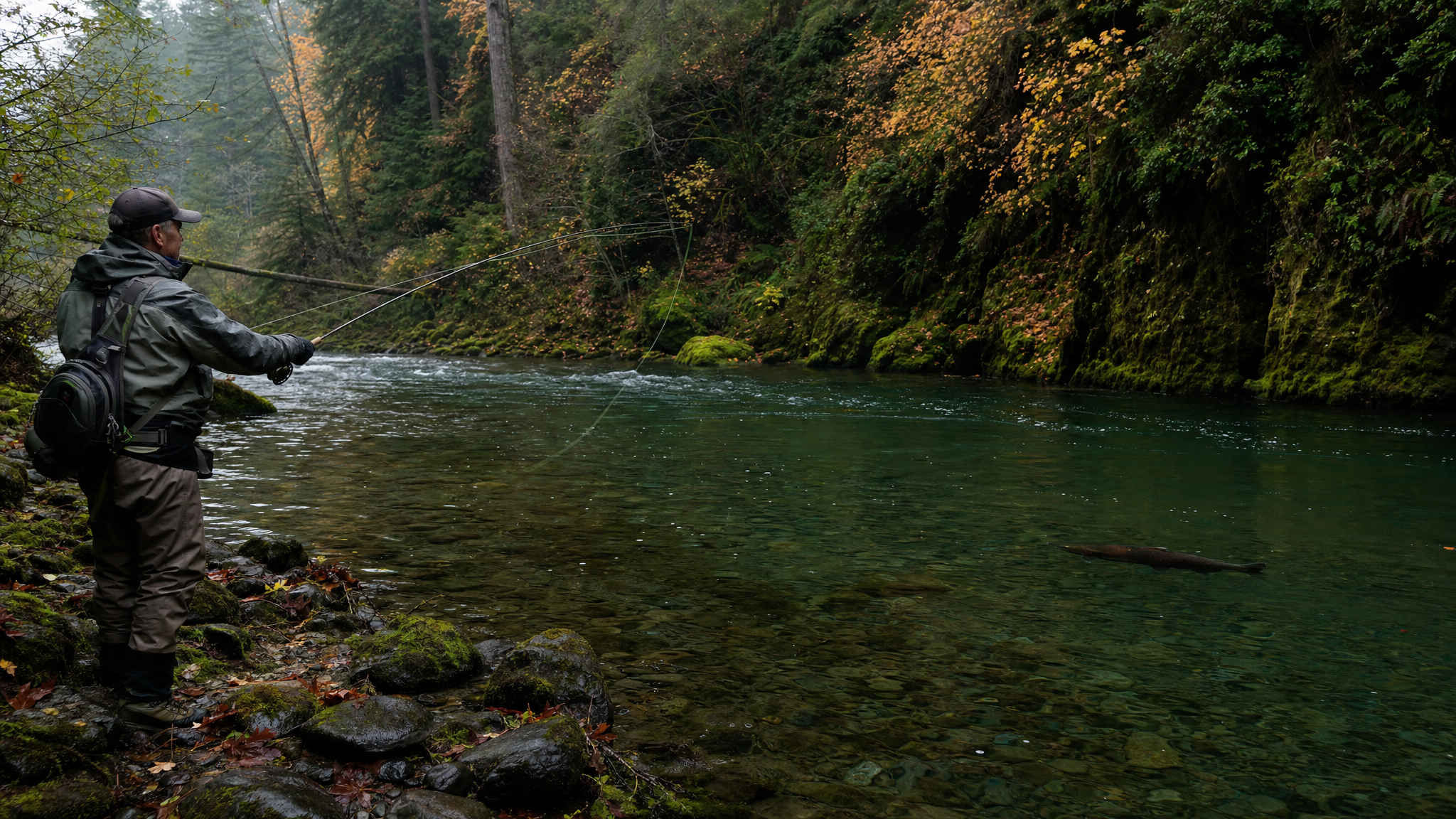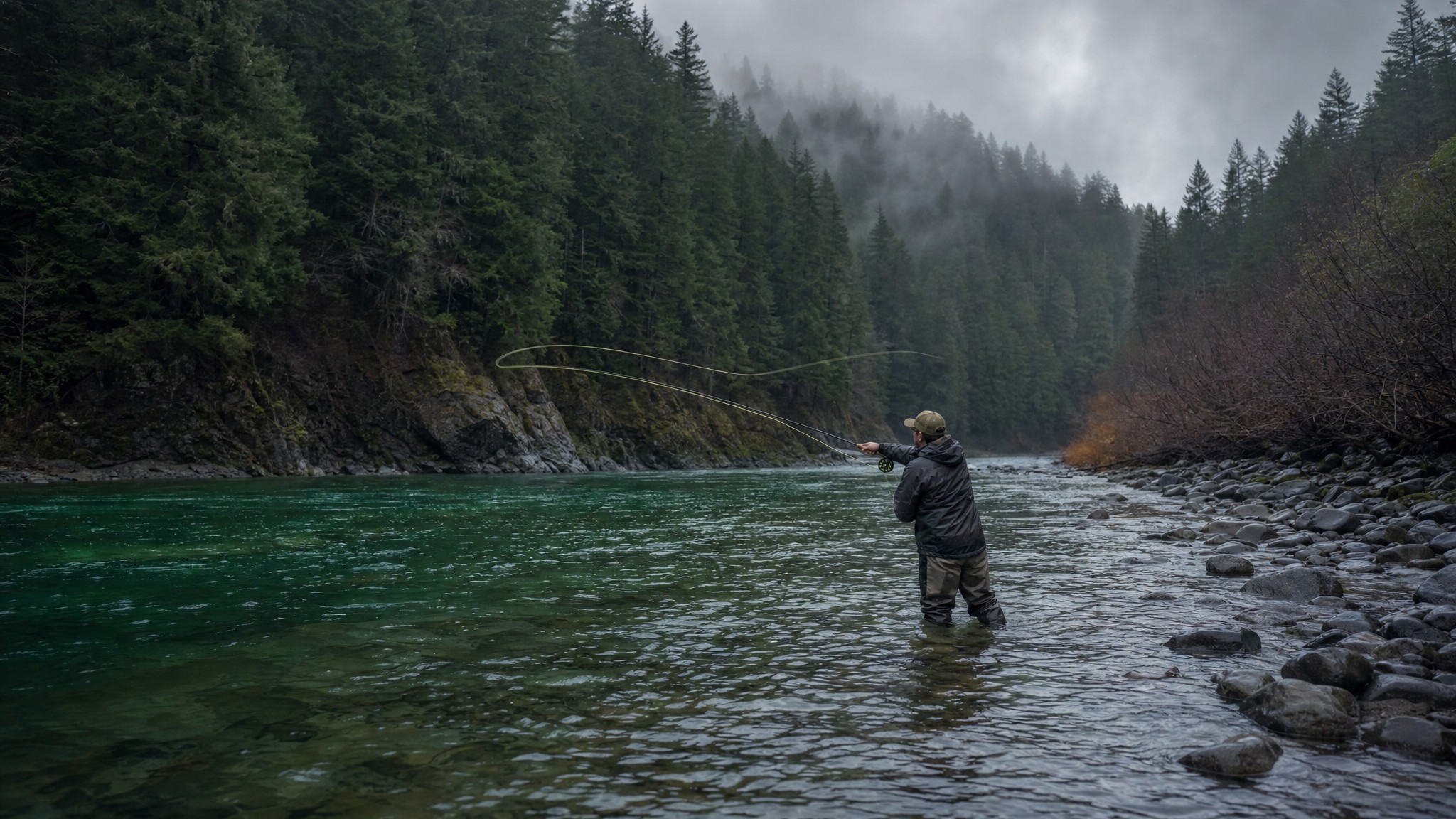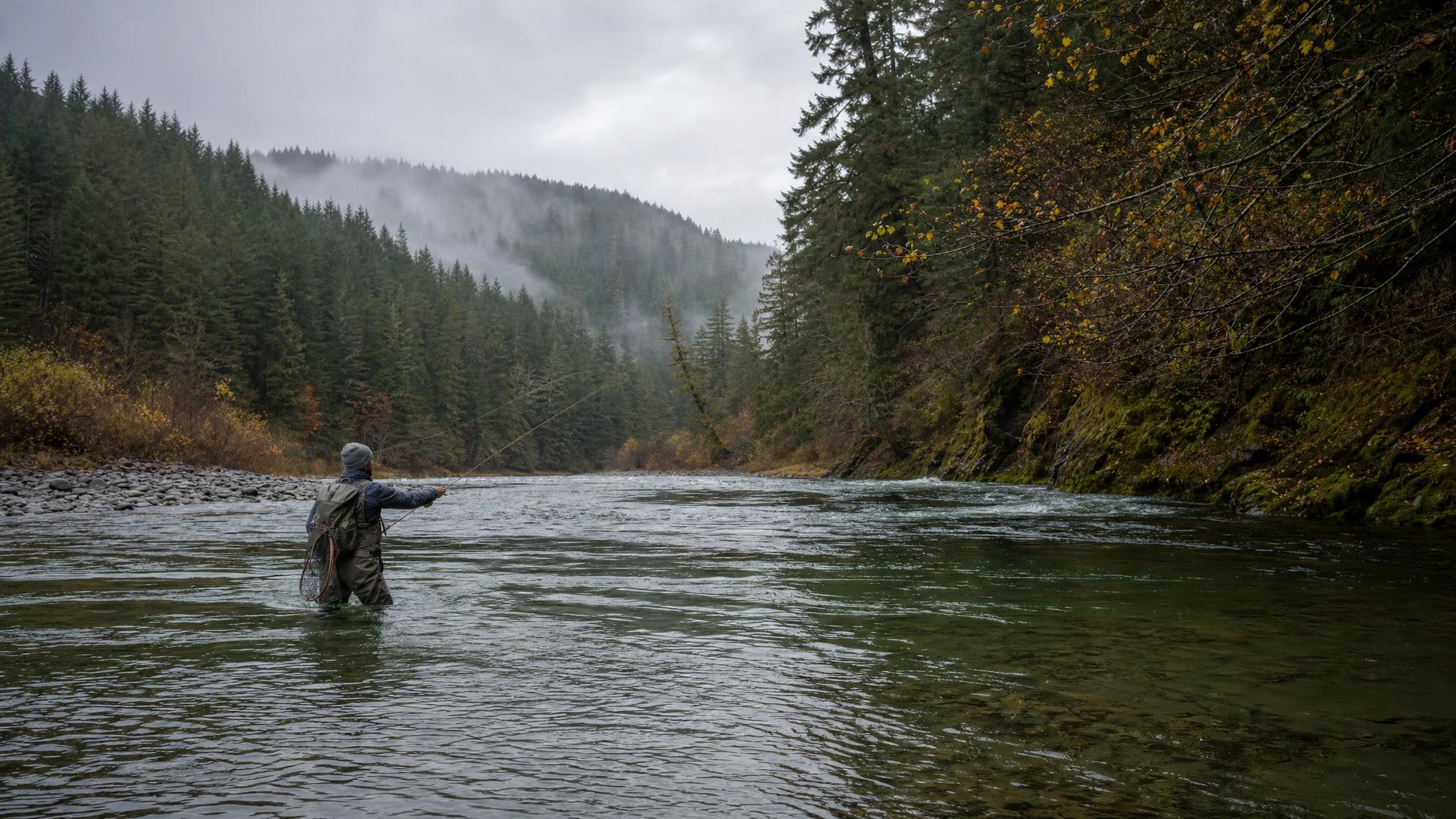
November is the month steelhead anglers in Tillamook County circle on their calendars. The Wilson River, flowing 75 miles from the Coast Range to Tillamook Bay, transforms into one of Oregon's most productive winter steelhead fisheries as hatchery fish stack in the lower reaches and wild native fish push into the upper canyon. If you've never fished the Wilson in November, you're missing one of the best bank fisheries the Oregon coast has to offer.
Why November Is Prime Time on the Wilson
The Wilson River hatchery program produces some of the largest returns of any coastal stream in Oregon. November typically sees the peak of the early hatchery run, with fish averaging 8–12 pounds and chrome-bright from the Pacific. Water temperatures drop into the optimal 45–52°F range, fish become more aggressive, and rainfall events push fresh fish into the river daily. After a good November rain — and there's no shortage of those in Tillamook County — the Wilson can go from sluggish to electric overnight.
Wild native steelhead also begin showing in November, though the season for retaining wild fish is closed. These are catch-and-release encounters with fish that can exceed 15 pounds, making the Wilson a year-round trophy fishery even when the hatchery run hasn't fully materialized.
Key Bank Access Points
One of the Wilson's greatest strengths is its extensive bank access along Highway 6. You don't need a drift boat to fish this river well — in fact, some of the best holes are most easily fished from shore.
Mills Bridge / MP 23
This is the go-to destination for bank anglers during the early season. A large gravel bar on river left provides casting access to a long, deep run that holds fish on their upstream push. Fish the seam where fast water meets the deeper trough on either side of the bar. Early mornings are most productive here before fishing pressure builds.
Footbridge Pool (MP 20)
Located near the Tillamook State Forest access point, the Footbridge Pool is a classic mid-river holding lie. Fish cruise through the tailout before resting in the deeper bucket above. Work the near-side bank thoroughly — fish often hold tighter to the bank than you'd expect in this stretch.
Sollie Smith / Elk Creek Confluence (MP 18)
During high water events, fish congregate at tributary mouths to stage and rest. The Elk Creek confluence is a producer in November when the river is blowing out — fish pull out of the main current and hold in the slack water near the mouth. This spot is often overlooked by anglers racing to the more popular pools upstream.
Rock Creek Campground (MP 11)
The upper canyon above Rock Creek holds fish longer into the season and tends to fish better later in the morning when light hits the water. The pools here are deeper and more defined, with classic tailouts that beg for a drifted egg loop.
Tackle and Techniques
Float Fishing
The float-and-jig or float-and-eggs setup is the dominant bank technique on the Wilson. Use a 10–11 foot float rod with 15–20 lb mainline and a 10–12 lb fluorocarbon leader of 18–24 inches. Set your float depth so your bait or jig ticks bottom — steelhead rarely rise far from the riverbed to take. Chartreuse, pink, and flame orange jigs in 1/8 to 1/4 oz are reliable. For eggs, cure your clusters with BorX O Fire or Pro-Cure and present a single cluster or small skein loop.
Side Drifting and Back Bouncing
In higher, off-color water, back bouncing with eggs, shrimp, or sand shrimp can be deadly from the bank in deep runs. Keep just enough tension to feel the bounce, and set hard when you feel a heavy thump. Use a pencil lead sinker with a dropper loop so you're not dragging terminal gear across the bottom.
Spinners and Spoons
When water is clearing after a rain — that perfect green tinge — throw a 1/2 oz Blue Fox Vibrax in chartreuse or a Mepps Aglia in silver/red. Work from the tailout up through the run and vary your retrieve speed until you find what triggers strikes that day.
Reading the River After Rain
The Wilson is a flashy coastal river. It can go from low and clear to 10,000 cfs overnight, and it clears back down in 2–3 days. The best fishing is typically on the drop — when the river goes from chocolate to slightly off-color green. At this stage, fish are aggressive, visibility is low enough to hide your terminal tackle, and fresh fish are moving into new lies. Download the USGS StreamStats app and watch the Wilson River gauge at Tillamook (Station 14301500). When flows drop below 5,000 cfs and are falling, get there early the next morning.
Regulations and Limits
- Season: Open year-round for steelhead; check current ODFW regulations for any closures
- Daily limit: 2 hatchery steelhead (adipose fin-clipped)
- Wild steelhead: Catch-and-release only — do not retain unclipped fish
- License: Oregon fishing license + Combined Angling Tag required
- Check ODFW emergency closures before each trip — the Wilson can close temporarily during extreme low flows or spawning surveys
Getting There
The Wilson River is accessed via Highway 6 west of Portland. From Portland, take US-26 west to Highway 6 south toward Tillamook — about a 90-minute drive. Most bank access points are marked with ODFW or Tillamook State Forest signage along the highway. Bring a National Forest or State Forest parking pass, and expect company on weekends during peak runs. Midweek fishing is significantly less crowded and often more productive.
Pack rain gear, waders, felt or cleated wading boots for the slippery cobble, and a solid wading staff. The Wilson demands respect — the same rain events that push fish in can make bank wading treacherous. When in doubt, stay out of the water and fish from the gravel.
The Wilson River in November is as good as Oregon coastal steelhead fishing gets. Find a fresh run, slow down your presentation, and hold on.