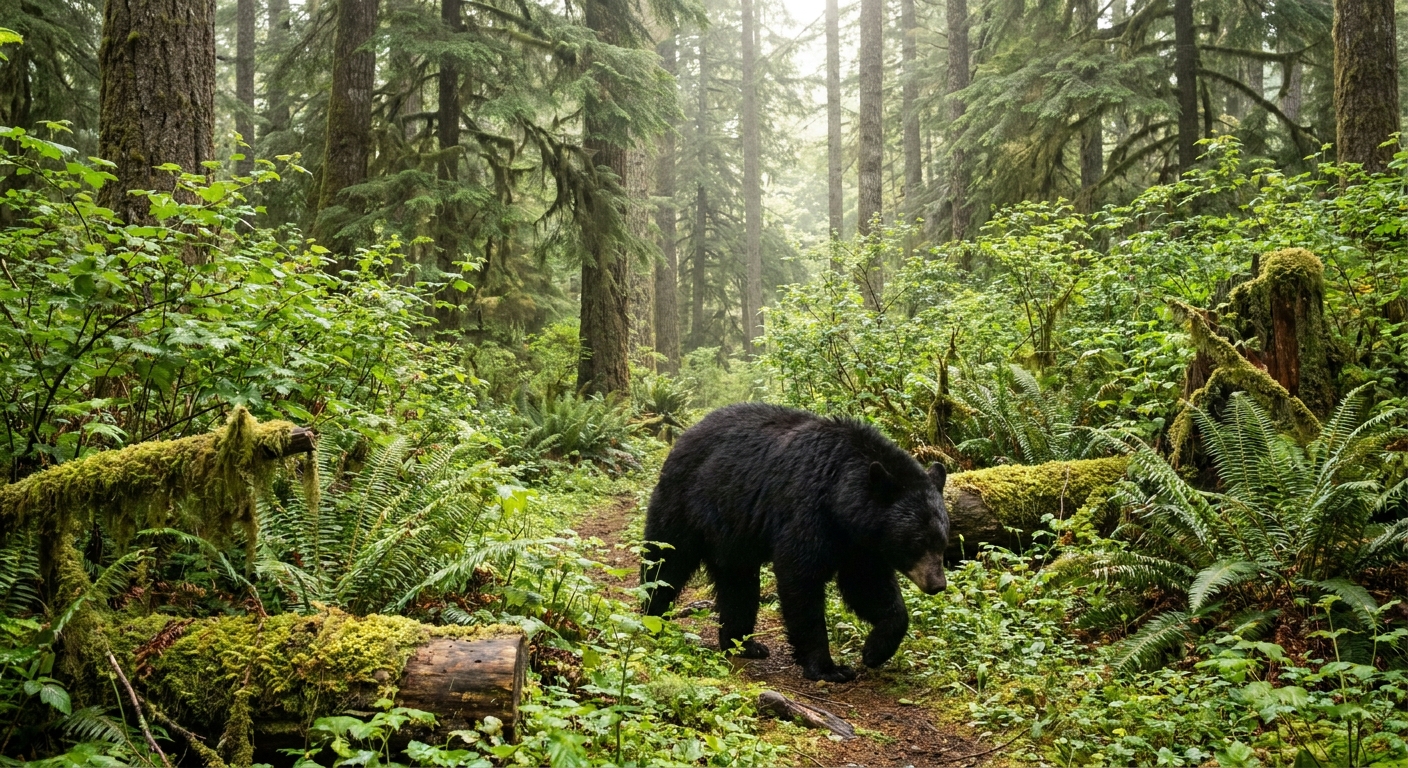
Oregon holds one of the healthiest black bear populations in the western United States, with an estimated 25,000-30,000 animals statewide according to ODFW. Every major mountain range hosts bears, tags are over-the-counter for residents at around $40, and the seasons are long. Despite all of this, the vast majority of Oregon hunters never pursue bears. That is a shame, and if you are looking for a challenging, rewarding solo hunt that extends your season deep into spring and fall, bears are worth your serious attention.
Oregon Bear Seasons: Know Before You Go
Oregon offers both a spring bear season and a fall season, with regulations varying by zone. The general structure as of recent regulation cycles:
- Spring Season: Typically April 1 through May 31. Applies to most of western Oregon and the Cascade Range. Bears are actively moving after emerging from dens, making them more visible than at any other time of year.
- Fall Season: August 1 through November 30 in most units, coinciding with and following the general deer and elk seasons. This is when most incidental bear kills happen as hunters encounter bears while on other pursuits.
Always confirm dates and zone boundaries in the current ODFW Big Game Regulations summary before purchasing your tag. Zone boundaries and season structures have shifted in recent years.
Top Units and Regions
Cascade Range (Units 49-64)
The western slope of the Cascades, from the Columbia Gorge south to the Siskiyous, holds the densest bear populations in the state. Units like the Santiam (Unit 49), McKenzie (Unit 50), Tioga (Unit 52), and Rogue (Unit 58) consistently produce good bear numbers. Heavy timber, berry patches, and proximity to oak savanna edges create ideal habitat. Access is generally good via Forest Service roads, and glassing logged clear-cuts in early morning and evening is a highly productive tactic.
Coast Range (Units 5-18)
The Coast Range from Astoria south to Brookings holds a substantial resident bear population. Units like the Alsea (Unit 9), Siuslaw (Unit 11), and Coquille (Unit 14) see surprisingly little hunting pressure. The timber here is thick and navigation requires more effort, but hunters willing to work creek drainages and find natural food sources are rewarded with multiple encounters per trip in good years.
Blue Mountains and Wallowas (Units 30-40)
Eastern Oregon's Blues and Wallowas hold a less dense but significant bear population. Bears here tend to be larger-bodied than their western cousins, with some boars exceeding 400 pounds. The Grande Ronde drainage and the Wenaha-Tucannon wilderness areas are standout spots. Access is more remote, which reduces competition substantially.
Scouting: Finding Bears Without Hunting Them
Bears are creatures of food availability. If you find food, you find bears. In spring, look for:
- South-facing slopes where skunk cabbage and forbs green up first
- Recent burns and clearcuts with new berry growth (huckleberry, blackberry, salal)
- Streams with fresh sedge and grass growth
- Areas with remnant winter-kill deer and elk carcasses
In fall, shift focus to huckleberry patches at elevation (4,500-6,000 feet in the Cascades), ripening chokecherry and serviceberry stands in lower drainages, and oak stands in the Siskiyous producing early acorn mast.
Trail cameras set on travel corridors near food sources will reveal patterns within a week. Look for natural funnels between timbered areas and feeding zones.
Spot-and-Stalk: The Most Rewarding Method
Glassing and stalking is the most satisfying way to kill a black bear. Set up on high points overlooking clear-cuts, burns, and meadow edges 30-60 minutes before first light. Bears often emerge from timber in near-darkness and feed until full sun, then again in the last 90 minutes of daylight. A good 10x42 binocular and a tripod-mounted 15x65 or 20x80 glass for confirming size will find more bears than any other method.
When you spot a target animal, close the distance using the terrain. Bears have a phenomenal nose but comparatively poor eyesight. Use the wind aggressively, stay below ridgelines, and move when the bear has its head down feeding. Most successful stalks end within 80 yards.
Bait Hunting and Hound Hunting
Both methods are legal in Oregon with appropriate licenses. Bait hunting involves establishing a site with attractants like fryer grease, sweets, or commercial bear bait, then hunting from a blind or tree stand. It is highly effective and legal on private land and most BLM and National Forest ground outside of designated wilderness. Running hounds requires a valid hound hunter license endorsement and working with trained dogs, but it is exceptionally effective at finding bears in heavy timber where glassing is not possible.
After the Shot: Bear Meat and Care
Bear meat is excellent table fare when handled correctly. The keys: cool the carcass immediately, remove the hide and all fat as quickly as possible (bear fat spoils fast and imparts off-flavor to meat), and process within 24 hours in warm weather. Bears are required to be inspected by ODFW for certain biological samples before transport in some zones. Check current regulations for mandatory check station requirements in your unit.
Final Word
Oregon black bear hunting is one of the most underutilized opportunities in the state. An over-the-counter tag, long seasons, and a healthy population add up to a hunt that rewards curiosity and persistence. If you have been walking past bear sign for years on your deer and elk hunts without doing anything about it, pull a tag this year. You will not regret it.