Coos Bay is Oregon's largest coastal estuary — a sprawling, tide-washed basin tucked behind the dunes near the city of North Bend. While most Oregon anglers chase steelhead in November, savvy crabbers know this is prime time to load up on Dungeness. The water is cold, the crabs are hard-shelled and full of sweet meat, and the crowds that swarm the docks in summer have mostly gone home.
If you've never crabbed Coos Bay in late fall, you're missing one of the most accessible and productive fisheries on the Oregon Coast.
Why November Is Prime Time
Dungeness crab (Metacarcinus magister) thrive in cold, clean water. As bay temperatures drop from September into November, crabs that spent the summer in softer-shelled molting phases begin to firm up and fill out. By November, you're pulling crabs with dense, sweet meat — the kind that makes a bucket of a dozen feel like Christmas morning.
Unlike ocean crab season, which is managed separately and often delayed by meat quality tests, bay crabbing in Oregon's estuaries like Coos Bay operates year-round for sport crabbers. That means you can be on the dock any day of the month, legally, with no season delays. The key regulation: male Dungeness must measure at least 5¾ inches across the widest point of the carapace. Females must be released immediately. Check the current Oregon Department of Fish & Wildlife regulations before each trip, as periodic safety closures for biotoxins can occur.
Best Spots in Coos Bay
Charleston Marina and Boat Basin
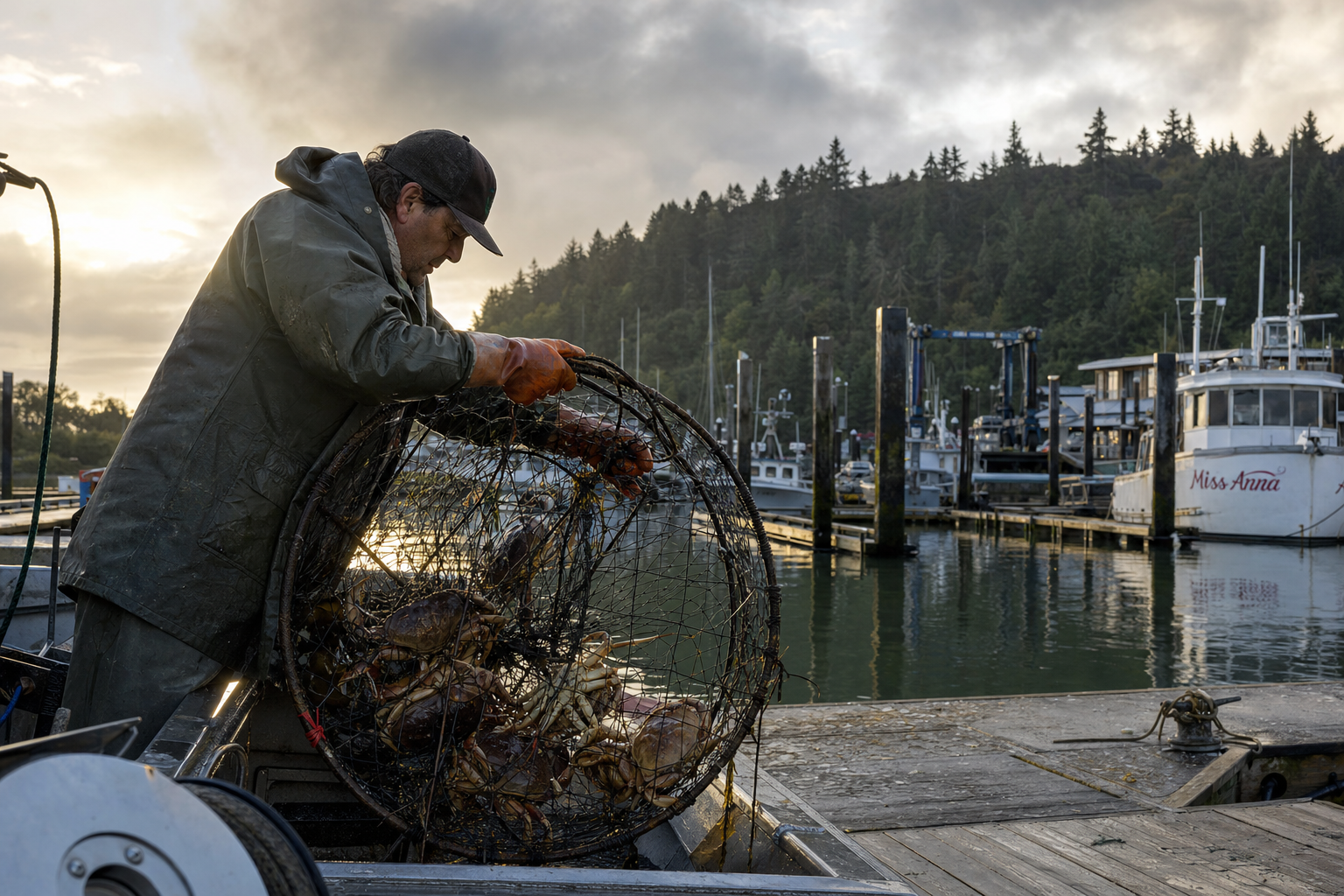
Charleston is the working heart of Coos Bay's commercial fishing fleet, and it's also ground zero for sport crabbers. The public docks along the boat basin produce reliably throughout the fall. Drop rings off the floating docks near the fish processing plants — the bait scent and fish waste in the water make crabs congregate here naturally. Access is free, parking is easy, and the ODFW boat ramp nearby is well-maintained.
Empire District Docks
The city of Coos Bay's Empire neighborhood has several pull-off points along the bay where crabbers work from shore and from docks. The shallower flats here produce well on incoming tides. Crab move up onto the flats to feed as water warms slightly mid-day, then retreat to deeper channels as the tide falls.
South Slough National Estuarine Research Reserve
The south arm of the bay, managed as a national reserve, still allows sport crabbing in designated areas. The slough channels hold crabs throughout the season. Check current reserve regulations for open areas — some sections are off-limits to protect sensitive habitat.
Gear and Rigging
- Ring nets: The workhorse of dock and shore crabbing. Drop, wait 20–30 minutes, pull steadily. Crab rings are fast to redeploy and easy to handle alone.
- Crab pots: More effective for extended soaks and boat crabbing. Rectangular wire pots with one or two funnel entrances outfish rings when left for an hour or more.
- Bait: Fresh or frozen fish carcasses are hard to beat. Salmon and rockfish carcasses from local processors are ideal. Raw chicken legs or thighs work well and stay on the hook longer. Avoid pre-cooked or heavily seasoned meat.
- Bait bags or jars: Mesh bait bags help keep bait intact longer. Some crabbers use sealed perforated containers to slow the scent dispersal on outgoing tides.
- Line and buoy: 50–75 feet of line is plenty for most Coos Bay spots. Brightly colored buoys prevent loss and keep lines from tangling other crabbers' gear.
Tide Timing Is Everything
The single most important factor in bay crabbing success is tide timing. The last two hours of an incoming tide and the first hour after high tide are consistently the most productive windows. As water rises, crabs move onto shallow feeding flats. At peak high tide, activity often slows as crabs scatter. On the outgoing ebb, they funnel back into channels — another productive window for crabbers working deeper spots.
Download a tide app or pick up a printed tide table at the Charleston Bait House before your trip. Plan your crabbing sessions to straddle the high tide, and you'll consistently outfish those who show up randomly mid-ebb.
Limits and Regulations
Oregon sport crab regulations allow each licensed angler to keep up to 12 male Dungeness crabs per day. A valid Oregon fishing license is required. The minimum size — 5¾ inches across the widest part of the carapace — is strictly enforced, and ODFW patrol officers check crabbers regularly at Charleston and North Bend access points. Keep a measuring gauge in your gear bag and check every crab before it goes in the cooler.
Biotoxin testing by ODFW can result in temporary closures of specific bay sections. The agency posts closure notices at boat ramps and publishes alerts online. Always verify before heading out — this is especially important for anyone harvesting bay mussels, clams, or crab in the same trip.
From Bay to Table
The simplest and best preparation: bring a propane burner, a large pot, and saltwater from the bay (or heavily salted fresh water). Cook live crabs in boiling water for 15–18 minutes depending on size, then cool immediately in an ice bath. The sweet, firm meat of a fresh November Dungeness needs nothing more than melted butter and lemon.
If you're making multiple trips, crabs can be kept live in a cooler with wet burlap or seawater for several hours. Don't submerge them in standing fresh water or leave them in a sealed ice chest without airflow — they'll die quickly and meat quality degrades fast.
Logistics and Local Resources
Charleston is a 15-minute drive from downtown Coos Bay. The Charleston Bait House stocks crab rings, bait, and licenses. The Coos Bay Visitor Center on Highway 101 can point you to public access points. November weather on the South Coast means rain — dress in layers, bring waterproof gear, and embrace it. The crabs don't mind the rain, and neither should you.
Oregon's South Coast gets far less fishing pressure than the North Coast's Tillamook and Clatsop County bays. That means uncrowded docks, cooperative crab, and one of the most underrated fall fisheries on the Oregon coast. If you haven't crabbed Coos Bay yet, November is the perfect time to start.