By November in the Rogue Valley, the blacktail rut is winding down and the big bucks that spent October chasing does are starting to settle back into feeding patterns. That's exactly when a careful, methodical hunter can punch a tag on a mature Southern Oregon blacktail — the same deer that's been invisible since velvet season.
Jackson and Josephine Counties hold a surprising density of Columbian black-tailed deer (Odocoileus hemionus columbianus). The mix of oak savanna, mixed conifer forest, brushy south-facing slopes, and BLM grassland creates ideal year-round habitat. And unlike the crowded blacktail country of the North Coast and Coast Range, the Rogue Valley's hunting units see far less pressure — particularly mid-week in November.
Units, Seasons, and Tags
Most Rogue Valley hunting falls within Oregon's G and Applegate deer units, with portions of the Rogue, South Cascades, and Klamath units also applying depending on exactly where you're hunting. The general rifle deer season for Western Oregon typically runs into mid-November, giving hunters a solid late-season window after the rut peak.
Oregon's general Western Oregon deer tag is an over-the-counter purchase, available at any ODFW license agent or online. No draw is required for the general unit. If you hold a leftover controlled hunt tag for the Applegate or G Unit, you may have access to restricted areas with lower pressure and better buck-to-doe ratios. Check the current ODFW regulations for exact boundary maps and season dates before heading out.
Reading the November Landscape
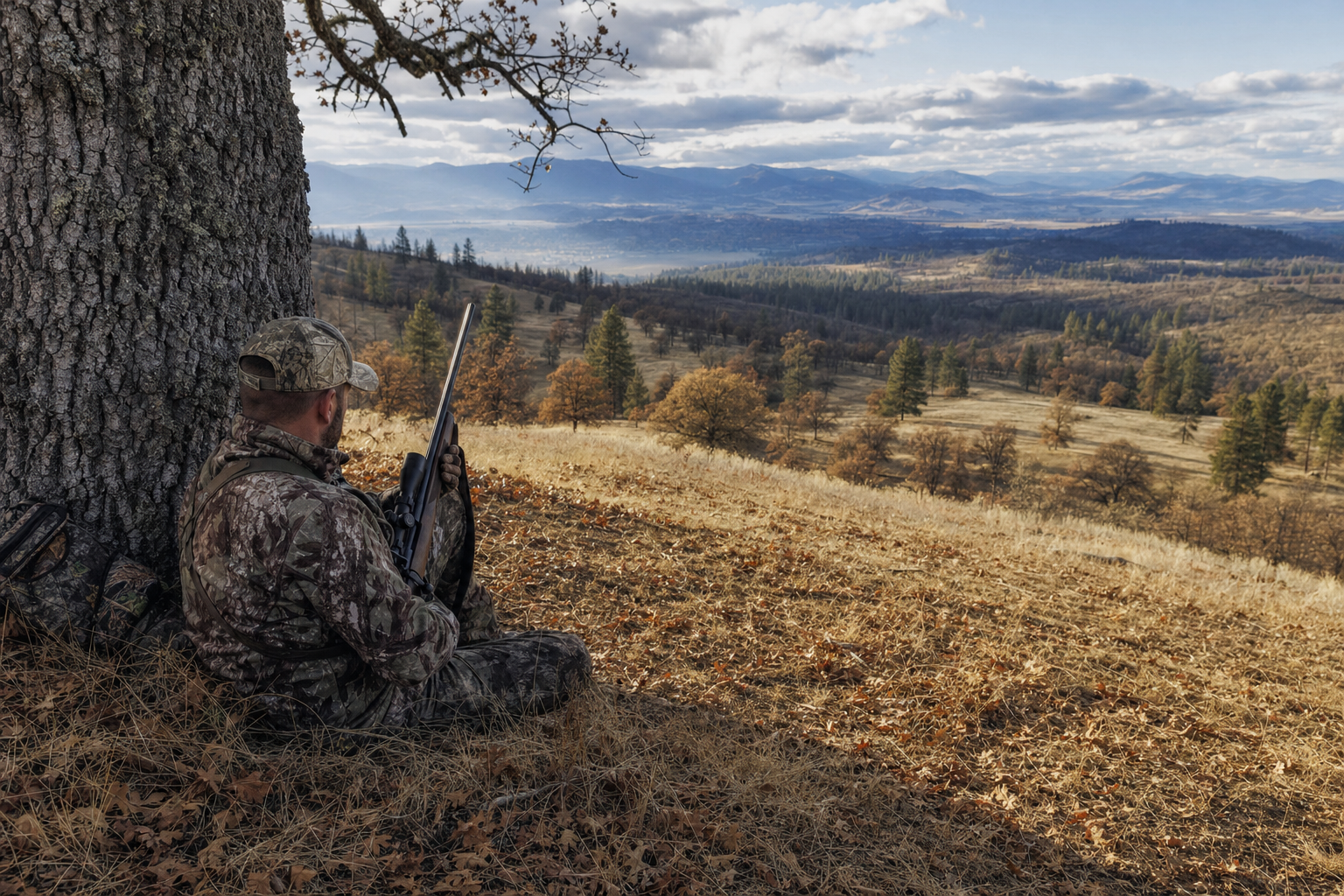
November blacktails in the Rogue Valley follow food. The acorn crop drives everything. White oaks — the sprawling, twisted-limbed oaks that dominate the valley's lower hillsides — drop mast from September into November. Deer key on the remaining acorns heavily after the rut, restoring body fat before winter. Find the oaks, find the deer.
Focus on:
- South-facing oak hillsides: These warm up faster in the morning and hold deer longer into daylight. Look for heavily browsed understory and fresh tracks in soft soil near drainages.
- Saddles and benches in mixed conifer: Bucks use these as daytime bedding spots. Work slowly through Doug fir and madrone on the edges of oak zones at first and last light.
- Creek bottoms and brushy draws: Poison oak and manzanita thickets funnel deer movement. These are travel corridors between feeding and bedding areas — ideal stand or ambush locations.
- Agricultural edges: The Rogue Valley's mix of orchards, vineyards, and pastures draws deer at dawn and dusk. Permission-based private land hunting here is worth pursuing if you have connections.
Tactics for Late-Season Rogue Blacktails
Glassing
The Rogue Valley has open enough terrain that glassing from ridges and roads is effective. Set up at first light on a high point with a clear view of oak slopes and grassy benches. Quality optics matter here — a 10x42 binocular and a spotting scope on a tripod will reveal deer at distances where hasty hunting will miss them entirely. Look for movement in the shadows under the oaks during the first 30 minutes of light.
Still-Hunting in Oak Zones
After the rut, bucks are on their feet during legal shooting hours more than at any other time of year. Slow, methodical still-hunting through oak strips — stopping every 20–30 yards to glass and listen — produces consistent results. Move with the wind in your face. The smell of oak leaves, damp earth, and Douglas fir makes human scent control critical in the light, variable valley thermals.
Rattling and Calling
Early November can still produce responses to antler rattling, particularly in the first week of the month when some bucks are still chasing. Light tickling and raking rather than full-blown, aggressive crashes tends to work better for Rogue Valley blacktails, which are notoriously call-shy compared to Eastern Oregon mule deer. Set up downwind of dense cover before rattling and have your rifle shouldered — responses are fast and short.
Recommended Access Points
The BLM Medford District manages significant acreage in Jackson and Josephine Counties open to public hunting. The Applegate Valley corridor — between the towns of Applegate and Jacksonville — has extensive BLM parcels accessed from Forest Road 20 and its spurs. The Foots Creek and Evans Creek drainages northwest of Gold Hill also hold good deer populations on a mix of BLM and timber company land.
Download the ODFW Hunting Atlas and BLM's Recreation Map for Medford District before your trip. OnX Hunt is invaluable here — boundary lines between private and public land in the Rogue Valley can be confusing, and trespass violations are taken seriously in the valley's wine and farm country.
Rifle Selection and Shots
Rogue Valley shots are typically 50–250 yards, with longer shots possible when glassing open slopes. A flat-shooting cartridge in the .270 Win, .308 Win, or 6.5 Creedmoor range is ideal. Blacktails are compact deer — a 125–150 lb live-weight buck is a good one — and don't require heavy magnums. Focus on shot placement: a 100-yard broadside shot through the shoulder is worth more than any caliber discussion.
For hunting in dense oak and manzanita, a compact carbine-length rifle in .308 or .30-06 handles brush and tight quarters better than a long-barreled varmint rig. Iron sights or a low-power variable scope (1-6x) keeps things fast when a buck appears at 40 yards in a draw.
Pack-Out and Processing
The Rogue Valley's terrain is huntable without a horse or mule — most areas are accessible to fit hunters on foot within a half-mile of a road. That said, November weather can close roads quickly. Carry tire chains, a winch strap, and don't push your rig beyond its limits on wet BLM two-tracks.
Medford has several quality meat processors if you don't want to do it yourself. Refrigerate your deer as quickly as possible — valley November temperatures can swing from 25°F at dawn to 60°F by afternoon. Get the hide off and the carcass into a cooler or cold garage within a few hours of the shot.
The Rogue Valley blacktail is Oregon's most underrated late-season deer hunt. The tags are over the counter, the country is beautiful, and a mature buck in the Southern Oregon oak hills is a trophy worth every cold, foggy November morning you put in to find him.