Every summer, the conversation about Oregon archery mule deer centers on the same handful of units — Steens, Hart Mountain, Silvies. Meanwhile, the Warm Springs Unit quietly produces some of the most shootable velvet bucks in the state, on a stretch of public land that most hunters blow through on Highway 26 without a second glance. If you've drawn or are considering applying for a Warm Springs archery deer tag, here's what the unit actually looks like on the ground.
Unit Overview
The Warm Springs Unit covers approximately 900,000 acres in north-central Oregon, centered on the Warm Springs Indian Reservation and the surrounding BLM and national forest land. Most of the huntable public acreage lies in the eastern and northern portions of the unit — the BLM ground south of the Columbia River along US-97, the Deschutes Canyon country north of Maupin, and the broken lava plateau east toward Antelope. The Confederated Tribes of Warm Springs manage the reservation portion as closed private land; do not hunt there without explicit tribal permission.
The unit is not a trophy factory. Average bucks here are 2x3 to 3x4 class deer with good mass. True 4x4 bucks exist, and a 4x5 or better shows up in trail camera photos every fall, but the Warm Springs Unit rewards hunters who are mobile, willing to cover miles, and comfortable making difficult shots in broken country.
Terrain and Habitat
The unit breaks into three distinct habitat zones:
- Sagebrush Flats (2,500–3,500 ft): The lower desert receives the most hunting pressure from road hunters and early-morning spot-and-stalkers. Bucks use this zone heavily in summer velvet but push to higher ground as temperatures climb past 90°F.
- Juniper Transition (3,500–5,000 ft): The productive middle band. Scattered western juniper, bitterbrush, and mountain mahogany provide excellent thermal cover and reliable forage. This is where you'll find the most deer per square mile during archery season.
- Ponderosa Fringe (5,000+ ft): The highest public ground on the unit's southern boundary contacts the Ochoco National Forest edge and offers thermal escape cover during the hottest days of August. Bucks in this zone are harder to find but tend to be older class animals.
Summer Scouting Strategy
The Warm Springs Unit archery deer season opens in mid-August, and your scouting window is right now — early-to-mid July. Velvet bucks are in their summer home ranges, predictable and highly visible during morning and evening feeding sessions. Here's how to use the next four weeks effectively:
Glass First, Walk Second
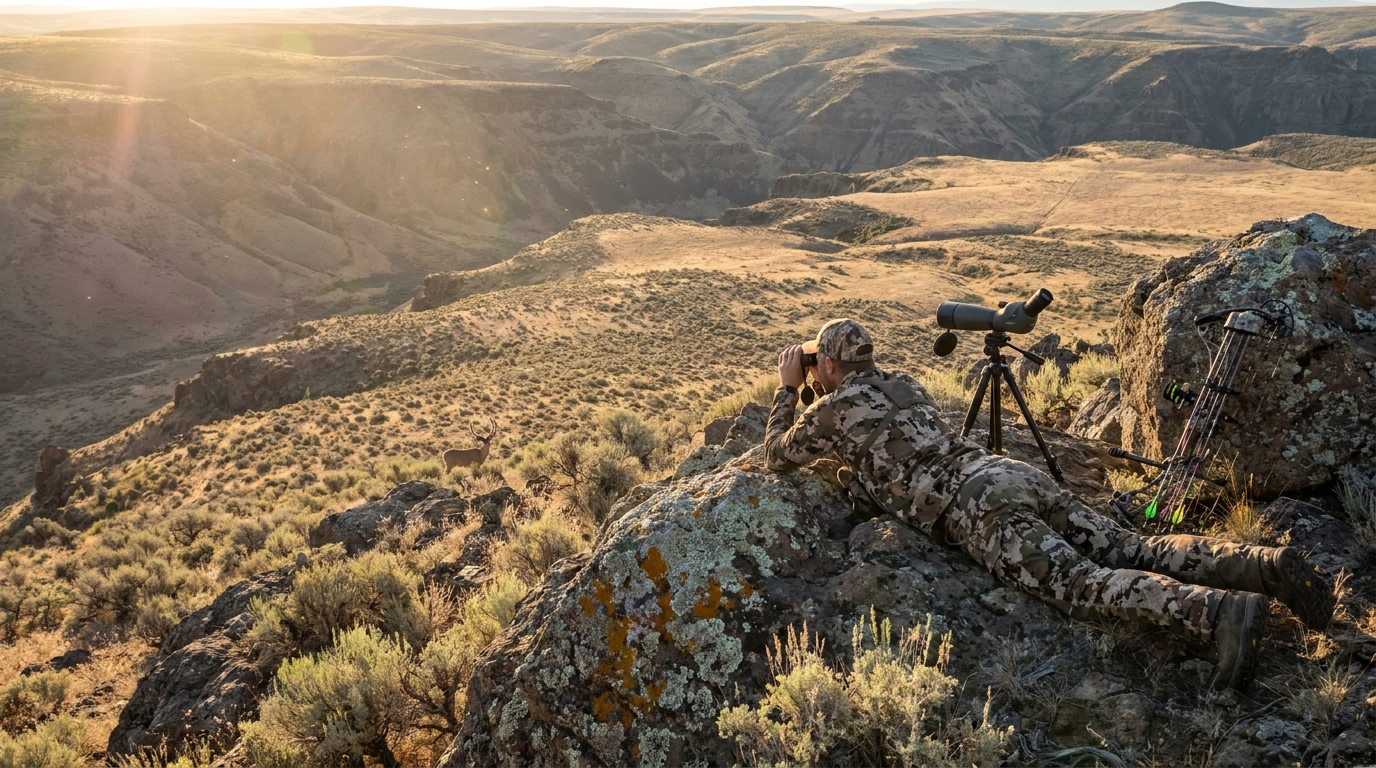
The unit's open terrain is made for a spotting scope. Set up glassing positions on high points overlooking the juniper transition zone 45 minutes before first light. Run your scope methodically across south-facing slopes where bitterbrush and sage mix — that's where bucks bed through the heat of the day. Mark every buck you see on OnX Hunt and note the time, wind direction, and bedding/travel patterns.
Water Is the Key in August
The unit's natural water sources are sparse. BLM-maintained wildlife guzzlers and seasonal springs are literal magnets for every deer in a square-mile radius during the heat of August. Pull BLM GIS layers in OnX or CalTopo and mark every known water source in your target area. Bucks will hit water once or twice a day in 95-degree heat, usually in the two hours before dark.
Trail Cameras on Water Sources
Set cameras now on every water source you can legally access on public land. Focus on the west-facing banks where deer approach from shade during the late afternoon. Forty-eight hours of camera time will tell you more about a water hole than a week of glassing.
Spot-and-Stalk Execution in Open Country
Spot-and-stalk is the dominant tactic in the Warm Springs Unit — there is almost no tree stand hunting, and few hunters run ground blinds. This is a foot-speed and wind-discipline game.
The prevailing thermals in this country rise off the canyon floors by 9 AM and reverse (falling) after sunset. Plan your stalks accordingly: morning approaches from above, evening approaches from below. The unit's volcanic rock is extremely noisy; wear soft-soled boots and move at a deer's pace when you get inside 200 yards.
Oregon's archery season in this unit allows for decoy use during mule deer season. A DSD Muley doe decoy or a small buck silhouette can be useful for stopping a moving buck or drawing a curious animal within range when conditions are right. Don't overuse it — desert muleys can be extremely decoy-shy after they've been pressured.
Practical Tag Odds and Application Strategy
The Warm Springs Unit archery mule deer tag is an any-antlered general tag — no preference point draw required. This means you can buy a tag over the counter if you're an Oregon resident, which makes it an outstanding option for hunters who prefer to go every year rather than accumulate points for a premium draw unit. Non-residents should check current quotas, as general archery tags in Oregon are available to non-residents at a higher tag fee but typically don't require preference points for this unit tier.
The Bottom Line
The Warm Springs Unit won't make the cover of a hunting magazine, but it will put a deer on the ground for a hunter willing to put in the scouting time and execute a clean stalk in heat and open country. Glass hard, find your water sources now, and be on the ridge at first light on opening day. The bucks are there.