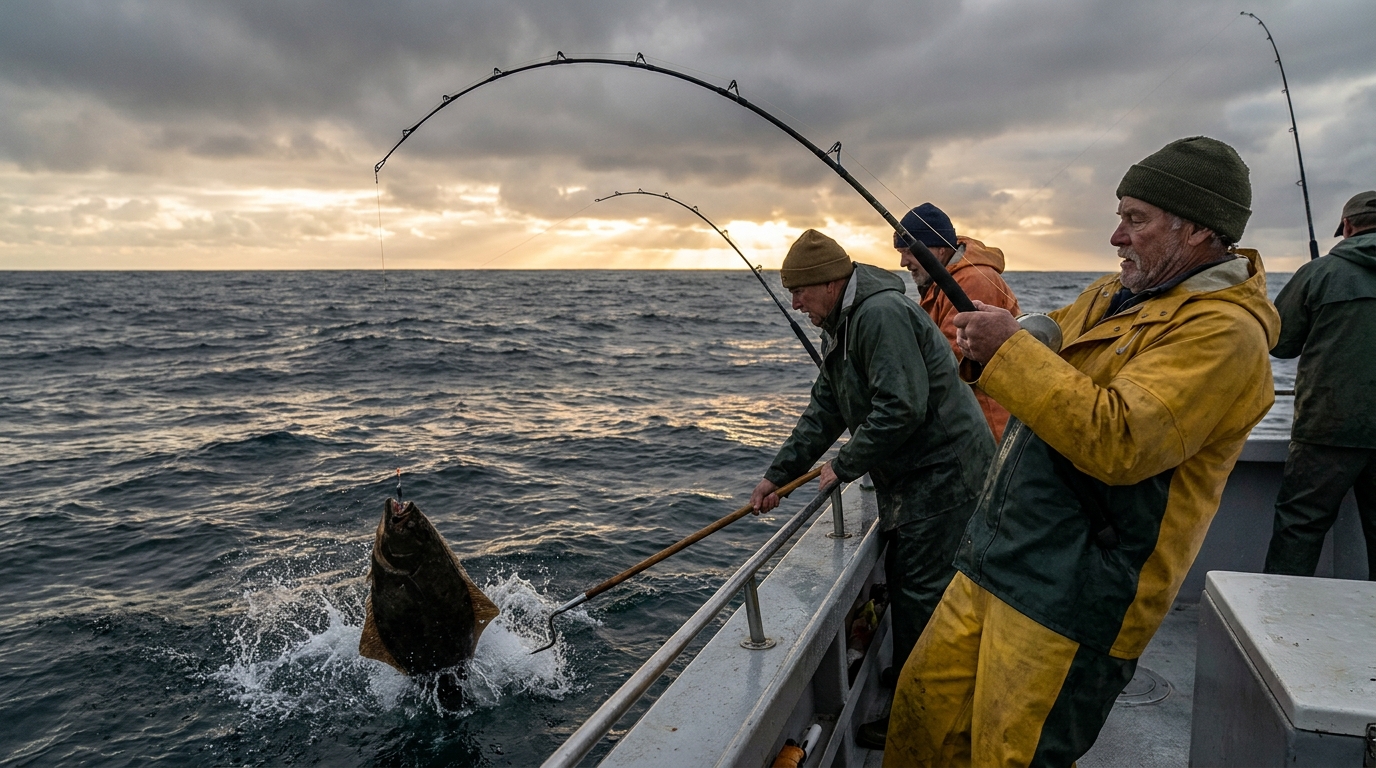
There's something about the moment a Pacific halibut commits to a bait 200 feet down that makes everything else disappear. The rod loads up, your heart rate spikes, and the next several minutes become a full-body workout you didn't sign up for — and wouldn't trade for anything. Oregon's offshore halibut fishery runs May through mid-October, and right now, in mid-May, is prime time to be on the water.
Understanding Oregon's Halibut Season and Regulations
The Pacific halibut fishery is managed cooperatively between the U.S. and Canada through the International Pacific Halibut Commission (IPHC). Oregon's quota is released each year, and once it's hit, the season closes — sometimes ahead of schedule. In recent years, the Oregon sport fishery has seen quotas ranging from 200,000 to 500,000 pounds. Check current ODFW closures weekly on the ODFW Marine Resources page before you head out.
Key regulations for 2026: The sport bag limit is one fish per angler, minimum 32 inches. Retention of Pacific halibut over 80 inches (approximately 100+ lbs) is prohibited under current rules — IPHC refers to these as "breeders." Licensing requirements include a valid Oregon Saltwater Fishing License and a Combined Angling Tag.
Best Departure Ports on the Oregon Coast
Where you launch matters. Oregon's major halibut ports each have their own productive grounds:
- Astoria / Warrenton: Close access to Flavel Bank and the Columbia River bar grounds. Some of the most consistent early-season action in the state.
- Tillamook Bay / Garibaldi: The Three Rivers Charter fleet here runs hard to Netarts Canyon and Stonewall Bank. Solid mid-season producer.
- Newport: Access to Yaquina Canyon edges and Heceta Bank. Some of the biggest fish historically come off this stretch.
- Winchester Bay / Reedsport: Excellent for anglers targeting both halibut and lingcod combo trips on Siltcoos and Tahkenitch reef systems.
- Gold Beach / Brookings: Southern Oregon grounds see lighter pressure and can produce excellent catches on calmer weather days.
Gear Setup: What Works Bottom
Halibut live on or near the seafloor, usually in 150–350 feet of water. Your rig needs to get there fast and stay there.
Rod and Reel
A heavy conventional setup is standard — think a Penn Senator or Shimano Tekota 600 paired with a 7-foot heavy action rod rated for 50–80 lb braid. Braid is non-negotiable: at 200+ feet, mono simply can't telegraph the strike and you'll lose critical feel.
Terminal Tackle
The Oregon rig for halibut is typically a slider sinker system. Slide a banana-style weight (8–20 oz depending on current) onto your mainline, follow with a bead and swivel, then 3–4 feet of 60–80 lb monofilament or fluorocarbon leader to a 6/0–9/0 circle hook. Circle hooks are required on many charter vessels and dramatically improve catch-and-release survival rates.
Bait Selection
Fresh bait wins. Period. Squid, herring, and anchovy are the standards — with whole squid being arguably the most consistent producer. Salmon bellies, when available, are an excellent premium bait. Many savvy halibut hunters add a pink or chartreuse Squid skirt above the hook as an attractor, which increases visibility in deeper, darker water.
Reading the Bottom: Where Halibut Hide
Halibut are ambush predators. They lie in depressions and edges on sandy or mixed-bottom flats, waiting for baitfish to cruise past. Your chart plotter is your best friend — look for:
- Edges of sandy flats adjacent to rocky structure
- Depth changes of 20–50 feet over short horizontal distances
- Underwater canyon rims and bench features
- Areas where tidal currents concentrate bait
Don't anchor up and wait. Drift fishing is far more effective. Use your trolling motor or set your drift to cover ground. If you mark fish on the sonar and aren't getting bites, that's a presentation problem — slow down, change bait, or drop a different weight to adjust your depth.
Working a Bite
Halibut bites can be subtle or violent depending on fish size. A legal "chicken" halibut (10–30 lbs) often hits like a hard thump and holds. A larger fish might mouth the bait and move off slowly. With circle hooks, resist the urge to swing — just come tight and wind. The hook sets itself as the fish turns.
Once you've got one pinned, keep steady pressure and don't pump aggressively. A big halibut near the boat is where fish are lost — they have tremendous lateral surface area and can surge back down with surprising power. Have your gaff or net ready before the fish surfaces.
Seasickness, Safety, and Offshore Preparation
Oregon's offshore waters are not forgiving. Swells of 6–10 feet are common even on "good" days. Take seasickness medication (Bonine or a scopolamine patch) the night before — not the morning of. File a float plan, carry your EPIRB, and never go offshore without checking both the National Weather Service marine forecast and the NOAA buoy reports for Station 46050 (Stonewall Bank) and Station 46002 (offshore).
Dress in layers. Even a 65°F day on shore is a 50°F day 15 miles out with wind chill. Bring more clothes than you think you need, waterproof everything, and wear your PFD.
Processing Your Halibut
Halibut is one of the finest eating fish in the Pacific. Bleed it immediately — a spike through the brain right behind the eyes, then a knife to the gill arches. Get it on ice within minutes. Halibut flesh degrades fast in warm water. A quality cooler with a 2:1 ice-to-fish ratio will keep fillets in prime condition until you get home.
The standard four-fillet approach works perfectly. Halibut is versatile: pan-fried in butter with lemon and capers, beer-battered fish and chips, ceviche, or simply grilled with a light seasoning. Don't overthink it — fresh halibut barely needs any help.
Final Notes Before You Go
Book charters early. Oregon's better-known charter operations out of Newport and Garibaldi fill up fast once the quota announcement drops. If you're running your own boat, make sure you understand the bar crossing conditions — Tillamook and Coos Bay bars can be dangerous even for experienced captains. Respect them, and you'll be eating halibut tacos all summer.