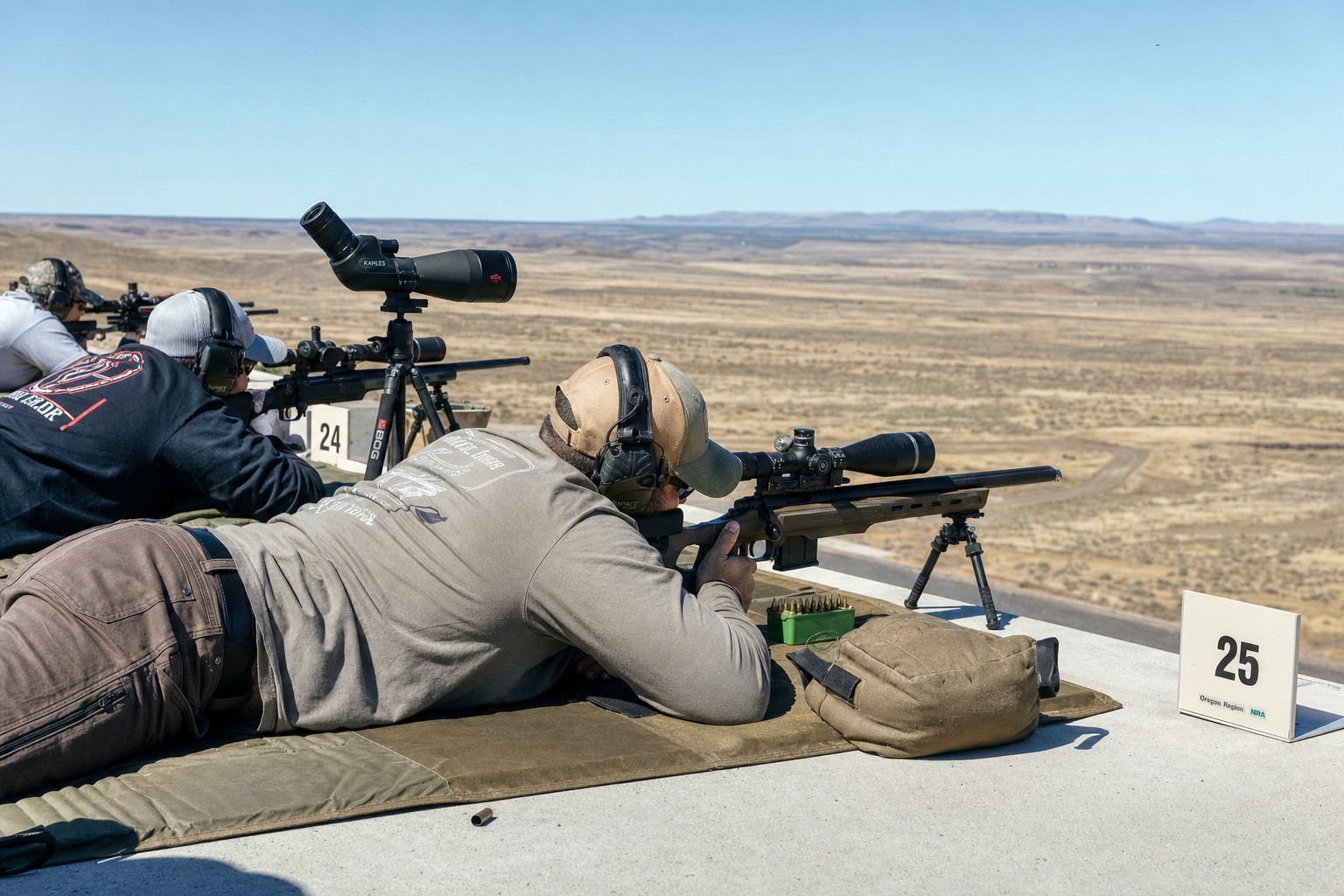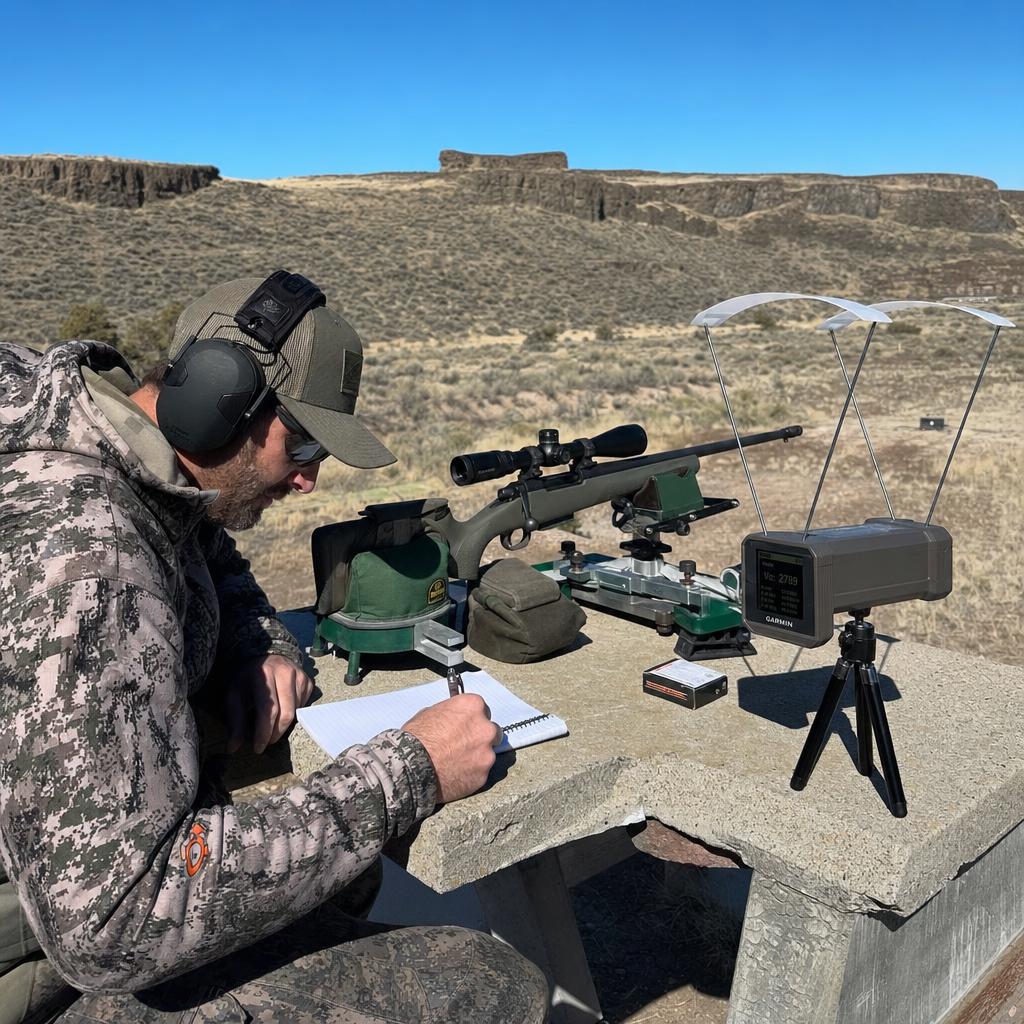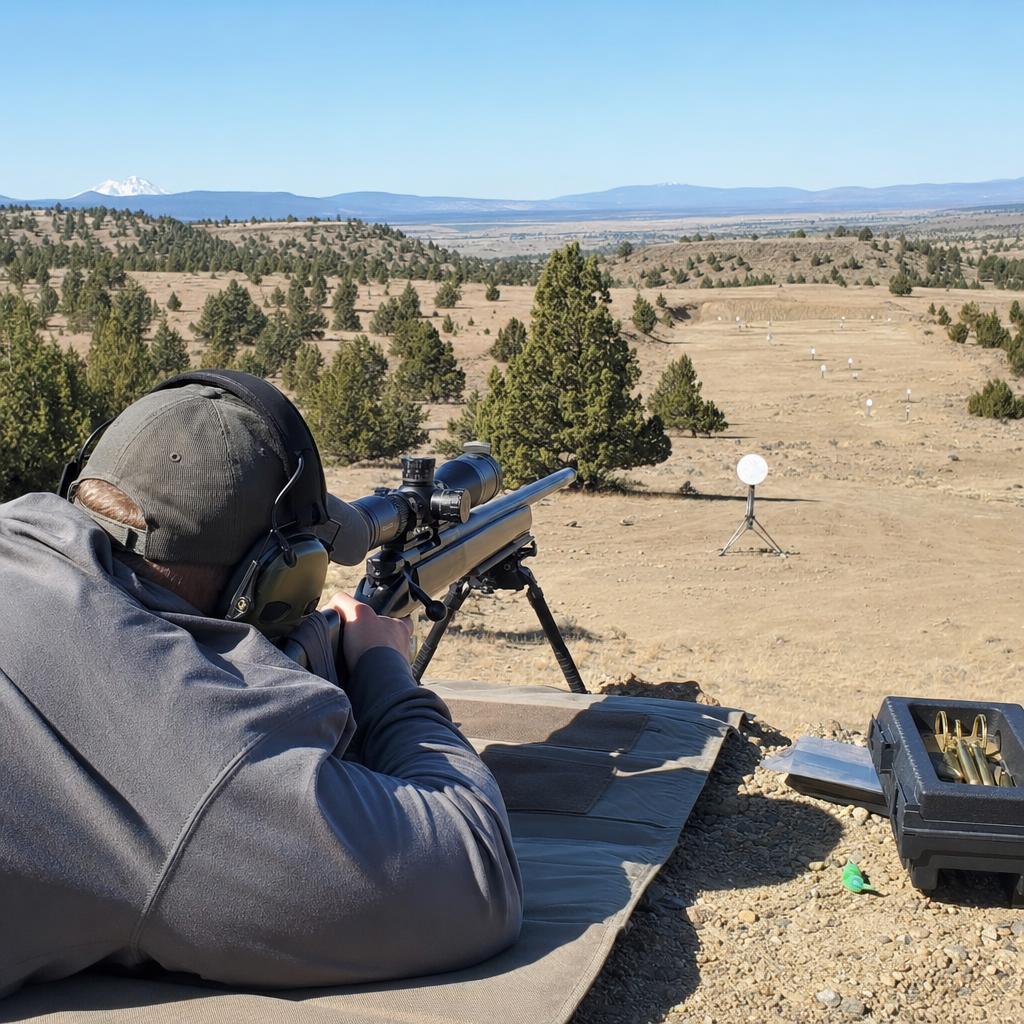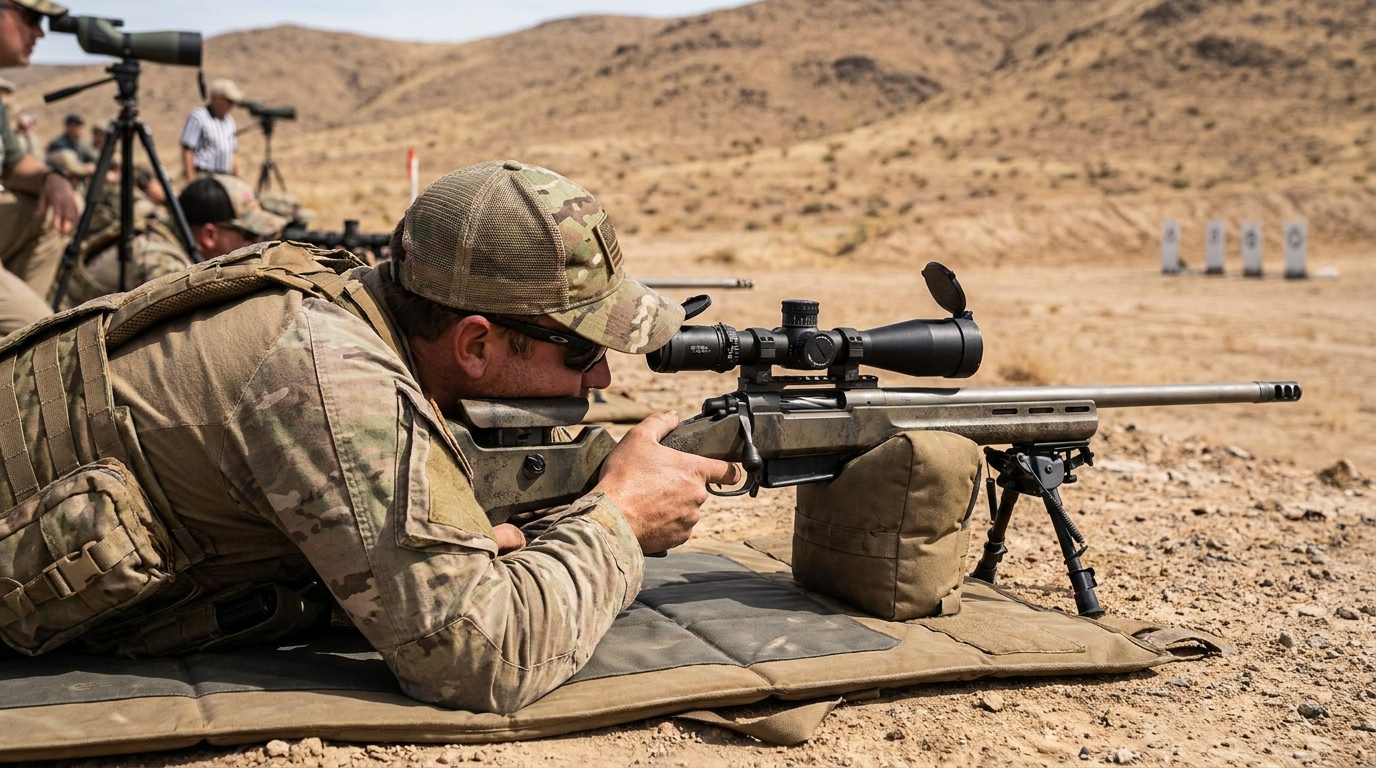
If you want to become a dramatically better field shooter — faster, more accurate under pressure, more competent at reading wind — the fastest path is precision rifle competition. The Precision Rifle Series (PRS) and its grassroots counterpart, the National Rifle League (NRL), have created a nationwide ecosystem of matches that will break your habits, expose your weaknesses, and turn you into a significantly more capable marksman within a season. The learning curve is steep. So is the reward.
What PRS Shooting Actually Looks Like
A typical PRS match consists of 10–12 "stages" — timed shooting challenges that require you to engage steel targets from 200 to 1,000+ yards in positions you don't get to choose. You might shoot prone from behind a barricade, standing in a window frame, from a kneeling position using only your support hand on a vertical post, or while transitioning between two positions under time pressure.
The targets are small. A standard PRS target at 500 yards might be 10 inches square. At 200 yards, some stages use 4-inch circles. You get points for hits, and the clock runs regardless of your internal monologue. It is brutal, humbling, and completely addictive.
Cartridge Selection: What Actually Wins
The PRS rulebook defines a "PRS-legal" cartridge as one generating at least 3,200 ft-lbs of muzzle energy — enough to reliably activate the steel knock-down targets. This rules out smaller cartridges and funnels competitors toward a handful of proven rounds.
The Dominant Cartridges
- 6mm Creedmoor: The current king of PRS competition. Flat trajectory, minimal recoil (critical for spotting your own hits), excellent barrel life relative to other 6mm options, and a deep pool of high-BC bullets in the 103–115 gr range. If you're building a PRS rifle from scratch, start here.
- 6.5 Creedmoor: The cartridge that started the current long-range revolution. Still extremely competitive and an excellent choice for new competitors. Components are universally available, reloading data is mature, and rifles chambered for it are plentiful.
- 6.5 PRC: A step up in velocity from the 6.5 CM with similar bullet selection. Excellent for longer stages where extra energy matters. Barrel life is shorter.
- 308 Winchester: The entry-level path. Brass is cheap, dies are everywhere, and you can absolutely be competitive at club-level matches. At the Pro level, the limited BC of .308 bullets becomes a disadvantage in wind, but for your first season, shoot what you have.
The Rifle Platform
You do not need a $5,000 custom rifle to compete. You need a rifle that is mechanically accurate (sub-MOA at 100 yards), reliable, and fits you properly. Here's what to prioritize:
Action
A Remington 700 footprint action gives you access to the widest aftermarket parts pool. Ruger Precision Rifle, Tikka T3x, and Bergara B-14 actions are all competition-proven out of the box. If you already own an accurate bolt gun, start with it and upgrade later based on what you actually need.
Stock and Chassis
An AI-style chassis (MDT, KRG Bravo, Oryx, Area 419) provides the adjustability and positional shooting capability that a traditional stock cannot. An adjustable length of pull and comb height matters more than you'd expect across diverse shooting positions. The Magpul PRS stock is a popular budget entry point. MDT ACC or LSS-XL chassis systems are popular mid-tier options.
Barrel
A 24–26 inch barrel in your chosen cartridge from a quality manufacturer (Bartlein, Benchmark, Proof Research, Krieger) is your accuracy foundation. Twist rate must match your bullet weight — for 6mm Creedmoor with 105–115 gr bullets, a 1:8 twist is standard.
Scope
This is where you should spend money. A poor scope on a great rifle ruins everything — a great scope on a decent rifle is competitive. Minimum specs for PRS: 5-25x magnification range, first focal plane (FFP) reticle with accurate mil subtensions, zero-stop turrets with at least 10 mils of travel. Vortex Razor HD Gen III, Nightforce ATACR, and Leupold Mark 5HD are common sights in the squad bay. Budget options from Primary Arms and Vortex Diamondback Tactical are viable for club matches.
Positional Shooting: The Real Skill Gap
Here's what surprises most new PRS competitors: their rifle is fine. Their position work is the problem. Shooting from unconventional positions with a rear bag, andmonopod, or contact-only with a vertical barricade requires hundreds of hours of practice that bench shooters never accumulate.
Essential Positional Skills
- Rear bag manipulation: Consistent cheek weld and bag grip under time pressure
- Barricade shooting: Using a rifle-mounted clamp or rear bag against a vertical surface
- Bipod work: Loading the bipod correctly for each position to eliminate cant and wobble
- Andmonopod/ARCA rail systems: Many top competitors use a rear monopod for faster position transitions
- Andbarricade bags: A set of small field bags (Wiebad, Armageddon Gear) in various sizes fills gaps in unconventional positions
Practice these at home. Dry-fire from every position you can imagine. Build a simple barricade from 2x4s. It costs almost nothing and will move you from the bottom third to the middle of the pack faster than any optic upgrade.
Wind Reading: The Never-Ending Education
At 500 yards in a 10 mph full-value wind, a 6mm 105 gr Berger at 2,950 fps drifts approximately 7–8 inches. Miss by 10% on your wind call and you miss the 10-inch target. This is why wind reading matters more in PRS than almost any other skill. Resources to develop it:
- "Applied Ballistics for Long Range Shooting" by Bryan Litz — the reference text
- Kestrel 5700 Elite with Applied Ballistics — gives you true firing solution data on the line
- Match experience — there's no substitute for reading wind flags, spotters, and mirage in competition
Finding Local Matches in the Pacific Northwest
Oregon and Washington have an active PRS/NRL club match scene. Oregon Precision Rifle (OPR) and various IPSC/practical rifle clubs run club-level matches that are ideal for new shooters. The NRL website maintains a match finder searchable by state. Most club matches welcome new shooters, and the PRS community is generally helpful to beginners — ask questions, watch how experienced shooters build positions, and don't be afraid to ask for coaching between stages.
Shoot your first match before your gear is "perfect." You'll learn more in one day on a match course than in months of solo range sessions. That's the point.