Ask most Oregon anglers what they're after in June and July, and you'll hear trout, bass, maybe steelhead. Mention kokanee salmon and you'll get a raised eyebrow or a knowing grin. Those who know, know — and they're usually not talking. Kokanee are the landlocked version of sockeye salmon, and Oregon's high-country lakes hold some of the best populations in the Pacific Northwest. Once you dial in the technique, a limit of these scrappy, bright fish is one of the most satisfying mornings you can have on the water.
Where to Find Kokanee in Oregon
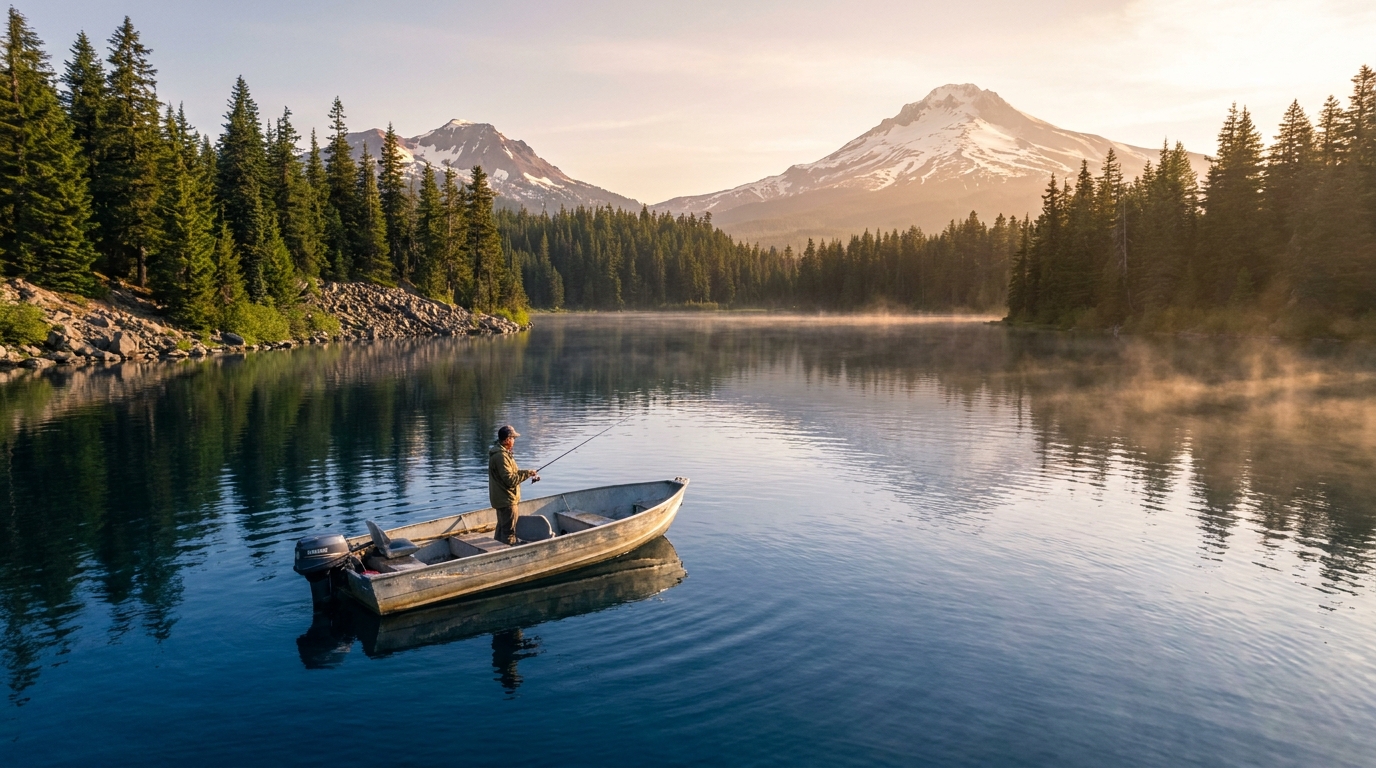
The two crown jewels of Oregon kokanee fishing are Odell Lake and Crescent Lake, both located in the Cascades near the Willamette Pass area of Klamath and Lane counties. Odell Lake sits at 4,800 feet and is the deeper of the two — consistently producing kokanee in the 14–18 inch range with occasional fish pushing 20 inches or better. Crescent Lake, just a few miles south, runs shallower but warms faster in spring, which can give it a slight edge in early-season timing.
Other solid Oregon kokanee waters include Wallowa Lake in the northeast, Wickiup Reservoir in Deschutes County, and Detroit Lake in the western Cascades. Each has its own personality — Wickiup is big and wind-prone, Wallowa is stunning but finicky, and Detroit can be productive right after ice-out when other lakes are still cold.
Timing: When the Bite Is On
On Odell and Crescent, the kokanee bite typically heats up from late May through early August. Fish are most catchable when the thermocline is well-defined — usually in the 30–60 foot range during summer. As surface temps climb above 60°F, kokanee drop deeper to find that sweet spot of cold, oxygenated water. By late August, fish are staging for their fall spawn and can be found in shallower water near tributary inlets, but they're also beginning to deteriorate in flesh quality.
Early mornings are almost always best. Fish are more active in low light and often suspend higher in the water column during dawn hours, making them easier to reach.
Gear and Rigging
Kokanee are notorious for their soft mouths and light strikes, which means your tackle selection matters. Most successful kokanee anglers run light action spinning or trolling rods in the 7–8 foot range paired with 4–6 lb monofilament or fluorocarbon. Braid mainline to a fluoro leader is a popular setup — braid telegraphs strikes well and the fluoro gives you some stretch at the hook set.
The most productive presentation on Oregon lakes is slow trolling with dodger-and-lure combos. A small, metallic dodger (Seps, Yeck, or Luhr-Jensen models all work) provides the flash and side-to-side action that triggers kokanee. Trail 6–10 inches behind the dodger with a small Wedding Ring spinner tipped with white corn, a Pink Lady lure, or a small squid pattern in pink or red.
- Dodgers: Size 0 or 00 — go small, kokanee are not aggressive open-water predators
- Colors: Pink, red, chartreuse, and silver are top producers
- Troll speed: 1.5–2.0 mph — faster than most trout trollers run
- Depth: Use a downrigger or leadcore line to hit the 30–60 foot zone precisely
Downriggers vs. Leadcore
A quality downrigger is the gold standard for kokanee fishing. It lets you set depth precisely and maintain it as you change speed or direction. On Odell and Crescent, most serious kokanee boats are running electric downriggers on both sides with a spread of 2–4 rods. If you're just getting started, even a manual Scotty or Walker downrigger will get the job done.
Leadcore line is a budget-friendly alternative. A general rule of thumb is roughly 5 feet of depth per color (10 yards) at trolling speed, though this varies with speed and line diameter. Leadcore doesn't offer the precision of a downrigger but it's cheap, simple, and effective.
Scent and Attractants
Kokanee have an exceptional sense of smell, and scent can be the difference between a box of fish and a blank day. Corn is the old standby — it's cheap, it works, and kokanee eat it naturally. But don't overlook Pro-Cure Kokanee Sauce, Pautzke Nectar, and Salmon eggs as tipped baits. Apply scent to your lure and reapply every 15–20 minutes, especially after a fish.
Regulations and Limits
Oregon kokanee regulations vary by water body, so check the ODFW Sport Fishing Regulations before you go. On Odell and Crescent lakes, kokanee are typically included in the general trout/salmon daily bag limit. Creel limits, size restrictions, and gear rules can change year to year — always verify current regs at myodfw.com.
Cleaning and Eating
Kokanee are outstanding table fare, especially fish taken in June and early July before they begin to spawn. The flesh is rich, pink, and fine-grained — closer to sockeye salmon than any trout. Bleed your fish immediately after catching, keep them on ice, and plan to eat them within a day or two. Grilled simply with olive oil, lemon, and dill is hard to beat.
The kokanee fishery doesn't get the press it deserves in Oregon, which means you'll find lighter pressure on some of these lakes compared to the weekend crowds at popular trout destinations. Do your homework, get your downrigger dialed in, and you'll wonder why it took you so long to discover one of the best fisheries the Cascades have to offer.