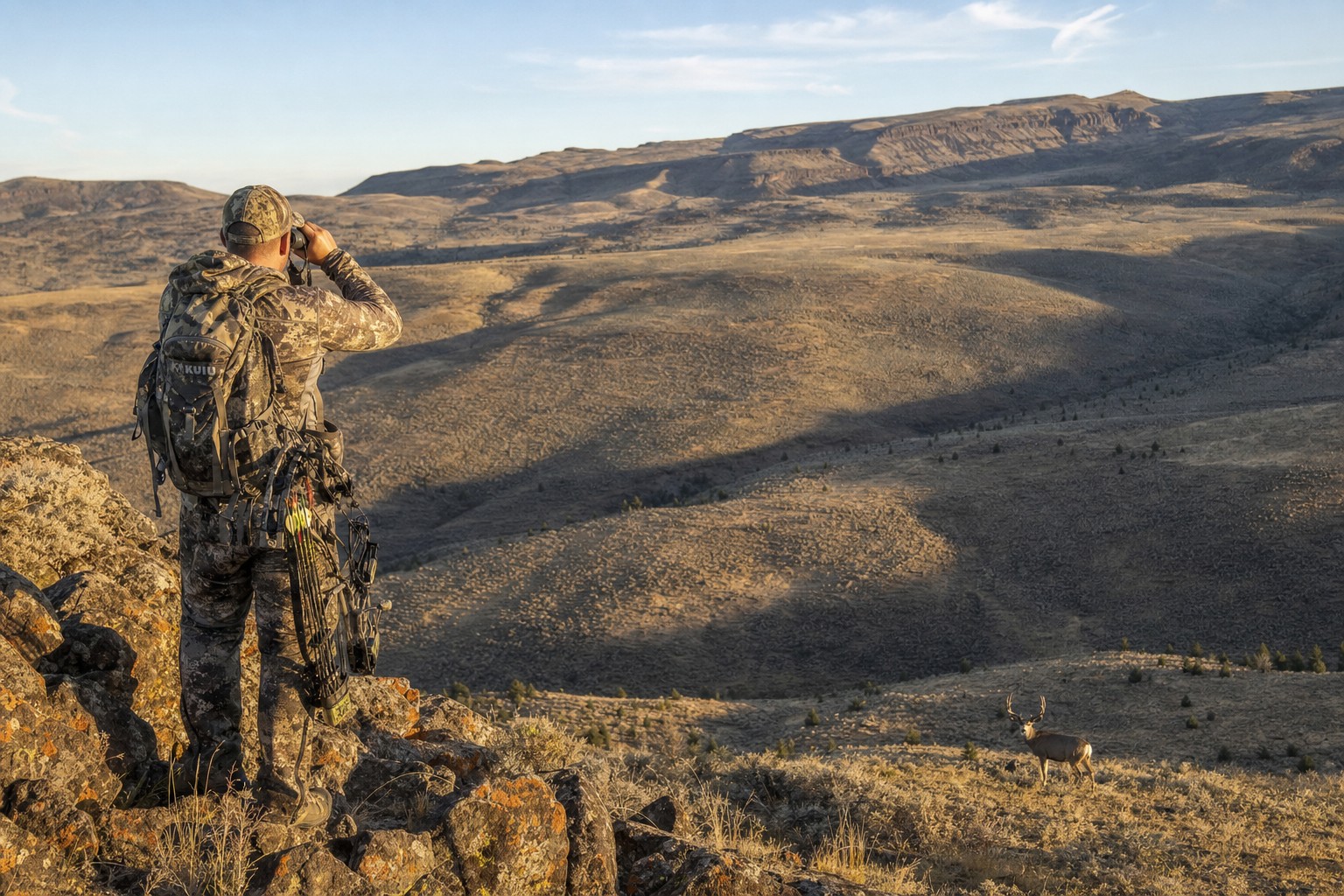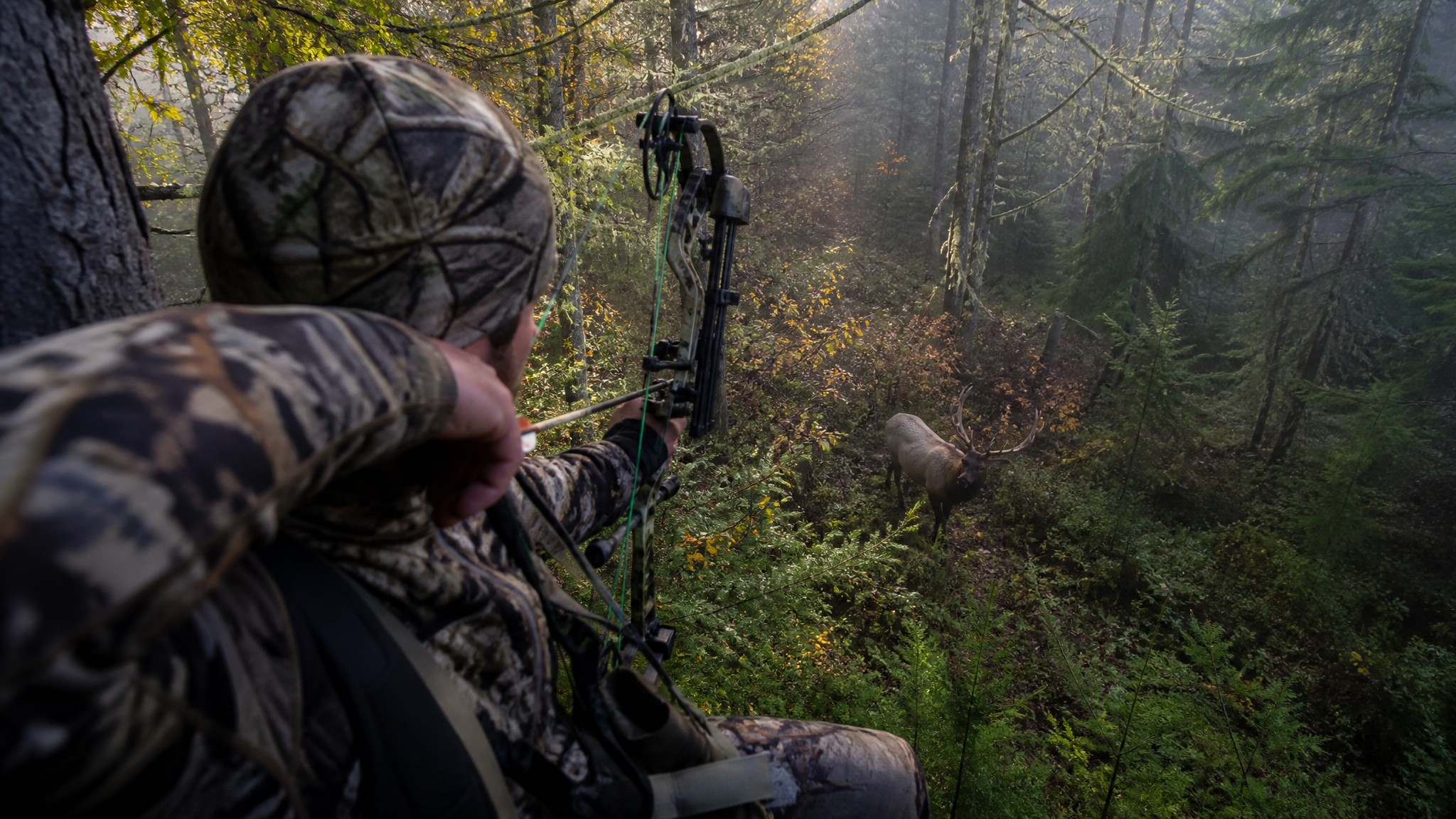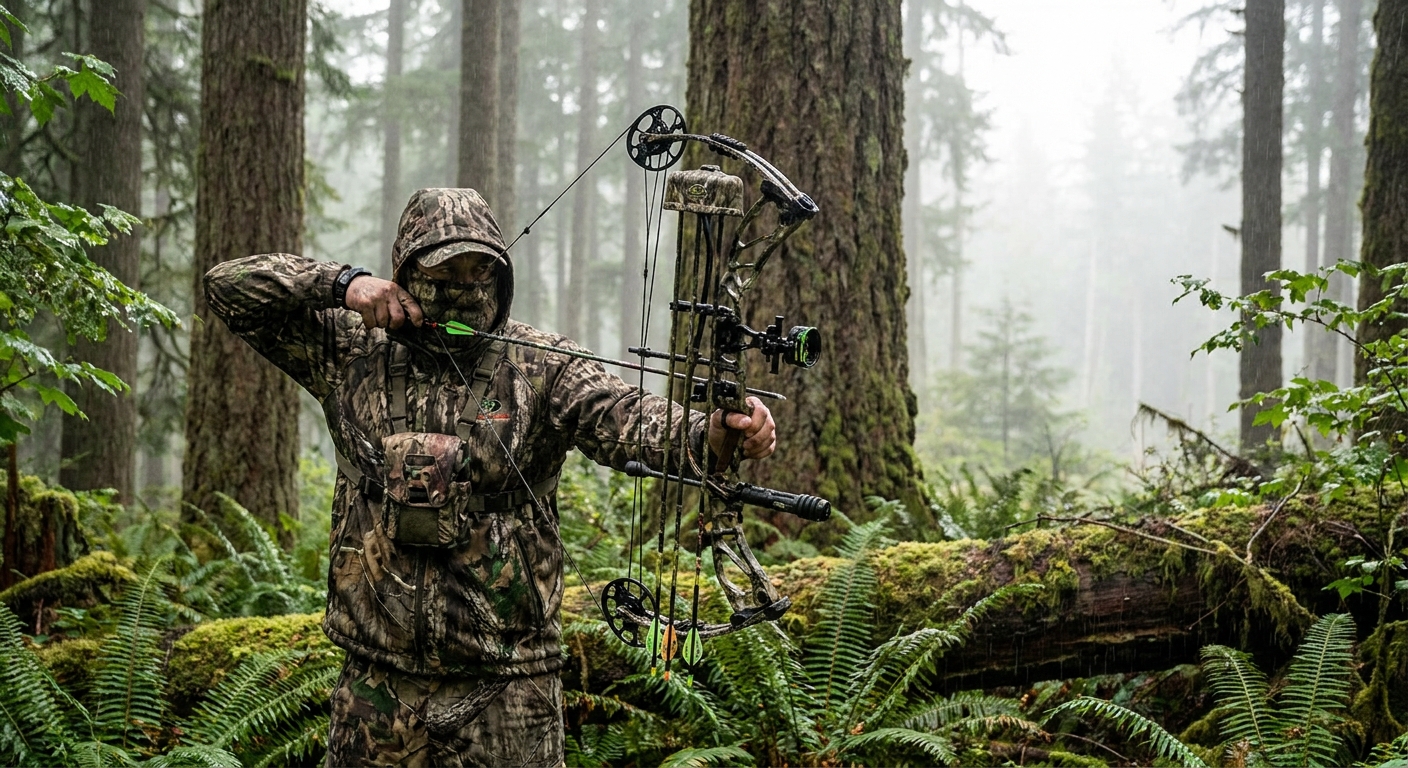
Oregon's archery seasons don't wait for good weather. The August deer opener might see 95-degree heat in the high desert or afternoon thunderstorms in the Cascades. By September, the first fall systems are rolling in off the Pacific. The Roosevelt elk rut in October and November — some of the best bowhunting of the year — happens in the Coast Range and Western Cascades in conditions that can include sideways rain, fog so thick you can't see 50 yards, and temperatures that drop from 50 to 35 degrees in an afternoon. If you're going to bowhunt the Pacific Northwest seriously, you're going to bowhunt in the rain. Here's how to do it right.
Your Bow in Wet Conditions
Modern compound bows are significantly more water-resistant than the aluminum-risered, standard-cable equipment of a decade ago. Most current risers are machined aluminum with anodized or Cerakote finishes, limbs are fiberglass composites that handle moisture well, and cam systems are largely sealed. That said, there are failure points you need to address before hunting in consistently wet conditions.
Strings and Cables
Bowstring materials — modern HMPE fibers like Dyneema and BCY 452X — are hydrophobic and don't absorb water the way old Dacron strings did. However, serving materials can wick moisture and loosen over time with repeated wet/dry cycles. Wax your string regularly (every 2 to 3 wet hunting days), paying particular attention to served areas. Dry your bow thoroughly before storage — don't leave a wet bow in a case overnight. Moisture trapped in a bow case accelerates serving separation and promotes mold on organic components.
Cams and Bearings
Cam axles and bearings are a real wet-weather concern. Most quality bows use sealed or stainless axle components, but cheaper bows with unsealed bearings can develop rust that you won't see until cam lean develops or the draw cycle becomes rough. After hunting in rain, wipe down all axle areas and apply a light coat of dry lubricant (Sentry TUF-GLIDE or similar). Avoid WD-40 — it attracts debris and isn't a long-term lubricant.
Peep Sights
Peep sights can fill with water droplets in rain, blurring or completely obscuring your sight picture at the moment of the shot. Solutions:
- Carry a small cloth or shammy in your jacket pocket to wipe the peep before drawing
- Choose a peep with a large aperture — 3/16 inch or larger — that allows water to clear more easily than a tight 1/8-inch target peep
- Some hunters use a hooded peep (Specialty Archery Clarifier System) that sheds water better than an open ring
- Practice drawing and wiping in one smooth motion until it's automatic
Arrow and Broadhead Considerations
Wet fletching is one of the most common causes of accuracy loss in rain hunting. Standard feather fletching absorbs moisture and becomes matted and asymmetrical within minutes of rain exposure — a three-fletch setup with soaked feathers can produce 6-inch fliers at 30 yards. Plastic vanes don't absorb water but can separate from the shaft when adhesive breaks down from repeated moisture exposure. Inspect your arrow-fletching bond before every wet hunt.
For consistent wet-weather accuracy:
- Use plastic vanes fletched with a quality adhesive (AAE Max Bond, Bohning Ferr-L-Tite) and allow full 24-hour cure time
- Re-fletch any arrows showing lifting or separating vanes before the hunt
- Carry arrows in a quiver with a cover flap, not an open side quiver that collects water
- Check that broadhead blades are dry before the shot — wet blades on mechanical heads can interfere with blade deployment
Fixed-blade broadheads are generally more reliable in wet conditions than mechanicals, because there are no moving parts to jam with debris or water. In western Oregon timber elk hunting — where shots are often inside 30 yards at moving animals — a stout fixed blade like the Slick Trick Magnum, Muzzy MX-3, or G5 Montec handles rain, blood, and brush contact better than most mechanicals. That said, top-tier mechanicals like the Rage Hypodermic NC (no collar) perform well in wet conditions when properly maintained.
Personal Gear: Staying Dry Enough to Function
There's a difference between staying dry and staying functional. In a Pacific Northwest downpour, you're probably not going to stay dry. The goal is to stay warm enough to draw cleanly and remain alert enough to make good decisions.
- Base layer: Merino wool or synthetic — never cotton. Wet cotton is a hypothermia trap in 45-degree rain.
- Mid layer: Lightweight fleece or softshell. Fleece maintains insulation when damp; down does not.
- Outer layer: A quiet, waterproof jacket is the hardest piece to get right in archery hunting. Stiff Gore-Tex is waterproof but noisy — avoid brushing limbs or draws on hard-finish shells. ScentLok and Sitka both make rain gear designed for quiet movement; the Sitka Cloudburst and ScentLok Be:1 Storm series are popular for western Oregon elk hunting.
- Hands: Cold, wet hands are the single biggest accuracy killer in rainy conditions. Practice your release glove or tab with thick liner gloves. Some hunters use hand warmers in jacket pockets and draw bare-handed only for the shot.
Accuracy Practice for Wet Conditions
If you've never shot your bow in actual rain, you need to do it before hunting season. Grip pressure changes with wet gloves. Peep visibility is different. Your anchor point reference may shift with a hood or collar riding up. These are not minor variables — they are the difference between a clean kill and a poor shot on the animal of a lifetime.
In July and August, take your bow outside during rain events and shoot. Start at 20 yards and move out. Notice where your shots go relative to dry-day practice. Adjust your form, your grip pressure, and your anchor reference until your wet-day groups match your dry-day groups. This is particularly important for Coast Range Roosevelt elk hunters — you may draw on a bull in November fog so heavy you can barely see your sight, with rain running off your facemask, in conditions you've never practiced in. That is not the time to discover your wet-weather groups are 8 inches off.
The Shot in the Rain
When the moment comes, trust your practice. Wipe your peep. Check your footing — wet timber is slippery, and a stumble at full draw can result in a dry fire or worse. Pick a specific spot on the animal, not a general area. In poor light and rain, elk and deer appear darker and their hair pattern changes with moisture. Focus on the shoulder crease and the leg-body juncture to find the heart-lung zone regardless of coat condition. Draw, confirm your anchor, and execute your release exactly as you've practiced hundreds of times in dry weather — and dozens of times in wet.
The Pacific Northwest is the best big-game bowhunting in the contiguous United States. It also gets rained on regularly from September through November. The hunters who consistently fill their tags in this country are the ones who've made peace with being wet and practiced until it doesn't matter.