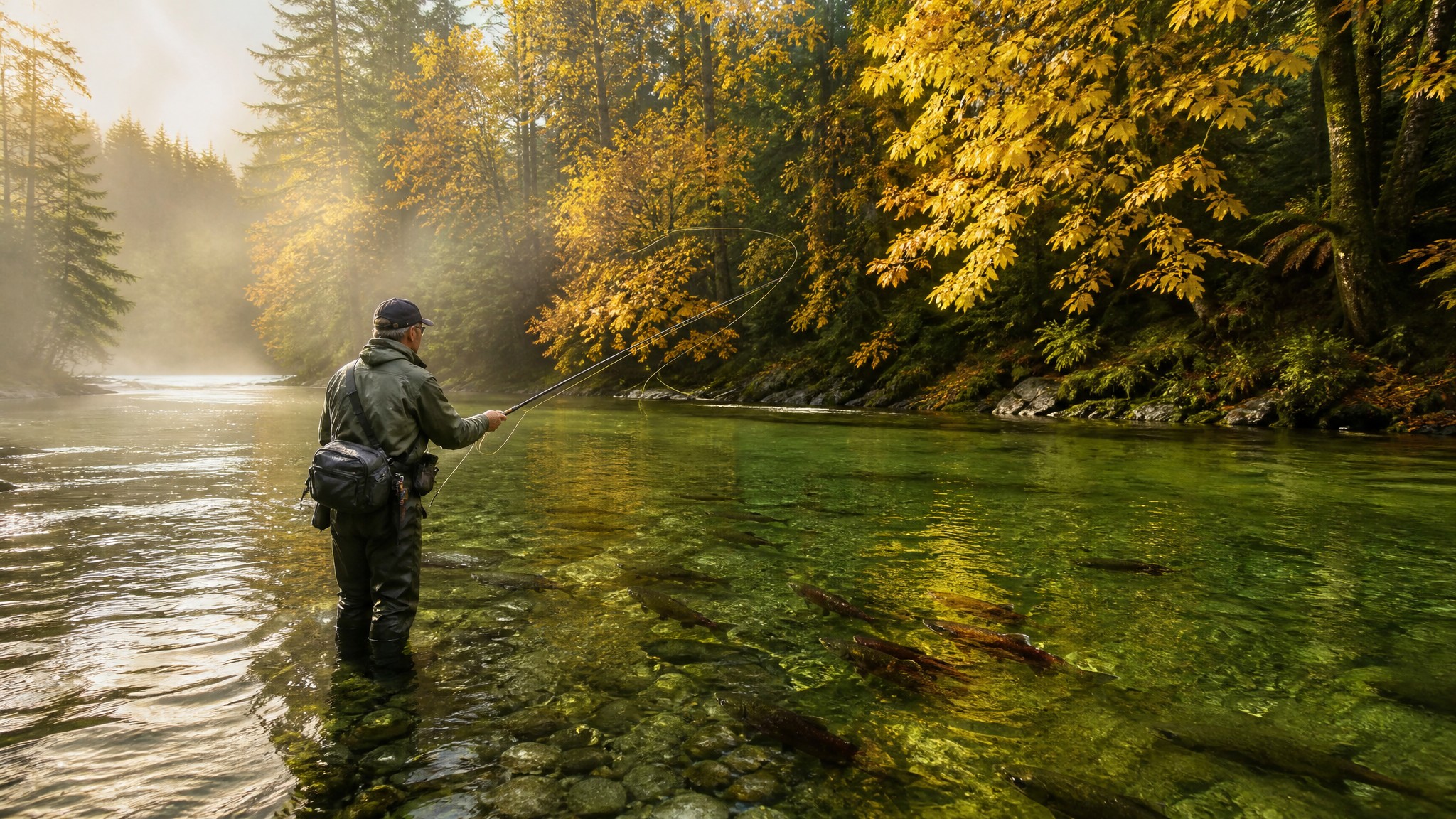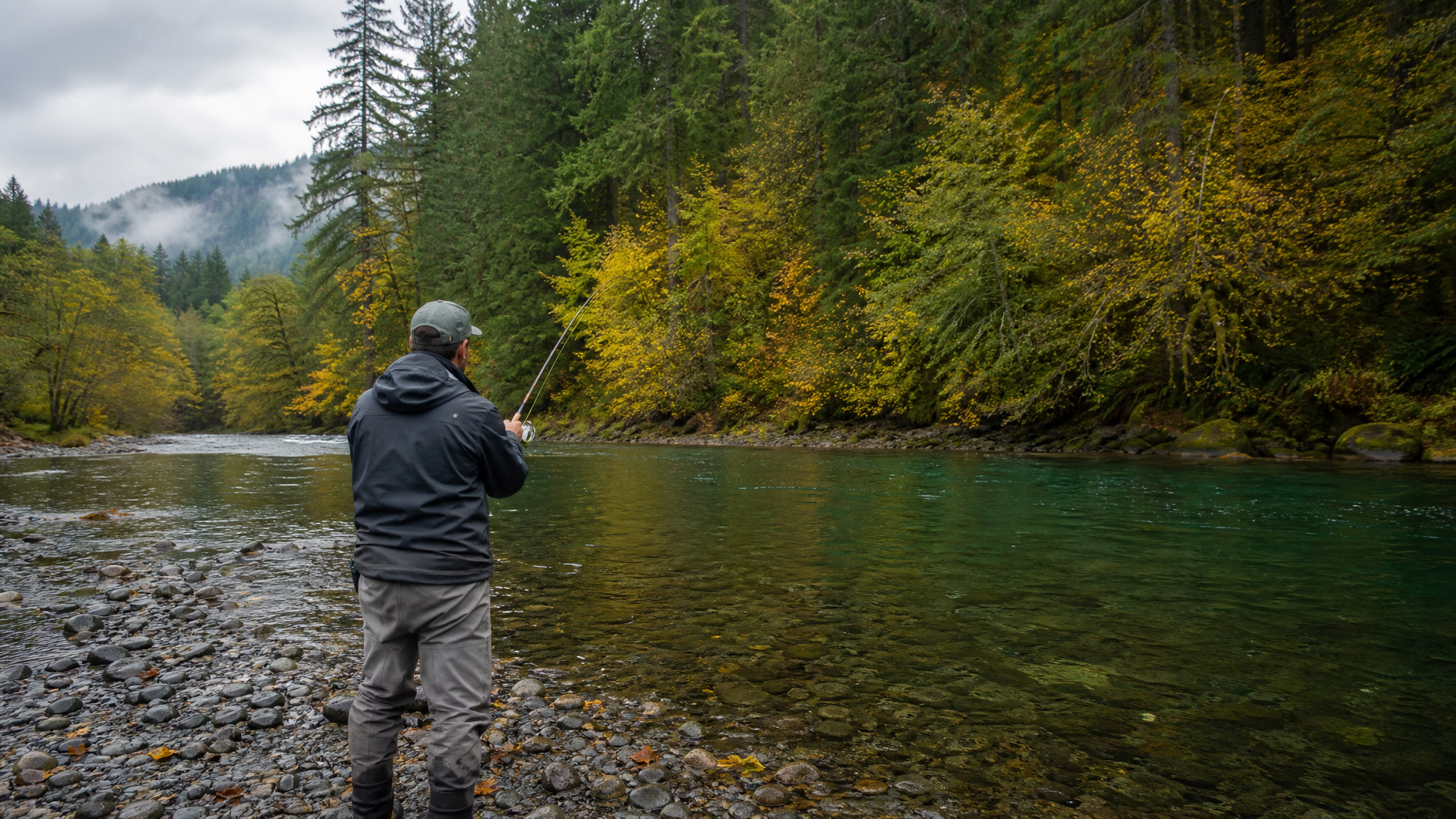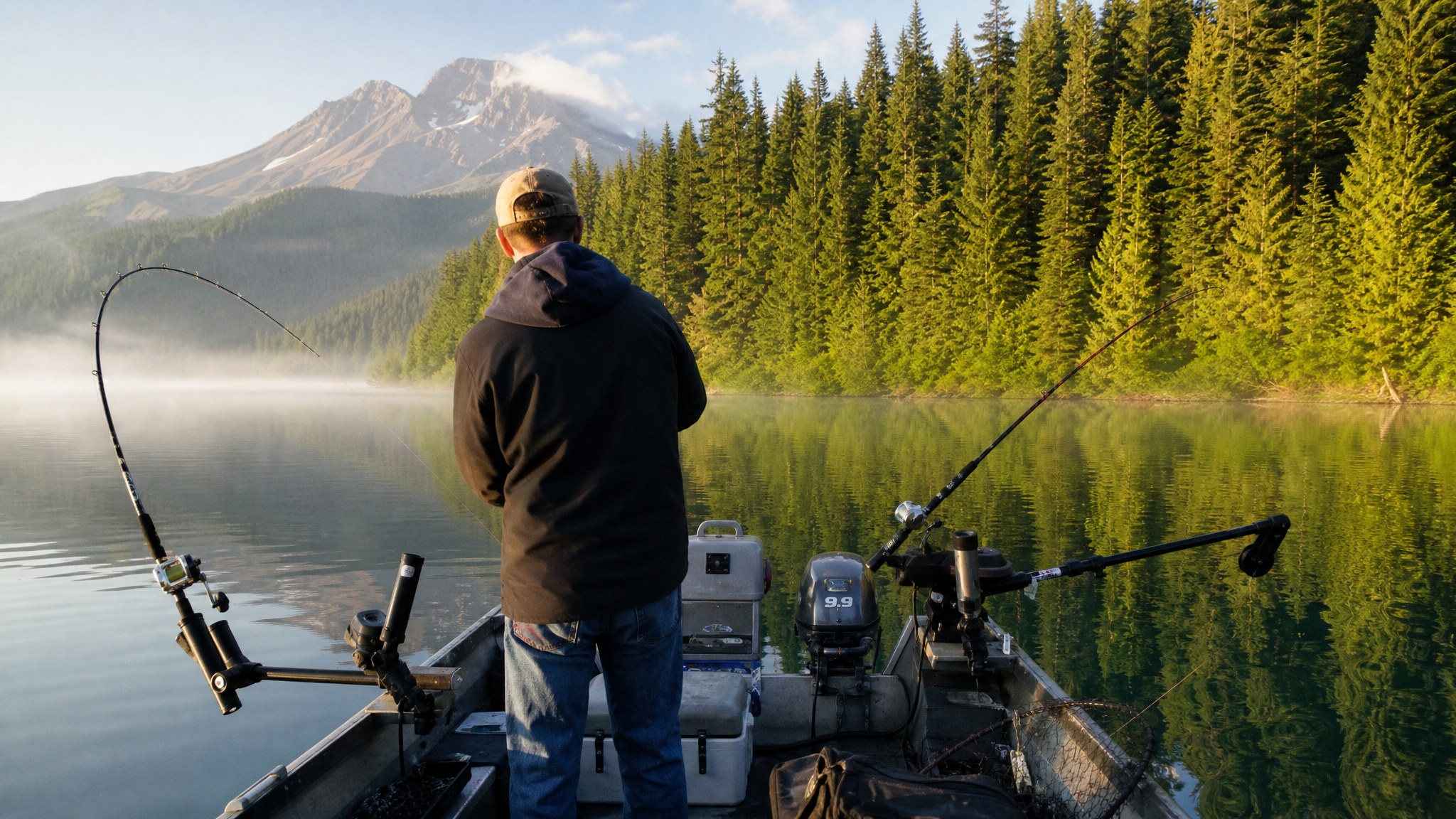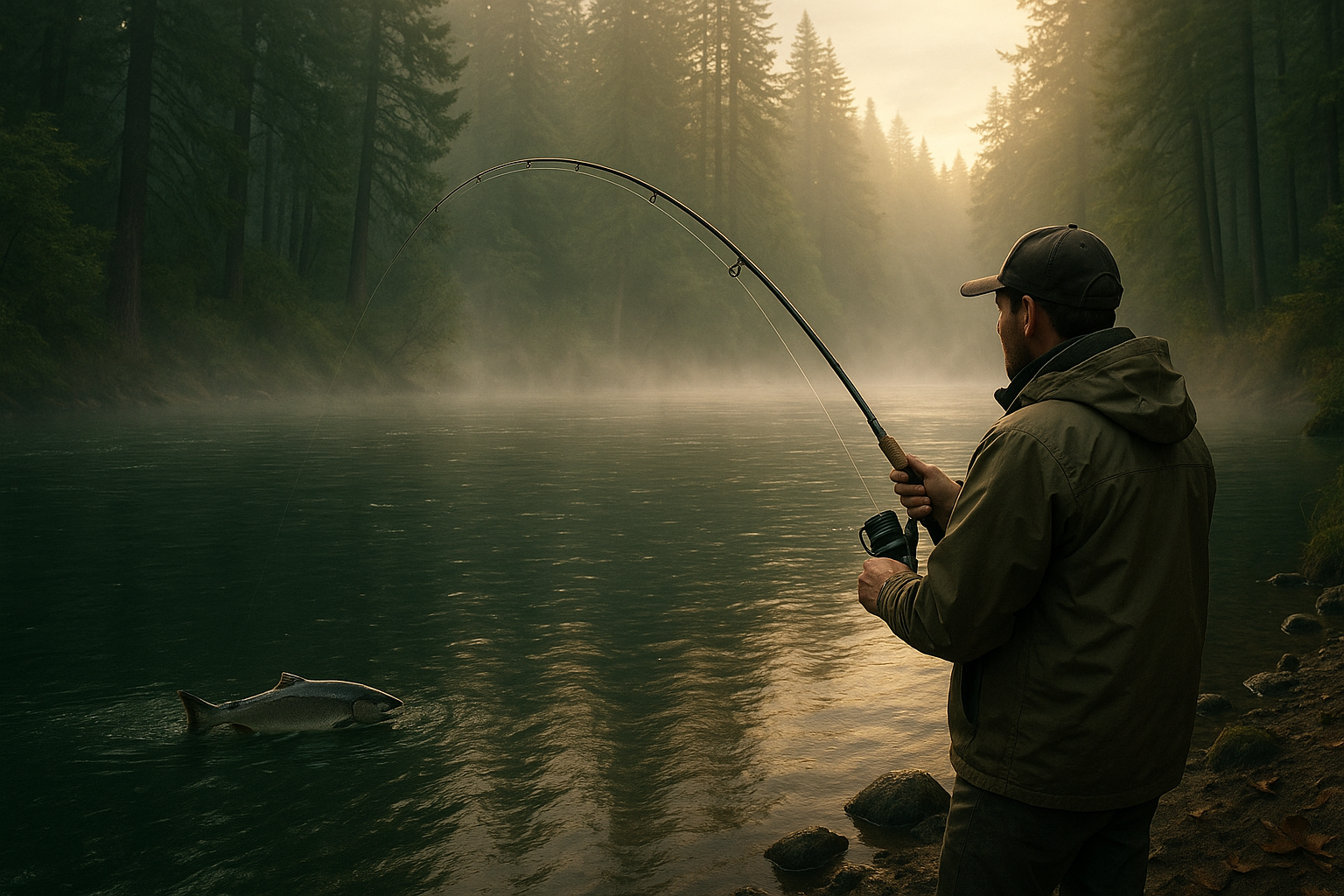
The Yaquina River doesn't make the glossy magazine covers the way the Rogue or the Deschutes do, but every September and October, Lincoln County locals load up their pickups and head to the banks knowing something most coastal anglers overlook: this river runs a strong fall Chinook, and the crowds are a fraction of what you'll find two hours north on the Wilson or south toward Coos Bay. If you're willing to put in a little homework, the Yaquina rewards you with some of the most accessible bank fishing on the Oregon coast.
Understanding the Run
Yaquina River fall Chinook are wild fish supplemented by hatchery returns out of the Elk City Hatchery, operated by the Oregon Department of Fish and Wildlife (ODFW) on the North Fork. Peak fishing typically runs from mid-September through late October, with the best bank bite corresponding to early fall rains that flush the estuary and trigger fish to push upstream. Water clarity is everything here — fish stack and hold far better in slightly off-color water than in the crystal-low conditions of late summer.
The Yaquina is a smaller system than most anglers are used to targeting Chinook on, which actually works in your favor. Fish don't spread out as much. Find a good hole, time it with incoming tide, and you can connect on a river that rarely sees heavy pressure above Toledo.
Where to Fish: Key Spots from the Bay to Toledo
Yaquina Bay and the Estuary
The bay itself fishes well for Chinook as early as late August, with trollers working cut-plug herring and spinners between the bridge and Sawyer's Landing. Bank anglers hit the north and south jetties during high tide slack for a shot at fish staging in the channel. The south jetty in particular — accessible off U.S. 101 near the port area — has produced consistent bank fishing for decades.
Toledo and Upstream
Toledo (roughly 12 miles from the mouth) is the hub of the bank fishery. The stretch from the Toledo boat ramp upstream through Chitwood holds fish during the main push. Look for deep outside bends where the current deflects and salmon can rest. Morning and evening tides that move water are your prime windows. The river narrows significantly above Elk City, but persistent anglers willing to hike in find unpressured fish stacked in the deeper pools.
Tactics and Terminal Gear
Back-Bouncing
The Yaquina's soft substrate and moderate flow make it ideal for back-bouncing. Start with a 3–6 oz slinky weight above a barrel swivel, then run 18–24 inches of 20 lb fluorocarbon to a 3/0–4/0 Gamakatsu Octopus hook. Tuna belly, sand shrimp, or cured eggs are the go-to baits — sardine-wrapped eggs are a September favorite among locals. Work the bait just off the bottom in slow, rhythmic lifts.
Spinners and Spoons
When the river has some color after a rain event, running a Blue Fox Vibrax or Mepps Aglia in chartreuse/silver or orange can be lethal. Cast quartering upstream, count down, then work the blade through the current seam at a medium-slow retrieve. Size #5 or #6 for Chinook. This method is particularly effective in the tidal zone where fish are actively moving.
Float Fishing
For anglers targeting holding water in deeper pools, a fixed float or slip float set 6–10 feet above a sand shrimp or bead under a jig is highly effective. Drop into a likely hole at slack tide and let it drift naturally. Chinook that won't chase a spinner will often mouth a slowly drifting sand shrimp.
Regulations to Know
Always check the current ODFW regulations and emergency closures before heading out — coastal Chinook rules can shift mid-season based on escapement data. In recent years, the Yaquina has had open retention for both hatchery and wild Chinook during portions of the fall season, but verify before you go. A punch card is required. The river above Elk City Hatchery is subject to different terminal gear rules.
Tide, Weather, and Timing
Incoming tides push fish upriver and trigger active feeding. Fish the two hours before and two hours after high tide for peak action in the tidal zone. After the first significant fall rain — typically mid-September in coastal Lincoln County — expect a fresh push of fish within 48–72 hours. Rivers this size respond quickly to precipitation. Watch NOAA forecasts for Newport and plan around any incoming frontal systems.
Gear and Access Notes
A medium-heavy 8.5–9.5 foot rod rated for 1/2–2 oz, paired with a 4000–6000 series spinning reel loaded with 30 lb braid and a 20 lb fluorocarbon leader, covers most situations on the Yaquina. Most bank access is via city and county parks in Toledo and below, along with several ODFW access easements. A detailed DeLorme Oregon Atlas or the ODFW public fishing access map for Lincoln County is worth printing before your first trip.
The Yaquina isn't the flashiest salmon river in Oregon — but when the fish are in and the tide is right, it's exactly the kind of place you tell your fishing buddies about only after you've already cleaned a couple of bright chrome Chinook in the driveway.