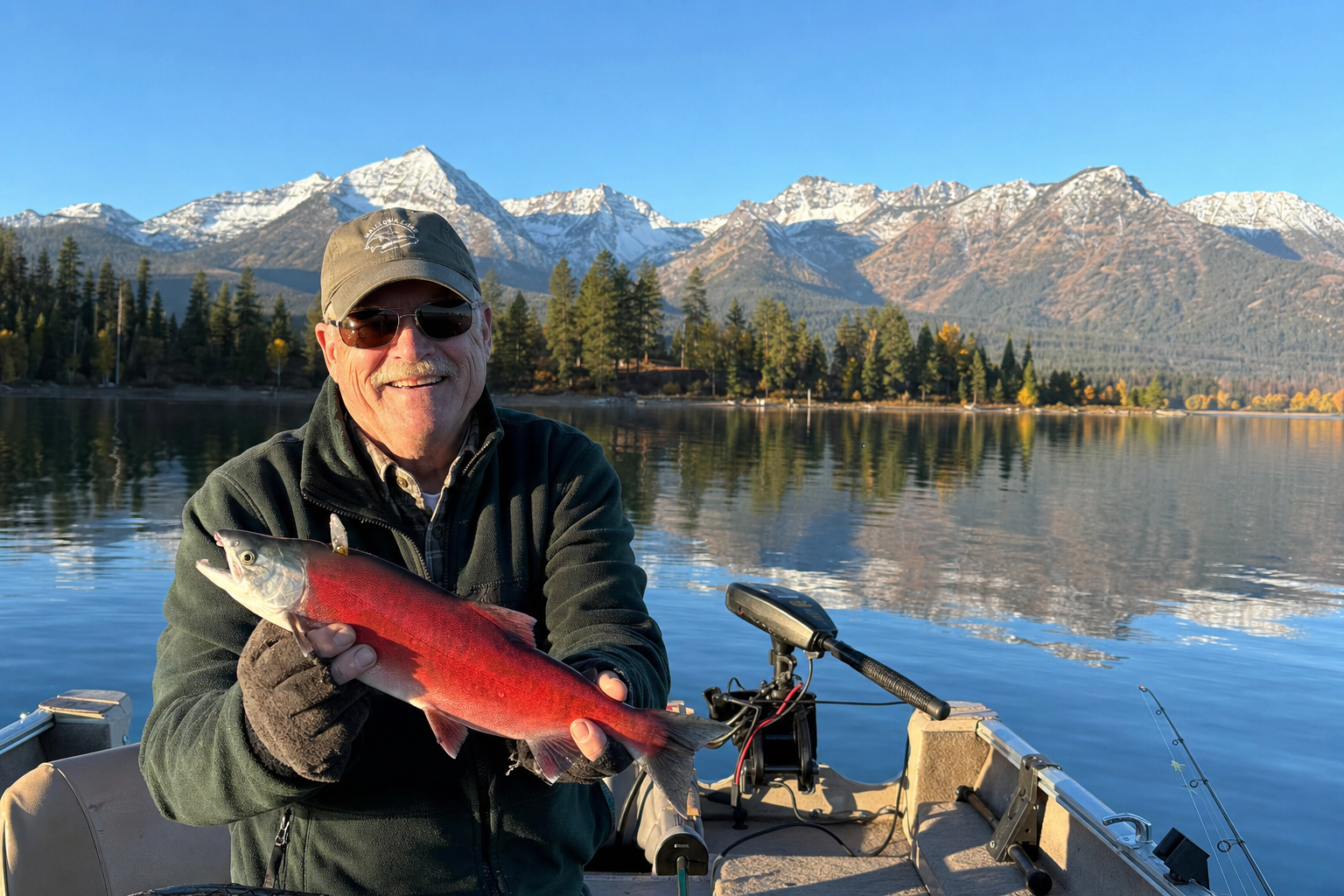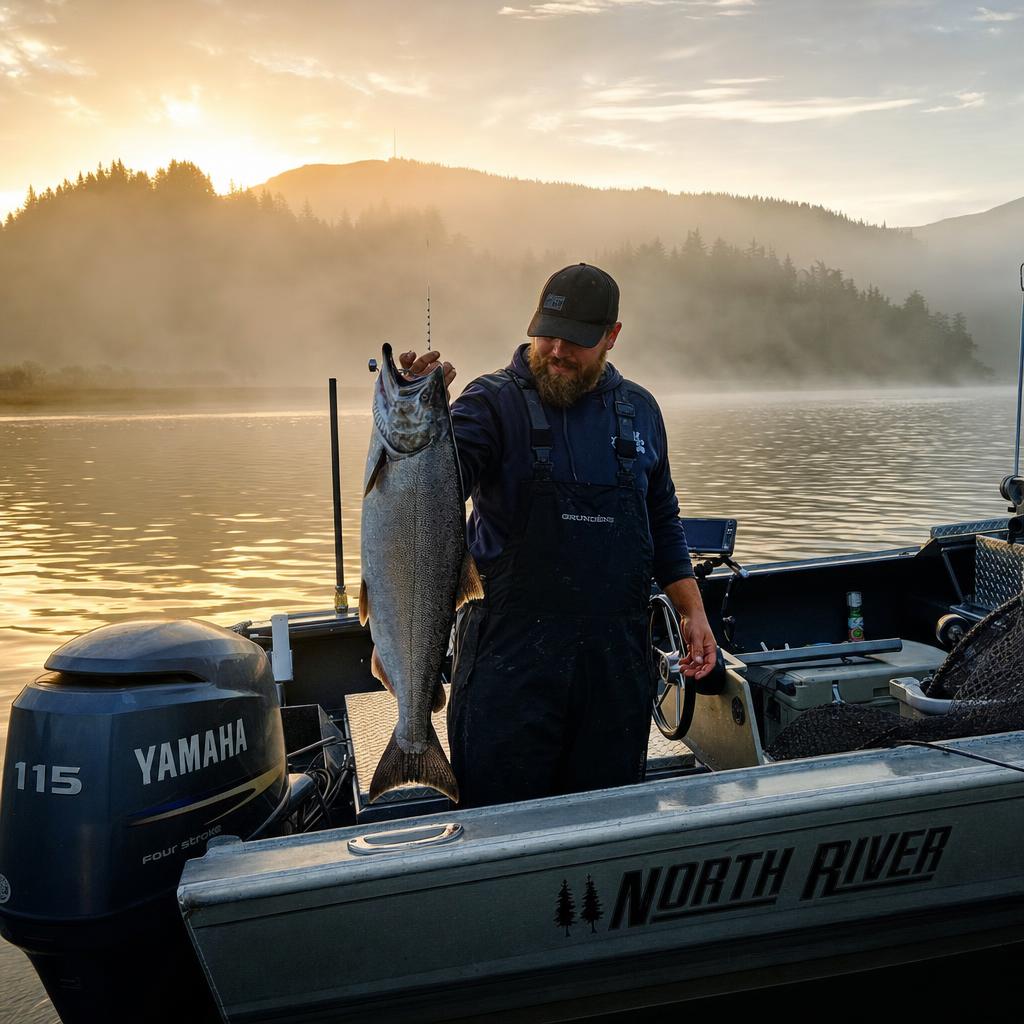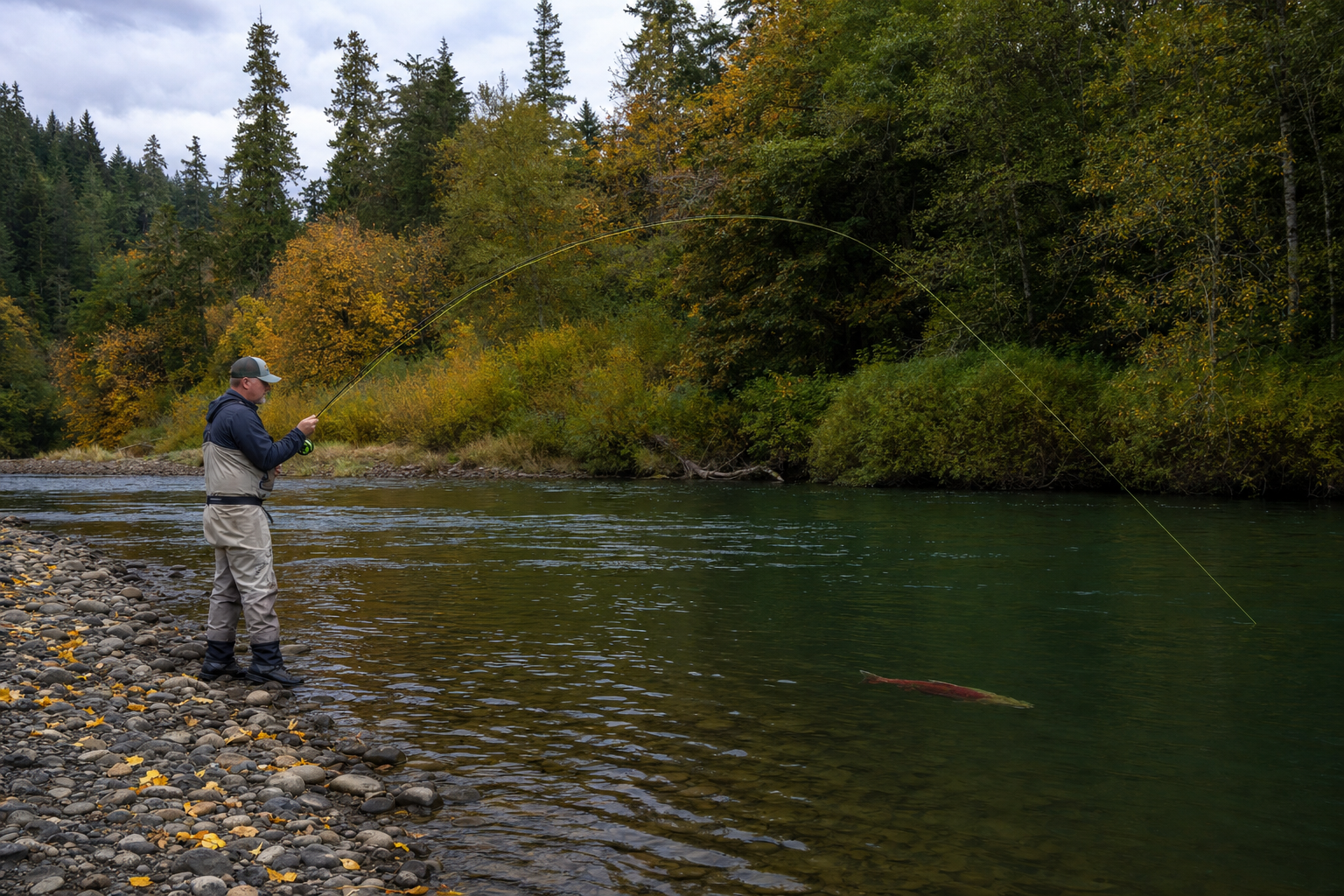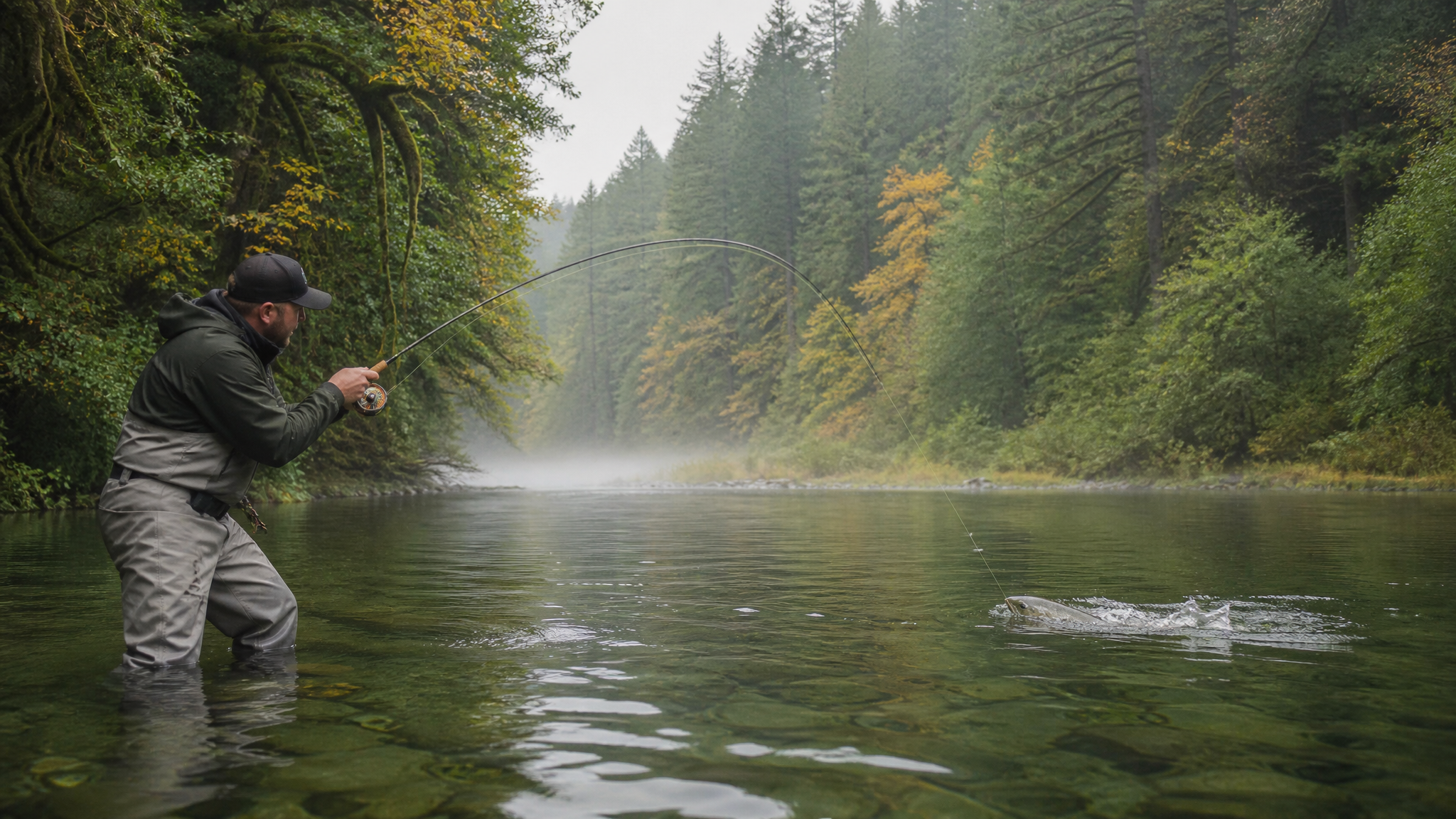
The Wilson River is Tillamook County's workhorse salmon stream — a short, powerful coastal river that punches well above its weight for fall Chinook. While anglers chase kings on the more famous Nestucca and Trask, the Wilson quietly delivers some of the most consistent bank fishing in northwest Oregon from mid-September through early November. If you've overlooked it, now is the time to pay attention.
Why the Wilson Stands Apart
The Wilson drains the northern Tillamook State Forest and drops nearly 3,000 feet in just 35 miles before meeting tidewater near the city of Tillamook. That steep gradient means fish move fast — a fresh Chinook that crosses the bar at Tillamook Bay can be at your favorite gravel bar the same day. During a pulse of fish, the Wilson can fish red hot for 48 to 72 hours before the run pushes upstream.
The river runs smaller and clearer than many coastal streams, which can actually work in your favor. Clear water lets you spot holding fish, read structure, and present bait with precision. It also means you need to dial in your presentation — sloppy terminal tackle gets ignored fast on the Wilson.
Timing: When to Be There
The first decent push of Chinook usually shows at the Wilson's tidewater in mid-September, but the peak bank fishing window is typically late September through mid-October. The key trigger is rain. A 1- to 2-inch rainfall event will bring a slug of fresh fish into the river within 24 to 48 hours of the first significant rise. Watch the gauge at USGS site 14301500 (Wilson River near Tillamook) and plan to be on the water when the river drops and clears after the initial blow-out — that sweet spot is your best shot.
By late October, coho salmon join the mix, and the Wilson's smaller size makes it perfect holding water for silvers stacking before their final push upstream.
Best Bank Access Points
The Wilson has excellent roadside access along Highway 6, which parallels the river from Tillamook nearly to its headwaters in the Coast Range. Key bank spots include:
- Sollie Smith Bridge area: Good deep hole below the bridge, classic plunking water for bigger fish.
- Keenig Creek confluence: Fresh fish often stack here, especially early in the season. Arrive early — it fills up fast.
- Tillamook State Forest pullouts between mileposts 19–25: Several ODFW-managed access points with room to fish without crowding your neighbors. Walk in 100 yards and you'll often find gravel bars entirely to yourself.
- Jones Creek Campground: USFS campground with excellent bank access and a long run of fishable water both up and downstream.
- Elk Creek confluence: A classic holding spot where Chinook stack before splitting into different forks. Fish the seam between fast water and the slow inside bend.
Terminal Tackle and Presentation
For bank fishing the Wilson, you have two primary approaches: plunking and drift fishing.
Plunking
A 10- to 14-ounce pyramid or slinky sinker holds bottom in Wilson's moderate current. Run 20-lb monofilament main line to a barrel swivel, then a 24- to 36-inch leader of 20-lb fluorocarbon to a 5/0 or 6/0 Gamakatsu Octopus hook. Rig a fresh plug-cut herring or cured roe cluster on the hook and let the river current spin the bait. Check and re-bait every 30 minutes — fresh bait means more scent, more strikes.
Drift Fishing
When you've found fish stacked in a run, drift fishing lets you cover water and find the exact lie. Use a pencil lead or slinky to tick the bottom, 20-lb main line, a Spin-N-Glo or corky-and-yarn combo trailing 8 to 12 inches behind the weight on 15-lb fluorocarbon. Cast slightly upstream, mend to achieve a natural drift, and feel for that unmistakable "thump" as a Chinook picks up the rig.
Cured Roe
If you can get your hands on fresh roe — either from an earlier catch or from a local bait shop — cure it yourself with Pro-Cure Brine 'N Bite or Sugar Brine for eggs that stay on the hook and leak scent all day. Pink and chartreuse are the top colors on the Wilson in low-to-medium water. When the river is off-color after rain, go brighter: orange or red clusters get noticed.
Regulations and Tags
The Wilson River falls under ODFW's North Coast Salmon regulations. For 2026, Chinook retention on the Wilson requires a valid Oregon angling license plus a Chinook harvest tag. Check ODFW's current emergency regulations — seasons and retention rules can shift in-season based on run counts. The Wilson also has a fin-clipped-only (hatchery Chinook) requirement in some reaches; always verify before you harvest a fish.
Hatchery fish are easily identified by their clipped adipose fin. Wild Chinook — adipose fin intact — must be released unharmed. Handling a wild fish briefly is acceptable; take the photo quick and get it back in the water head-first.
Getting There
From Portland, take Highway 26 west to Banks, then Highway 6 southwest toward Tillamook — the Wilson parallels the road for most of the drive. It's roughly 75 miles and about 90 minutes from the west side. From the coast, you're already close. Bring your rain gear, a thermos of hot coffee, and patience — fall on the Wilson means weather, but it also means fish.
The Wilson River is Oregon's most underrated bank fishery for fall Chinook. While the crowds flock to the Nestucca and the Sandy, you can find elbowroom, fresh fish, and memorable autumn days in the Tillamook State Forest. Get there early, read the water, fish fresh bait, and the Wilson will earn a permanent spot in your fall salmon rotation.