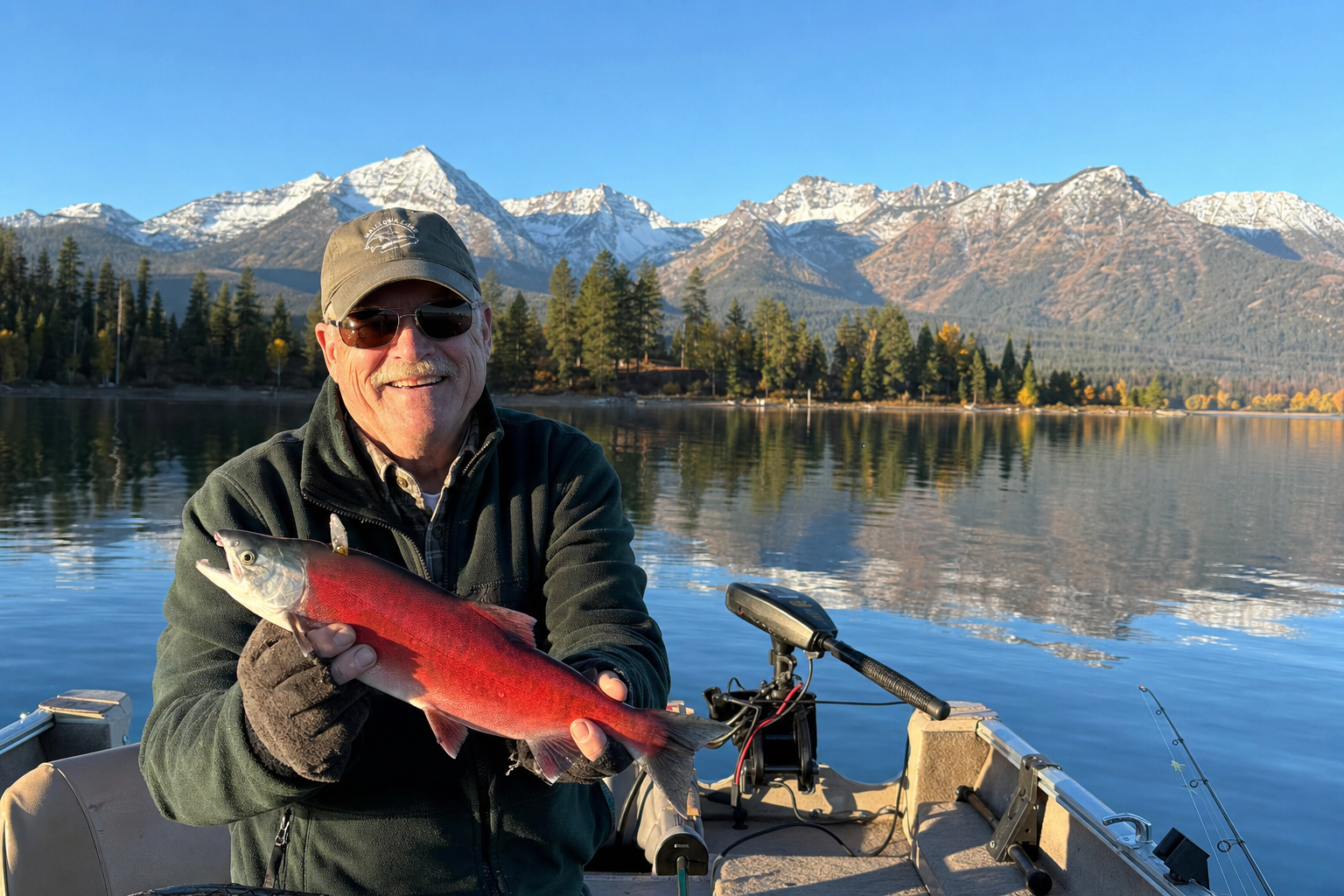
Tucked into the Wallowa Valley at the foot of the Eagle Cap Wilderness, Wallowa Lake is one of Oregon's most beautiful bodies of water — and one of its most underrated fisheries. Come September and October, the kokanee salmon in this 300-foot-deep glacial lake are staging their spawning run, putting on brilliant red spawning colors and packing on fat from a summer spent chasing zooplankton in the cold depths. If you've never chased landlocked sockeye in alpine surroundings, add Wallowa Lake to your bucket list immediately.
About Wallowa Lake Kokanee
Kokanee are landlocked sockeye salmon — genetically identical to their ocean-going cousins but trapped in freshwater for generations. Wallowa Lake's kokanee are a wild, self-sustaining population supported by ODFW supplemental stocking, and they grow fat on Daphnia and other zooplankton in the lake's cold, clear depths. Most fish run 10–14 inches, with trophy fish pushing 16–18 inches and weighing up to 2 pounds — respectable for a landlocked salmon.
The kokanee season on Wallowa Lake runs year-round, but September through early November is prime. Fish move shallower as water temperatures drop, following their prey into the 20–60 foot range. By late October, spawning fish push toward the inlet at the lake's south end near the State Park marina.
Gear and Terminal Tackle
Kokanee fishing requires light tackle. These fish have tender mouths and soft takes — heavy gear loses fish at the net. Standard setup:
- Rod: A light-action 7–8 foot trolling rod with a soft tip, or a light spinning rod
- Reel: Size 2500–3000 spinning reel or a small level-wind trolling reel
- Main line: 8–10 lb monofilament or low-stretch 10 lb braid with a 6 lb fluorocarbon leader
- Dodger: A size 0 or 00 dodger (3–4 inches) in chrome or UV pink/orange
- Lure: Kokanee-specific spinners — Apex Hot Shot or Mack's Lure Wedding Ring in pink, orange, or chartreuse
- Bait tip: A single white or pink shoepeg corn kernel or small piece of cured shrimp on the hook — kokanee won't resist scent
The dodger-to-lure connection matters. Run your spinner or spoon 6–10 inches behind the dodger on a short fluorocarbon leader. The dodger provides wobble action that triggers schooling kokanee to strike.
Trolling Depth and Speed
Finding the depth is everything. Kokanee school tightly and if you're 10 feet off, you'll go fishless while the guy next to you limits out. Bring a fish finder — even a basic Lowrance or Garmin unit will mark kokanee schools as dense clouds of returns on the screen.
In September, look for fish at 25–50 feet. As October progresses, they'll push shallower — often 15–30 feet near the inlet. At the lake's south end near the State Park marina, fish are often visible in 10–20 feet of water by late October.
Trolling speed should be 1.2–1.8 mph — slower than you think. Kokanee are not aggressive strikers when water temps are cool. Use a GPS or trolling motor to dial in exactly 1.5 mph. Add a small downrigger or lead-core line if you can't get your dodger/lure combo to the right depth at slow speed.
Reading the Lake: Where to Troll
Wallowa Lake is roughly 4 miles long and oriented north-south. In fall:
- South basin (near the inlet) — Best in October when kokanee are staging to spawn; fish the shallower water near the Wallowa River inlet at the south end
- Mid-lake thermocline zone — September fish hold here along the depth change; troll a long north-south pass at consistent depth
- West shoreline — Morning shade keeps water temps slightly cooler; good for early and late trolling passes
- Dam end (north) — Deeper water; good for suspended fish mid-day when they drop deeper to avoid light
Make long oval trolling passes and mark any area where you get bites. Kokanee school densely — if you hit one, there are likely hundreds more. Stay on that depth contour and keep circling.
Fishing Regulations
Check current ODFW regulations before fishing. Wallowa Lake has had varying kokanee bag limits — typically 25 fish per day — but always verify the current year's regs at myodfw.com. A valid Oregon fishing license is required. The lake allows gas-powered motors, so a standard fishing boat or aluminum skiff works fine.
The State Park at the south end of the lake has a boat ramp and day-use parking. Peak fall weekends can get crowded, especially when kokanee action is hot — launch early to get your preferred trolling lanes.
Equipment for the Alpine Setting
Wallowa Lake sits at 4,395 feet elevation. September mornings can drop into the 30s°F even before the mountain snows start. Dress in layers:
- A base layer of merino wool or synthetic
- Mid-layer fleece or puffy jacket
- Waterproof shell for spray and rain
- Gloves and a wool hat — hands get cold handling wet line early in the morning
Afternoon warms quickly once the sun clears Chief Joseph Mountain to the east, but mornings on the water require real cold-weather gear.
Other Species to Target
While you're set up for kokanee, Wallowa Lake also holds quality rainbow trout and lake trout (mackinaw). The mackinaw grow enormous in the deep cold water — 20+ pound fish are caught every fall by dedicated deepwater jigging anglers. Lakers hold 80–150 feet down most of the year but push shallower in fall to chase baitfish staging for the kokanee spawn.
If kokanee action slows, switch to a heavy spoon or tube jig and drop it to 80–100 feet. Jig vertically and watch for heavy, slow takes. Mackinaw are a different animal from kokanee — less acrobatic but way more weight on the other end of the line.
Wallowa Valley While You're There
Enterprise and Joseph, Oregon sit at the north end of the lake and are worth a day of exploration. The Wallowa Mountains behind the lake offer some of the best backcountry elk and deer hunting in Oregon — Unit 53 (Sled Springs and Chesnimnus units) and Unit 57 (Eagle Cap Wilderness) both open September 30 for general rifle deer. If you're fishing kokanee and archery hunting elk or deer in the same trip, this is Oregon's most spectacular combination.
Final Thoughts
Wallowa Lake kokanee fishing is one of those experiences that doesn't feel like it should be real — brilliant red fish in gin-clear alpine water with snowcapped peaks overhead. If you haven't made the drive east to the Wallowas for fall kokanee, put it on the calendar. The lake is worth it on scenery alone, and when the fish are biting, it's unforgettable.