The Siletz River is one of Oregon's most overlooked fall Chinook fisheries, and if you fish the coast at all, that's good news for you. While crowds pack the Nestucca and Wilson Rivers every September, the Siletz — running through the heart of Lincoln County from its headwaters above Siletz to tidewater at Lincoln City — quietly receives a solid wild Chinook run that rewards anglers willing to explore a little farther off the beaten path.
This guide covers the timing, access points, gear, and tactics that consistently put fall Chinook on the bank from late August through mid-October on the Siletz.
Understanding the Siletz Fall Chinook Run
The Siletz supports both a hatchery and a wild fall Chinook run, though the wild component is strictly regulated. ODFW manages the fishery carefully, so always download the current Oregon Sport Fishing Regulations before you go — the Siletz has specific retention rules that can differ from neighboring coastal streams.
Peak fishing generally falls between mid-September and the first week of October, timed to the first heavy rains that push fresh fish into the lower river. In low-water years like much of recent memory, fish stack up in tidewater and the lower estuary near Lincoln City waiting for a rain event. The first two or three days after a good rain are typically the best bank fishing of the year.
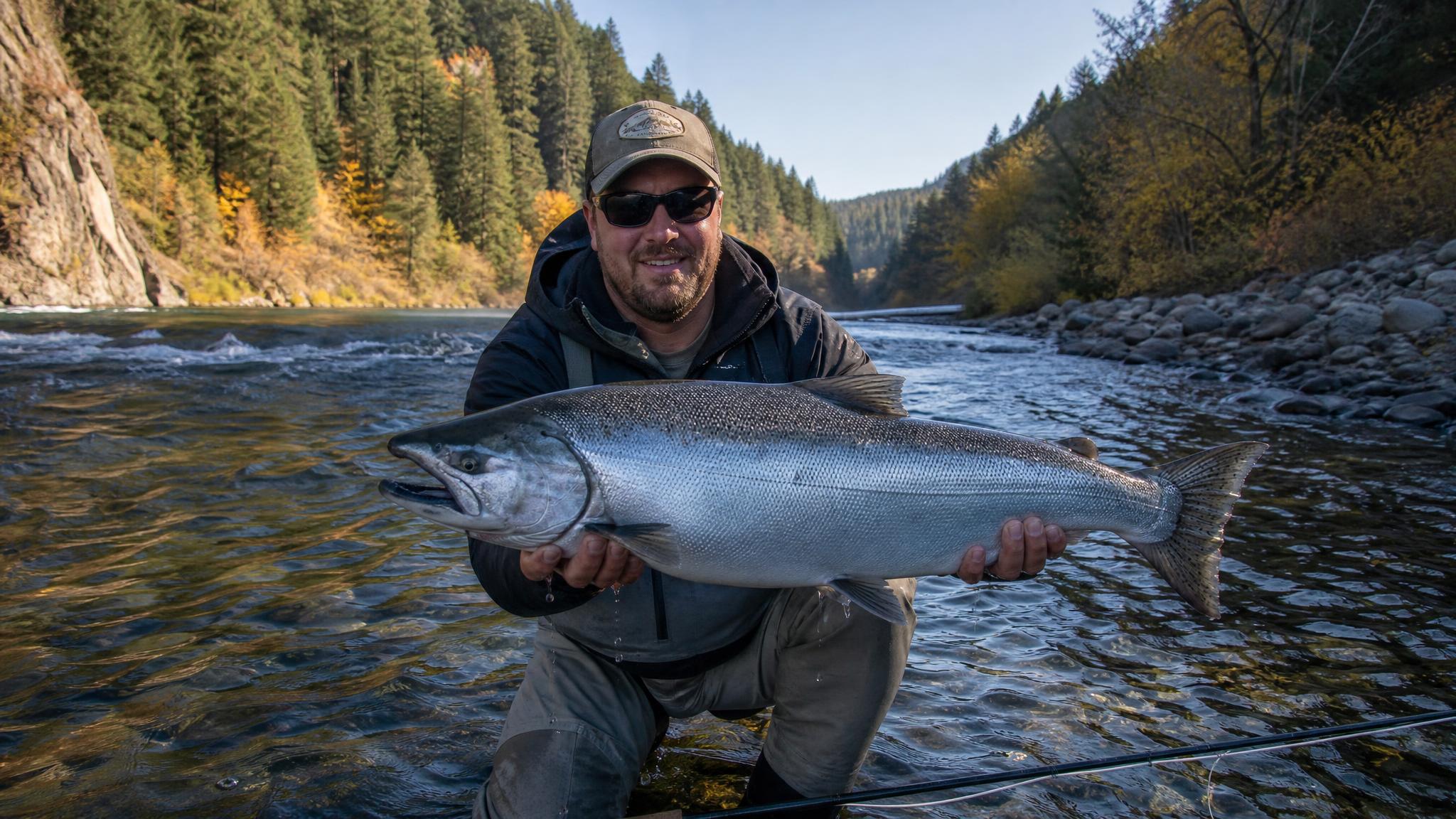
Fish typically run 15 to 35 pounds, with occasional brutes in the upper 40s. A 25-pound bright Chinook on the bank is a realistic goal for any serious September day on the river.
Best Access Points on the Siletz
The Siletz has more publicly accessible bank fishing than many coastal rivers its size. Here are the key spots worth knowing:
Tidewater and the Lower Estuary (Lincoln City to Kernville)
The stretch from the Highway 101 bridge at Lincoln City upstream to Kernville is prime pre-rain holding water. Fish congregate here waiting for flow to rise. Chinook can be taken on bait all day during incoming tides. There are several informal pullouts along Siletz Highway (Highway 229) where anglers can work gravel bars and tailouts.
Siletz to Logsden (Mid-River)
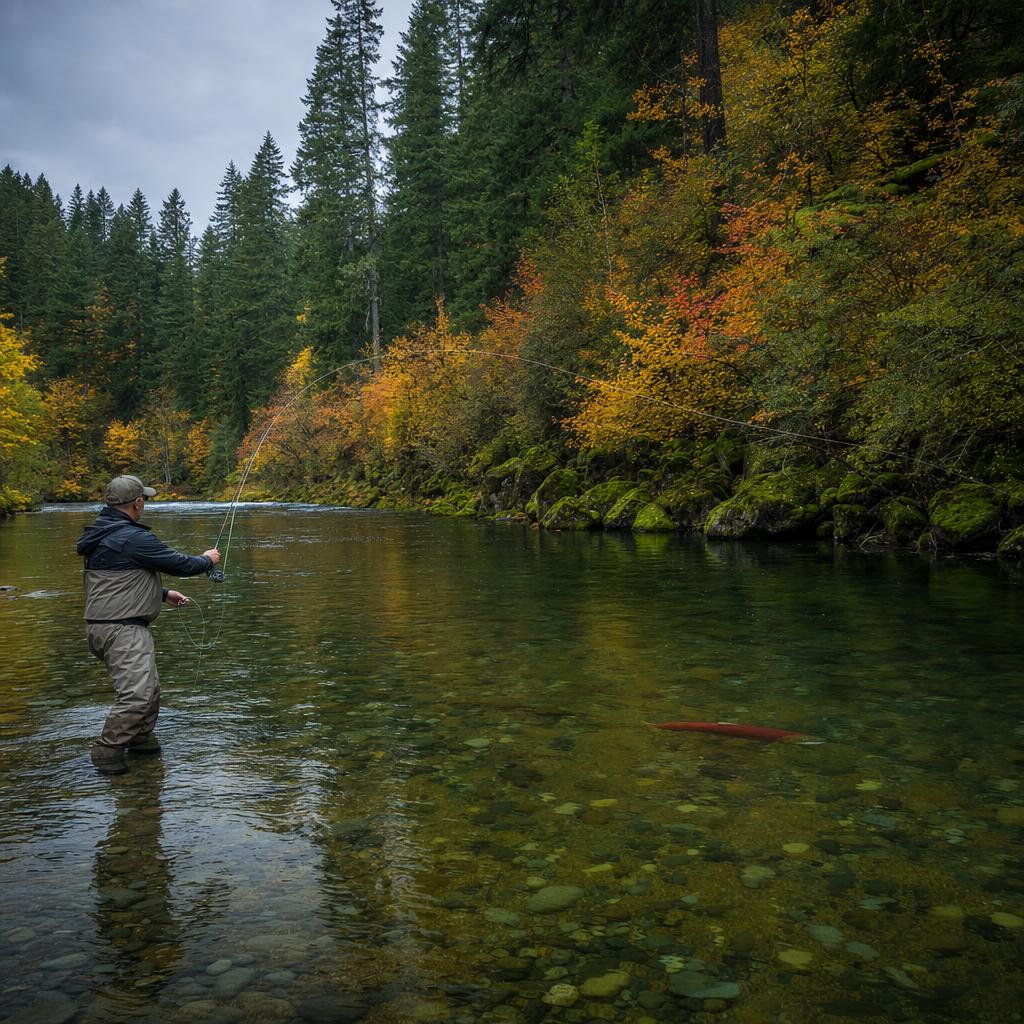
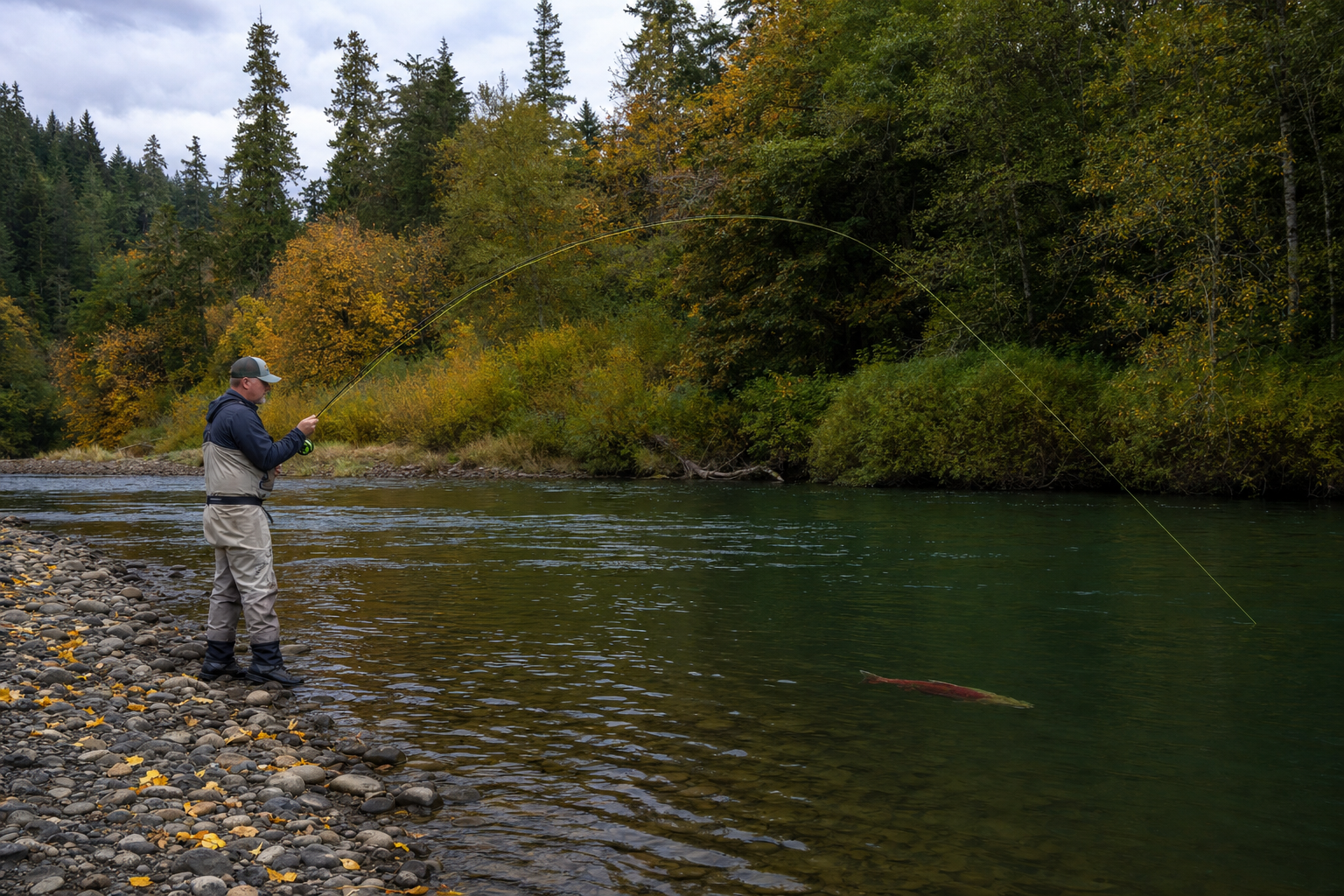
Once the river rises after rain, this stretch lights up. The pools and runs between the towns of Siletz and Logsden hold fish throughout the run. Look for deep green pools below log jams and boulder gardens — that's where big Chinook rest after pushing upriver. This section also has some of the most scenic bank access on the coast.
Upper River — Above Logsden
The upper Siletz above Logsden transitions to smaller water, but it's worth hiking in to pools that don't see many anglers. Wild fish push surprisingly high in good water years. Check regulations carefully — wild Chinook retention rules may differ in this section.
Gear and Rigging for Siletz Bank Fishing
The Siletz is a medium-sized coastal river — not as big as the Rogue or Umpqua, but powerful enough in fall flows to require substantial gear.
- Rod: 9.5 to 10.5 ft medium-heavy to heavy rod, rated for 1 to 4 oz with 20–40 lb main line
- Reel: Level-wind baitcasting reel with solid drag — you'll need it for a 30-pound Chinook in current
- Main line: 30 lb monofilament or 50 lb braid with a 20 lb fluorocarbon leader
- Terminal rig: Sliding sinker rig or 3-way swivel setup with a 2–4 oz pencil weight
- Bait: Cured salmon eggs (pink or red cure), sand shrimp, or a shrimp/eggs combo are the go-to baits
- Hardware: Blue Fox spinners in size 5 or 6 (chrome/orange or chrome/red) work well in the first day or two after rain when fish are moving
Drift Fishing vs. Plunking
On the Siletz, drift fishing with cured eggs accounts for a huge percentage of bank-caught Chinook. Cast slightly upstream, let the bait bounce along the bottom through the holding zone, and keep your line as close to vertical as current allows. Plunking — anchoring bait in current and waiting — works best in the slower tidewater reaches when fish are stacked and not moving much.
Tides Matter — Even Miles From the Ocean
On a coastal river like the Siletz, tide cycles affect fish behavior well upstream of where you'd expect. In the lower river from Lincoln City to Kernville, fish move and feed most actively on incoming tides. Plan your best fishing around the incoming tide, even if you're bank fishing what looks like a freshwater stretch. The NOAA tide chart for Depoe Bay or Lincoln City will serve you well.
What to Do When You Land One
A Chinook salmon fresh from the Pacific is one of the finest fish you can put on the table, but they require prompt care. Have a fish priest or blunt object ready to dispatch the fish quickly, bleed it immediately by cutting the gill arch, and get it on ice as fast as possible. A bank bag or large cooler with ice in the car is standard equipment on any September coastal trip. Meat care in the field separates the anglers who rave about salmon from those who wonder why it tasted fishy.
Regulations and Licenses
Oregon requires a valid fishing license plus a Combined Angling Tag (which covers salmon) for all anglers 14 and older. The Siletz may have specific wild fish retention restrictions — always confirm at myodfw.com before you go. Regulations on coastal Chinook rivers change year to year based on run forecasts, and fishing with the wrong information can result in citations or killing a wild fish you're not allowed to retain.
The Bottom Line
The Siletz River is one of those places that rewards loyalty and a little local knowledge. Show up the first morning after the first heavy September rain, have your gear rigged before first light, and work the deeper tailouts in the Siletz-to-Logsden reach with cured eggs on a sliding sinker rig. The crowds won't be there — and the fish will. Lincoln County's Siletz River might just become your new favorite fall Chinook river on the Oregon coast.