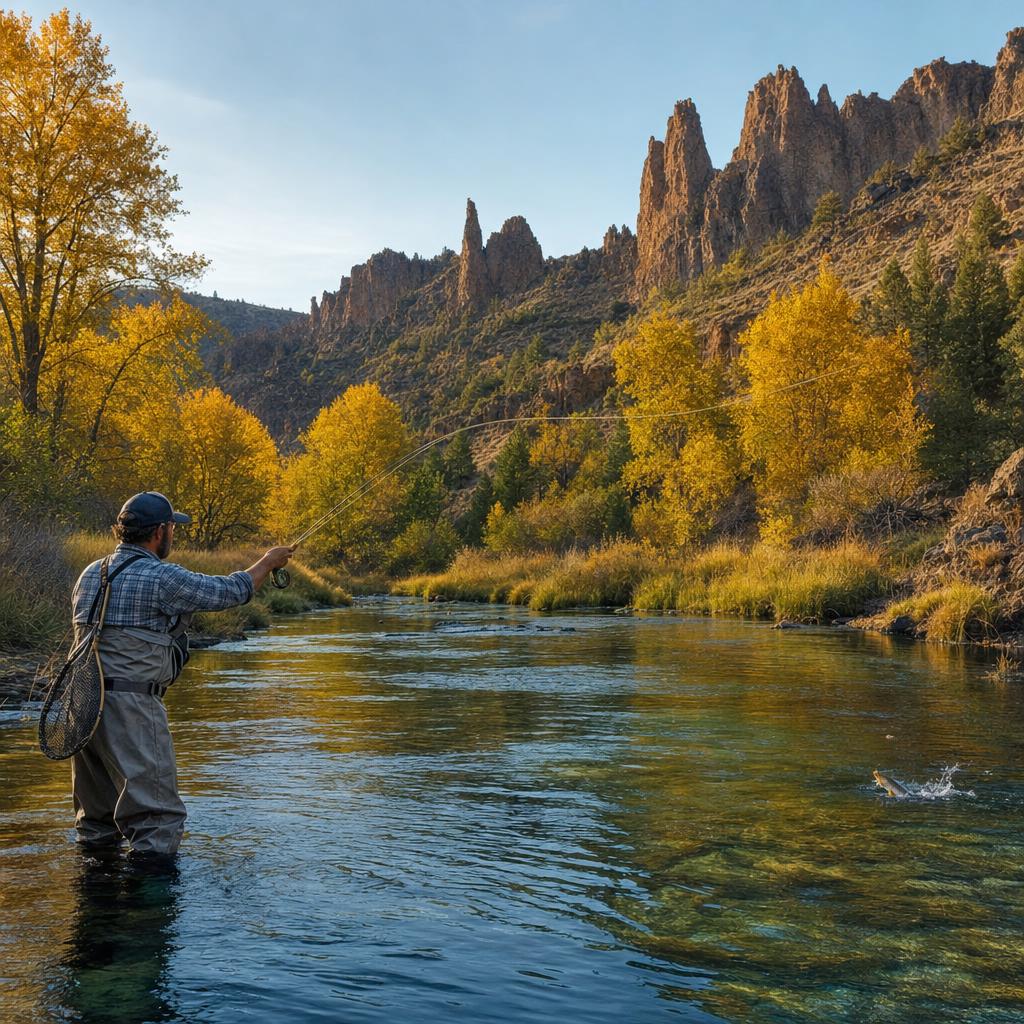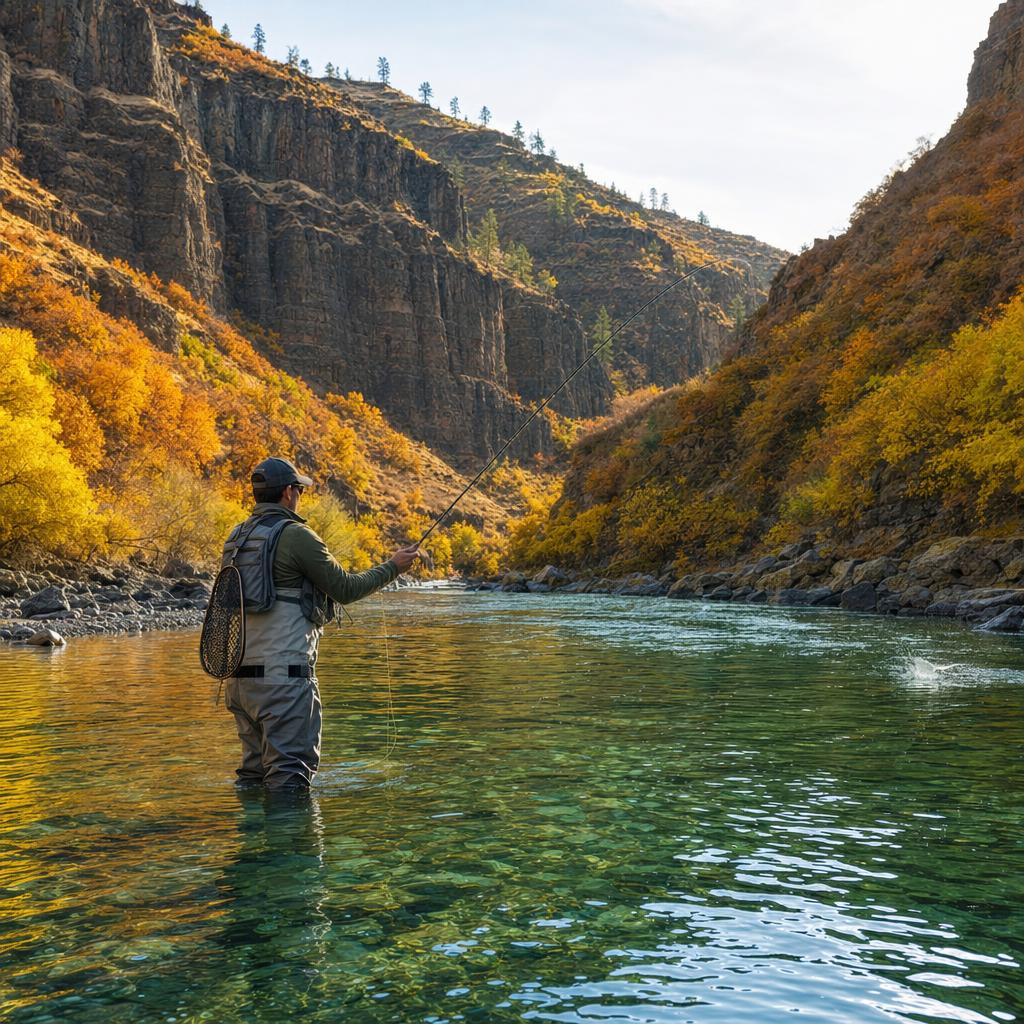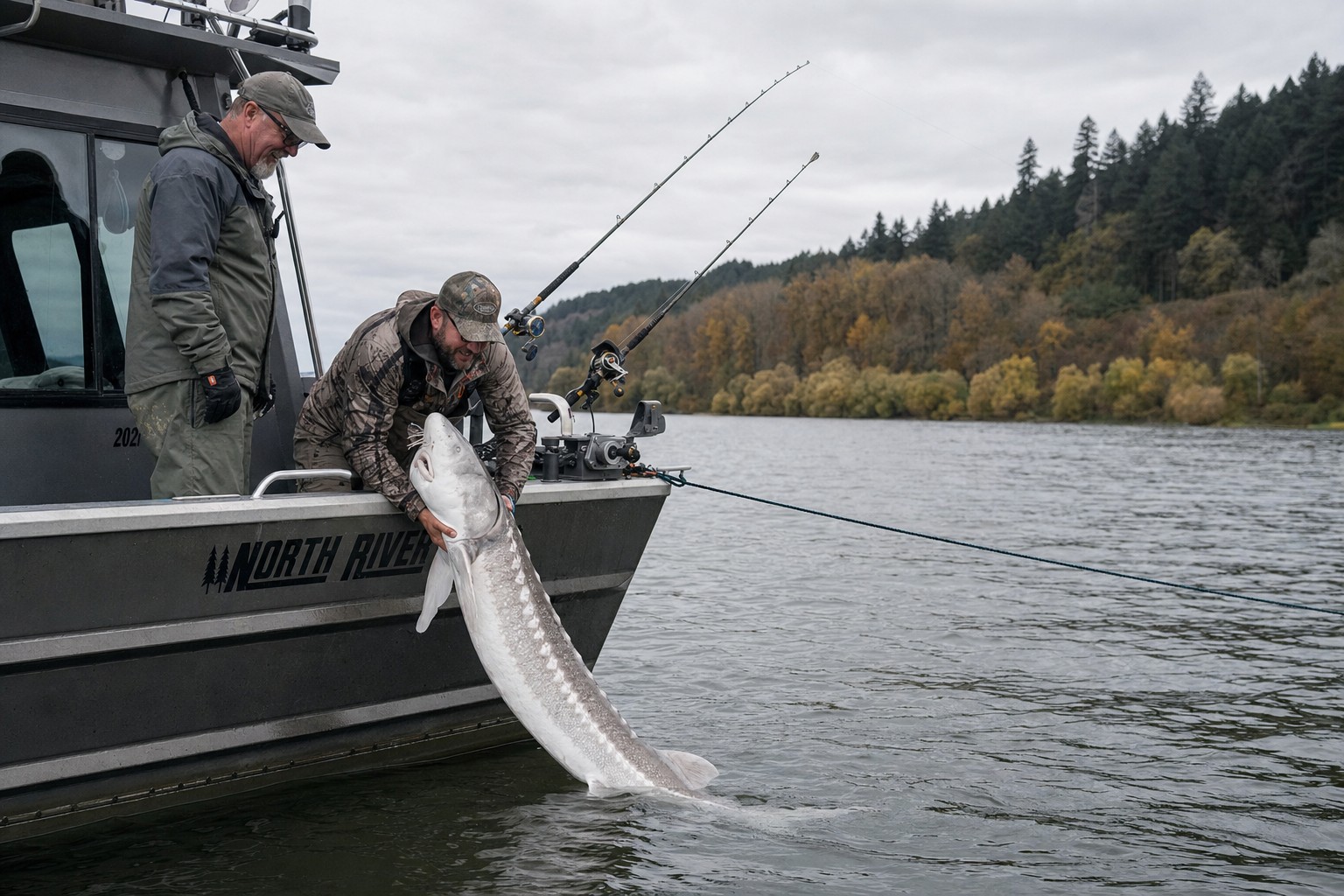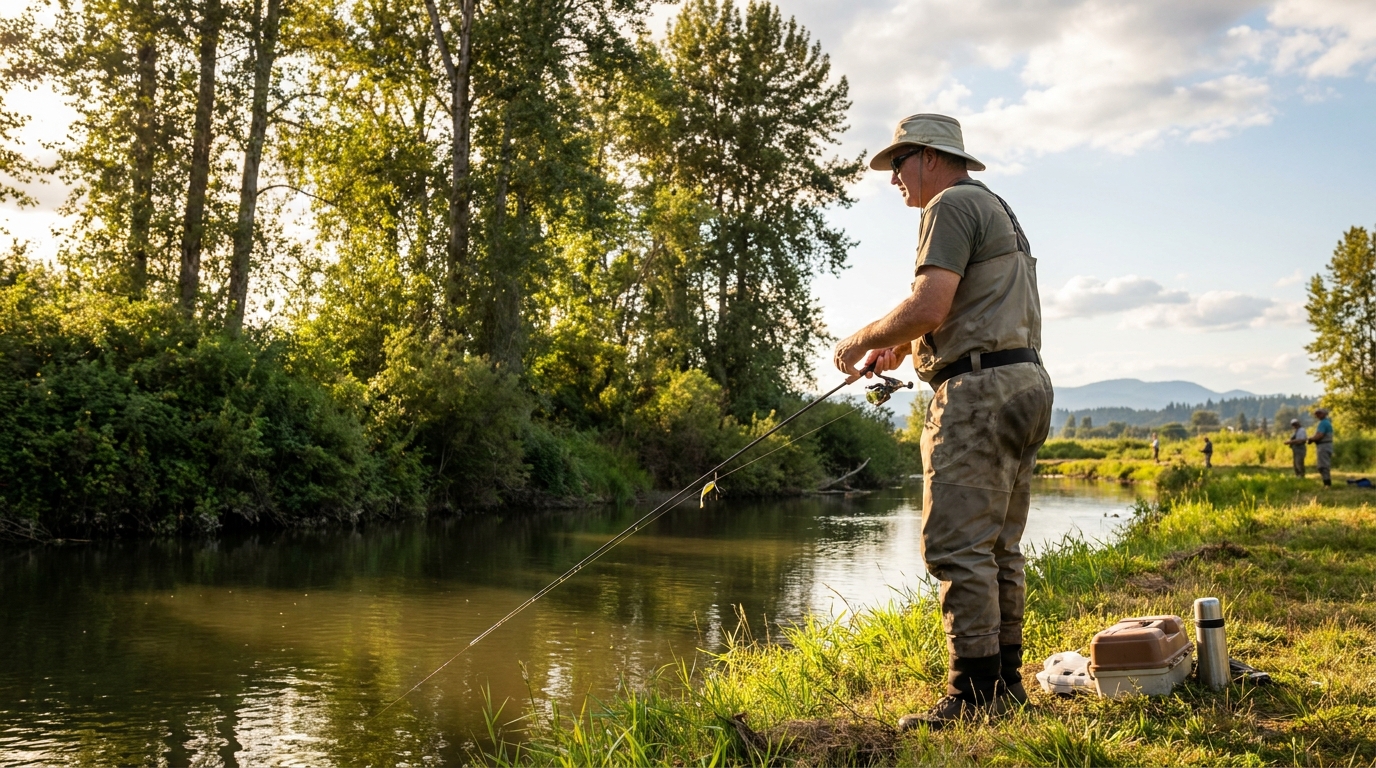
You don't need to drive four hours into the backcountry to catch fish in Oregon. Sauvie Island's sloughs, lakes, and Columbia River backwaters hold largemouth bass, crappie, bluegill, and catfish all summer long — and they're less than 15 miles from downtown Portland. If you've been driving past the Sauvie Island Bridge on your way to “real” fishing, you've been missing one of the state's most productive and accessible warm-water fisheries.
Why Sauvie Island Produces in July and August
The island sits at the confluence of the Columbia and Willamette rivers, creating a network of sloughs, lakes, and backwater channels that warm up quickly through summer. By late July, water temps in the interior lakes and sloughs reach the high 60s to low 70s — prime territory for largemouth bass, crappie, and panfish. The shallow, vegetation-choked waters provide exactly the kind of structure warm-water species love: submerged logs, emergent tules, lily pad flats, and flooded timber edges.
The island's Columbia River side also sees strong smallmouth bass action in late summer, with fish staging along rocky points and gravel bars as the river drops to its summer low.
Best Waters on the Island
Sturgeon Lake
The largest lake on the island at roughly 3,500 acres, Sturgeon Lake is the marquee destination. Don't let the name fool you — while white sturgeon do use it seasonally, summer fishing is dominated by largemouth bass, crappie, and yellow perch. Access is via the boat ramp at the south end, or by bank fishing along the wildlife area levees. The tule edges on the north end hold bass all summer. A Wildlife Area parking permit (annual or daily) is required for most access points.
Gilbert River Slough
This narrow, snaking slough on the island's west side is a panfish factory. Crappie suspend under overhanging willows throughout July, and bluegill swarm the shallow flats near the mouth. A kayak or canoe opens up miles of fishable water that bank anglers can't reach. Water clarity is often low here — fish by feel and sound as much as sight.
Cunningham Lake and Coon Island Slough
Smaller, shallower, and heavily weeded, these waters shine for largemouth in the early morning before heat sets in. Fish plastic frogs and hollow-body topwaters across the pad fields at first light. When the sun comes up and surface activity dies, switch to Texas-rigged creature baits worked through the thick stuff.
Target Species and Tactics
Largemouth Bass
Sauvie Island largemouth aren't giants — the average is 1.5 to 2.5 pounds — but they're willing biters and the numbers are solid. Target them along weed edges, submerged brush piles, and any visible structure in the shallower interior lakes. Soft plastics on a weedless Texas rig are the year-round workhorse. In July and August, topwater action in the early morning hours can be spectacular. Buzzbaits, frogs, and poppers all produce. By mid-morning, drop down to a wacky-rigged Senko or finesse jig near structure.
Crappie
Both black and white crappie are present, with black crappie dominating the sloughier water. They school around submerged timber and brush — if you find one, you've found 50. Small jigs in chartreuse, white, or pink (1/16 to 1/8 oz) under a slip float are the most consistent presentation. Live minnows will outfish plastics on stubborn days. Target shaded areas and deeper slough bends in mid-afternoon when fish push off the flats.
Yellow Perch
Perch are arguably the most underrated fish on Sauvie Island. They're abundant, fun on light tackle, and excellent table fare. Small spinners, worms, and tiny jigs all work. Find them near the bottom in 8 to 15 feet of water along drop-offs in Sturgeon Lake. A simple drop-shot with a small piece of night crawler is hard to beat for numbers.
Channel Catfish
The Columbia-connected sloughs and the lower end of Sturgeon Lake hold channel cats, and they bite best after dark or on overcast summer days. Fish cut carp, chicken liver, or prepared stink bait on the bottom near channel edges. The catfish action on Sauvie Island is overlooked precisely because most anglers are targeting other species — which means less competition for the fish that actually bite all day long.
Access, Regulations, and Permits
Sauvie Island Wildlife Area is managed by ODFW. The northern two-thirds of the island requires a parking permit from mid-October through mid-July — but from mid-July through October 14, day use is free with no permit required. This means late July through early fall is the ideal window for budget-conscious anglers.
Standard Oregon fishing license and appropriate tags apply. Sturgeon regulations are in effect if you target them — check the current ODFW synopsis for slot limits and retention rules before fishing.
To reach the island, take US-30 west from Portland to the Sauvie Island Bridge (NW Sauvie Island Road). The bridge is about 10 miles from downtown. A county map or OnX Maps is helpful for navigating the island's maze of roads and levee tracks.
Gear for the Island
- Rod: Medium-light 6.5 to 7-foot spinning rod for panfish and crappie; medium-heavy baitcaster for bass
- Line: 8-12 lb fluorocarbon or 20-30 lb braid with a fluorocarbon leader in clear water
- Kayak or canoe: Highly recommended — opens up miles of inaccessible slough water
- Insect repellent: Non-negotiable in July and August. The mosquitoes here are serious.
- Sunscreen and water: The open levees have zero shade mid-day
The Bottom Line
Sauvie Island isn't going to win any headlines as a trophy fishery. But on a Tuesday morning when you have three hours to fish before work, or when you want to introduce a kid to fishing without a two-hour drive, it's hard to beat. The fish are there, the access is easy, and from mid-July on, it's completely free. Fish it early, fish it often, and don't overlook the crappie — they're the best-kept secret on one of Oregon's most accessible fisheries.