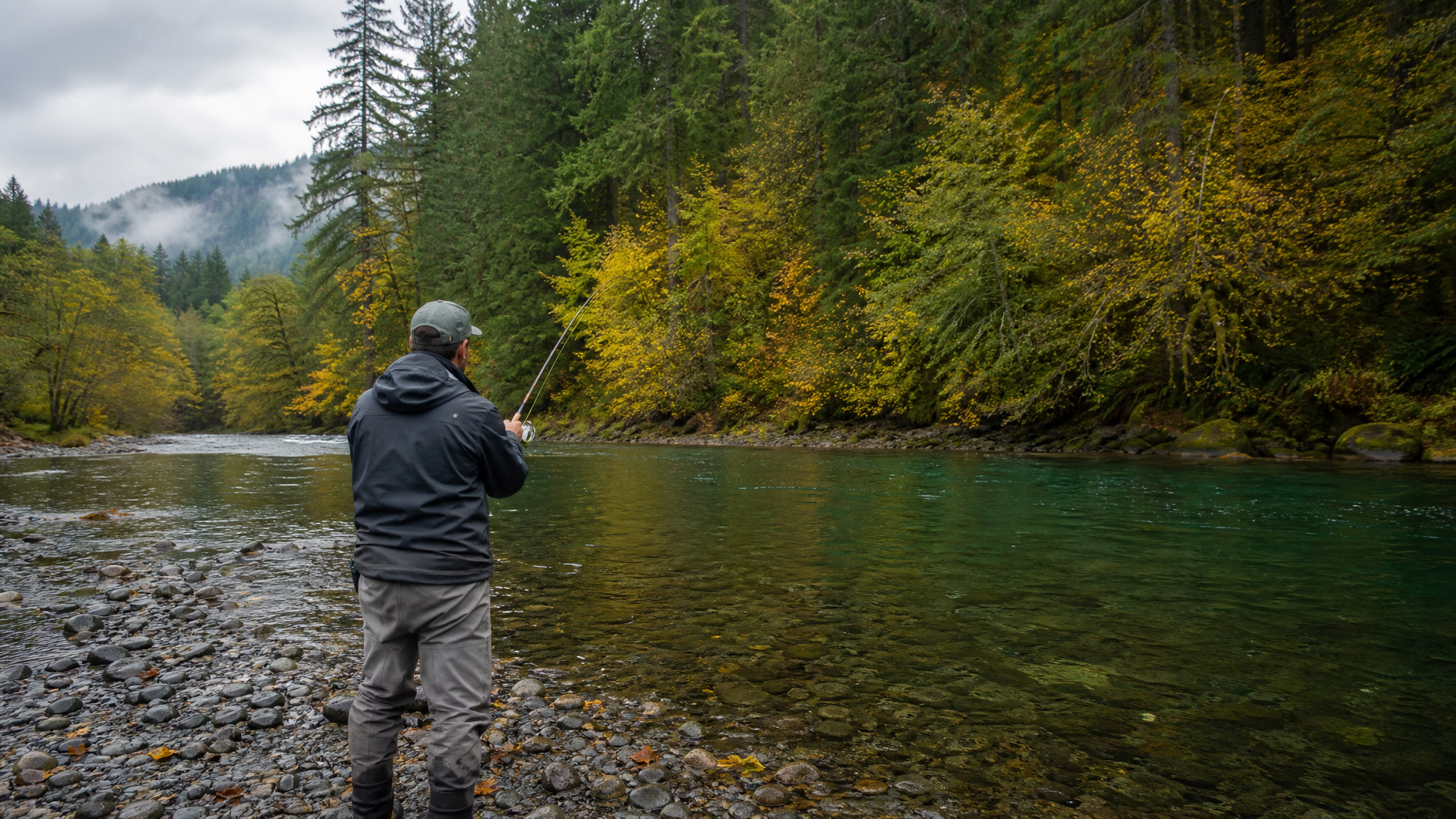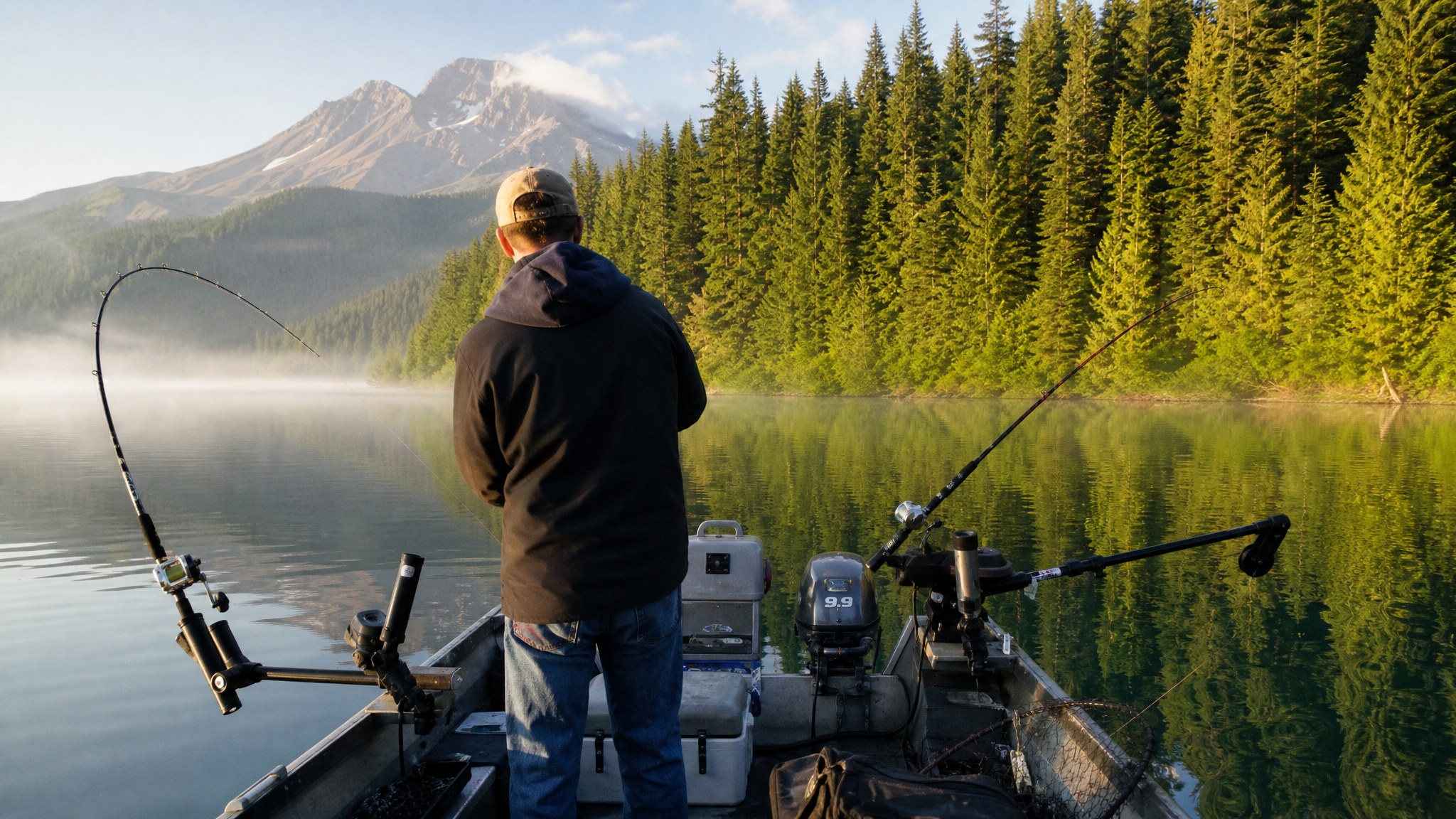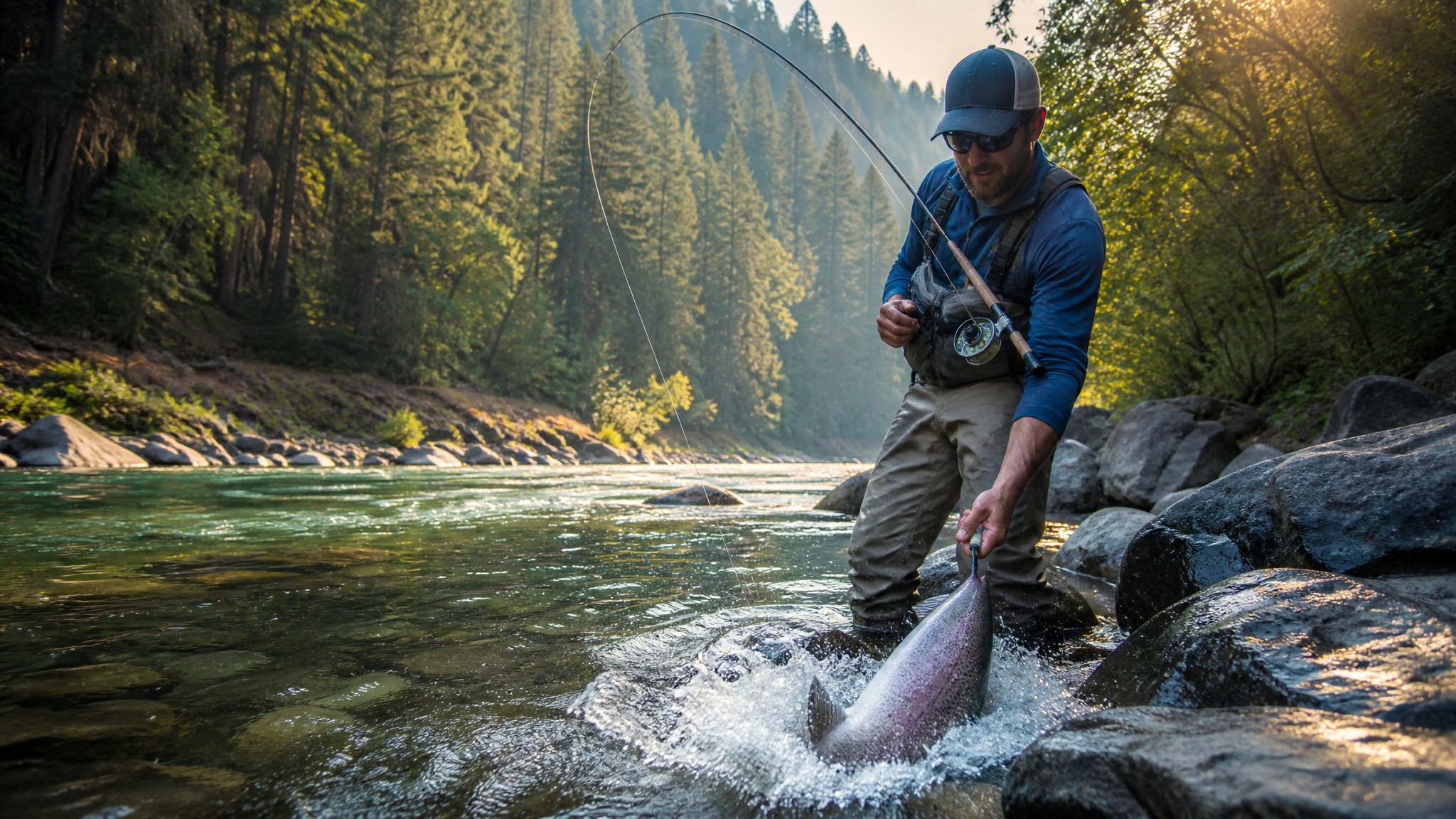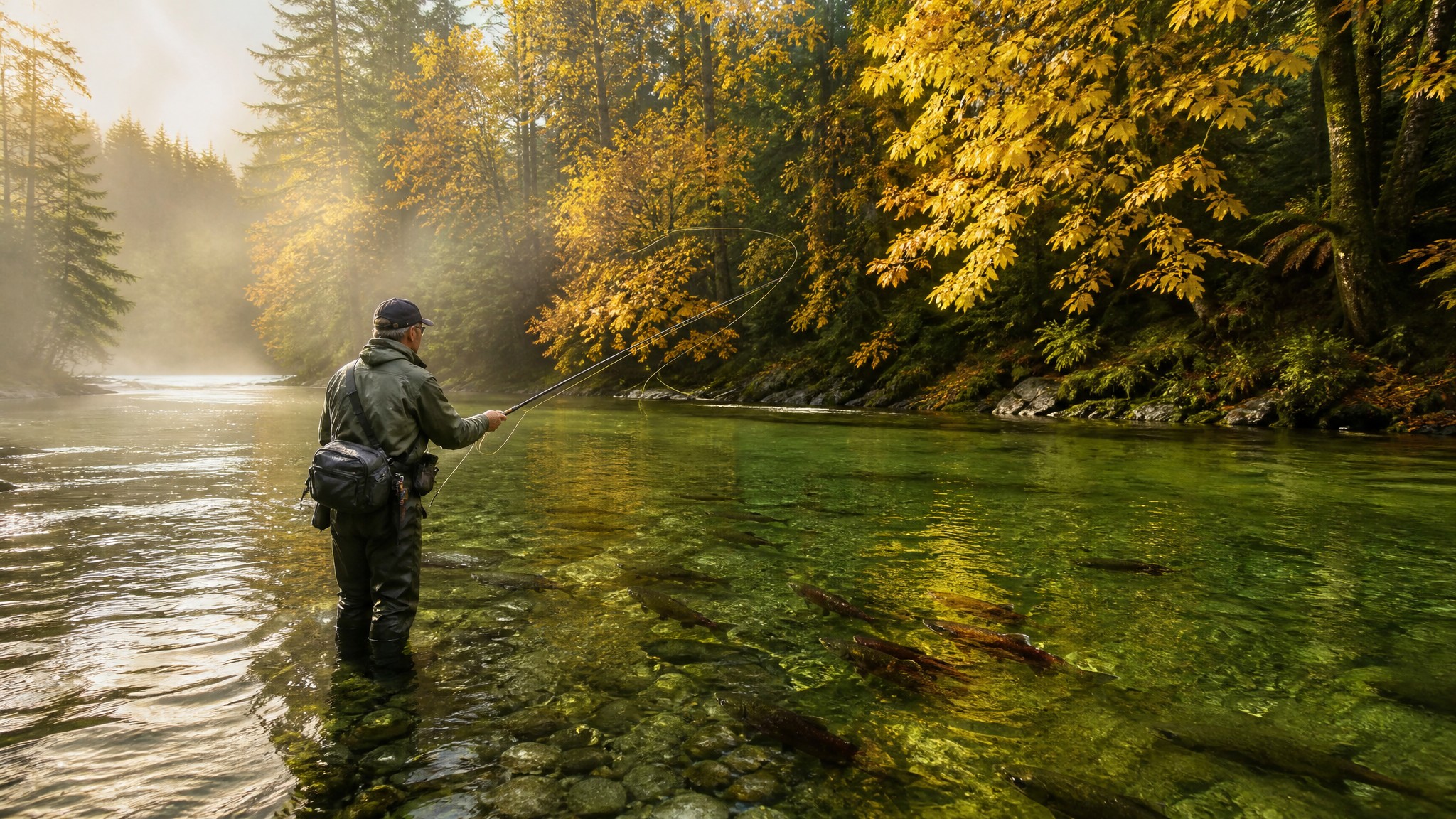
If you've driven Highway 18 toward Lincoln City and glanced at the dark ribbon of water slipping under the bridge at Otis, you've already spotted one of the Oregon coast's most productive and least-pressured small salmon rivers. The Salmon River drains roughly 30 miles of Lincoln County rainforest before entering the Pacific near Otis, and every fall it draws coho salmon and steelhead that punch well above what you'd expect from a stream this size.
Why the Salmon River Deserves More Attention
The Salmon River gets overshadowed by its larger neighbors — the Siletz to the north, the Nestucca to the south — and that's exactly why savvy anglers have been quietly working it for decades. Hatchery coho returns are managed through the Salmon River Hatchery near Otis, providing legal harvest opportunities while wild fish return to the upper canyon. The result is a fishery that offers both action and variety without shoulder-to-shoulder crowds.
The river also holds one of the more intact coastal estuary systems on the Oregon coast. The lower two miles below Highway 101 are designated estuary, with tidal sloughs that concentrate early-run fish before the rains push them upstream. Bank access is surprisingly good, with a USDA Forest Service campground, the Salmon River Trail, and multiple Highway 18 pullouts giving anglers plenty of options without a boat.
Fall Coho: Timing and Tactics
Hatchery coho begin showing in the lower river and estuary as early as mid-September when the first coastal rains arrive, though the main push typically comes in October. In low, clear late-summer conditions, fish will stack in the tidal section and hold until a rain event triggers upstream movement. Watch the USGS gauge at ODFW's StreamNet — a rise of 6 inches or more will move fish aggressively.
Key access points for coho:
- Salmon River Estuary / Lower Bridge: Wade the tidal flats at low tide and cast spinners or spoons across the channel. Early morning is best before foot traffic increases.
- Highway 18 Corridor (Otis to Rose Lodge): Multiple pullouts give access to classic pool-and-riffle water. Hatchery fish stage in deeper pools; probe the tailouts at dawn.
- Above the Hatchery Rack: Check ODFW regulations carefully — the hatchery weir may close certain sections to public access during peak return periods.
For early-season low-water coho, scale down. A size 3 Blue Fox spinner in silver or chartreuse is a proven first choice. When water colors with rain, switch to heavier hardware — a 1/2-oz Kastmaster in green-and-gold or a drift setup with bright pink or flame-orange yarn under a float. Sand shrimp on a hook with light lead works well in off-color water and is the go-to for anglers who grew up on this river.
Fall and Winter Steelhead
The Salmon River also receives a run of both hatchery and wild winter steelhead. Fish begin entering the lower river in November and peak in December through February. Unlike the coho fishery, wild steelhead on the Salmon River are subject to ODFW's wild fish retention rules — check current regulations before keeping anything. Hatchery fish will have clipped adipose fins.
Steelhead on the Salmon River are classic small-water fish. They hold tight to structure — undercut banks, submerged root balls, current seams just inside the main flow — and they're spooky in clear water. Approach pools from downstream, move slowly, and make your first cast count.
Effective steelhead setups for this river:
- Float and jig: A 1/8-oz pink or white marabou jig under a small float is the most versatile rig on small coastal streams. Adjust depth until the jig ticks the bottom of the holding lane.
- Bead fishing: Single 10mm or 12mm peach or orange bead pegged 2 inches above a size 2 hook. Dead drift through slots and pocket water.
- Spinner fishing: A size 2 Mepps Aglia or similar in silver or copper covers water quickly when prospecting unfamiliar pools.
Gear and Wading Notes
A light to medium spinning rod in the 8'6" to 9'6" range spooled with 10-12 lb monofilament or 20 lb braid with a fluorocarbon leader handles everything this river throws at you. Chest waders are recommended — the Salmon River runs cold and the cobble bottom is slick with algae through most of fall. Cleated soles or carbide studs are worth the investment.
Cell service is spotty between Otis and Rose Lodge. Download offline maps before you leave and let someone know your plan. The river corridor can flood fast — a 2-inch rainfall event in the headwaters can raise the lower river 3 feet in 12 hours. Keep an eye on the weather and do not leave vehicles parked on low gravel bars.
Regulations Quick Reference
Always verify the current Oregon Sport Fishing Regulations before heading out. The Salmon River typically falls under ODFW's Zone 5 (North Coast) management plan. Key points to confirm annually include wild coho retention status, steelhead wild fish rules, and any hatchery rack closures. Regulations can change year to year based on run forecasts, and this river has seen both expanded opportunity and temporary closures in recent seasons.
The Salmon River won't make the highlight reel on a fishing podcast, and that's part of what makes it good. Fish it before September rains put everyone else on the water, and you'll likely have a pool to yourself. That's rare on the Oregon coast, and worth the short detour off Highway 18.