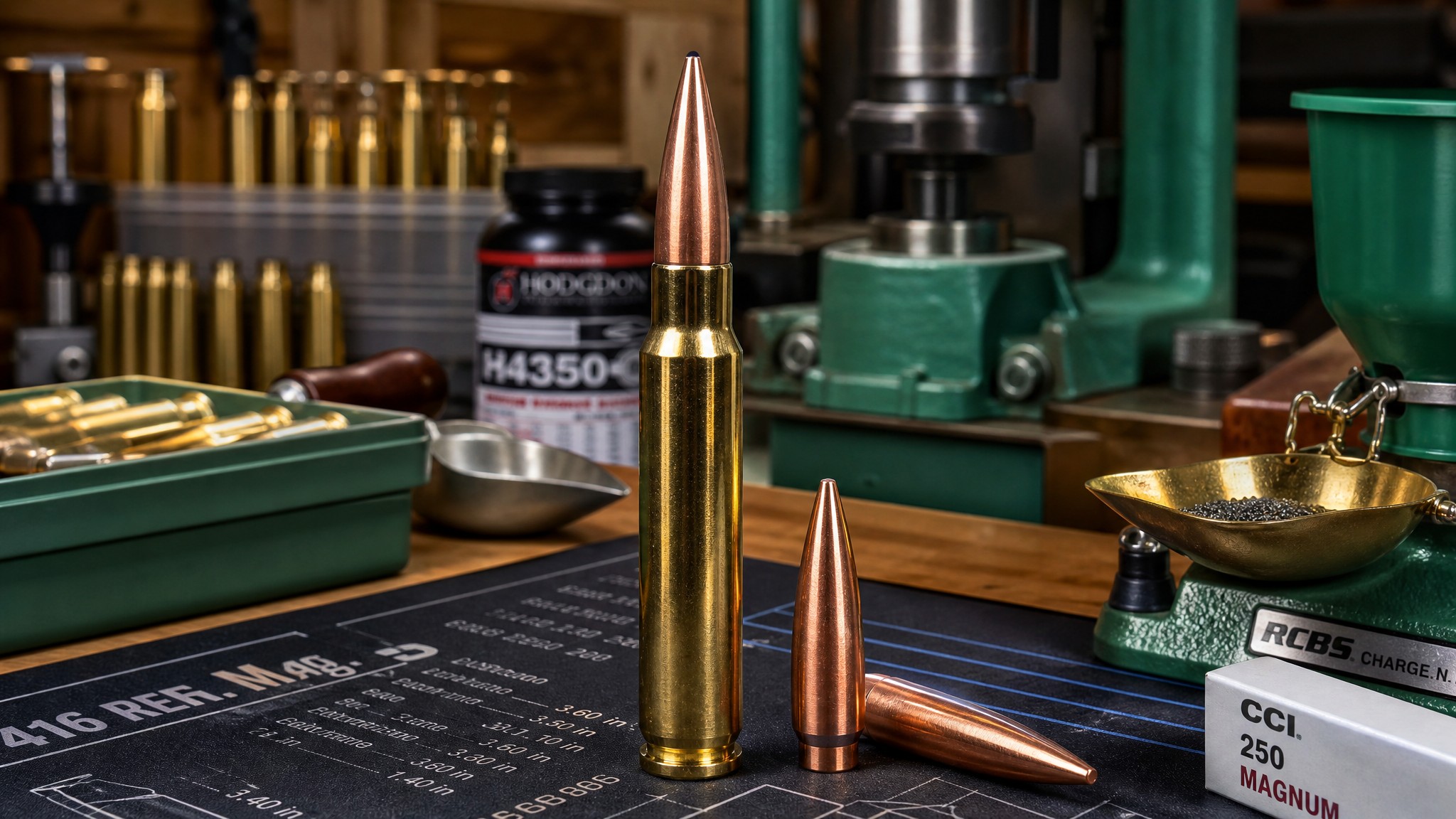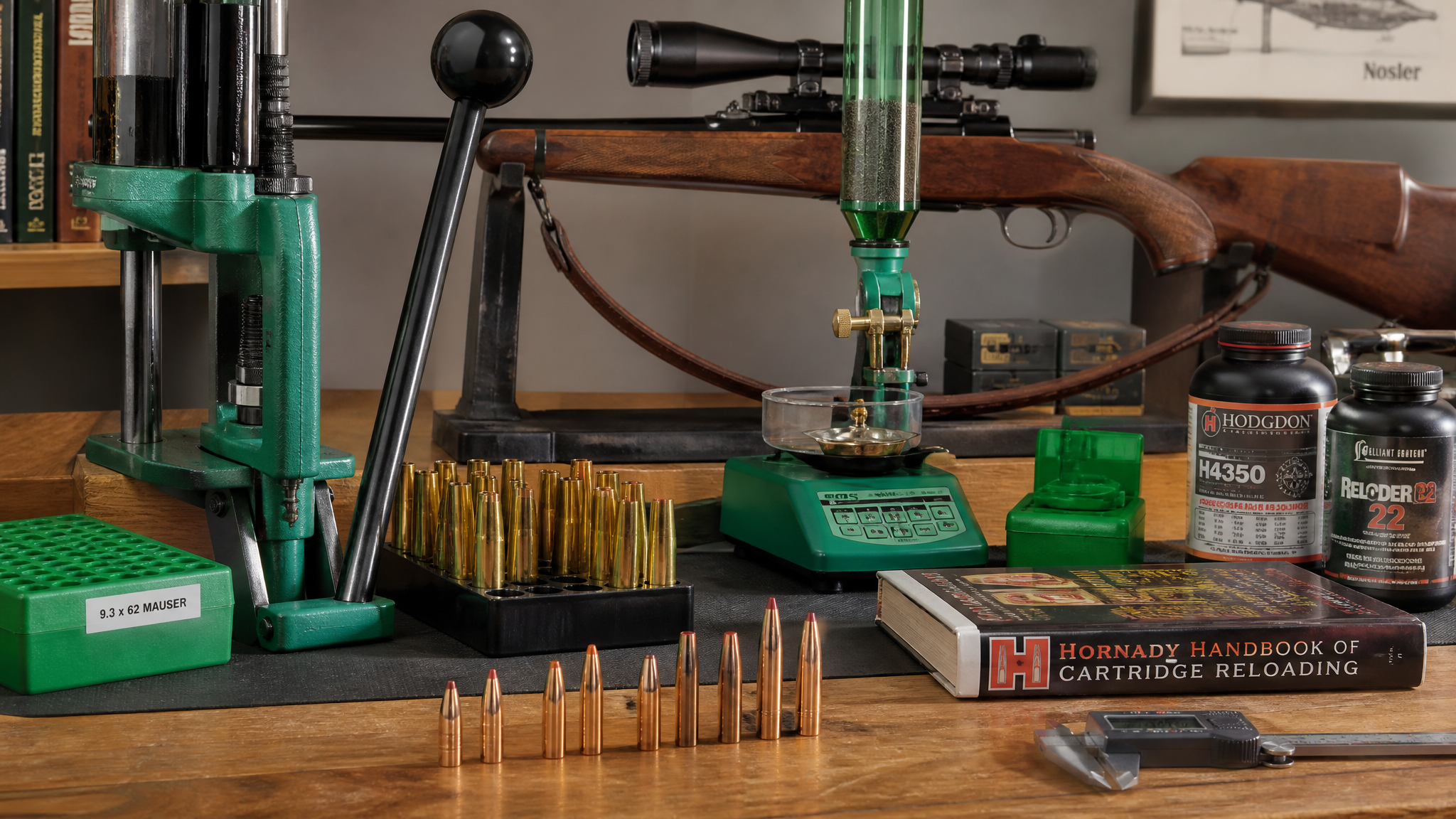
Roy Weatherby called the 7mm Weatherby Magnum his favorite cartridge, and the man invented a whole family of them. That's not a trivial endorsement. Introduced in 1944, the 7mm Weatherby predates many of the cartridges that have since grabbed the spotlight — the 7mm Remington Magnum, the 7mm PRC, the 28 Nosler — yet it still outperforms most of them on paper and in the field. If you shoot a Mark V or a Weatherby-chambered rifle and you've been running factory ammunition, loading your own will unlock everything this cartridge is actually capable of.
Cartridge Overview
The 7mm Weatherby Magnum is a belted magnum based on a blown-out, double-radius-shoulder case. Weatherby's distinctive shoulder design — a venturi shape with dual radii rather than a conventional shoulder — gives the cartridge a distinctive silhouette and reportedly improves powder burning efficiency. The case capacity is substantial, falling between the 7mm Rem Mag and the 28 Nosler, with a slightly larger bore diameter than most .280-class cartridges (true 7mm bore, .284 bullet diameter).
Factory loads typically push 140-grain bullets at 3,300 fps and 160-grain bullets at 3,100 fps from a 26-inch barrel. Those numbers are not marketing — they're real, and they translate to flat trajectories and excellent downrange energy retention for elk-sized game at 400 to 600 yards.
Case Preparation
7mm Weatherby brass is available from Weatherby and Norma — use Weatherby-headstamped cases for best results, as they're purpose-built for the chamber dimensions. Norma brass is excellent quality but may require a sizing pass before first loading if you're using a standard SAAMI-spec die.
- Full-length resize on every firing — belted magnum cases headspace on the belt, not the shoulder, so neck-sizing alone isn't reliable for consistent headspace.
- Trim to 2.545 inches after the first couple of firings. Cases grow with each shooting cycle.
- Deburr and uniform primer pockets after the first firing. The primer pocket uniformer is especially important for magnum cartridges where ignition consistency directly affects velocity spread.
- Anneal every 3 to 4 firings to prevent neck cracking. Weatherby cases see high pressures and high friction in the sizing die — annealing extends case life significantly.
Primers
Use large rifle magnum primers — period. The 7mm Weatherby burns large powder charges that benefit from the hotter, longer-duration ignition of magnum primers. Federal 215M (Gold Medal Match) and CCI 250 are both excellent choices and offer consistent lot-to-lot performance. Avoid standard large rifle primers in this cartridge; you'll see higher extreme spreads and less complete powder combustion, especially with slower-burning powders.
Powder Selection
The 7mm Weatherby is a powder-hungry cartridge that reaches its full potential with slow to very slow burning powders. The case capacity demands something in the Reloder 22 to H1000 range for full-throttle loads with heavy bullets.
Top Powder Choices
- Reloder 26 (Alliant): The top pick for heavy hunting bullets (160–175 gr). Excellent temperature stability, which matters for hunters shooting in cold morning conditions versus warm afternoon sighting sessions. Expect velocities in the 3,050–3,150 fps range with 160-grain bullets.
- IMR 7977: Another outstanding slow burner for the 7mm Weatherby. High energy content and good metering. Works especially well with 162-grain Hornady ELD-X and similar high-BC hunting bullets.
- Reloder 22: The classic Weatherby powder — Roy Weatherby himself favored RL-22 in his cartridges. Excellent with 140- to 160-grain bullets. Slightly faster than RL-26, so watch for pressure signs with maximum charges and heavy bullets.
- H1000 (Hodgdon): Extremely temperature-stable Extreme powder. Ideal for hunters who will encounter large temperature swings between zero time and shot time. Excellent with 160–175-grain bullets.
- Retumbo (Hodgdon): The slowest of the useful bunch. At or near maximum charge weight, Retumbo can extract the most velocity from the case, but pressure builds fast — work up carefully.
Bullet Selection for Hunting
The 7mm bore is blessed with an exceptional selection of premium hunting bullets. For elk-sized game in Oregon's mountains, you want a bullet that retains weight and drives deep at both close and extended ranges.
- Hornady 162-gr ELD-X: The most popular hunting bullet for this cartridge. High BC (0.631 G1), reliable expansion, and outstanding accuracy in most 7mm Weatherby barrels. The go-to for open-country mule deer and elk.
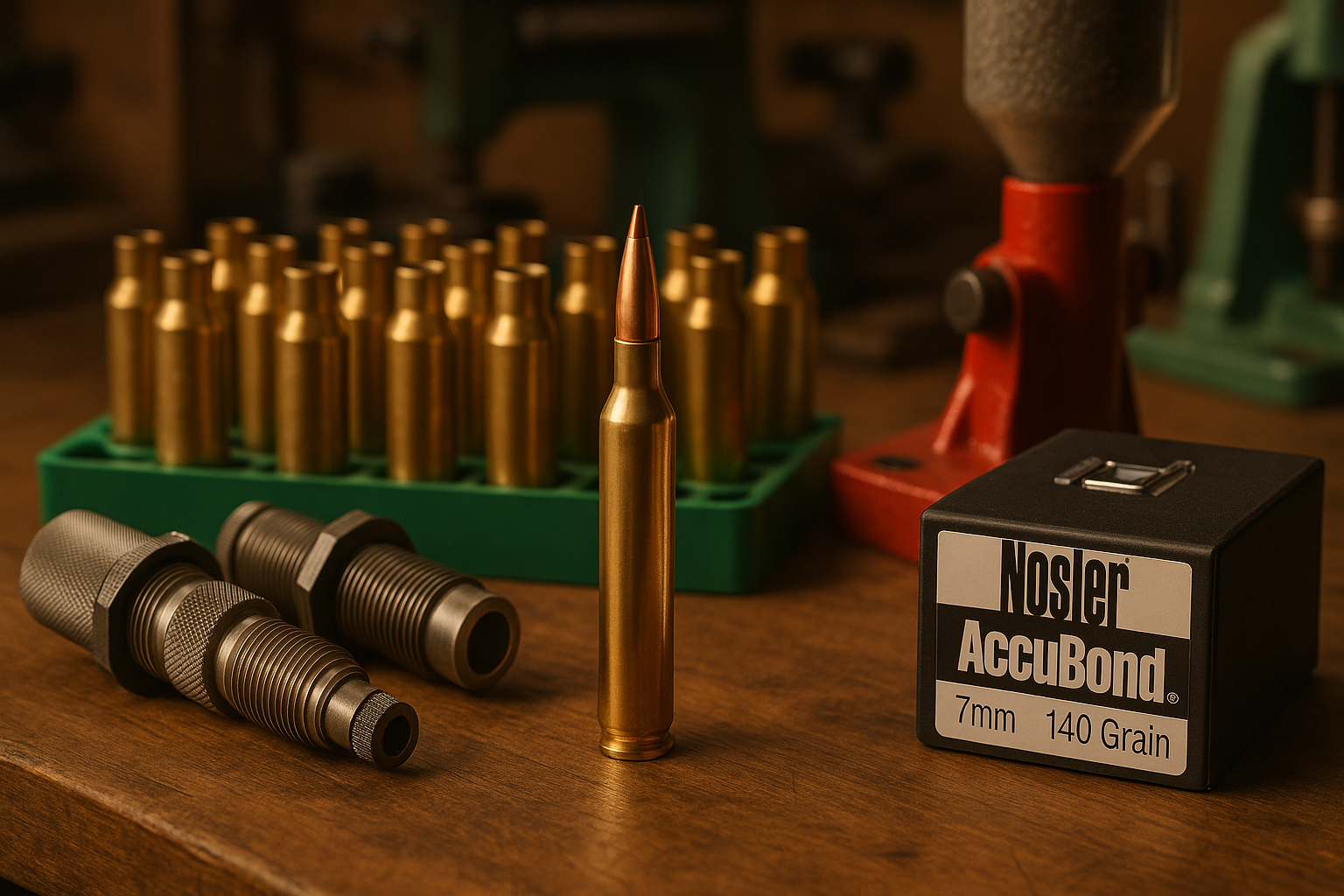
- Nosler 160-gr AccuBond: The bonded construction holds up to shoulder hits and angled entry shots. Good BC, controlled expansion. Excellent for close-range timber elk.
- Berger 168-gr VLD Hunting: Outstanding for very long range. The VLD design creates a large wound channel through delayed expansion. Works best on broadside shots — not ideal for quartering shots on large bulls.
- Swift 160-gr Scirocco II: A bonded, polymer-tipped bullet that offers the best of both worlds — high BC and controlled expansion. Underrated for this cartridge.
Load Data (Always Work Up From 10% Below Max)
Disclaimer: Load data below is for reference only. Always begin at published starting loads and work up carefully. Verify against current manufacturer data.
162-gr Hornady ELD-X / Reloder 26
- Starting load: 72.0 gr — approximately 3,000 fps
- Near max: 76.5 gr — approximately 3,100–3,130 fps (watch for pressure signs)
- COAL: 3.340 inches (verify with your specific chamber)
160-gr Nosler AccuBond / Reloder 22
- Starting load: 68.0 gr — approximately 2,980 fps
- Near max: 72.0 gr — approximately 3,080–3,110 fps
- COAL: 3.340 inches
Accuracy Expectations and Barrel Considerations
Most factory 7mm Weatherby Mark V rifles are capable of sub-MOA accuracy with quality handloads. The 26-inch barrel is standard on most factory offerings and is necessary to achieve the advertised velocities. Chopping the barrel to 24 inches loses 80 to 120 fps depending on the powder, which is still fast, but defeats some of the cartridge's purpose.
Barrel life is the honest caveat with any Weatherby Magnum. Expect 1,200 to 1,800 rounds before accuracy degrades noticeably — more if you let the barrel cool between strings and avoid copper-fouling buildup. For a dedicated hunting rifle that sees 40 rounds per year in practice plus field use, this means decades of service before a barrel replacement becomes necessary.
The Field Case for the 7mm Weatherby
Oregon's elk and mule deer country — from the Wallowas to the Steens to the Coast Range — covers an enormous range of shooting distances and conditions. The 7mm Weatherby Magnum handles them all. It's flat enough to be effective at 500 yards in the open country of Eastern Oregon, powerful enough to anchor a bull elk in the timber, and accurate enough to take full advantage of today's rangefinding and ballistic app technology. With quality handloads in the 162-grain ELD-X, you're looking at roughly 12 inches of drop at 400 yards from a 200-yard zero — a dead-flat trajectory that requires minimal holdover in the field.
Roy Weatherby got this one right. If you've got a Mark V sitting in the safe, start loading for it. You may find yourself wondering why you have all those other rifles.