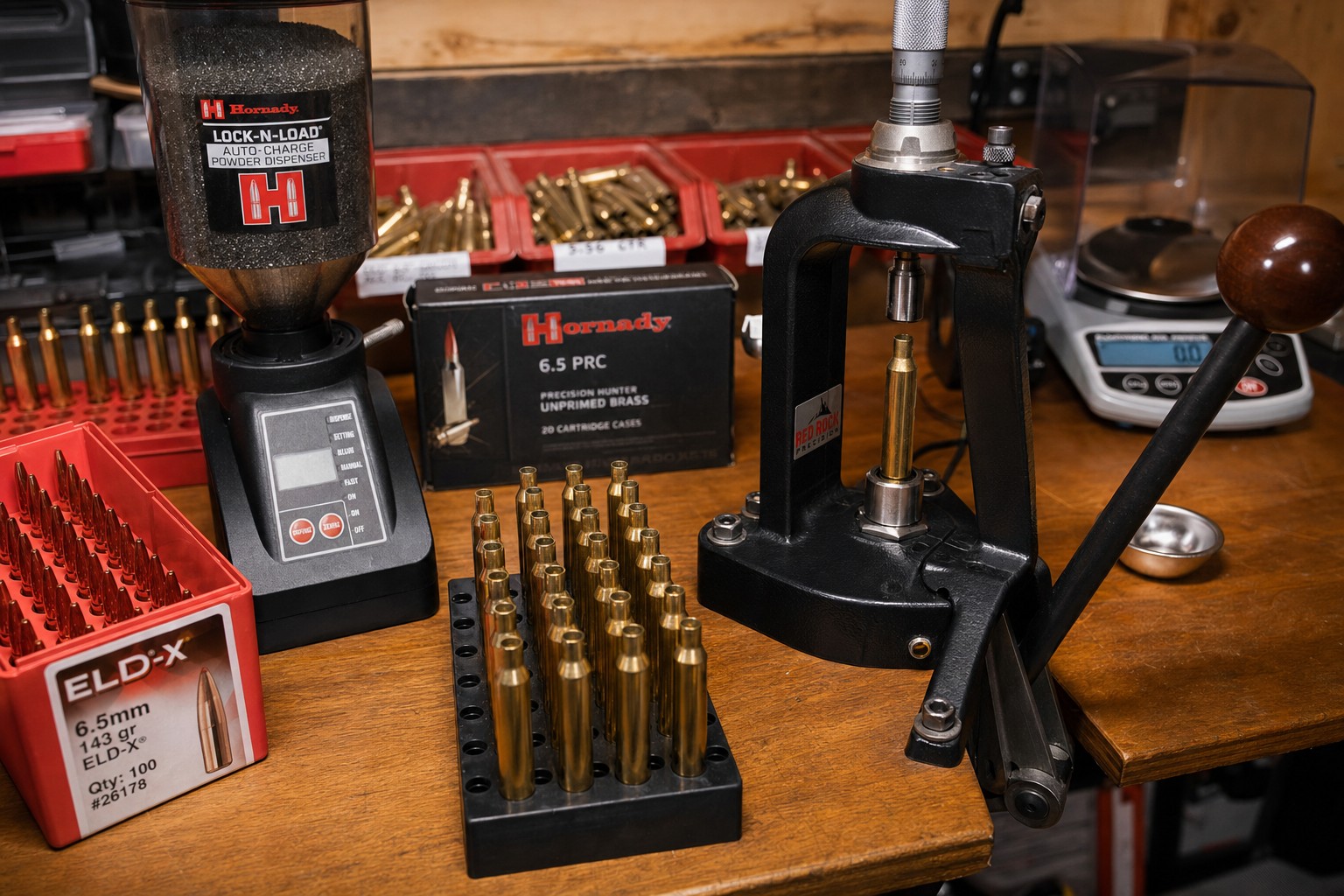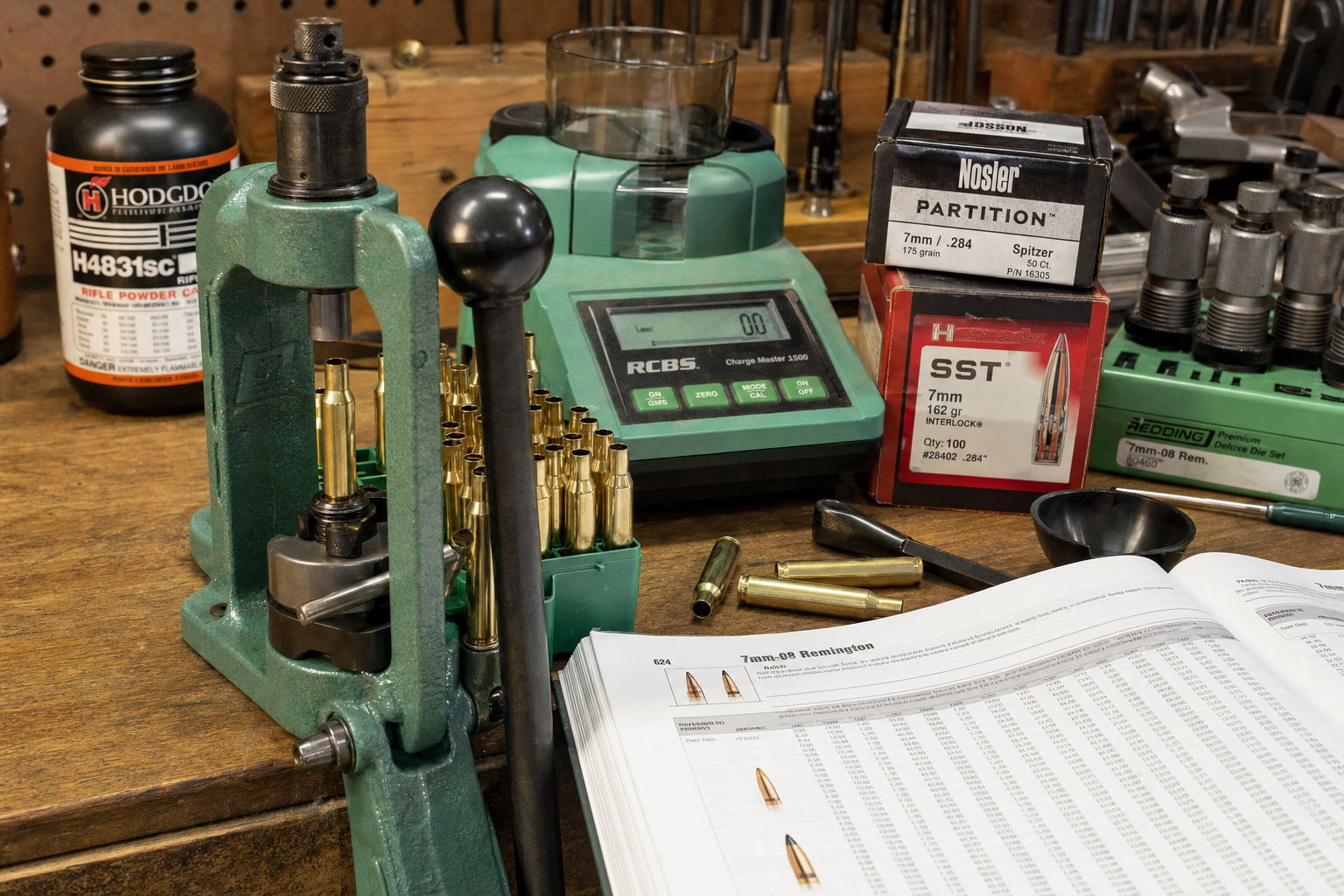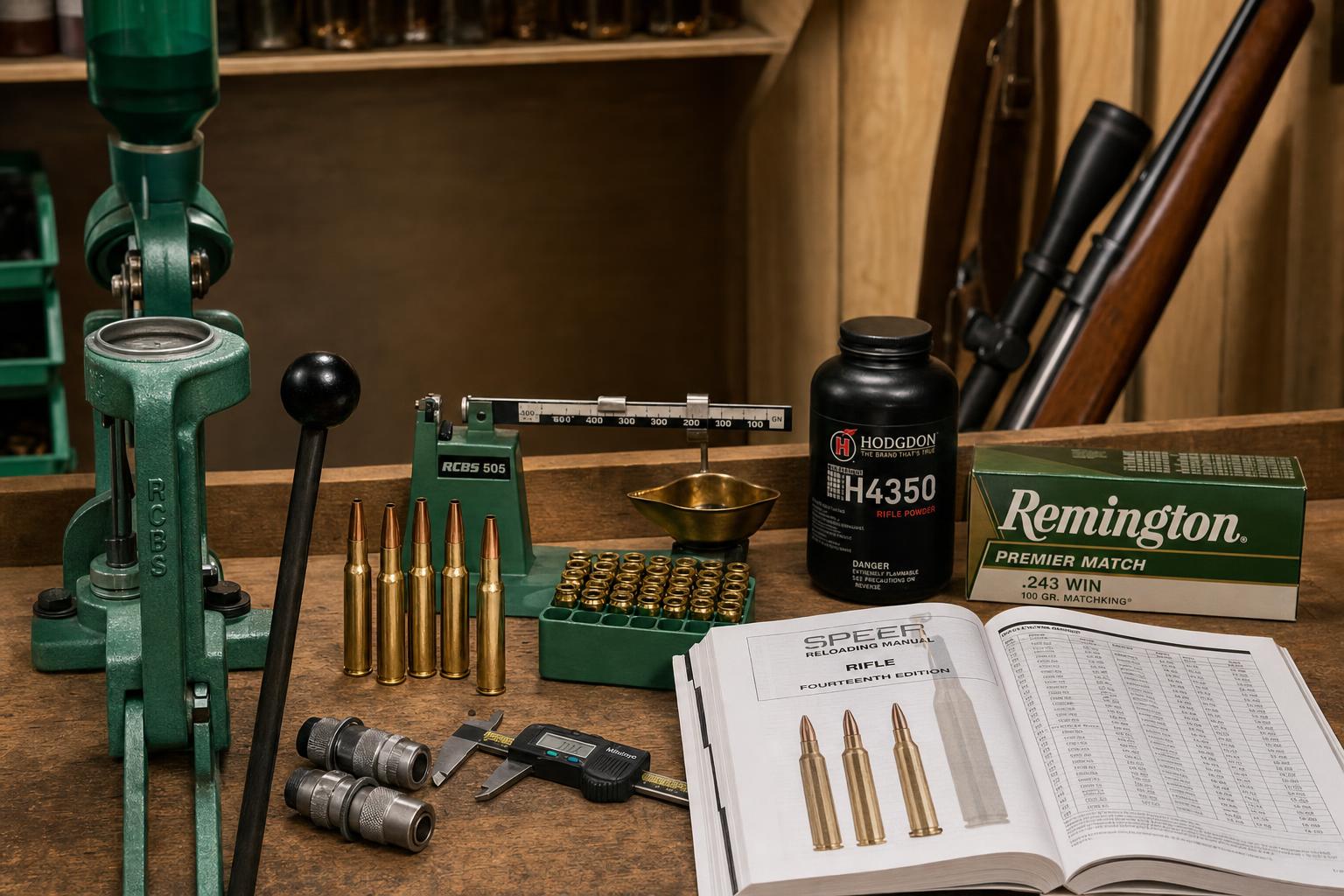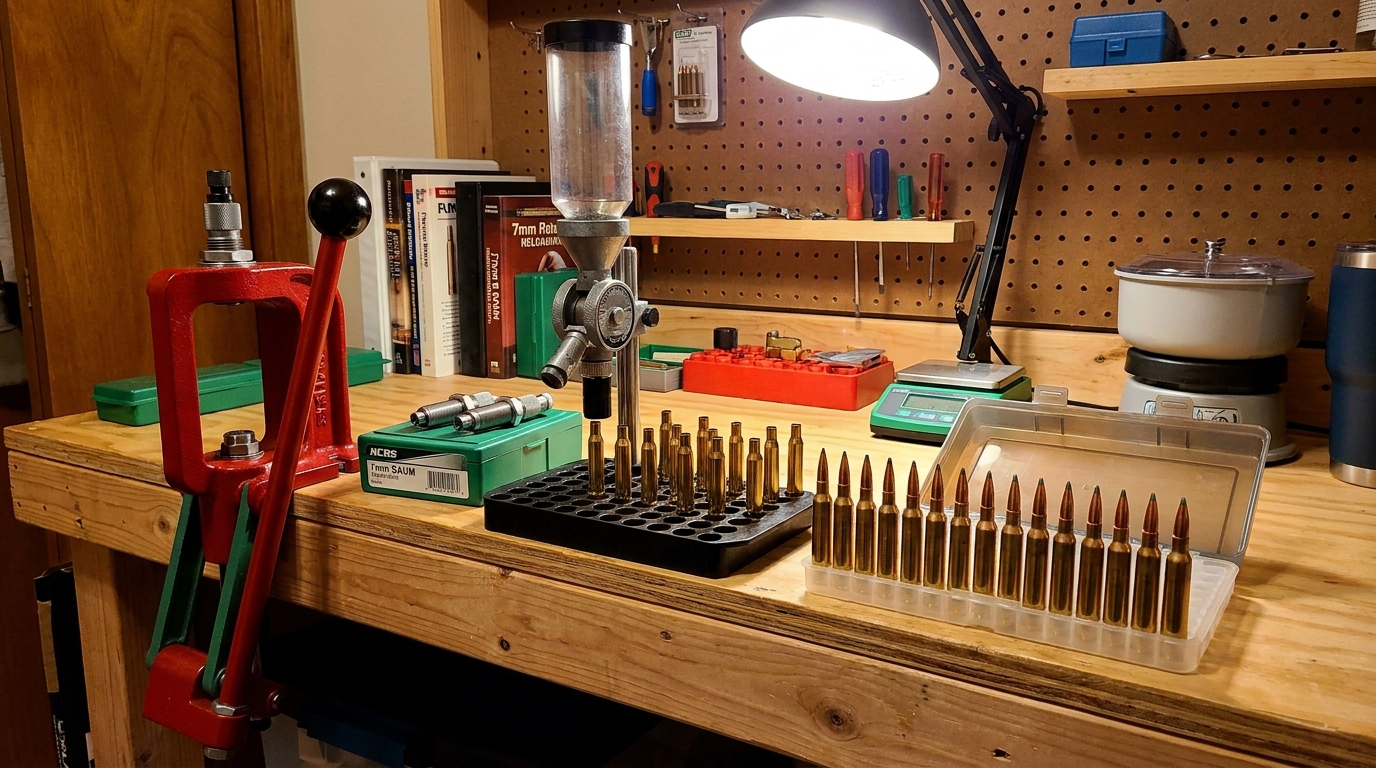
The 7mm Short Action Ultra Magnum doesn't get the press it deserves. Remington introduced it in 2002 alongside the 300 SAUM, and for a while it looked like these compact magnums might rewrite the rulebook on short-action performance. Then Remington stumbled marketing-wise, Winchester countered with the WSM line, and the SAUM faded into the background. That's a shame — because the 7mm SAUM is an outstanding cartridge, and for reloaders, it's an especially compelling one.
The Case for the 7mm SAUM
The 7mm SAUM is based on the Winchester Short Magnum parent case — a rebated rim design with a very short, fat body that maximizes powder capacity in a package that fits a short-action receiver with a standard bolt face. The result is a cartridge that pushes 160-grain 7mm bullets to 3,000 fps and 175-grain bullets to 2,900 fps from a 24-inch barrel. That's 7mm Remington Magnum performance in a rifle that weighs a pound less and cycles noticeably faster.
For open-country hunting in Oregon and the Pacific Northwest — where shots at mule deer and elk beyond 300 yards are routine and pack weight matters — the SAUM formula is compelling. A trim 7.5-pound mountain rifle in 7mm SAUM hits harder at 400 yards than most hunters' .30-06 loads hit at the muzzle.
Brass and Component Availability
Remington originally headstamped SAUM brass, and while it's not stocked everywhere, it's available from Nosler, Norma, and Remington through online retailers. Expect to pay a premium over common brass — roughly $1.20 to $1.60 per case. Buy 200 at once and treat each case with care. The good news: SAUM brass is robust, has uniform primer pockets, and anneals well. Properly prepared and maintained SAUM brass will last 8 to 10 loadings before signs of fatigue appear.
Primers are standard: Federal 215M Large Rifle Magnum primers are the first choice of most SAUM reloaders. CCI 250 Magnum primers are a reliable alternate. The fat, short case geometry benefits from a magnum primer's stronger ignition — stick with magnum primers even at moderate loads.
Powder Selection
The 7mm SAUM has a relatively small case volume compared to a standard magnum, and that shapes powder selection significantly. Fast-burning powders that would choke a 7mm Rem Mag can work beautifully in the SAUM.
- Hodgdon H4831SC: The top choice for 150 to 175-grain bullets. Excellent metering, very temperature-stable, and produces consistent velocity across Oregon's elevation and temperature swings. Expect 3,020 to 3,080 fps with a 140-grain bullet and a 24-inch barrel.
- IMR 7977: Slightly slower than H4831SC, giving a small velocity advantage with heavier 160 and 175-grain projectiles. Excellent for elk-weight loads where penetration premium bullets are used. Requires careful charge weight management due to the SAUM's smaller case.
- Reloder 22: A classic choice that meters well and delivers consistent results. Popular with SAUM reloaders who also work with 7mm Rem Mag — the powder bridges both platforms.
- Hodgdon H1000: The slow end of the useful range. Works well with 175-grain and heavier VLD-style bullets for long-range work. Leaves more unburned powder in cold conditions — a consideration for late-season hunting.
Bullet Selection and Load Data
The 7mm caliber offers perhaps the best selection of high-BC hunting bullets of any caliber. For hunting use in the Pacific Northwest:
Deer Loads (140-150 grain)
- Nosler Accubond 140gr: 60.0gr H4831SC — 3,110 fps (24" barrel). Outstanding deer load with excellent expansion at long range and enough BC (0.485) to buck wind effectively.
- Berger Hunting VLD 140gr: 60.5gr H4831SC — 3,130 fps. Maximum performance for open-country deer. The VLD's high BC (0.519) makes it a genuine 500-yard capable load in the SAUM.
Elk Loads (160-175 grain)
- Nosler Partition 160gr: 56.5gr H4831SC — 2,920 fps. The Partition's dual-core construction and controlled expansion make it the gold standard for heavy timber elk where shots may not be perfectly broadside.
- Federal Trophy Bonded Tip 160gr: 56.0gr Reloder 22 — 2,890 fps. Excellent bonded construction with a high enough BC (0.531) for the longer shots Oregon's open-country elk units demand.
- Nosler Accubond LR 175gr: 54.5gr IMR 7977 — 2,810 fps. The high BC long-range version for hunters calling shots past 400 yards on elk. Requires a 1:9 twist rate minimum.
Note: All load data should be cross-referenced with current manufacturer data. Start 10% below listed charges and work up. SAUM cases are sensitive to pressure — watch for stiff extraction as a primary pressure indicator before overpressure is reached.
Case Prep for the SAUM
The SAUM's rebated rim and short, fat body require a few considerations beyond standard case prep:
Full-length resize on every firing if the rifle will be used in the field or shared between rifles. The SAUM's generous case dimensions make neck-only sizing unreliable for hunting ammunition unless you're loading exclusively for one rifle and measuring headspace carefully.
Trim to 2.030 inches after each firing. The SAUM grows faster than most cartridges due to its body geometry. Check and trim every firing without exception.
Anneal every third firing. The short, thick body stresses the case shoulder significantly. Annealing keeps primer pockets tight and prevents case head separation — an especially important precaution given the premium cost of SAUM brass.
Seat bullets to 2.825" OAL as a starting point for most short-action magazine dimensions. The SAUM headspaces off the belt-less case body, so seating depth has more influence on pressure than in belted magnums. Establish your pressure baseline before pushing seating depth toward the lands.
Rifle Selection and Barrel Length
Factory SAUM rifles were primarily offered by Remington in the Model 700 and by Browning in the A-Bolt. Both are excellent action platforms for custom work. If you're building, a Remington 700 short-action footprint is the most common starting point — a 24-inch barrel in a 1:9 twist gives the full velocity potential and handles bullets up to 175 grains with confidence.
For a Western backcountry rifle, a 22-inch fluted barrel in a lightweight hunting stock (McMillan Edge or similar) produces a finished rifle under 7.5 pounds that loses only 60 to 80 fps compared to a 24-inch tube — a trade most hunters consider worthwhile.
The Bottom Line
The 7mm SAUM rewards the reloader who pays attention to detail with a cartridge that's genuinely capable of taking any big game animal in Oregon — from open-country mule deer at 400 yards to brush-country black bear at 100. It's not flashy, the brass costs more than average, and you won't find load data in every manual. But for the serious handloader looking for short-action magnum performance with real-world versatility, the SAUM deserves a serious look.