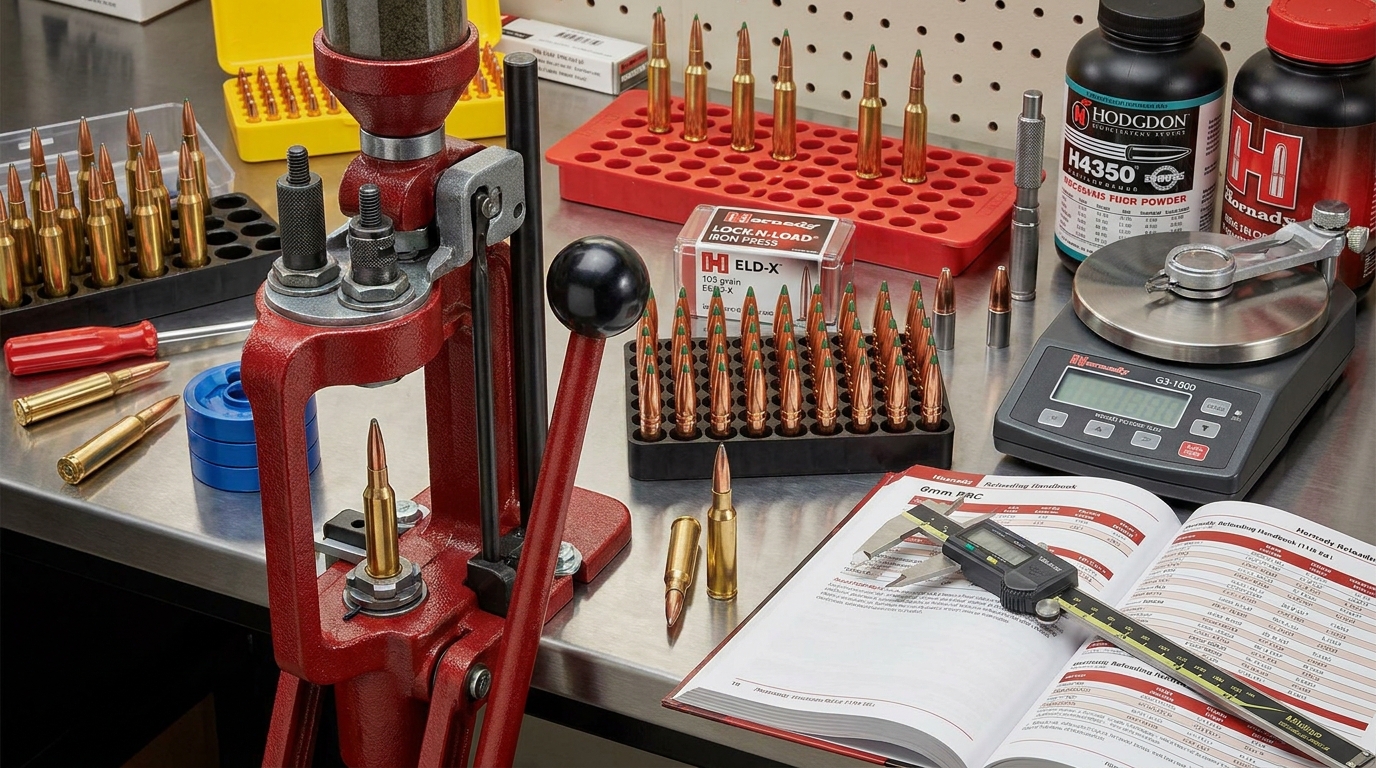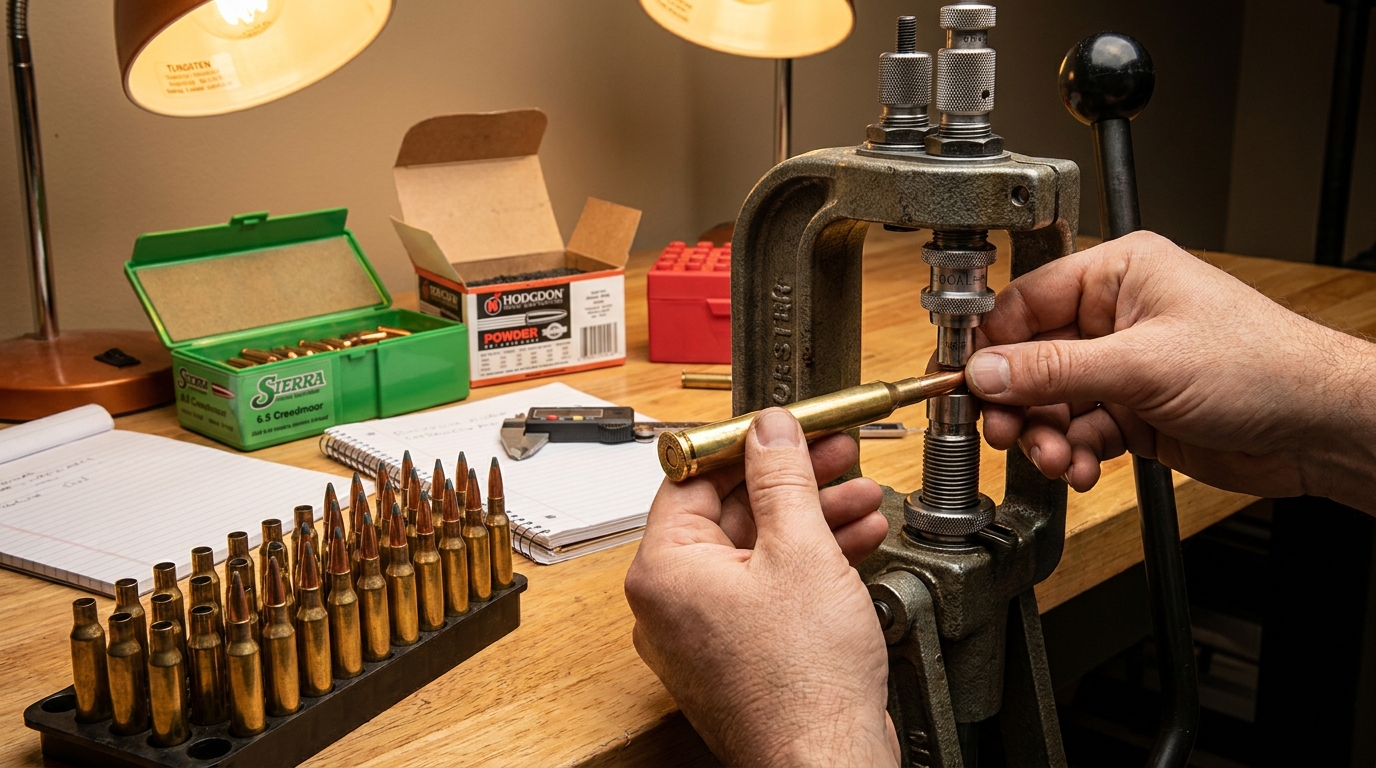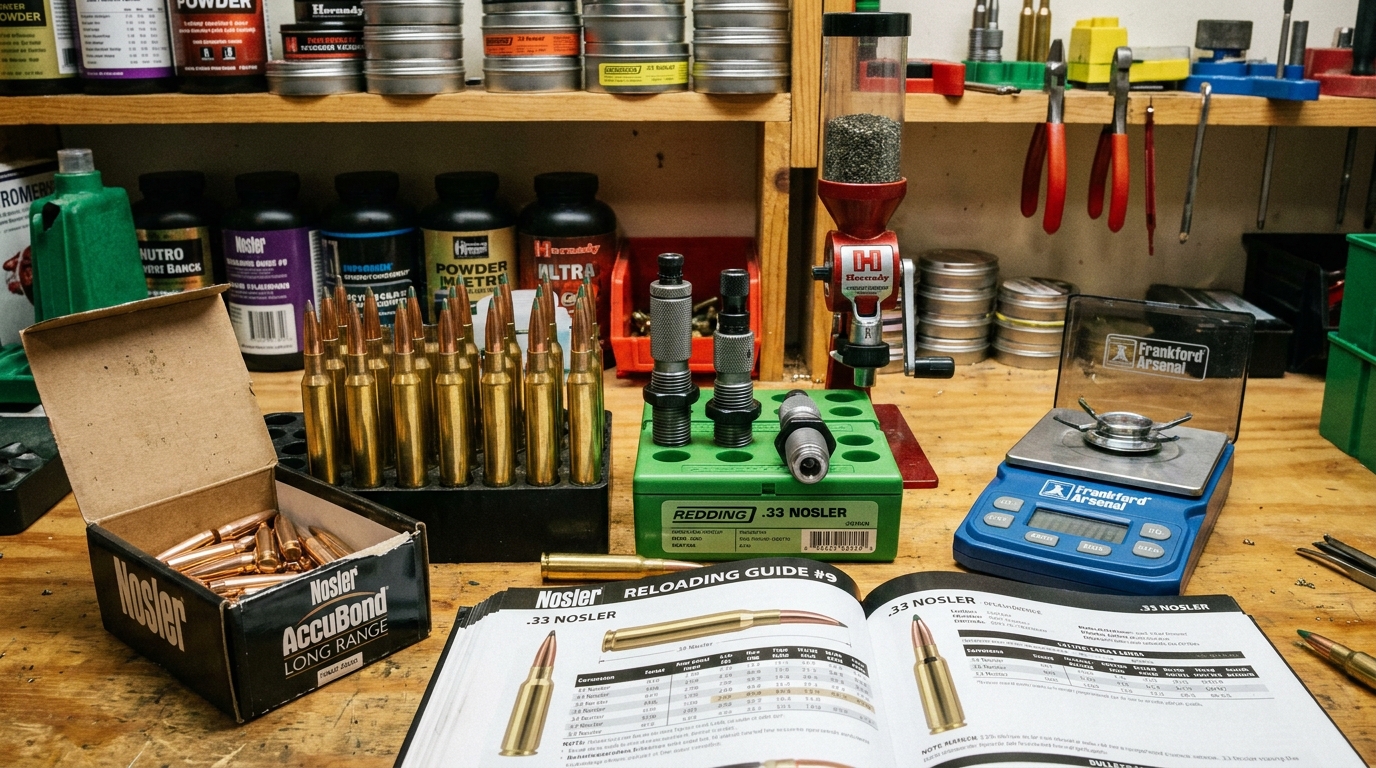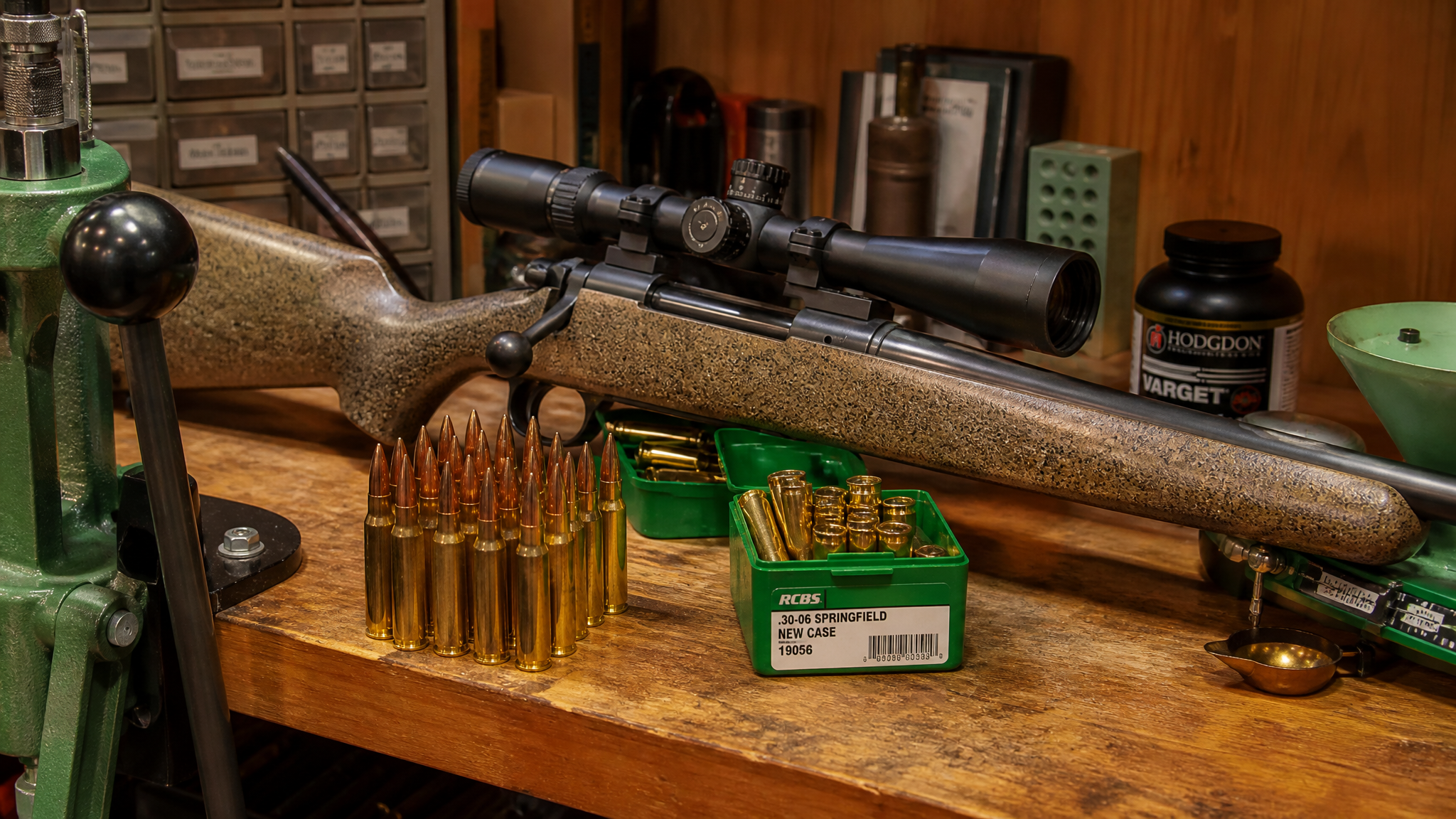
The .350 Remington Magnum doesn't get talked about much anymore, and that's a shame. Introduced in 1965 alongside Remington's Model 600 carbine, it was designed to push a 250-grain bullet to 2,400+ fps from an 18.5-inch barrel — matching the .358 Norma Magnum's performance in a short-action package. The round never caught on commercially, the Model 600 was discontinued, and the cartridge faded from mainstream conversation. But for handloaders who can source brass and who want a short, hard-hitting brush cartridge for Oregon elk, the .350 Rem Mag still delivers.
Why It's Worth Your Time
The .350 Remington Magnum fires .358-inch diameter bullets — the same projectiles used in the .35 Whelen, .358 Winchester, and .358 Norma Magnum. These are large, heavy bullets designed to break bone and create massive wound channels on thick-bodied game. In the Pacific Northwest's dense coastal timber and brushy Cascade foothills, a 225-grain Partition moving at 2,600 fps hits considerably harder than a 150-grain .30-caliber bullet at equivalent range — and dumps energy faster in the heavy brush where most Coast Range elk hunting happens.
The short-action belted magnum case is based on the H&H family shortened to feed through a short action, giving you the benefit of a lighter, shorter rifle without sacrificing downrange authority on elk-sized game. Several current production rifles chamber it, including the Ruger 77-series variants and custom bolt gun builds. If you've acquired one of the classic Remington Model 660 or 700 short-action .350s, handloading is essentially mandatory — factory ammunition is expensive and limited.
Brass
Remington manufactures .350 Rem Mag brass, and Nosler produces premium unprimed cases. Availability fluctuates — stock up when you find it. The belted case requires standard large magnum rifle primers (CCI 250, Federal 215M, or Remington 9.5M). Depriming and sizing follow the same process as any belted magnum: use a full-length sizing die and ensure the sizing die contacts the belt face, not the shoulder, to avoid headspace issues over repeated firings.
Brass Prep Tips
- Trim to 2.160" (trim-to length) after 2–3 firings — belted cases tend to grow
- Anneal case necks every 3–4 firings to maintain consistent neck tension
- Flash hole deburring on the first prep
- Primer pockets are large magnum — use a proper uniforming tool before the first load
Bullet Selection
The .358-inch bullet diameter gives you outstanding options across the weight spectrum. For elk and black bear in Oregon's mountains and coastal timber, these are the top performers:
- Nosler Partition 225 gr: The classic choice. Front core expands reliably; rear core retains mass for penetration. Outstanding on elk at any realistic range.
- Barnes TSX 200 gr: All-copper expanding bullet. Lower recoil, higher velocity, excellent penetration on angled shots and heavy bone hits.
- Hornady InterBond 200 gr: Bonded core, controlled expansion, flat-shooting for a .35-caliber bullet. Good choice for open-country elk.
- Sierra GameKing 250 gr: Maximum penetration, heavy for caliber, ideal for large-bodied bull elk or black bear at timber ranges.
- Nosler AccuBond 225 gr: Ballistic tip with bonded core. Better BC than the Partition, consistent terminal performance from 50 to 400 yards.
Powder Selection
The .350 Rem Mag works best with medium-to-medium-slow burning powders in the IMR 4064 to IMR 4350 range. The relatively modest case capacity rewards powders that meter evenly and burn cleanly at moderate to high charge weights.
Top Powder Choices
- IMR 4064: Excellent with 200–225 gr bullets. Consistent metering, predictable velocity, available in most reloading supply stores.
- Reloder 15: Temperature-stable, slightly slower than IMR 4064, works well with 200–225 gr projectiles in warmer conditions — important for an August elk load.
- Varget: Extremely temperature-insensitive and consistent. Works well with lighter 200-grain bullets.
- IMR 4320: Good mid-range option for all bullet weights.
- H380: Ball powder, excellent metering, suitable for 200–225 gr loads.
Always start 10% below published maximum loads and work up in 0.5-grain increments while watching for pressure signs: flattened primers, sticky bolt lift, ejector swipes on case heads. Consult a current edition of the Hodgdon, Sierra, or Nosler reloading manual for specific charge weights.
Realistic Ballistics
From a 20-inch barrel, expect:
- 200 gr TSX: ~2,700–2,750 fps at the muzzle
- 225 gr Partition: ~2,550–2,600 fps at the muzzle
- 250 gr Sierra: ~2,350–2,400 fps at the muzzle
Zero at 200 yards with the 225-grain Partition and you'll be about 3.5 inches low at 300 yards — more than adequate for body shots on elk at realistic hunting distances in Oregon's timbered terrain.
Is It Worth Chasing Brass For?
If you already own a rifle chambered in .350 Rem Mag, absolutely yes. The cartridge outperforms the .35 Whelen in velocity from short barrels, hits harder than any standard .30-caliber, and offers the same terminal performance as the far more popular .338 Win Mag on elk-sized game — with noticeably less recoil. Keep 50–100 pieces of brass in rotation, load them carefully, and this cartridge will put Oregon elk in the freezer for decades.