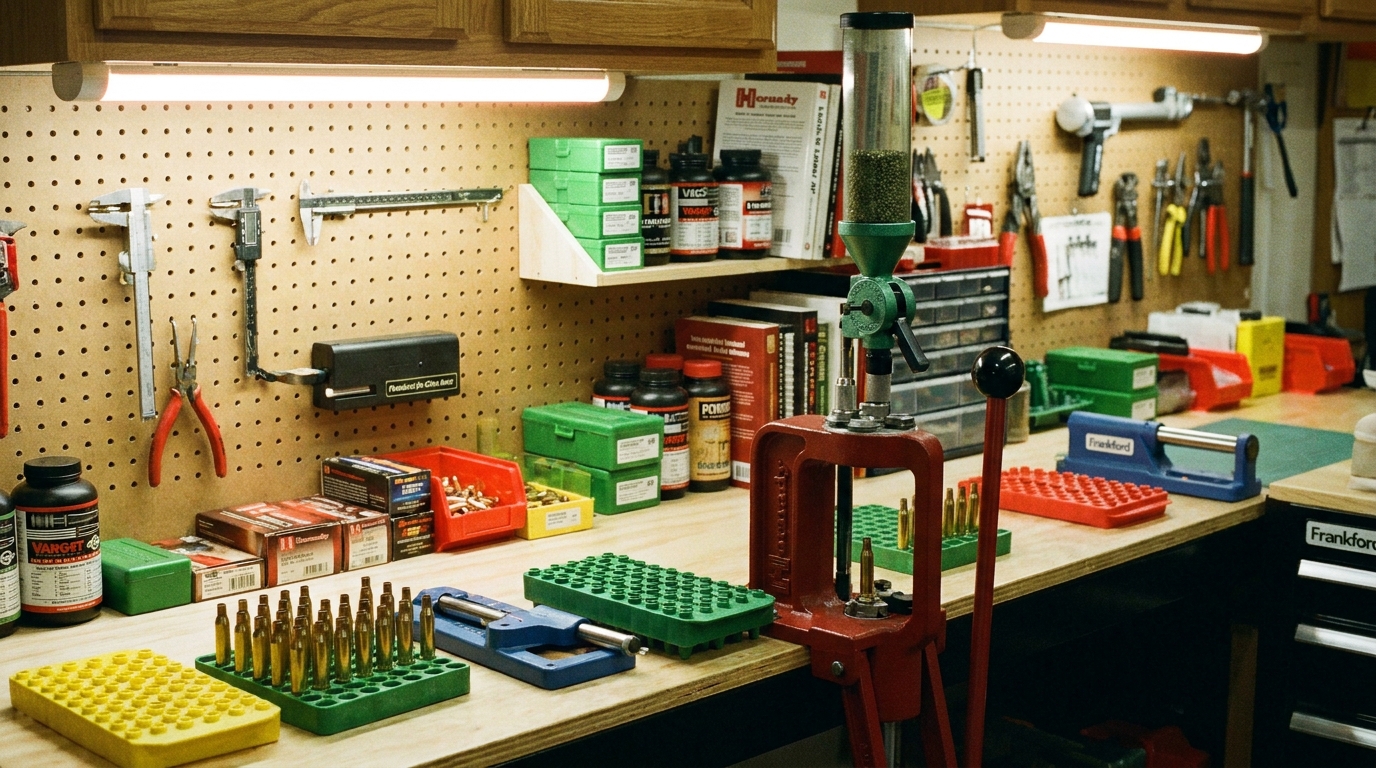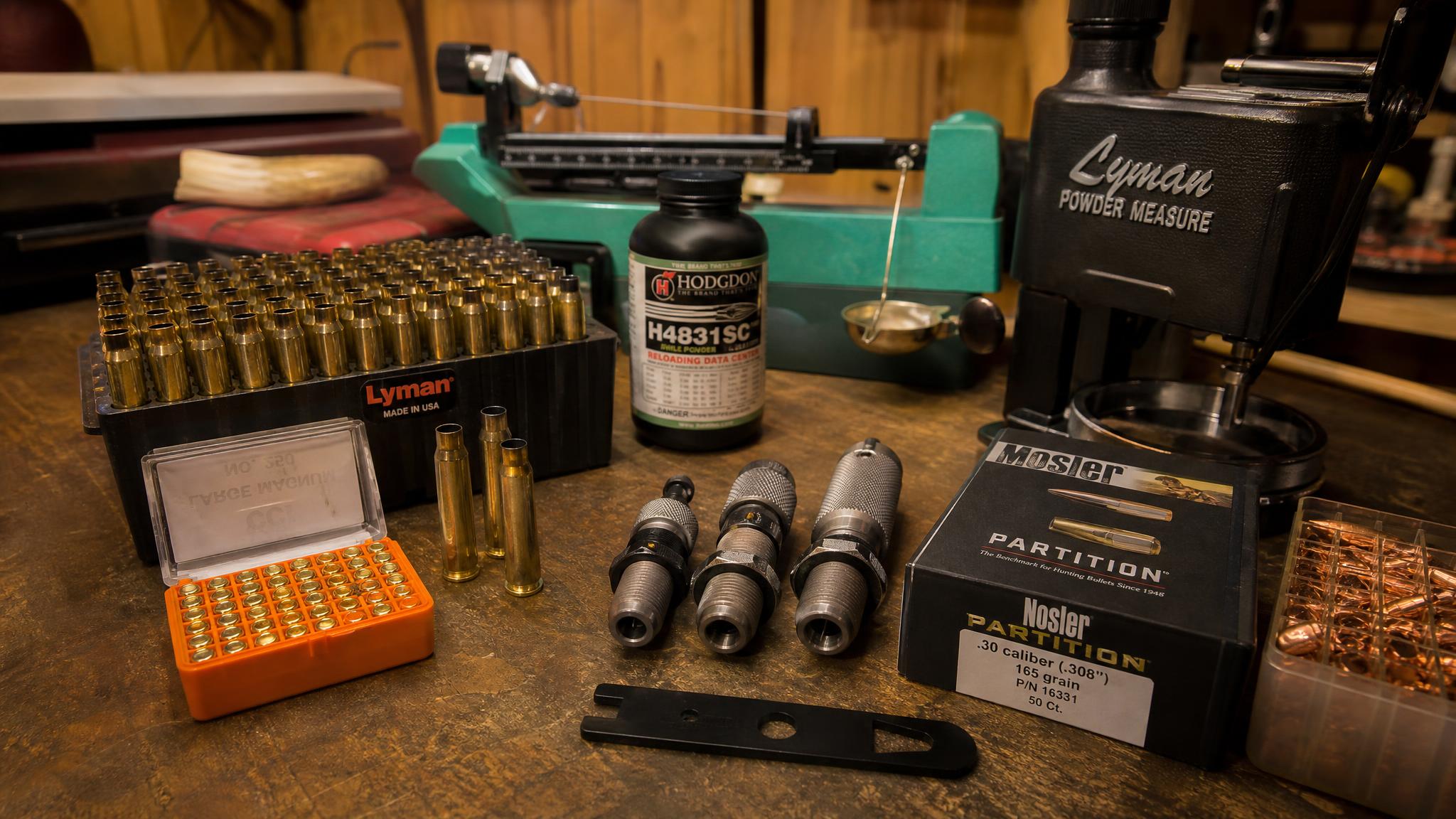
Few cartridges have earned their reputation as thoroughly as the .300 Winchester Magnum. Introduced in 1963, it became America's best-selling belted magnum within a decade and has never relinquished that title. For Oregon hunters chasing Roosevelt elk in the Cascades, mule deer across the high desert, and black bear in the Coast Range, the .300 Win Mag offers a compelling combination of flat trajectory, retained energy at distance, and wide availability of components for the hand loader. If you're serious about building accurate, field-proven loads for the .300 Win Mag, this guide will get you there.
Why the .300 Win Mag for Pacific Northwest Hunting
Oregon's hunting terrain demands versatility. A Roosevelt elk at 60 yards in the North Cascades timber requires a different performance envelope than a mule deer at 350 yards on the Steens Mountain rim. The .300 Win Mag handles both with authority. With a 180-grain bullet at 2,950 fps, it hits harder at 300 yards than a .30-06 does at the muzzle. It's legal for all big game in Oregon and carries enough energy margin to handle the biggest Roosevelt bulls if you're in tight cover and need reliable penetration.
For long-range hunters in eastern Oregon's open country — units like Steens, Beatys Butte, or the OC&O — the .300 Win Mag also shines. A well-loaded 200-grain AccuBond or 215-grain Berger hybrid extends effective range and minimizes wind drift compared to lighter, faster cartridges.
Brass Selection and Prep
Start with quality brass. Winchester, Nosler, and Lapua all make excellent .300 Win Mag cases. Lapua is the gold standard for precision work but costs significantly more. Winchester brass is widely available, affordable, and performs well when properly prepped.
New brass requires minimal prep — just check for burrs and uniform primer pockets. Once-fired brass needs:
- Full-length resize: Use a quality die (Redding or RCBS) and lube cases thoroughly to avoid stuck cases
- Trim to length: SAAMI trim length is 2.500"; trim to 2.490" for reliable chambering
- Deburr and chamfer: Chamfer the case mouth inside and out for consistent bullet seating
- Primer pocket uniforming: Not essential for hunting loads, but improves consistency in precision work
- Anneal every 3–4 firings: Helps the neck stay consistent and reduces split cases
Primers
The .300 Win Mag uses Large Rifle Magnum primers. Federal 215M, CCI 250, and Remington 9½M are all proven choices. The Federal 215M is a favorite among benchrest shooters for its consistent ignition; the CCI 250 is rugged and reliable in cold weather — an important consideration for fall elk season in the Oregon mountains.
Avoid standard Large Rifle primers in magnum cases with slow powders — the larger powder charge needs the extra ignition energy of a magnum primer to burn cleanly and consistently, especially at cold temperatures.
Powder Selection
The .300 Win Mag's large case capacity (91+ grains of water) favors slow-burning powders. The sweet spot in the burn rate chart sits around Hodgdon H1000, IMR 7828, Reloder 25, and H4831SC. These powders fill the case well, produce consistent velocities, and are temperature stable — critical for hunting loads that may be stored at 70°F in the truck and shot at 25°F on a mountain.
Recommended Powders
- Hodgdon H1000: Excellent with 180–200gr bullets. Temperature-stable, consistent, widely available. The go-to for many .300 Win Mag loaders.
- Hodgdon H4831SC: Slightly faster, works well with 165–180gr bullets. Very temperature-stable due to the SC (short cut) granule shape.
- Reloder 25 (Alliant): A top performer with heavy bullets (200–220gr). Excellent velocity and accuracy in most barrels.
- IMR 7828 SSC: Classic .300 Win Mag powder, still excellent with 180gr bullets.
- Hodgdon Retumbo: Best suited for 200–215gr VLD and hybrid bullets. Maximizes velocity in longer barrels.
Bullet Selection for Oregon Game
Elk — 180–200 Grain Controlled Expansion
Roosevelt elk are big, tough animals. Bullet construction matters. The Nosler Partition 180gr has been killing elk in Oregon since the 1970s — its dual-core design ensures reliable expansion and deep penetration through heavy bone. The Federal Trophy Bonded Bear Claw 180gr, Swift A-Frame 200gr, and Hornady GMX 180gr are all excellent choices. Avoid light varmint-style bullets in the .300 Win Mag for elk.
Mule Deer and Blacktail — 165–180 Grain
The 165gr Nosler AccuBond or Hornady SST at 3,050–3,100 fps is a flat-shooting deer load with excellent terminal performance. The added velocity of the lighter bullet flattens the trajectory for open-country eastern Oregon hunting without sacrificing enough retained energy to matter at ethical deer ranges.
Long-Range Applications — 200–215 Grain VLD/Hybrid
The Berger 215gr Hybrid OTM and the Nosler AccuBond Long Range 200gr are designed for precision long-range work. Pair with Retumbo or Reloder 25 and a barrel with a fast twist (1:10" or faster) to stabilize these heavy, high-BC projectiles. Expect MV around 2,750–2,800 fps and exceptional ballistic performance past 500 yards.
Field-Proven Load Data
Always start 10% below listed maximum and work up in 0.5-grain increments. These are reference data from published sources — verify against your specific reloading manual before loading.
Load 1: Elk Work-Horse
- Bullet: Nosler Partition 180gr
- Powder: H1000, 73.0–76.0gr (start low, work up)
- Primer: Federal 215M
- Brass: Winchester or Nosler
- COAL: 3.340"
- Expected MV: 2,940–2,980 fps (24" barrel)
Load 2: Open-Country Deer
- Bullet: Hornady SST 165gr
- Powder: H4831SC, 71.0–74.0gr
- Primer: CCI 250
- Brass: Winchester
- COAL: 3.340"
- Expected MV: 3,050–3,100 fps (24" barrel)
Load 3: Long-Range Precision
- Bullet: Berger 215gr Hybrid OTM
- Powder: Retumbo, 74.0–77.0gr
- Primer: Federal 215M
- Brass: Lapua
- COAL: 3.340" (or to magazine length; seat to the lands if throat allows)
- Expected MV: 2,770–2,810 fps (26" barrel)
Load Development Process
The .300 Win Mag is not a finicky cartridge, but it rewards methodical load development. Start by establishing safe maximum pressure signs — sticky bolt lift, flattened primers, case head expansion. Work up in 0.5-grain increments from your starting charge, shooting 3-shot groups at each step and checking for pressure. Once you've identified the accuracy node (often a 0.5–1.0 grain window where groups tighten), test with 5-shot groups at 100 yards to confirm, then verify at 200 and 300 yards before hunting season.
Chronograph your loads. Consistent velocity is the foundation of consistent accuracy, especially at distance. A 30 fps standard deviation is adequate for hunting loads; 15 fps or less is the target for precision work. If your ES (extreme spread) is over 50 fps, investigate the cause — powder charge weight, primer seating depth, or brass prep consistency.
Final Thoughts
The .300 Winchester Magnum is one of the great all-around hunting cartridges, and Oregon's diverse terrain is a showcase for everything it does well. A well-developed hand load outperforms factory ammunition in both accuracy and terminal performance — and for an elk hunt that might be the trip of a lifetime, that margin matters. Take the time to develop your loads properly, verify them at hunting distances, and you'll carry one of the most capable big-game rounds ever chambered into Oregon's mountains.