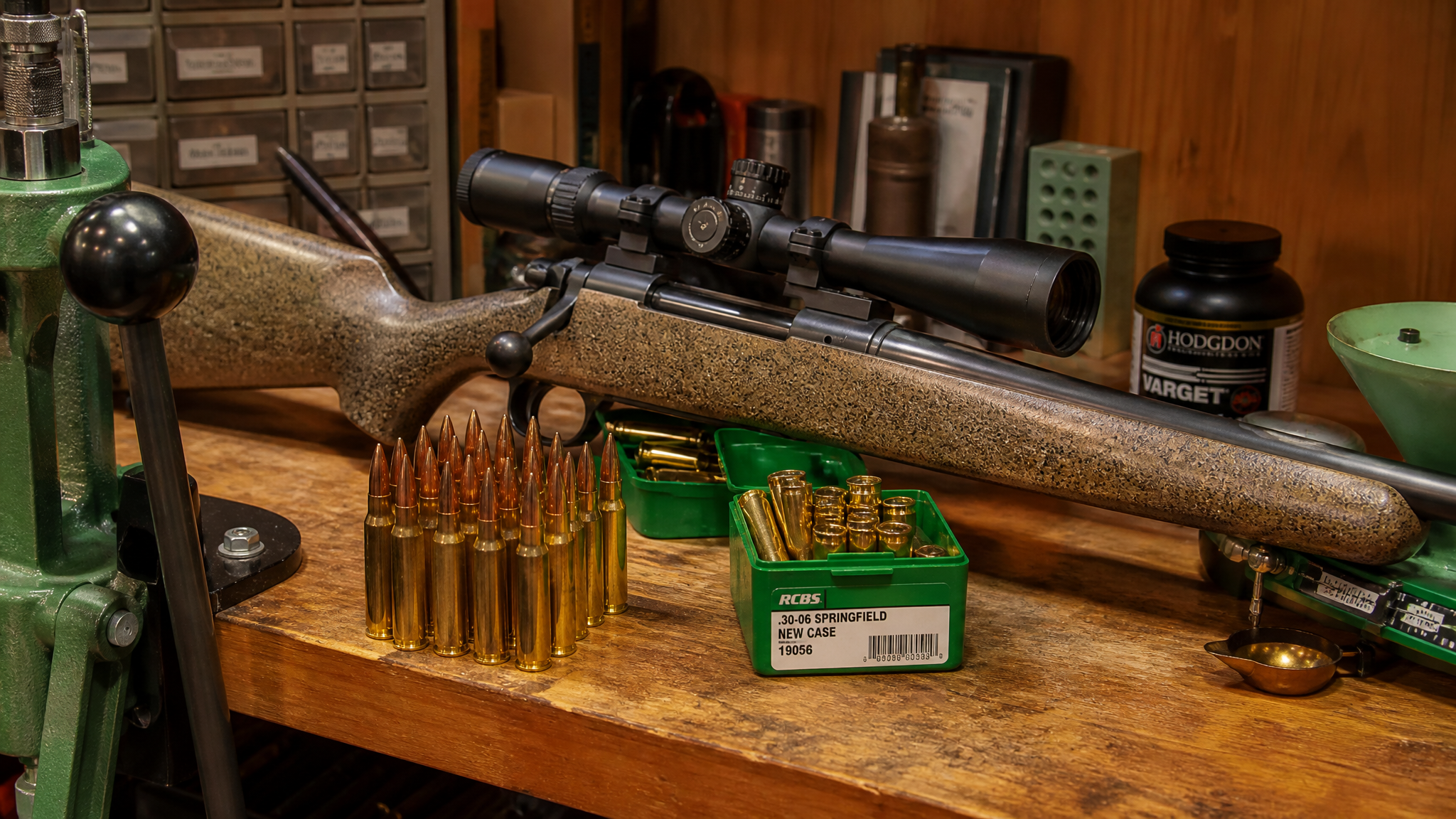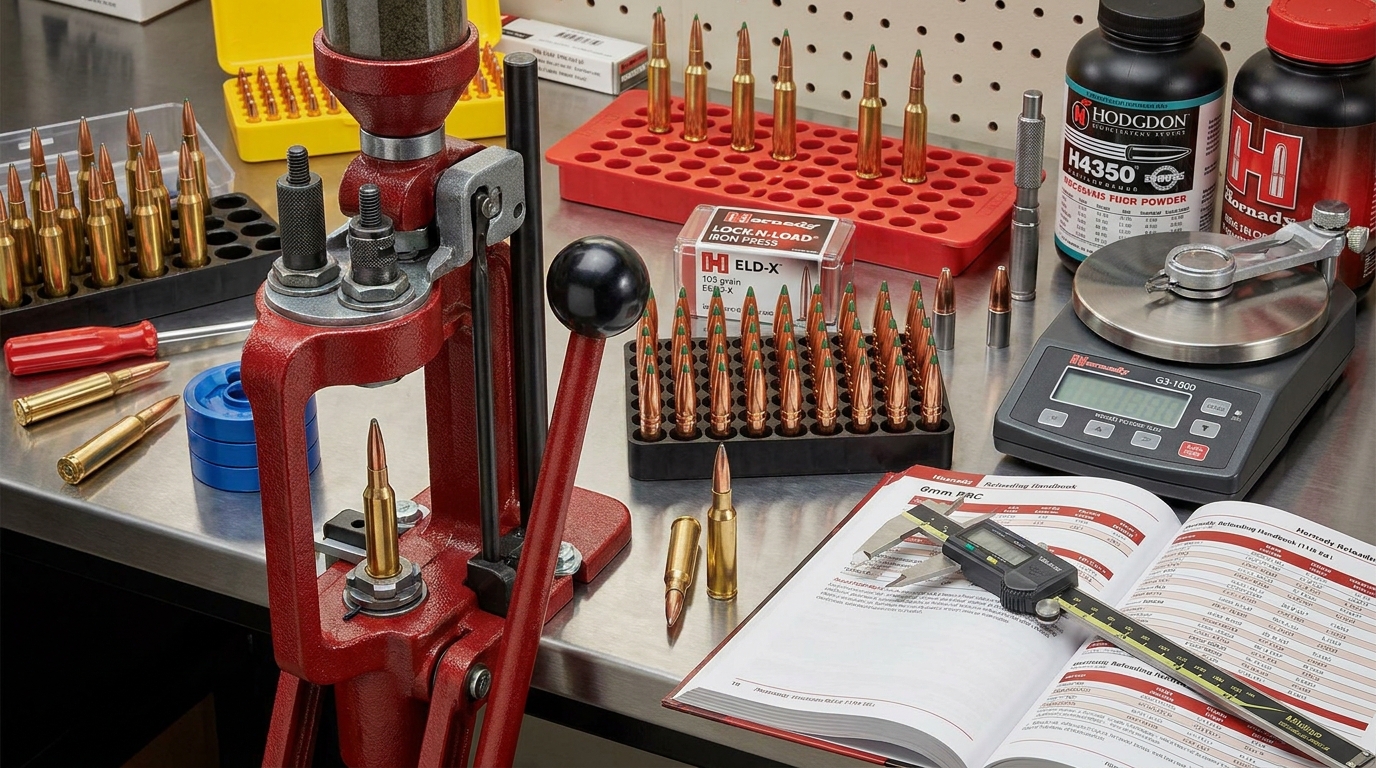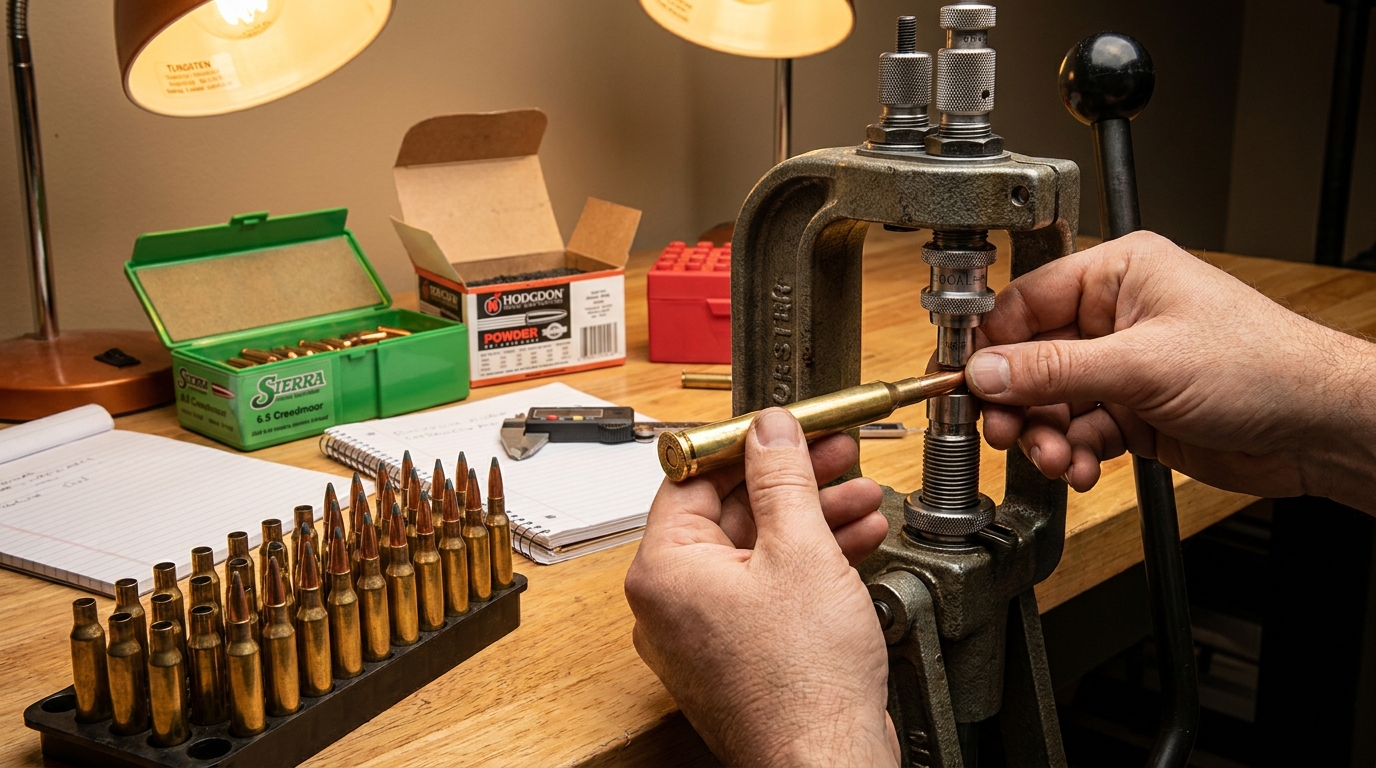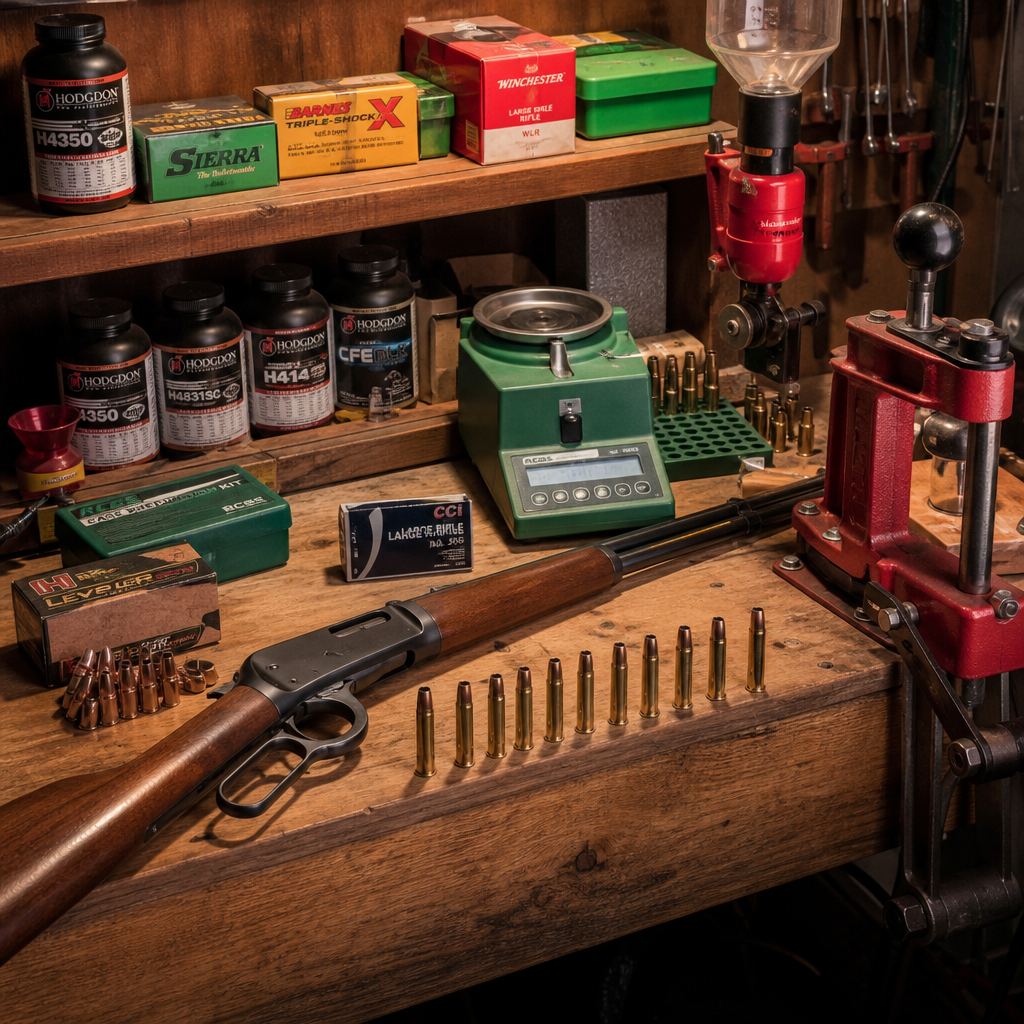
When Winchester introduced the .375 Winchester in 1978 for the Model 94 Big Bore, they gave hunters a genuinely serious cartridge in a platform they already trusted. It pushed a 200-grain bullet at 2,200 fps from a compact 20-inch barrel — flat enough for 150-yard shots, with enough frontal diameter and sectional density to anchor black bear and reach through the ribs of a Roosevelt elk at close range. Handloaders who find one of these rifles and take the time to develop loads are sitting on something special.
Note: The .375 Winchester is a completely different cartridge from the .375 H&H Magnum and .375 Ruger. It is a straight-walled rimmed cartridge designed for lever-action rifles and should not be confused with either magnum bottleneck round.
The Case and Its Quirks
The .375 Winchester case is a straight-wall rimmed design measuring 2.020 inches in length, derived from the .38-55 Winchester case. It headspaces on the rim and operates at a relatively modest 52,000 CUP — about the same as the .30-30 Winchester. This lower pressure ceiling means that trying to push it beyond its design limits buys you nothing but case stretching and sticky extraction.
Brass is available from Winchester in original production and periodically appears from Starline. Starline brass is the handloader's preference — thicker walls, more consistent weight, and better annealing than the older Winchester lots. If you can't find it new, .38-55 cases can be reformed with careful sizing, though overall length and wall thickness may require additional attention.
Bullet Selection
The .375 Winchester uses standard .375" diameter bullets. Your best options for hunting loads:
- Hornady 220 gr FP: The classic choice and what the cartridge was designed around. Broad flat nose, controlled expansion, excellent penetration on black bear and mule deer. This is the go-to hunting bullet for most .375 Win loads.
- Speer 235 gr Hot-Cor SP: A heavier option that slows down but hits hard at close range. Particularly effective on elk in timber at inside-100-yard shots.
- Cast lead bullets: The .375 Win is outstanding with cast bullets for general practice and small game. A 255-grain cast bullet at 1,600 fps is pleasant to shoot and very accurate in a lever gun. Use a hard alloy (20:1 or wheel weights) to prevent leading at higher velocities.
Powder Selection
The .375 Winchester's case capacity and pressure ceiling point to medium burn-rate powders in the IMR 3031 to IMR 4064 range. Faster powders don't build pressure efficiently in this relatively large-bore straight-wall case, while slower powders push past the pressure limit before reaching useful velocities.
Recommended Powders
- IMR 3031: The traditional choice and often the most accurate in this case. Meters well, provides consistent ignition, and works with a wide range of bullet weights.
- Varget: Temperature-insensitive and widely available in the Pacific Northwest. Slightly slower burn rate than 3031 gives it a velocity edge with heavier bullets.
- H4895: Reduced loads using 60% of max H4895 charge produce excellent cast-bullet training rounds. Full charges push jacketed bullets to near-maximum velocity efficiently.
- Benchmark: An underrated choice for this cartridge — fine metering granules and efficient burn characteristics in a medium-case volume.
Load Data (Always Start 10% Below Max and Work Up)
The following data comes from Lyman's 50th Edition and Hodgdon published data. Always verify against a current manual before loading. Maximum pressure for the .375 Winchester is 52,000 CUP.
220 gr Hornady FP (jacketed)
- IMR 3031: Start 33.0 gr / Max 37.0 gr — expect 1,950–2,150 fps from a 20" barrel
- Varget: Start 34.0 gr / Max 38.5 gr — expect 2,000–2,200 fps
- H4895: Start 32.5 gr / Max 36.5 gr — expect 1,920–2,100 fps
235 gr Speer SP (jacketed)
- IMR 3031: Start 31.5 gr / Max 35.0 gr — expect 1,850–2,020 fps
- Varget: Start 33.0 gr / Max 37.0 gr — expect 1,900–2,080 fps
Primer Selection and Brass Prep
Use large rifle primers. Winchester LR or CCI 200 are the standard choice. Federal 210 primers may show slightly higher pressures — if using them, back off your charge weight by 0.5 gr and work back up. The .375 Win ignites easily due to its straight-wall geometry, so there's no need for magnum primers.
Brass prep is straightforward: full-length resize, trim to 2.010" (SAAMI max is 2.020"), deburr flash hole, and chamfer the case mouth before seating bullets. Lever-action rifles can be hard on brass during ejection — inspect for head separation after three to four reloads and retire cases that show a bright ring above the head.
Accuracy Expectations and Field Performance
A properly loaded .375 Winchester in a Model 94 Big Bore or Browning BLR will produce 1.5–2.5 MOA groups at 100 yards with jacketed loads — entirely adequate for its intended application inside 150 yards. Cast loads at reduced velocity often shoot even tighter. The cartridge is at its best in Oregon timber country: black bear over bait or dogs, close-range Roosevelt elk in the Coast Range and western Cascades, and Columbia blacktail deer out to 100 yards with room to spare.
If you've inherited a .375 Winchester or found one at a gun show and dismissed it as a curio, put it on the reloading bench. This cartridge has more practical utility for close-range Oregon hunting than most shooters give it credit for, and a well-developed handload will outperform factory ammunition in accuracy and consistency. It's not glamorous — but it works.