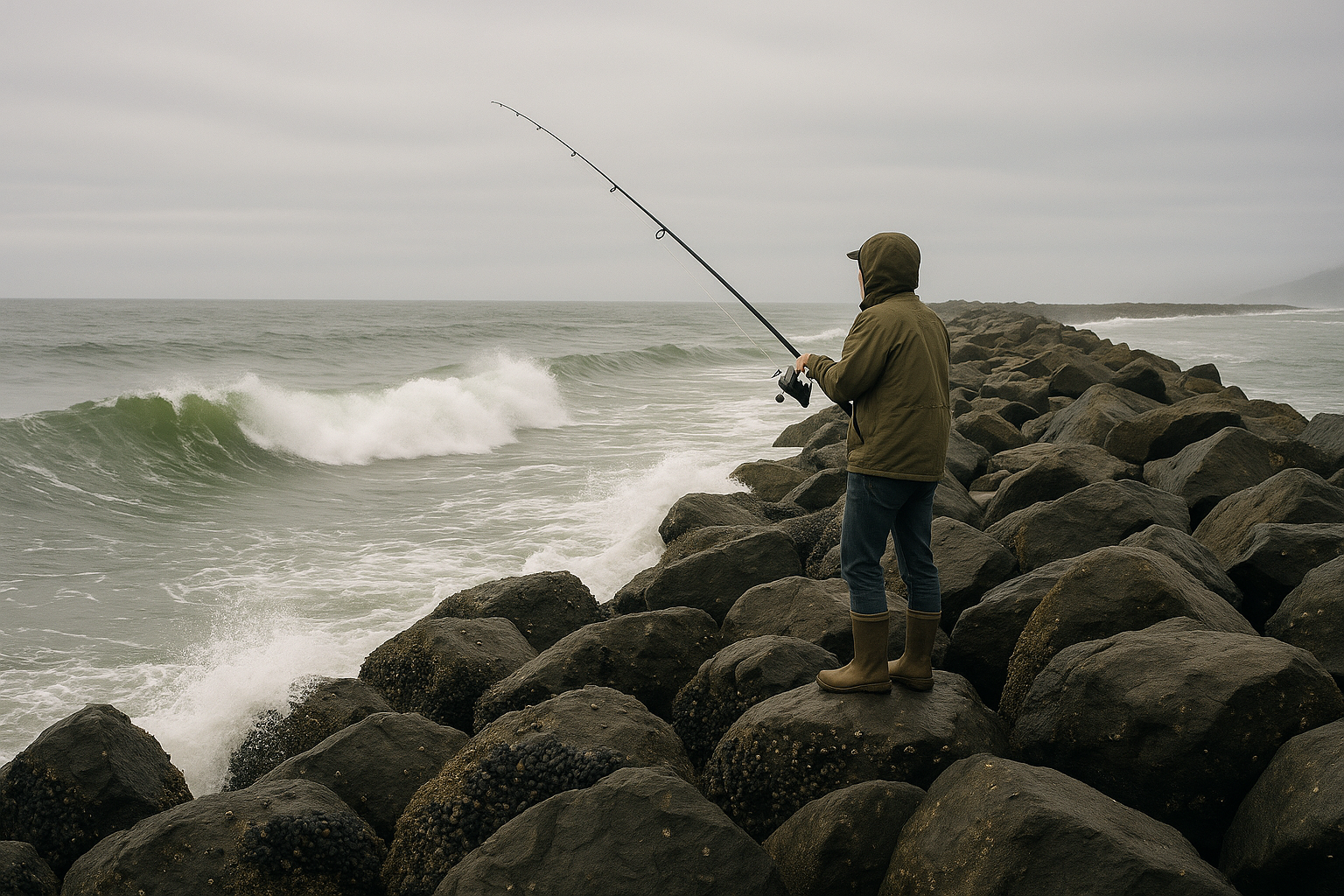
Oregon's coastline is punctuated with jetties and breakwaters at nearly every major river mouth — Tillamook Bay, Yaquina Bay, Coos Bay, Winchester Bay, Depoe Bay, and more. These rock structures, built to protect harbor entrances and stabilize river channels, do something unintentional and wonderful: they create world-class fishing structure. Rockfish, greenling, and cabezon stack up along these rock piles year-round, and for anglers willing to walk out on the boulders, the action can be exceptional.
This is accessible fishing — no boat required. A license, a medium-heavy rod, and a box of appropriate terminal tackle is all you need. But fishing jetties effectively requires understanding the species, the structure, and the techniques that produce fish instead of snags.
The Three Main Species: Know What You're Targeting
Black Rockfish
Black rockfish (Sebastes melanops) are the most common jetty catch on the Oregon coast. They school in open water around jetty structure, often suspending at mid-column depths of 15–40 feet, though you'll find them shallow on overcast days. They're aggressive feeders that will blast surface iron jigs and eat plastic swimbaits on the drop. Black rockfish grow to 5–8 pounds on productive sections of coast, and a limit of 10 fish per day (check current ODFW regs) is achievable on a good session. These fish are excellent table fare — mild, firm white meat.
Kelp Greenling
Greenling are the bright-colored bonus fish of the jetty. Males show electric blue spots on olive bodies; females are golden brown with orange spots. Both sexes live right in the rocks, picking crabs, worms, and small fish from crevices. They're not long travelers — they stay tight to structure. Greenling average 1–3 pounds but fight hard for their size, and their flesh is some of the best eating on the coast. Target them with slow-rolled swimbaits or bait fished directly against the rocks.
Cabezon
Cabezon are the heavyweights. Oregon's largest sculpin can exceed 20 pounds and 30 inches, though most jetty fish run 3–8 pounds. They lie absolutely motionless in rock crevices, ambushing crabs and octopus. Landing a cabezon means finding one, getting your bait right in front of its face, and holding on when it bulldogs back into the rocks. Cabezon can be caught year-round, but fall and winter — when the fish are fat and feeding — produce the largest individuals. One important note: do not eat cabezon roe — the eggs are toxic to humans. The flesh, however, is exceptional.
Oregon Jetty Locations Worth Fishing
- South Jetty, Yaquina Bay (Newport) — One of Oregon's most accessible and productive. Drive to the south side of the bay entrance, park at the lot, and walk out. Black rockfish stack at the tip. The rocks closer to the mouth hold greenling and cabezon.
- South Jetty, Coos Bay (Charleston) — The longest walkable jetty on the southern Oregon coast. The mid-jetty sections are less pressured and hold good fish. The confluence of bay current and ocean surge creates bait concentrations that attract rockfish.
- Winchester Bay South Jetty — Excellent for cabezon. The rocks here are covered in mussel and barnacle — prime structure. Fish the surf-facing boulders at the tip for the best action.
- Tillamook Bay Jetty (Garibaldi) — The north and south jetties both produce, with the south jetty offering better public access. Black rockfish and greenling are abundant, and fall cabezon fishing here is outstanding.
- Depoe Bay Seawall — A unique urban jetty experience. The tiny harbor and adjacent seawall produce good rockfish action. Fish during incoming tide when bait pushes through the notch.
Tackle Setup for Jetty Success
Rod and Reel
A 7–8 foot medium-heavy spinning rod rated for 1/2 to 1.5 oz paired with a 3000–4000 series reel is the Oregon coast workhorse. Spool with 20–30 lb braided mainline and attach a 24-inch fluorocarbon leader of 15–20 lb test. Braid gives you sensitivity for feeling bottom structure; the fluoro leader provides abrasion resistance in the rocks.
Lures and Presentations
For black rockfish, 3–4 oz bar jigs (leadheads with bucktail or tube bodies) are classic. Cast out, let the jig sink 20–30 feet, then retrieve with an erratic, snapping action. White, pink, and chartreuse produce well in Oregon's green water. Swimbaits on 1–2 oz jigheads also excel — work them at mid-column depths.
For greenling and cabezon, go slow and go to the bottom. Soft plastic crabs, white swimbaits, and strip baits (squid, herring) fished on a dropper loop rig right against the rocks will out-produce any jig. The key is patience — let your presentation sit. Cabezon will sometimes hold a bait for 10–15 seconds before you feel the pull.
Live and Cut Bait
Fresh squid, pieces of herring, and live sand crabs are deadly for cabezon and greenling. A simple Carolina-style rig with a 1–2 oz egg sinker and 2–0 to 3–0 octopus hook fished right in the rock seams is the old-school approach that still catches the most fish.
Safety on the Rocks
Jetty fishing demands respect for the ocean. Several anglers die on Oregon jetties every decade, almost all swept in by unexpected rogue waves. The rules are non-negotiable:
- Never fish alone on the outer sections of a jetty
- Wear a personal flotation device — inflatable suspender PFDs are lightweight and won't impede fishing
- Watch wave sets for 10–15 minutes before committing to an exposed rock
- The rocks are slippery even when dry — studded korkers or golf-cleated boots are worth every penny
- Know your exit before the tide changes — an accessible rock at low water may be cut off at high
Seasons and Regulations
Oregon's nearshore rockfish regulations allow year-round retention of most black rockfish and greenling. Cabezon seasons vary — check the current ODFW Marine Zone regulations before fishing, as seasons and bag limits are subject to change. The general nearshore limit is 10 fish per day (aggregate), with additional species-specific sublimits for certain species. Tidal licensing requirements apply to all anglers 12 and older.
When to Go
The ideal jetty session happens during an incoming tide on a calm day. Rising water pushes baitfish and crustaceans against structure, triggering feeding. Early morning and late afternoon see the most active fish. September and October bring excellent conditions — the summer upwelling pattern settles, seas moderate, and rockfish are actively feeding before winter sets in. The fish are fat and aggressive. Don't wait for perfect weather; Oregon's coast rarely delivers it, and the locals fish through the drizzle.
If you haven't fished Oregon's jetties, you're missing some of the most productive and accessible saltwater action on the Pacific Coast. Pick a calm tide window, grab a friend, and get out on the rocks.