If you ask most Oregon bowhunters where they want to punch their archery mule deer tag, you'll hear the usual answers: Steens, Hart Mountain, Beatys Butte. The Biggs Unit rarely makes the list — and that's exactly why you should be hunting it.
Stretching across the basalt rimrock and sagebrush flats of north-central Oregon between the Columbia River and the Deschutes drainage, the Biggs Unit sits in GMU 69. It receives modest archery hunting pressure compared to the celebrated units to the south, yet it holds a healthy population of Columbia Basin mule deer, including some genuinely impressive bucks that grow fat on bitterbrush and cheatgrass through summer.
Understanding the Terrain
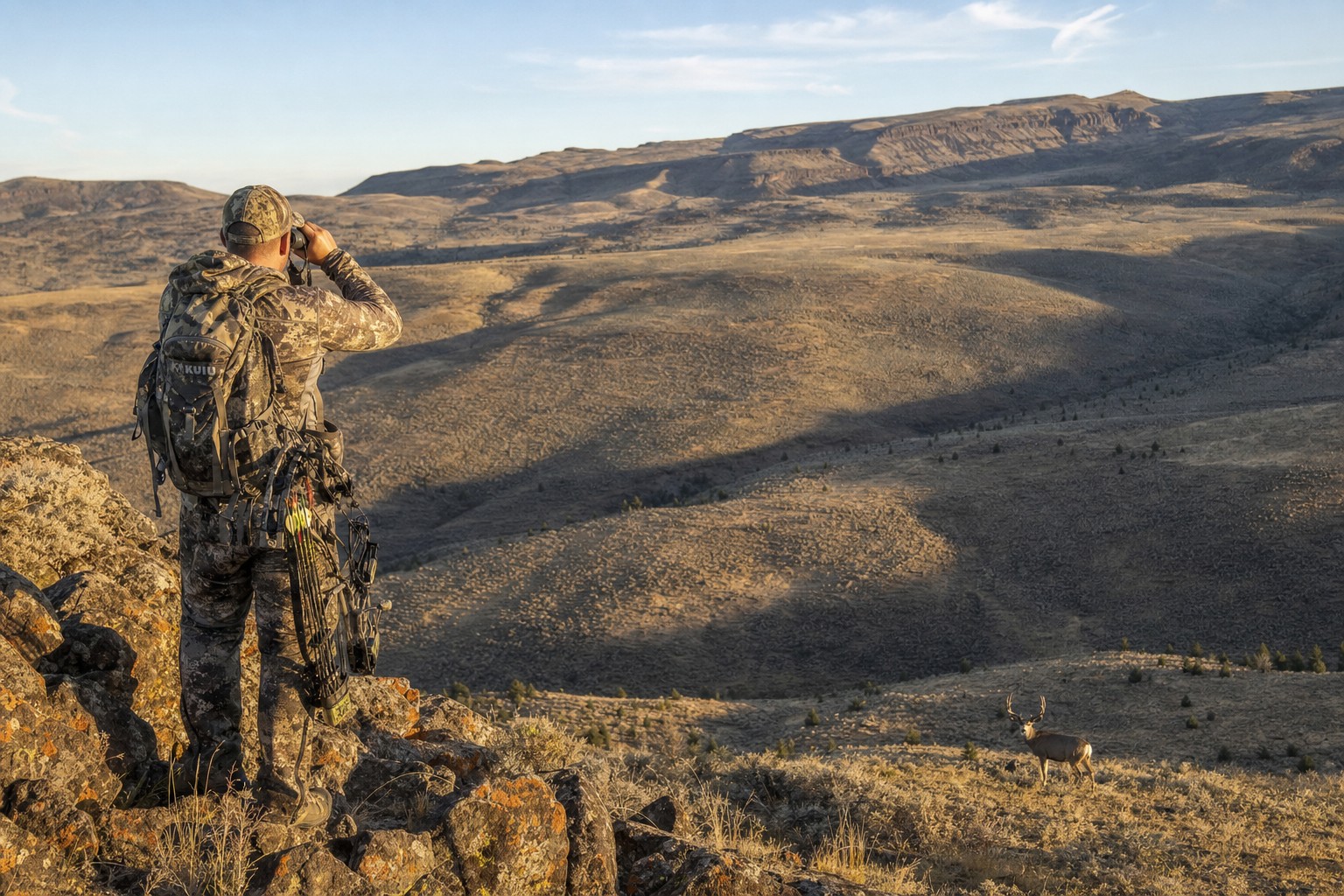
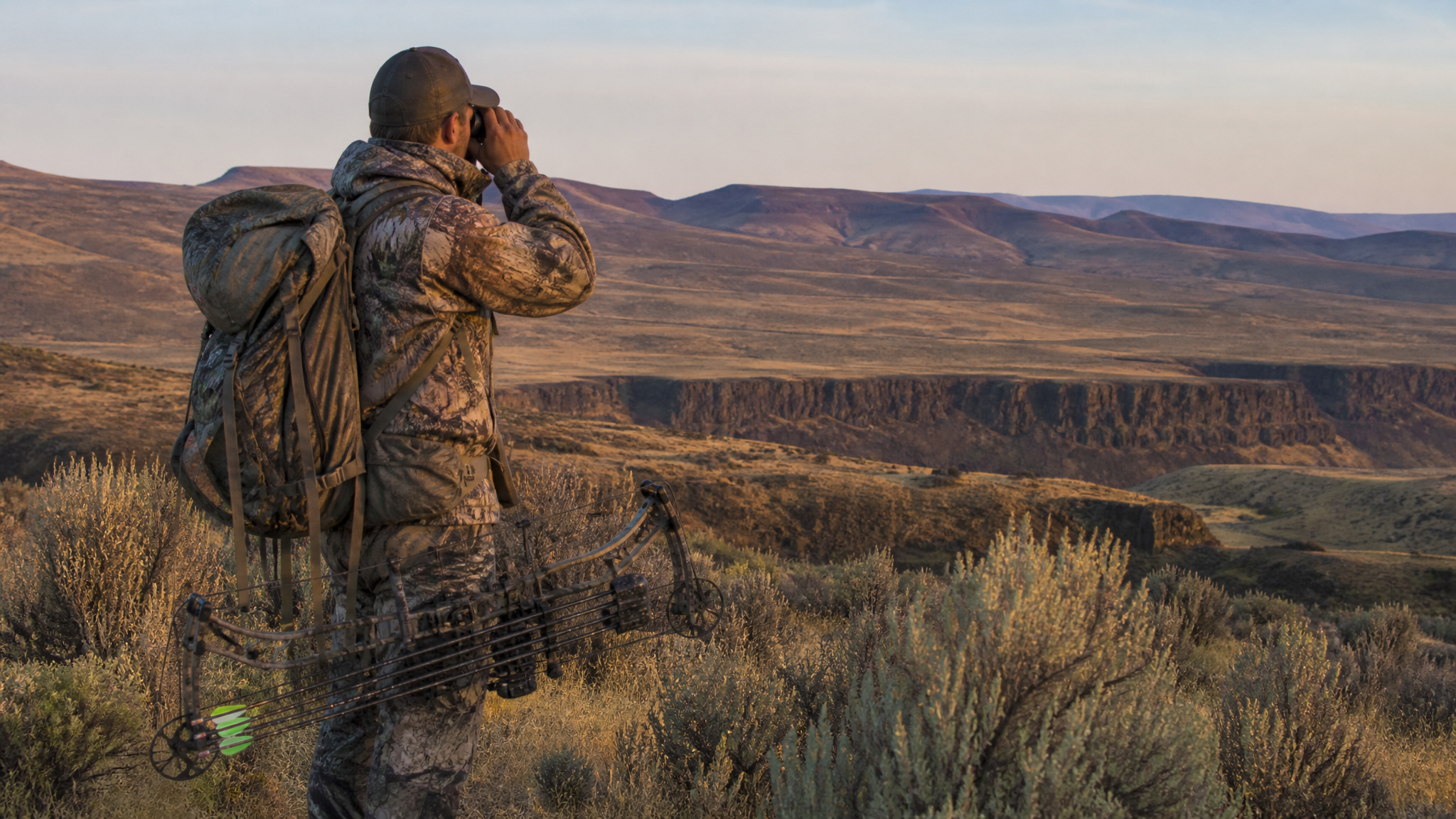
The Biggs Unit is defined by dramatic elevation changes. You'll find deep coulees and canyon drainages cutting through high sagebrush plateaus, with basalt rimrock providing shade and security cover. Elevations range from near river level along the Columbia up to 3,000 feet on the plateaus. This topography gives you options: canyon heads hold deer through the heat of the day, while open sagebrush flats become feeding zones in the last two hours of light.
In August, when the archery season opens, temperatures regularly hit 95–105°F in the canyon bottoms by midday. Deer behavior responds accordingly. Early morning and evening hunting are non-negotiable, and midday glassing sessions from high vantage points overlooking shaded canyon walls can reveal bedded bucks that won't move again until late afternoon.
Scouting Strategy: Glass First, Walk Second
The most efficient way to hunt the Biggs Unit on foot is to glass from high points in the 45-minute window before shooting light and the hour after sunset. Use quality 10x42 or 10x50 binoculars and a tripod-mounted 80mm spotting scope. Look for bucks on north-facing slopes in the morning, where shade lingers longest. In the evening, watch sagebrush benches above water sources — stock tanks and seasonal seeps are magnets in August's heat.
OnX Hunt's Oregon layer is invaluable here. BLM lands in the unit are accessible, but patches of private ground require careful navigation. Download offline maps for the northern Wasco County sections and use the public/private boundary overlay religiously — trespassing in this country can cost you your tag and your truck.
Water Sources Are the Key
In the Biggs Unit during August, water sources concentrate game. Locate every stock tank, spring, and cattle trough on public land using OnX or Google Earth's satellite imagery. Mule deer will visit these sources daily, often in predictable windows. Setting up a glassing post within 200 yards of a reliable water source at first and last light gives you a significant advantage. If you spot a buck using a tank, pattern him for a day before committing to a stalk.
Stalking Techniques in Open Country
Stalking mule deer in open sagebrush and rimrock country is a different skill than hunting elk in timber. Thermals are everything. In canyon country, morning thermals pull uphill as the ground warms; evening thermals fall as the earth cools. Time your stalks accordingly, and always play the wind.
When you spot a bedded buck, use the terrain features — coulee lips, basalt outcroppings, sagebrush clusters — to break your outline as you close the distance. Move only when the deer's head is down. Mule deer in open country rely on their eyes more than whitetail; the moment they're alert and scanning, freeze. Patience matters more than speed.
Target 30–40 yards for a clean shot in this terrain. Mule deer in open country often give you time that timber elk never will, but any shot much beyond 50 yards with a bow in August heat adds variables you don't need. Know your comfortable distance and commit to it.
Gear Considerations for High Desert August Hunting
- Hydration: Carry a minimum of 4 liters per day. Heat exhaustion is a real risk when temperatures exceed 100°F. Start drinking before you're thirsty.
- Camouflage: Open-country patterns — Sitka Elevated II Open, KUIU Vias, or any tan/khaki sage pattern — beat timber greens in this environment.
- Footwear: Lightweight, breathable trail runners or low-cut hunting boots for the flats; ankle support matters in basalt scree.
- Binos: Don't shortchange yourself here. At least 10x42 glass with field-of-view suited for long hours of glassing.
- Cooling: A battery-powered misting fan or ice-filled bandana can make midday hides survivable.
Meat Care in August Heat
This is the most critical element of August archery hunting that hunters underestimate. Temperatures that push 100°F in the Biggs Unit can spoil an elk or deer quarter in hours if you're not prepared. Plan your recovery accordingly:
Field dress immediately after recovery. Quarter and bone the animal in the shade if at all possible. Pack Freez-Pak cooler inserts or dry ice in a large cooler in your vehicle. Game bags are mandatory — fine-mesh bags keep flies out while allowing air circulation. If you can't get the meat into a cooler within four hours of the kill in August heat, you may lose it. Hunt with this in mind and plan kill locations relative to your vehicle access.
Tag and Regulations
The Biggs Unit (GMU 69) is an Oregon controlled archery unit. Check current ODFW regulations for tag availability, season dates, and any unit-specific restrictions before you go. Some years the unit offers leftover tags or landowner vouchers that can be secured after the initial drawing.
The Columbia Basin mule deer are a remarkable animal — wide-racked, heavy-bodied, and built for open country. Hunt the Biggs Unit right, and you might find yourself punching a tag on a buck most Oregon bowhunters never knew existed.