The Nehalem River is one of Tillamook County's most underappreciated fall Chinook fisheries. While neighboring streams like the Wilson and Tillamook attract most of the early-season press, the Nehalem offers something equally compelling — a robust October run of bright, hard-fighting kings that push well into the upper river, combined with lighter crowds and miles of accessible bank water that reward persistent anglers.
The Nehalem Run: Timing and Biology
Nehalem Chinook are a late system. The bulk of the fall run doesn't reach fishable numbers until early-to-mid October, with the best bank fishing window typically running from mid-October through early November, depending on rain. The first significant rain event after September 15th is the trigger — it blows the estuary full of fresh water and pulls the fish that have been stacked in Nehalem Bay up into the river proper.
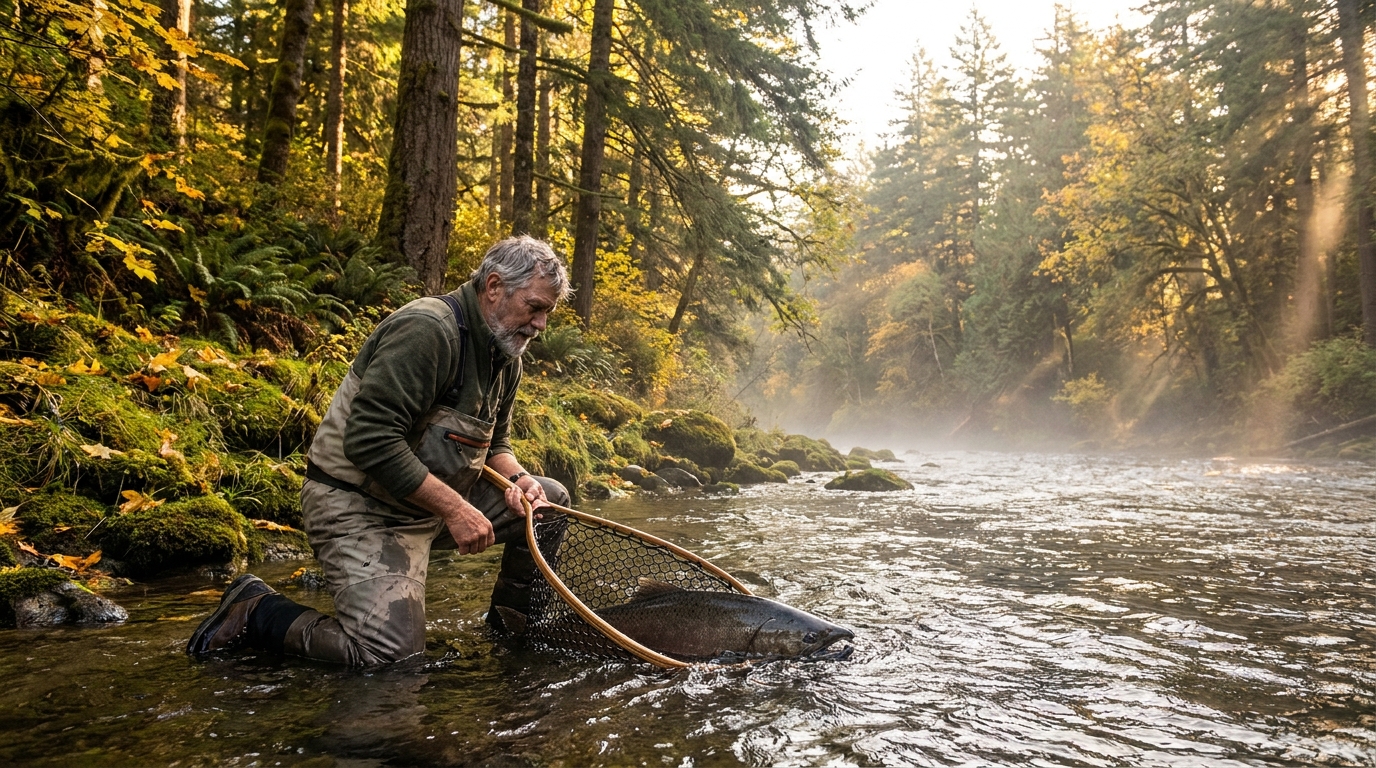
Fish average 15 to 25 pounds, with occasional bruisers in the 35- to 40-pound class showing up each year. Most of what you'll encounter are wild fish returning to natal tributaries like the North Fork Nehalem, the upper main stem, and Rock Creek. ODFW regulations govern retention carefully — always check current emergency orders at myodfw.com before you head out, as wild Chinook retention rules vary by year and water conditions.
Access Points That Matter
The Nehalem has more bank access than most anglers realize. Here are the key spots:
- Nehalem Falls (upper river): A natural fish concentration point. The pool below the falls holds fish staging before the drop. Access via Foss Road off Highway 53.
- Highway 53 Corridor: Several pull-offs between the community of Vernonia and the falls give you access to deep runs and back eddies where fish rest. Look for water that's knee-to-thigh depth on a drift.
- Spruce Run County Park: A reliable put-in for drift boats and a decent bank access point. The gravel bar downstream holds fish during medium flows.
- Nehalem Bay State Park Estuary: When fish are milling in the bay during incoming tides, bank anglers with long rods can reach them from the campground bank.
- Roy Creek Road pullouts: Less visited, these spots between Mohler and Wheeler give you access to tidal water during slack and incoming tides.
Gear for Nehalem Bank Fishing
The Nehalem is a relatively modest-sized river — nothing like the Columbia — which means your gear choices need to match the water. A 10- to 10.5-foot medium-heavy spinning rod rated for 15- to 30-pound line is the workhorse setup. Spool up with 30-pound braid and run a 15- to 20-pound fluorocarbon leader of 24 to 36 inches.
Drift Rigs
Side-drifting and traditional bottom-bouncing are both effective on the Nehalem's gravel runs. Rig up a 1- to 2-ounce pencil lead or slinky weight above a barrel swivel, then attach your leader and a size 2/0 or 3/0 Gamakatsu Octopus hook. Bait with fresh cured egg clusters — Pautzke's Fire Cure in orange or chartreuse is a consistent producer on coastal Oregon rivers. Sand shrimp tipped below the eggs adds scent and movement that the Nehalem fish love.
Spinners and Plugs
When fish are actively moving, a No. 5 or No. 6 Blue Fox Vibrax in silver-blue or chartreuse will draw aggressive strikes from fresh kings. Kwikfish and Flatfish plugs fished on a back-troll from a bank anchor point are highly effective when you can hold position on a deep slot. Wrap the plug belly with fresh sardine fillet secured with Magic Thread for added scent attraction.
Reading the River in October
After a good rain, the Nehalem will rise and color quickly. Don't abandon ship — that first flush of off-color water between 1 and 3 feet of visibility is prime time for bank fishing. Fish move aggressively through colored water, and the bait-and-drift approach shines when visibility is limited. As the river drops and clears over the following two to three days, transition to spinner presentations and target the edges of deep runs where fish are resting in slower current.
Watch your thermometer. When water temps drop below 48°F, fish slow down and hold in deep, slow pools. Scale down your presentation, use more scent, and be patient. The bite can still happen — it just requires longer drifts and more precise positioning.
Regulations Snapshot — Always Verify Before You Go
- Check ODFW Emergency Rules for current wild Chinook retention status
- Two-rod validation available from ODFW for additional presentations
- Barbless hooks required on many coastal Oregon streams — check specific river regs
- Hatchery Chinook (adipose fin clipped) may be retained — verify current limits
- Tidal zone regs differ from river regs; know your boundary markers
The Nehalem Experience
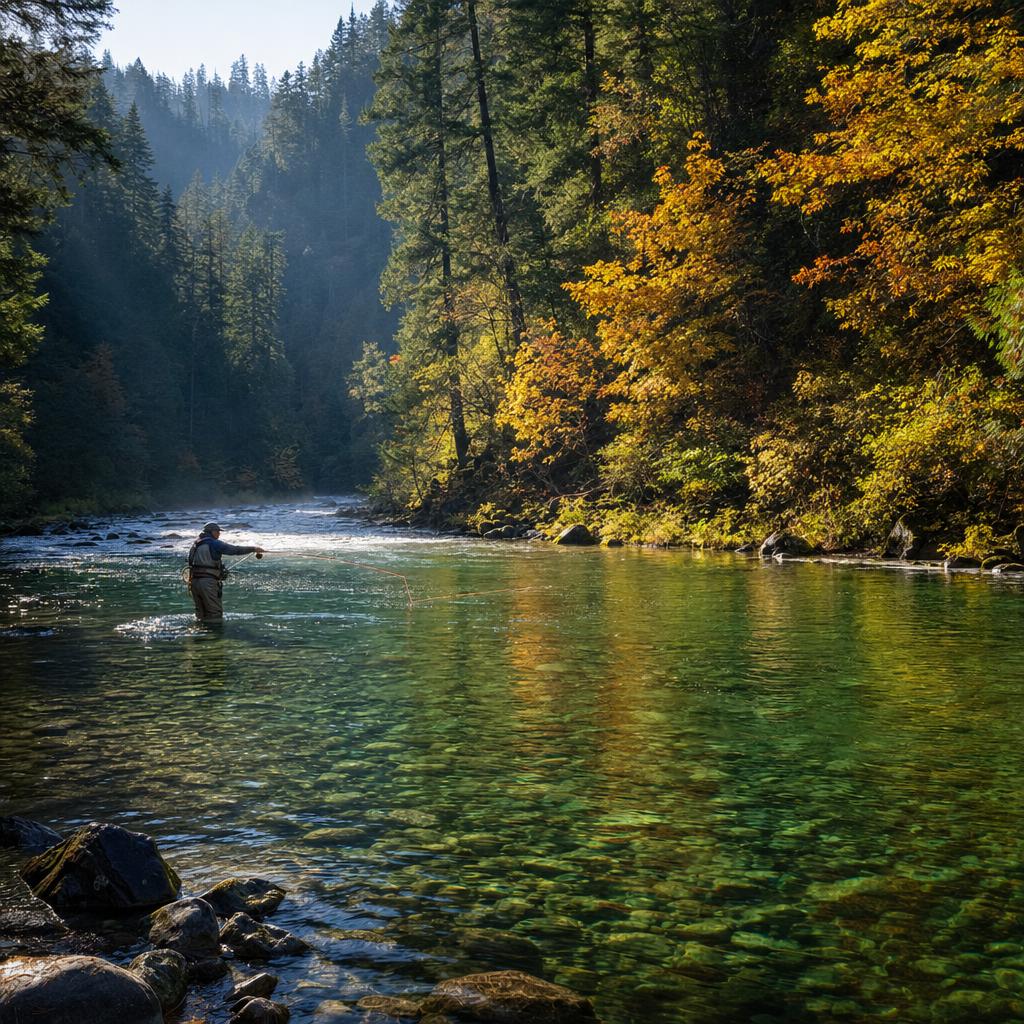
What the Nehalem lacks in name recognition it makes up for in atmosphere and elbow room. On a mid-October Tuesday after a good rain, you might have an entire gravel bar to yourself, watching dark-backed kings roll through the run while the coast range steams in morning fog. There are no guarantees in salmon fishing, but the Nehalem's October window is as reliable a slot as any coastal Oregon river offers — and it's worth building a trip around.
Pick up your license and two-rod validation at a local shop in Wheeler or Nehalem, grab a coffee, and get on the water before first light. October waits for no one on the Oregon coast.