The John Day River is Oregon's longest free-flowing river, cutting nearly 300 miles through the high desert plateaus and basalt canyons of north-central Oregon before dumping into the Columbia at Rufus. Ask most Oregon anglers about smallmouth bass and they'll mention the Umpqua or the Columbia, but serious bass fishermen know a secret: the Lower John Day River, from Clarno downstream to Cottonwood Canyon State Park and beyond, holds one of the finest wild smallmouth fisheries in the Pacific Northwest — and October is prime time to be on the water.
Why October on the John Day
Smallmouth bass in the John Day River spend summer holding in deeper pools and shaded canyon water, feeding aggressively but often going deep in the midday heat. By late September and into October, cooling water temperatures trigger a transition. Bass move into shallower feeding areas — gravel bars, current seams, and rocky points — as they pack on calories before winter. Water temperatures in the 55–65°F range produce some of the most active feeding behavior of the year.
There's another advantage to an October float: the crowds are gone. Summer kayakers, swimmers, and weekend recreationists have cleared out. You'll have long stretches of canyon entirely to yourself, with nothing but the sound of the river, the cry of a red-tailed hawk, and the thump of a big smallmouth hammering a topwater lure.
Float Planning: Clarno to Cottonwood Canyon
The most productive multi-day float for bass is the Clarno to Cottonwood Canyon section — roughly 70 river miles through the Lower John Day Wild and Scenic River corridor. This stretch passes through the John Day Fossil Beds National Monument at Clarno, then enters deep basalt and rimrock canyon country with no road access for most of its length. You are truly in the wilderness here.
- Put-in: Clarno Bridge — Access via Highway 218, good boat ramp, ample parking for shuttle vehicles.
- Take-out: Cottonwood Canyon State Park — 73 miles downriver, full facilities, well-maintained ramp.
- Float time: 4–6 days at a relaxed pace. Most groups camp on gravel bars in the canyon.
- Permits: No permit currently required for non-commercial floaters on this section. Check with the BLM Prineville District for current conditions before launching.
A shorter option is the Cottonwood Canyon to Rock Creek section below the state park, roughly 30 miles with road-accessible takeouts. This lower canyon is narrower and the bass tend to be slightly smaller, but it's a great weekend float.
Gear and Rigging for John Day Smallmouth
The John Day is clear in October — crystal clear. This is not a muddy Willamette Valley fishery. You'll be sight fishing in many sections, watching bass hold in current seams and behind boulders. That clarity demands lighter line and a more subtle presentation than you might use in turbid water.
Recommended Setup
- Rod: 6'10" to 7'2" medium-power spinning rod, fast action. Paired with a quality 2500-series spinning reel.
- Line: 10–15 lb braided mainline with an 8–10 lb fluorocarbon leader, 18–24 inches. The fluoro is nearly invisible in clear water and handles abrasion from rocky bottom structure.
- Topwater: A 3.5-inch Whopper Plopper or Heddon Zara Spook in natural shad or bone color will absolutely destroy bass in the morning hours before the sun hits the water. October mornings on the John Day are cool and still — the topwater bite can last until 9 or 10 AM.
- Mid-depth: A Ned rig with a finesse mushroom head (3/16 or 1/4 oz) tipped with a 3-inch Z-Man TRD in green pumpkin or natural crawfish. Dead-sticking this on a rocky shelf at 5–12 feet will produce all day.
- Deep water: A 1/2 oz football head jig with a bulky beaver-style trailer in brown/orange. Work it along the rocky bottom in the deeper pools beneath rimrock ledges.
Reading the John Day for Bass
The Lower John Day in October concentrates bass in predictable locations. The key is matching structure to water temperature and time of day.
Morning: Hit shallow gravel bars, rocky points, and current seams at the tail of riffles with topwater and swimbaits. Bass push shallow to feed as light begins to filter into the canyon. Some of the best water is only 2–3 feet deep.
Midday: Move to the shaded side of the canyon. By midday, bass retreat to deeper slots — 10–20 feet — along cliff walls and beneath undercut ledges. A drop shot or football jig fished vertically is the right tool here.
Afternoon: The late afternoon bite often rivals the morning session. Work current breaks at the downstream end of large pools, behind mid-river boulders, and along gravel bars that shade up as the canyon walls block the western sun.
Target Fish Size and What to Expect
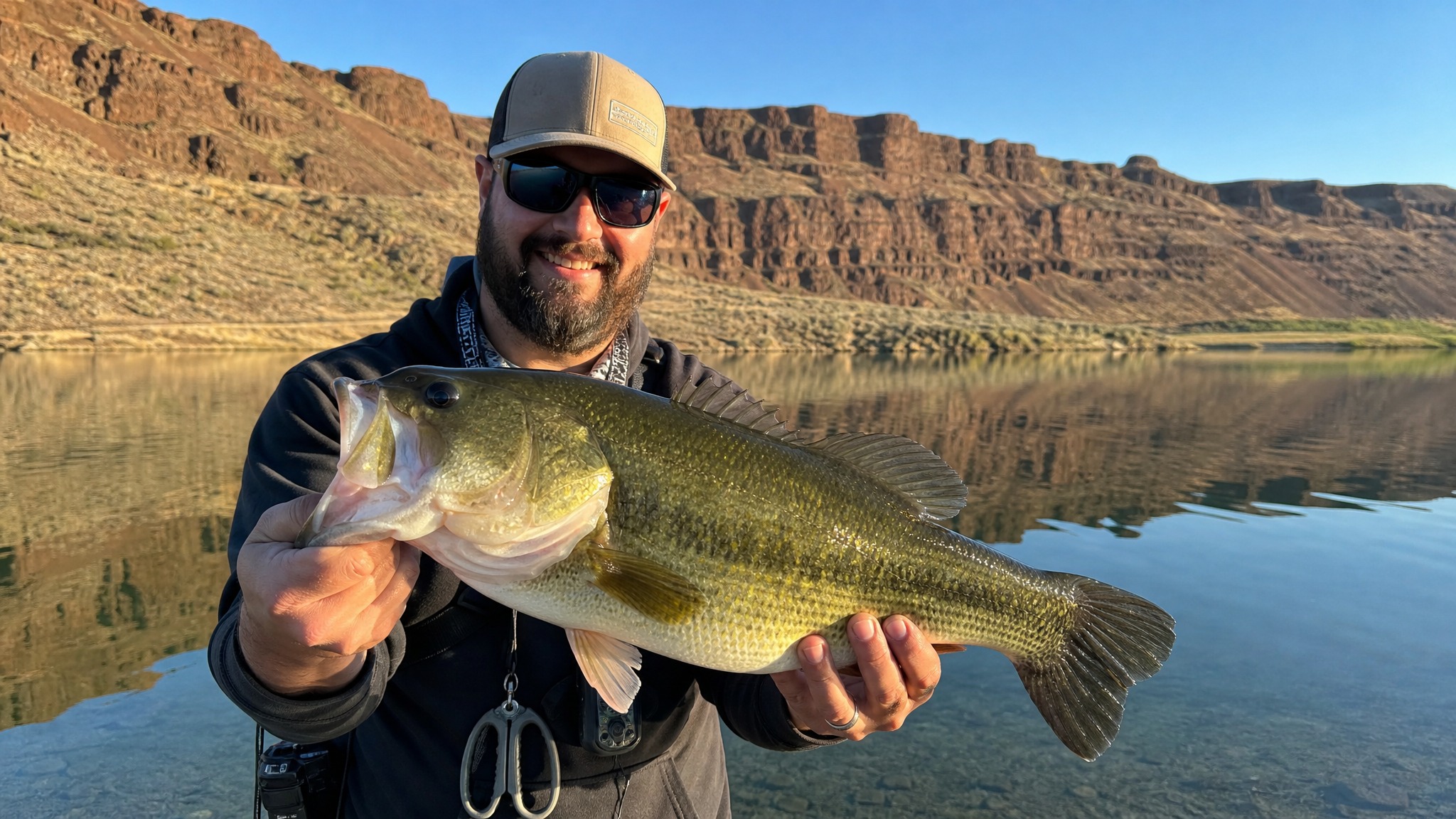
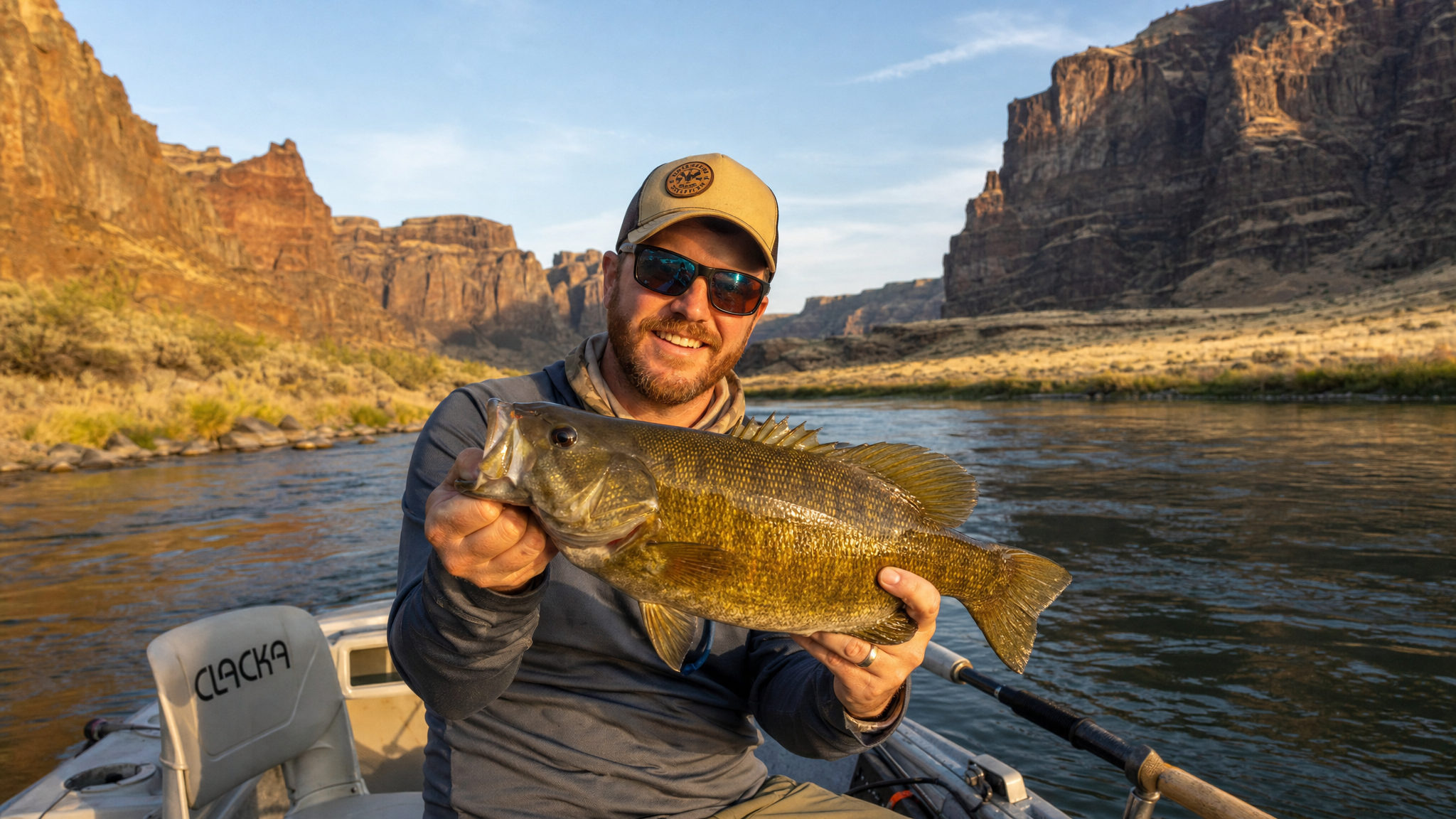
The John Day regularly produces smallmouth in the 12–16-inch range, with 18-inch fish not uncommon in the best pools. Fish over 20 inches exist — the river record approaches 5 pounds — and an October float gives you a legitimate shot at a trophy. Most anglers fish catch-and-release here, though Oregon regulations allow harvest. The wild fish population is self-sustaining and robust in this system, an extraordinary thing for a high desert river.
Expect to land anywhere from 10 to 40 fish per day on a good float, depending on conditions. A warm, overcast October day with light wind is ideal. Bright, cold, bluebird days post-front can be slower, though bass still feed — go slower and finesse them with the Ned rig.
Float Craft and Logistics
Most floaters use hard-sided drift boats, rafts, or inflatable kayaks. The John Day has Class I–II rapids in the Lower Canyon, nothing technical but enough to flip an inexperienced paddler. A raft or inflatable cataraft is the most forgiving option for anglers who want to focus on fishing rather than boat control.
Water for drinking should be filtered — carry a Sawyer or Katadyn filter. Cell service is essentially nonexistent in the canyon. File a float plan with someone reliable, and carry a satellite communicator such as a Garmin inReach for emergencies.
Fall Colors and the John Day Experience
An October float on the John Day is one of the most visually stunning outdoor experiences in Oregon. Canyon walls of columnar basalt and ash-layered rimrock rise hundreds of feet above the river. Cottonwood trees lining the banks explode in gold and amber. Golden eagles hunt the rimrock. Bighorn sheep are often visible on the canyon walls above Clarno. It is genuinely remote, genuinely wild, and genuinely worth the effort. The smallmouth are the reason you go — the landscape is the reason you never forget it.